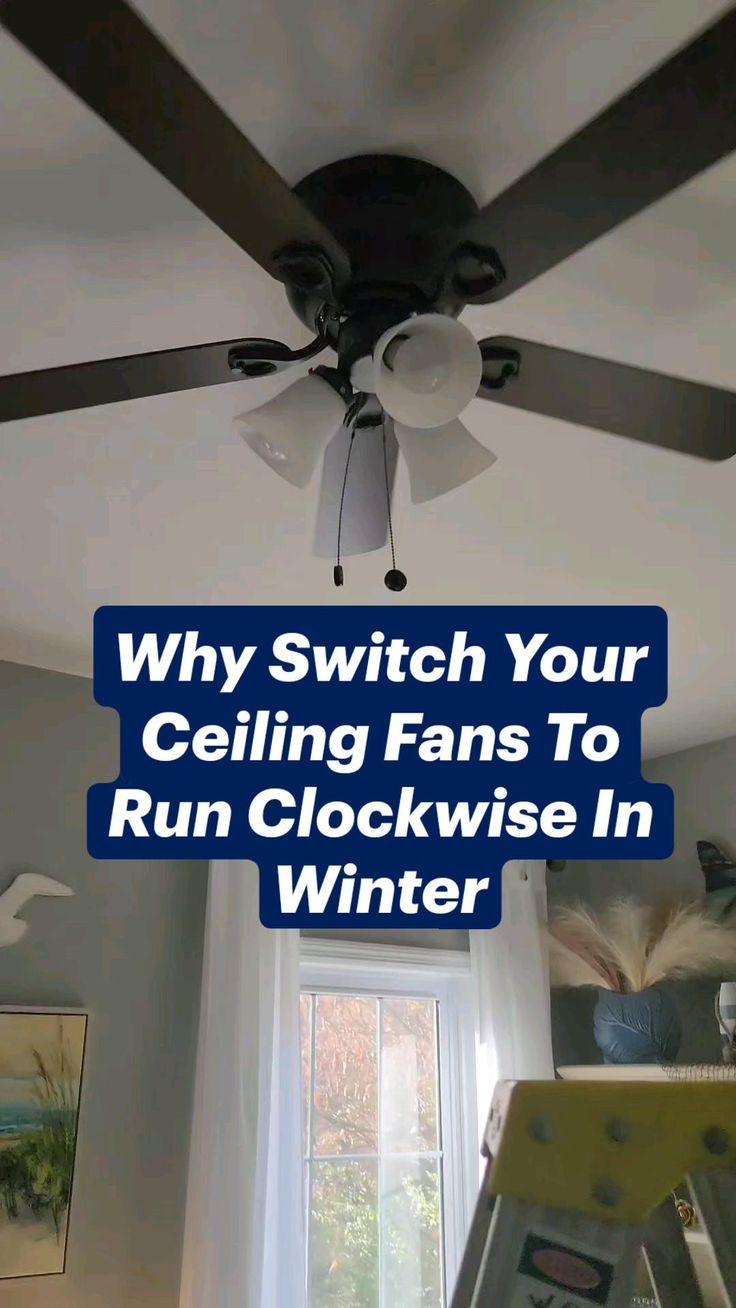
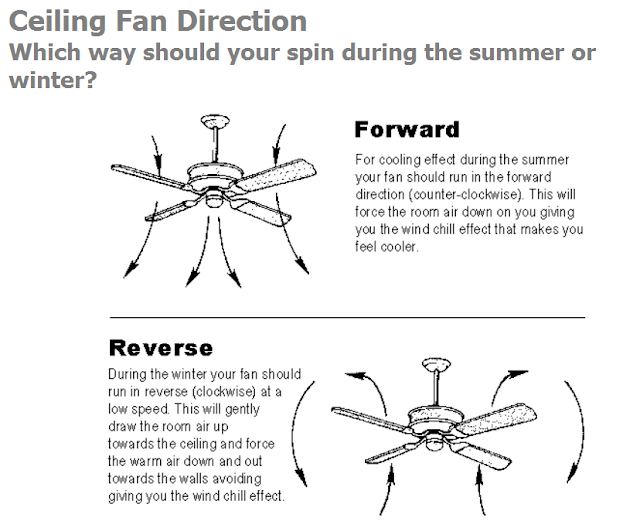
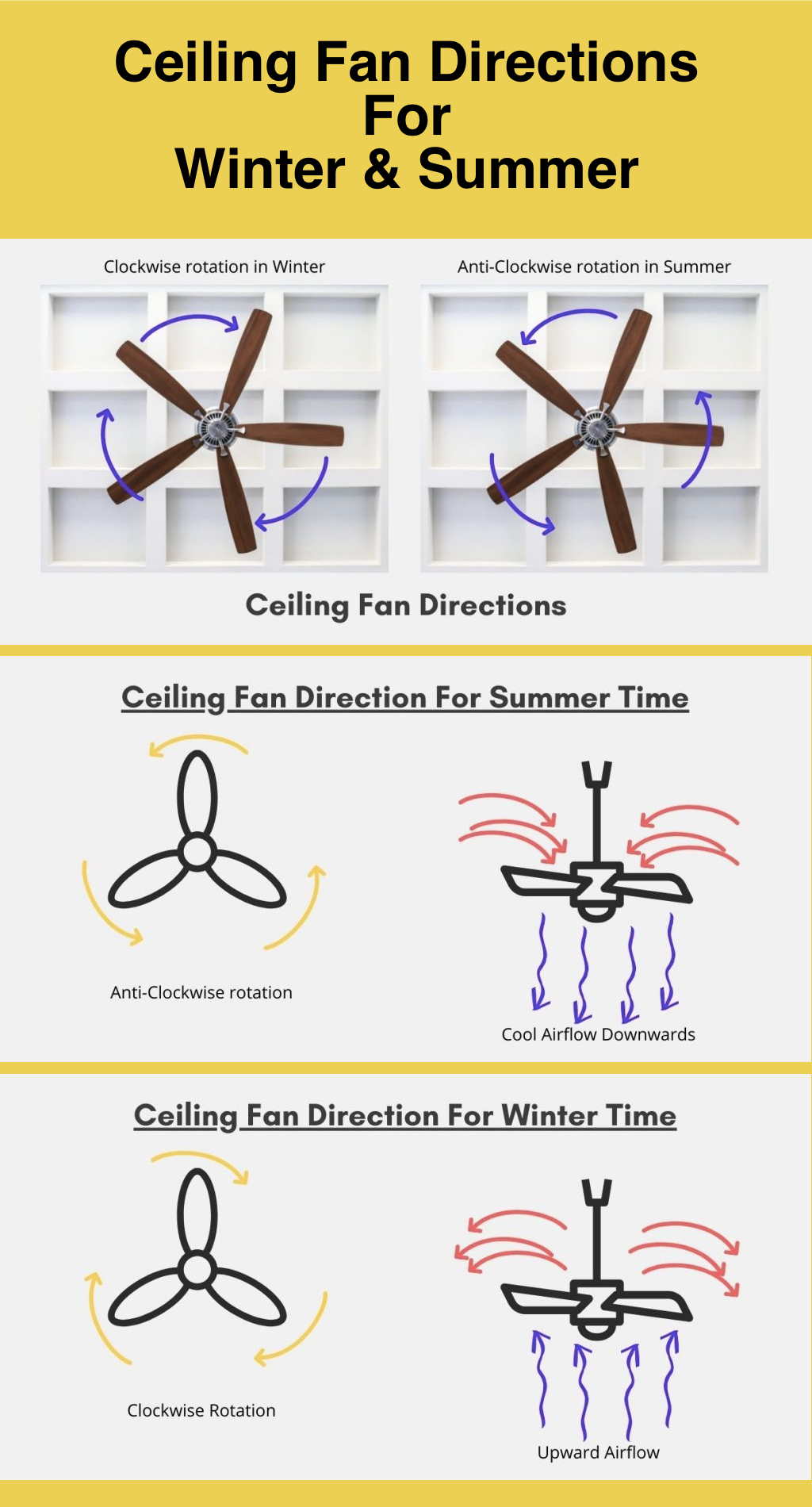
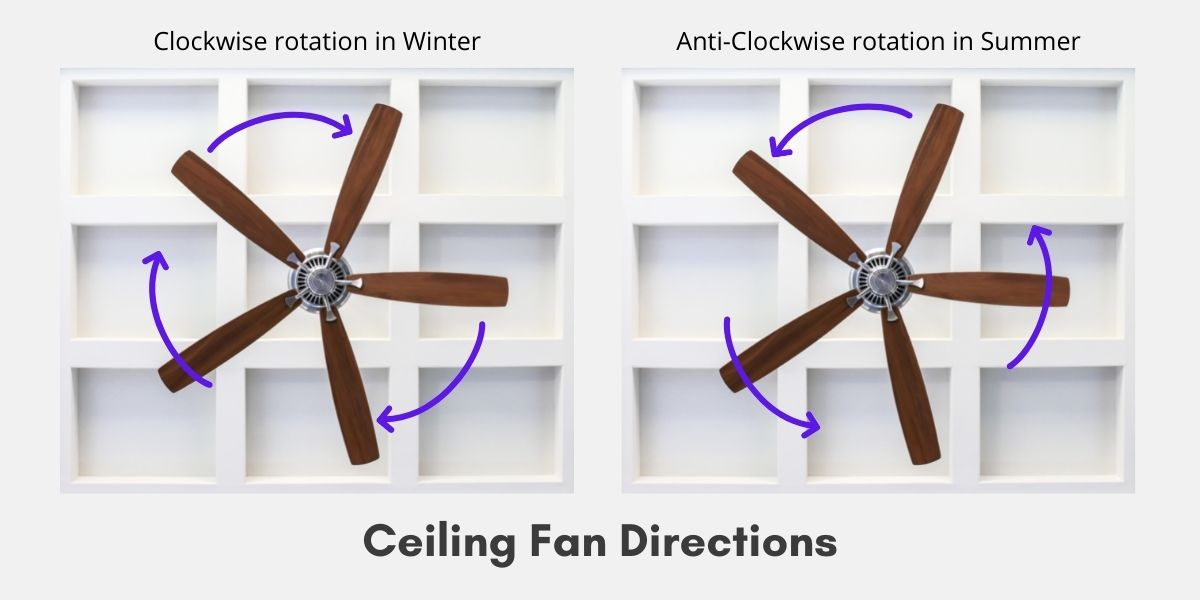
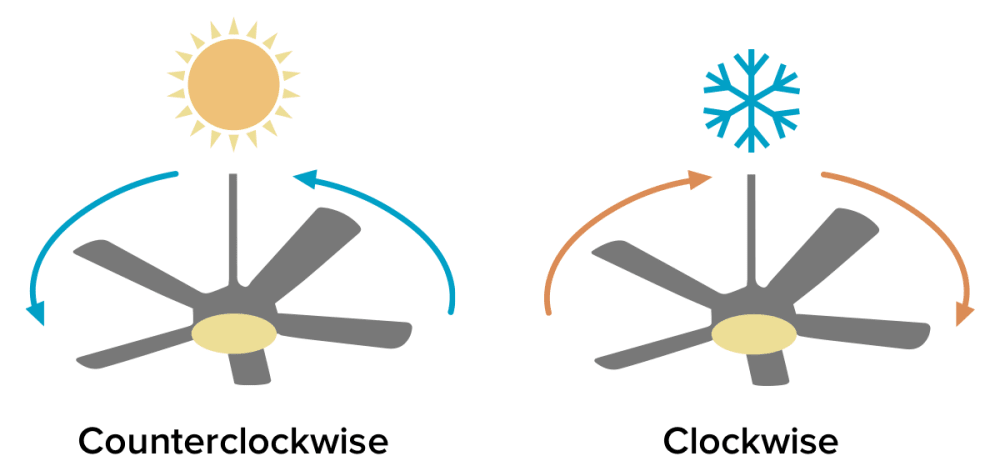
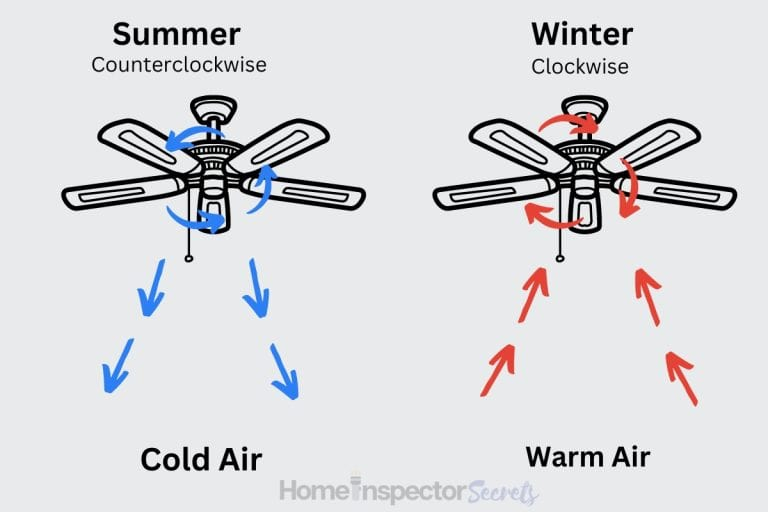
Most ceiling fans have a small switch on the motor housing that almost nobody flips: reverse. In summer the blades spin counterclockwise and push air down, creating a breeze that makes the room feel cooler. In winter the same fan should run clockwise at low speed, pulling room air up toward the ceiling. It is a two-second adjustment with no tools, and once the heating season starts it is one of the cheapest comfort upgrades in the house.
Why Fan Direction Changes With the Season
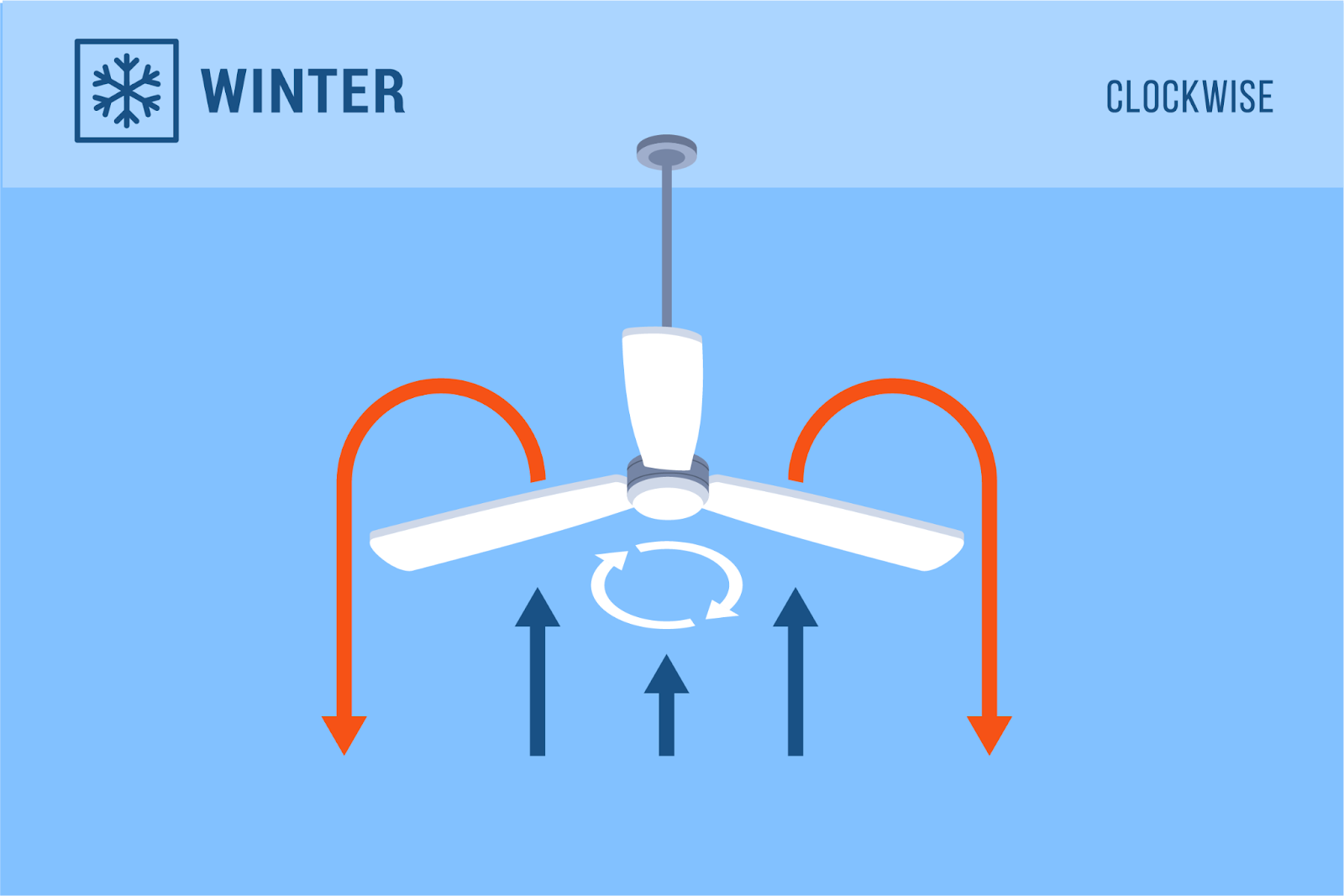
Warmed air rises. In a room with the heat on, the air near the ceiling can be noticeably warmer than the air at the sofa, which means part of what you pay to heat collects above your head instead of around you. A fan blowing down in winter fixes that the wrong way — it sends a cool draft straight at people. Run in reverse, it does the opposite job: “when the ceiling fan blades move clockwise, they create an updraft, pulling cold air from the floor level upwards and mixing it with the warm air trapped at the ceiling level and sending this mixed air back down into the room” (American Standard). No draft on your neck, and the heat you already paid for gets stirred back into the living zone.
How to Know Which Way Your Fan Is Spinning
Stand directly under the fan while it runs on a visible speed and watch the blades from beneath. If you can feel air pushing down onto you, it is in summer mode — for most fans that is counterclockwise as seen from below. If you feel essentially nothing, it is in winter mode, pulling air up. Not sure? Flip the reverse switch on the motor housing and watch the blade edges change direction as the fan slows and restarts. Manufacturer guidance is consistent on the setting itself: “winter fan direction should be clockwise,” run on low (American Standard). Utility companies teach the same pairing — summer counterclockwise, and in winter “spin clockwise… on a low speed,” which “pulls cool air up” and “displaces the warm air trapped at the ceiling” (Reliant). Flip the switch twice a year: clockwise when the heat comes on in fall, counterclockwise when the air conditioning season returns.
Speed, Runtime and Realistic Expectations
Use the lowest speed in winter. The goal is gentle mixing, not circulation you can feel — a fan on high defeats itself by creating the draft you are trying to avoid. Run it only when the room is occupied; a fan makes people comfortable by moving air, and an empty room gains nothing from a spinning motor. Be honest about what the switch does: it destratifies the room so the heat you already generate reaches you, which can let you set the thermostat a touch lower at the same comfort. It does not heat the room — the motor actually adds a small amount of heat — and it will not rescue a room with undersized heating or leaky walls. High or cathedral ceilings benefit most, because that is where the warm layer collects; in a flat eight-foot ceiling the effect is real but modest.
Fans That Will Not Help in Winter
Not every fan in the house belongs in this routine. Outdoor ceiling fans on a covered porch move air for people in summer but have nothing to mix in January when nobody is out there — switch them off for the season instead. Small bathroom extractor fans and whole-house fans are ventilation, not circulation; they run to remove moisture or pull cool night air, and their schedules are unrelated to blade direction. A fan with no reverse switch, common on very old or very basic models, simply stays in summer mode in winter — running it downdraft in a heated room adds a chill, so leave it off. If a bedroom fan is too wobbly to run on low quietly, balance or repair it first; a noisy fan gets switched off, and a switched-off fan saves nothing.
What About Tall Ceilings and Smart Fans
Ceiling height changes how much the reverse setting earns you. In rooms with vaulted or cathedral ceilings, the warm layer above the living zone is deepest, and a fan mounted on a downrod at the standard 8-to-9-foot height does the most useful mixing — follow the manufacturer’s downrod length guidance rather than hugging a steep peak. In a standard flat-ceiling room, still flip the switch; the benefit is smaller but the effort is zero. If your fan came with a remote or a wall control that has a reverse button, use it — the direction change is the same, and you are more likely to actually do it each October. Older pull-chain fans sometimes reverse with a separate small pull on the motor housing; if the direction never changes no matter what you do, the fan predates the feature and simply stays off in winter.
One Switch Inside a Bigger Winter Checklist
Set every reversible ceiling fan to clockwise-low on the same weekend you do the rest of the cold-weather prep, so the habit sticks. That list is where the real comfort comes from: after reversing the fans, walk the house for the drafts — around doors, at window sashes and along baseboards — and seal what you find, because heated air that leaks out is gone no matter how well it is mixed. We walk through locating leaks and choosing between weatherstripping and caulk in our guide to sealing drafty windows before the heating season. Check the thermostat against a room thermometer, replace the HVAC filter if it is loaded, and reverse the fans. None of it is expensive, all of it compounds, and when the first real cold snap arrives the house will already be working with you instead of against you.