You’re standing on a job site. The wind is howling, the steel is cold, and you’ve got a critical connection to make. Do you grind that bevel down to the root for a full penetration weld, or do you save time and money with a partial penetration joint? It’s not just a technical choice. It’s a decision that affects the budget, the schedule, and honestly, whether the structure stands up when things get tough.
In 2026, the pressure is on. Materials are expensive. Labor is tight. Everyone wants it done yesterday. But cutting corners on welds? That’s a recipe for disaster. We’ve seen too many projects suffer because someone didn’t understand the difference between a weld that goes all the way through and one that stops short. This isn’t about textbook theory. It’s about what happens when the torch hits the metal.
Let’s talk about the real world. Not the clean diagrams in a manual, but the messy, noisy, high-stakes environment where bridges, buildings, and heavy machinery come together. Knowing when to go deep and when to hold back is a skill that separates the pros from the amateurs. And it starts with understanding exactly what’s happening inside that joint.
The Anatomy of a Butt Joint
At its core, a butt weld is simple. You take two pieces of metal, put them edge-to-edge, and fuse them together. Sounds easy, right? But the devil is in the details. The main difference between full and partial penetration lies in how deep that fusion goes.
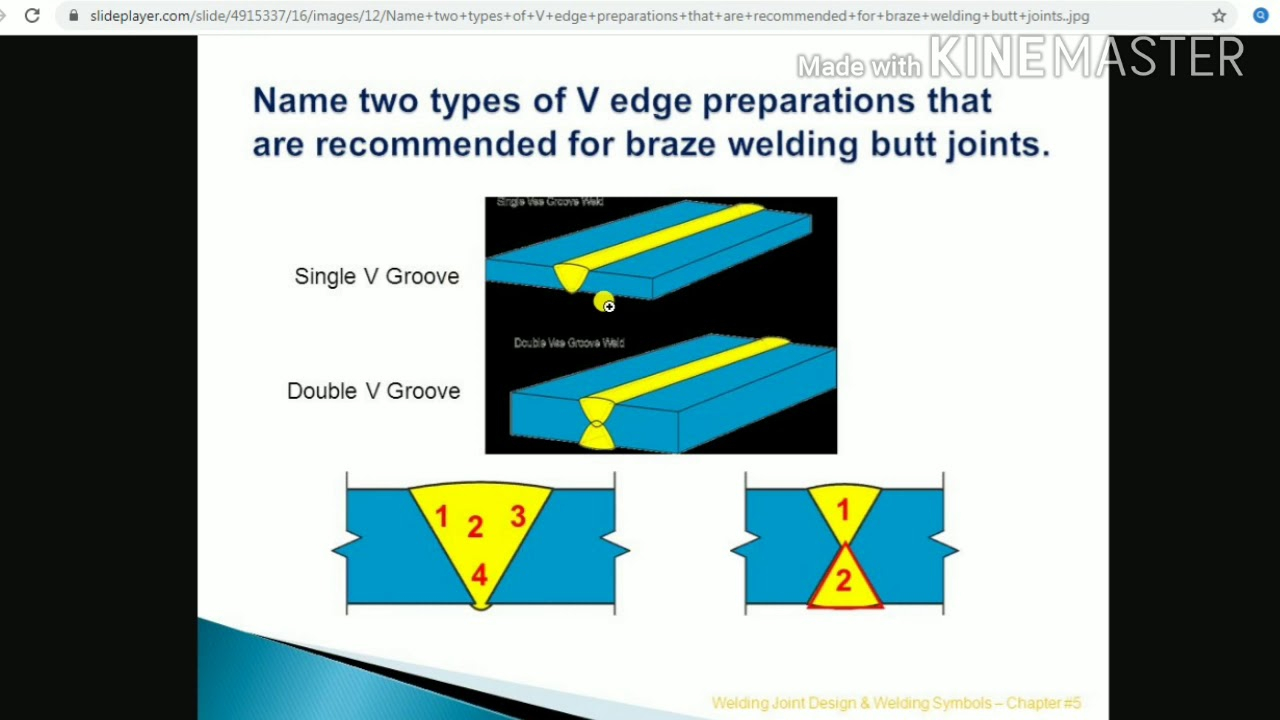
Full penetration, often called complete joint penetration (CJP), means the weld metal extends completely through the thickness of the joined parts. There’s no unfused gap at the root. It’s as if the two pieces have become one solid chunk of steel. This is the gold standard for critical connections. Think moment frames in skyscrapers or the main girders of a bridge. If failure here means collapse, you go full pen. No questions asked.
Partial penetration, or partial joint penetration (PJP), is different. The weld only goes partway through the material thickness. There’s a deliberate unfused portion at the root. Why would anyone want that? Well, it’s cheaper. It requires less prep work, less filler metal, and less time. For non-critical connections, like stiffeners or secondary beams that just need to transfer shear loads, PJP is perfectly fine. It’s about matching the weld strength to the actual demand. Don’t over-engineer it.
But here’s the catch. You can’t just guess. The design drawings specify which type to use. And if they don’t, you need to ask. Because assuming a PJP is strong enough for a tension load is a mistake that can’t be undone once the concrete is poured. The geometry matters too. A square groove might work for thin plates, but thick steel needs a V-groove or U-groove to let the arc reach the bottom. If the torch can’t see the root, the weld won’t penetrate. It’s that simple.
When to Go All the Way: Full Penetration Scenarios
So, when do you bite the bullet and do a full penetration weld? Basically, whenever the joint is subjected to significant tension or fatigue loads. Imagine a crane boom lifting tons of steel. The forces pulling those plates apart are immense. A partial weld might crack at the root under that stress. A full pen weld distributes the stress across the entire thickness. It’s stronger. More reliable.
Fatigue is another big one. Structures that vibrate or experience cyclic loading—like offshore platforms or highway bridges—are prone to fatigue cracks. These cracks love to start at discontinuities. The root of a partial penetration weld is a major discontinuity. It’s a stress concentrator. By welding all the way through, you eliminate that weak spot. In 2026, with infrastructure aging and traffic loads increasing, fatigue resistance is more important than ever.
Also, consider dynamic loads. Earthquakes, blasts, impact. These events create unpredictable forces. A full penetration weld offers ductility. It can deform without breaking. A partial weld might fail brittlely. In seismic zones, building codes are strict. They often mandate CJP welds for primary lateral force-resisting systems. It’s not just best practice; it’s the law. Ignoring it isn’t an option.
There’s also the issue of inspection. Full penetration welds are easier to inspect thoroughly. You can use ultrasonic testing (UT) to check the entire volume of the weld. With partial penetration, the unfused root can mask defects or create confusing signals. If you need 100% confidence in the integrity of the joint, full pen is the way to go. It leaves less room for doubt. And in high-liability projects, certainty is worth the extra cost.
Saving Time and Money: The Case for Partial Penetration
Let’s be real. Full penetration welds are expensive. They require extensive joint preparation. You’re grinding bevels, cleaning roots, and often welding from both sides. That takes time. And time is money. Partial penetration welds, on the other hand, are faster. You might only need a single-sided weld with a smaller groove angle. Less prep, less filler, less labor.
For many applications, this is perfectly acceptable. Take a column base plate. The column sits on the plate, transferring compression loads to the foundation. The welds holding the column to the plate mostly deal with shear and minor bending. They don’t need to resist huge tensile forces. A PJP weld is sufficient. It saves hours of fabrication time without compromising safety. Why pay for a Ferrari engine when a Honda will do the job?
Consider stiffeners on a girder. These plates prevent the web from buckling. They’re not carrying the main load. They’re just providing support. Welding them with full penetration is overkill. It adds unnecessary heat input, which can distort the girder. Distortion means more straightening, more rework, more delays. A partial penetration fillet or groove weld gets the job done cleanly and efficiently.
In 2026, sustainability is also a factor. Less welding means less energy consumption. Less filler metal means less material waste. While it might seem small on a single joint, multiply that by thousands of connections on a large project, and the environmental impact adds up. Choosing PJP where appropriate is a smart, green decision. It’s not just about cutting costs; it’s about being responsible with resources. But remember, this only works if the engineer has specified it. Never downgrade a weld on your own.
The Prep Work Difference: Bevels, Gaps, and Roots
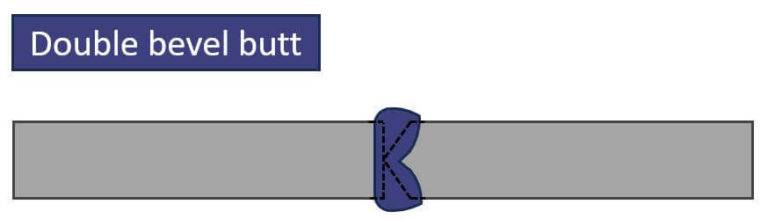
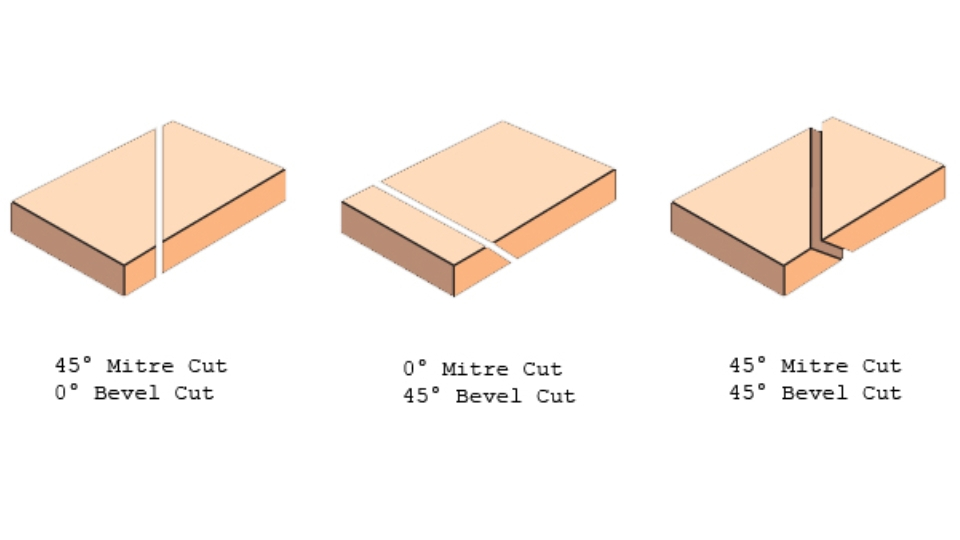
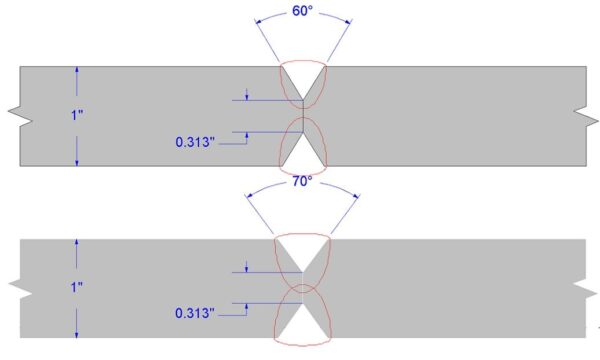
The biggest practical difference between full and partial penetration welds is the preparation. For a full pen weld, you need access to the root. This usually means machining or grinding a bevel on the edges of the plates. Common shapes include V-grooves, U-grooves, and J-grooves. The angle of the bevel depends on the thickness of the material and the welding process. Thicker plates need wider angles to let the electrode reach the bottom.
You also need to manage the root gap. This is the space between the two plates before welding. Too small, and the arc can’t penetrate. Too large, and you risk burning through or excessive distortion. Often, a backing bar is used. This is a piece of steel placed behind the joint to support the molten metal. It ensures a smooth root bead. But backing bars can trap slag or cause fusion issues if not removed properly. In some cases, welders use a consumable insert or weld from the back side to avoid backing bars altogether.
Partial penetration welds are simpler. You might not need a bevel at all for thinner materials. A square groove joint can work. For thicker plates, a smaller bevel angle is sufficient because you’re not trying to reach the root. The key is controlling the depth of fusion. This is often done by limiting the heat input or using specific welding techniques. The goal is to achieve the required throat dimension specified in the drawings. It’s less about reaching the bottom and more about hitting a target depth.
Cleanliness is crucial for both, but especially for full pen. Any rust, oil, or mill scale at the root can cause lack of fusion. This is a serious defect. It creates a plane of weakness inside the weld. For partial pen, surface cleanliness is still important, but the consequences of minor contamination are often less severe since the stress concentrations are lower. Still, good habits matter. A clean joint is a happy joint. Don’t skip the wire brushing.
Inspection and Quality Control Realities
How do you know if the weld is good? That’s the million-dollar question. For full penetration welds, visual inspection is just the start. You need to look underneath the surface. Ultrasonic testing (UT) is the most common method. It sends sound waves through the weld to detect internal flaws like cracks, lack of fusion, or porosity. UT is highly effective for CJP welds because it can scan the entire volume.
Radiographic testing (RT), or X-ray, is another option. It provides a picture of the weld interior. It’s great for detecting voids or inclusions. But it’s slower and involves radiation safety concerns. In 2026, advanced phased array ultrasonic testing (PAUT) is becoming more common. It offers better resolution and faster scanning than traditional UT. It’s particularly useful for complex geometries where standard probes might struggle.
Partial penetration welds are trickier to inspect. The unfused root reflects sound waves, which can interfere with UT signals. It’s hard to distinguish between the intentional lack of fusion and a defect. Visual inspection and magnetic particle testing (MT) or dye penetrant testing (PT) are often used to check for surface cracks. These methods are effective for finding defects at the toe or face of the weld. But they can’t see deep inside.
This is why design clarity is so important. If a weld is specified as PJP, the inspector knows not to look for full fusion. They check for the required throat size and surface quality. If it’s specified as CJP, they expect 100% fusion. Miscommunication here leads to failed inspections and costly rework. Always clarify the acceptance criteria before starting. Know what you’re looking for. And document everything. In case of disputes, your inspection records are your best defense.
So, how do you decide? It comes down to three things: load, cost, and code. First, look at the loads. Is the joint in tension? Does it see fatigue? If yes, go full penetration. Is it mostly in compression or shear? Partial penetration might work. Consult the structural engineer. They’ve calculated the forces. Trust their specs.
Second, consider the cost. Full pen welds cost more. Can the budget handle it? If not, can the design be modified to reduce the number of CJP welds? Maybe some connections can be bolted instead. Or maybe stiffeners can be redesigned to use PJP. Value engineering isn’t about cheaping out; it’s about optimizing. Find the balance between safety and economy.
Third, follow the code. In the US, AWS D1.1 is the standard for structural welding. It has specific rules for qualifying welders, procedures, and inspection for both CJP and PJP welds. Other countries have their own standards, like ISO 5817 or EN 1090. In 2026, these codes are stricter than ever. Compliance isn’t optional. It’s mandatory. Make sure your welding procedure specifications (WPS) are approved for the type of weld you’re doing.
Don’t forget the human element. Talk to your welders. They know what’s practical. A complex full pen joint might be difficult to weld in position. They might suggest a slight design tweak that makes it easier without sacrificing strength. Collaboration is key. Engineers, fabricators, and inspectors need to work together. When everyone understands the why behind the weld, the project runs smoother. Fewer mistakes. Less stress. Better results.
Choosing between full and partial penetration isn’t just a technical checkbox. It’s a strategic decision. It impacts the timeline, the budget, and the long-term performance of the structure. By understanding the strengths and limitations of each, you can make informed choices that keep your project on track. Don’t guess. Don’t assume. Know the difference. And weld with confidence.
[sps_html tag=”img” src=”https://cdn.northcarolinafinearchitecture.com/2026/05/what-is-bevel-machining-benefits-types-applications-intended-for-mastering-bevel-angles-for-stronger-butt-joints-every-time.jpg” alt=”What Is Bevel Machining? Benefits, Types & Applications intended for Mastering Bevel Angles for Stronger Butt Joints Every Time” style=”width: 100%; height: auto;”]
[sps_html tag=”img” src=”https://cdn.northcarolinafinearchitecture.com/2026/05/what-is-a-butt-weld-full-explanation-structural-basics-pertaining-to-mastering-bevel-angles-for-stronger-butt-joints-every-time.jpg” alt=”What Is A Butt Weld? {Full Explanation} - Structural Basics pertaining to Mastering Bevel Angles for Stronger Butt Joints Every Time” style=”width: 100%; height: auto;”]
[sps_html tag=”img” src=”https://cdn.northcarolinafinearchitecture.com/2026/05/what-is-bevel-butt-joint-explain-in-details-step-by-step-procedure-to-intended-for-butt-joint-design.jpg” alt=”What Is Bevel Butt Joint? Explain In Details Step By Step Procedure To … intended for Butt Joint Design” style=”width: 100%; height: auto;”]
[sps_html tag=”img” src=”https://cdn.northcarolinafinearchitecture.com/2026/05/bevel-angle-calculator-at-larry-hinojosa-blog-regarding-butt-joint-design.jpg” alt=”Bevel Angle Calculator At Larry Hinojosa Blog regarding Butt Joint Design” style=”width: 100%; height: auto;”]
[sps_html tag=”img” src=”https://cdn.northcarolinafinearchitecture.com/2026/05/how-to-design-butt-joint-weld-single-double-bevel-youtube-with-butt-joint-design.jpg” alt=”How To Design Butt Joint/Weld (Single & Double Bevel) - Youtube with Butt Joint Design” style=”width: 100%; height: auto;”]