There is a distinct, hollow thud that a poorly built patio makes when you step across it after a heavy spring freeze. It is the sound of shifting aggregate, a silent warning that your outdoor investment is slowly coming unglued. We have all walked across those wobbling, sunken slabs of concrete or misplaced pavers, wondering how a backyard weekend project turned into an annual game of landscape whack-a-mole. Patios are meant to be sanctuaries, not secondary jobs that demand your Saturday mornings with a polymeric sand trowel or a heavy-duty power washer.
The antidote to this endless cycle of patio maintenance isn’t buying more chemical sealants or hiring expensive masonry crews every three years. The secret lies in a brutal, uncompromising commitment to what happens beneath the surface. When you strip away the marketing hype of modern home improvement, a truly great flagstone patio is an exercise in physics, hydrology, and ancient stonecraft. By respecting how water drains, how sub-bases bear weight, and how stone handles thermal expansion, you can engineer an outdoor living space that requires almost nothing from you except the occasional sweep of a broom and a glass of iced tea.
Humanity has paved outdoor rooms with natural stone for millennia, from the basalt-paved roads of the Roman Empire to the irregular, moss-kissed farm terraces of New England. Yet, modern property owners often treat patio installation like laying tile in a bathroom, ignoring the brutal realities of freeze-thaw cycles and restless native soils. True low-maintenance design requires a fundamental shift in perspective: instead of trying to outsmart nature with synthetic glues and impermeable barriers, you must design with nature, allowing water to pass harmlessly through your patio assembly while gravity holds your stones safely in place.
The Geotechnical Reality of Stone Selection and Sub-Base Engineering
The lifespan of a flagstone patio is determined long before the first piece of stone is lifted from the pallet. It starts in the quarry. Not all stones are created equal, and choosing the wrong geological material for your specific climate zone guarantees a lifetime of flaking, cracking, and structural failure. Sandstone, limestone, slate, and quartzite each behave entirely differently when exposed to ultraviolet radiation, driving rain, and sub-zero temperatures. If you live in a region characterized by heavy frost heaves, sedimentary stones with high porosity or heavy clay content will absorb moisture, freeze, expand, and shatter from the inside out within a few short seasons.
Geological composition dictates how a stone handles compression and flexural stress. Quartzite and dense bluestone offer exceptional density and tensile strength, making them ideal choices for high-traffic zones and harsh winters. Conversely, softer limestone and variegated sandstones offer warm, earthy color palettes but require careful thickness selection—never drop below two inches of thickness if you want to eliminate flexural cracking under heavy furniture or foot traffic. When laying out your budget, treat the stone itself as the permanent skin of your landscape; saving a few dollars per square foot on thin, low-grade material is a false economy that will cost you dearly in repairs down the road.
Beneath that stone lies the true engine of longevity: the aggregate base. A low-maintenance patio is entirely dependent on a minimum of four to six inches of compacted crushed stone—typically dense-grade aggregate or ¾-inch minus gravel—sandwiched between a heavy-duty geotextile fabric and a one-inch setting bed of coarse concrete sand or #8 washed chip gravel. This structure acts as a monolithic, self-draining sponge. When water infiltrates your patio joints, it doesn’t pool and freeze beneath the stones; it drops straight through the permeable sub-base layers and dissipates harmlessly into the native subgrade below, entirely neutralizing the hydraulic pressure that causes stones to pop out of alignment.
Designing for Organic Elegance and Structural Stability
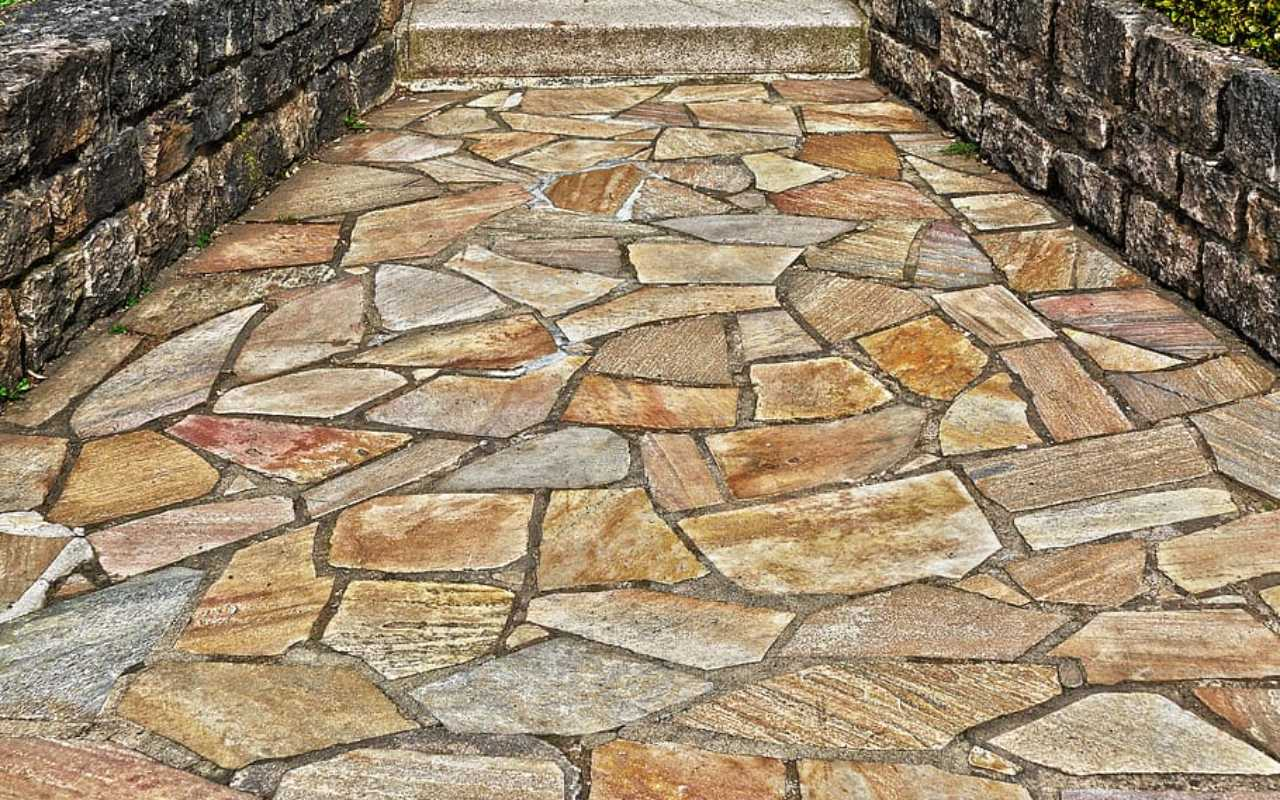
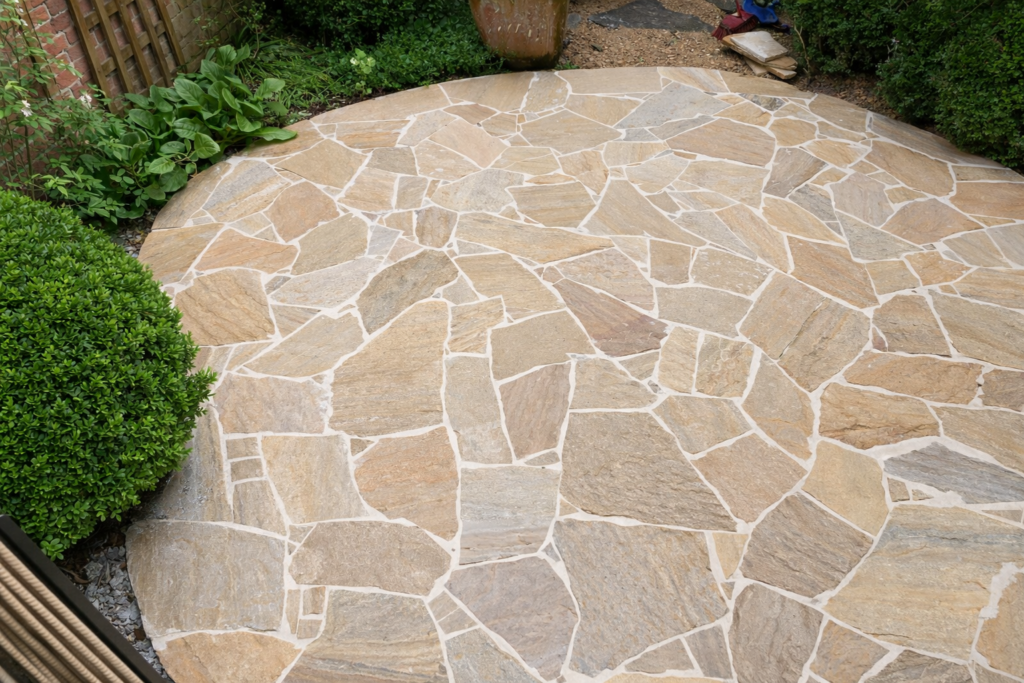
A common design fallacy is that low maintenance means rigid, geometric perfection. Homeowners often spend weeks obsessing over saw-cut edges and razor-thin mortar joints, believing that sealing every microscopic crack will keep weeds at bay. In reality, mortar joints on an exterior patio are ticking time bombs. Temperature swings cause thermal expansion and contraction, which inevitably cracks rigid mortar. Once moisture breaches those microscopic cracks, winter frost turns them into wide chasms, requiring constant chiseling and re-pointing. The ultimate low-maintenance design embraces dry-laid or open-joint construction, utilizing organic spacing filled with creeping ground covers or permeable aggregate.
Laying out your flagstone pattern requires an artistic eye combined with strict logistical discipline. Whether you are using a geometric ashlar pattern with thermal-cut squares and rectangles or a wild, irregular random-flagstone layout, the secret to structural stability lies in the interlocking nature of the joints. Avoid continuous running joints longer than three feet, as these act as natural fault lines for shifting earth. Instead, use "T" joints rather than four-way cross intersections, which anchor each individual stone on at least three sides by its neighbors.
Planning your patio elevations is equally critical for keeping maintenance near zero. Your patio surface must slope away from your home’s foundation at a minimum rate of one-eighth to one-quarter inch per foot. Water is the undisputed enemy of both house foundations and patio sub-bases; getting it to run off the surface naturally prevents standing puddles that stain the stone and breed mosquitoes. Incorporating subtle, graded contours into your landscape design ensures that stormwater is directed toward rain gardens, dry creek beds, or French drains rather than pooling against your seating walls or patio borders.
Step-by-Step Methodology for Building a Generation-Proof Patio
Executing a generational flagstone patio demands patience, physical labor, and strict adherence to professional grading and compaction standards. Rushing the sub-base is the single most common reason DIY patios fail within five years. By following a proven, step-by-step framework, you ensure that every square inch of your patio bears weight evenly and sheds water effortlessly.
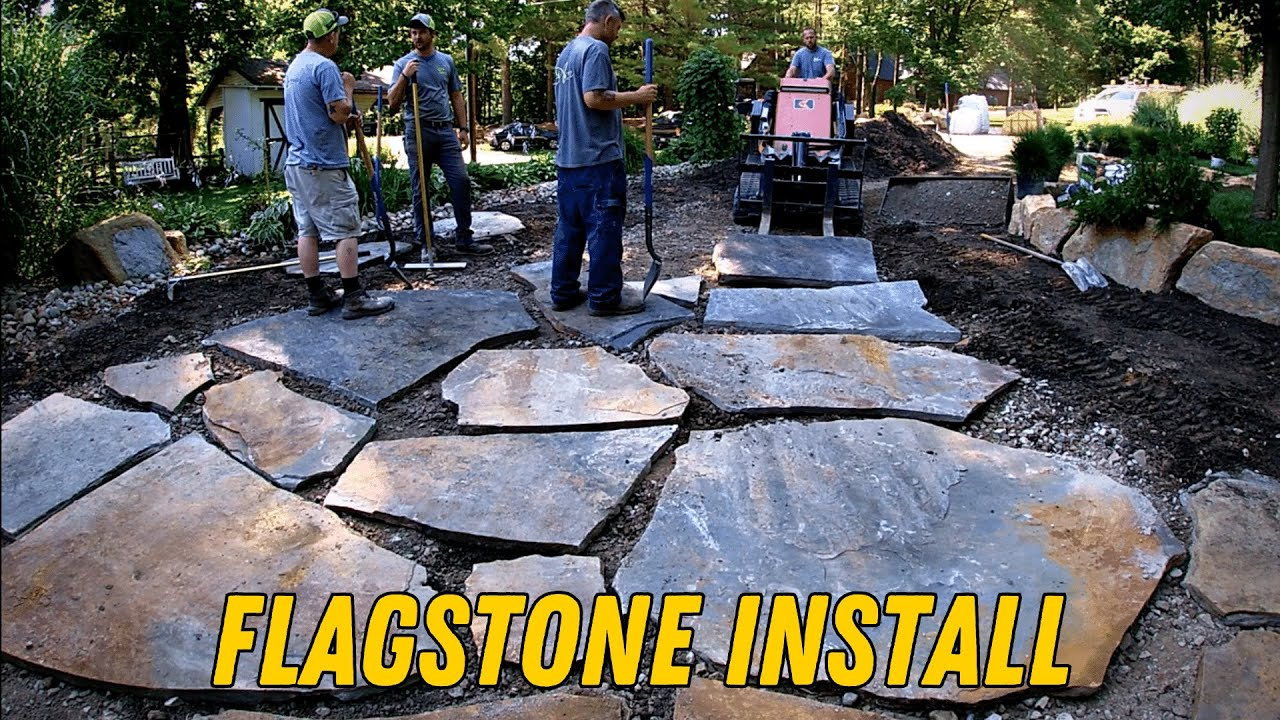
- Step 1 (Excavation and Site Prep): Excavate the entire patio footprint to a depth of 7 to 9 inches below your finished grade, accounting for the thickness of your aggregate base, setting bed, and stone. Compact the native subgrade thoroughly using a heavy plate compactor to eliminate soft spots and prevent future settling.
- Step 2 (Geotextile Layering and Base Installation): Install a commercial-grade woven geotextile fabric across the excavated area to prevent native soil from migrating up into your aggregate base. Spread your crushed stone base in distinct 2-inch lifts, wetting each layer and compacting it meticulously with a mechanical plate compactor until you achieve 98% Proctor density.
- Step 3 (Screeding the Setting Bed): Lay down rigid screed pipes across your compacted base and apply a 1-inch layer of #8 washed limestone chips or coarse masonry sand. Pull a straight board across the pipes to create a completely flat, level bed that matches your precise 1/4-inch per foot drainage slope.
- Step 4 (Stone Placement and Leveling): Carefully select and place each flagstone piece into the setting bed, starting from the outer edges or corners and working inward. Use a rubber mallet to tap each stone firmly into place, checking constantly with a spirit level to ensure a smooth, trip-free surface plane across adjacent stones.
- Step 5 (Joint Filling and Edge Restraints): Install heavy-duty plastic or aluminum landscape edging pinned with 10-inch steel spikes around the perimeter to lock the outer stones in place. Sweep polymeric sand or crushed decomposed granite into the joints, mist lightly to activate binders or settle the aggregate, and let the patio cure for 24 hours before heavy use.
Navigating Common Pitfalls and Field-Tested Workarounds
Even experienced builders occasionally stumble when working with natural stone due to its inherent irregularities. Natural stone varies in thickness from slab to slab—sometimes by as much as an inch within a single pallet. Ignoring these thickness discrepancies during installation will result in a bumpy, frustrating surface that catches broom bristles, trips guests, and creates annoying puddles. A seasoned practitioner knows how to compensate for these variances on the fly without compromising the structural integrity of the base.
Another frequent misstep is improper edge containment. Without rigid perimeter restraints, foot traffic and seasonal ground expansion will slowly push the outer stones outward, causing the entire patio to creep and open up massive gaps in the interior joints. Relying purely on topsoil or mulch to hold the edges of a flagstone patio is a guaranteed recipe for structural collapse. You need commercial-grade aluminum or heavy resin edge restraints buried beneath the turf line, or a hidden concrete collar poured beneath the perimeter stones.
Water management is another area where shortcuts lead to long-term headaches. Homeowners often grade their patios flat because they fear losing a level dining surface, but a completely flat patio is a stagnant pond in the making. Furthermore, failing to account for roof runoff or downspouts near the patio perimeter will quickly wash out your setting bed. Always direct roof water far away from the patio zone using underground corrugated pipes before you begin shaping your patio grades.
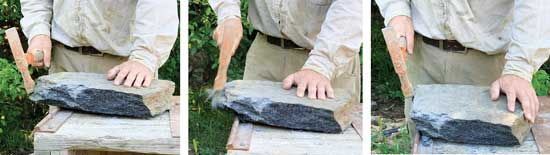
- Pitfall 1 (Thickness Variations): When stones vary wildly in thickness, do not try to force them onto a uniform sand bed. Instead, butter the back of thin stones with a strong mortar mix or add extra bedding aggregate beneath shallow spots to bring the surface flush with neighboring slabs.
- Pitfall 2 (Weed Growth in Joints): Avoid standard topsoil in open stone joints, which turns into a nursery for weed seeds. Use polymeric sand, crushed decomposed granite, or plant tight-knit creeping ground covers like creeping thyme or blue star creeper that outcompete weeds naturally.
- Pitfall 3 (Patio Creep and Separation): Never skip commercial edge restraints. Secure heavy-duty metal or plastic edging with 10-inch steel spikes driven every 12 inches through the compacted base aggregate to lock the perimeter in place permanently.
- Pitfall 4 (Surface Staining and Efflorescence): Do not pressure wash natural stone on high settings, as this strips the stone’s natural face, opens its pores, and forces water deep into the bedding layers. Use a gentle garden hose with a soft bristle brush and pH-neutral stone cleaner.
- Pitfall 5 (Frost Heaving and Shifting): If your patio develops localized sunken spots after a harsh winter, lift the affected stones, add fresh base aggregate, re-compact, and reset the stone rather than trying to shim it from above.
The Broader Economic and Environmental Impact of Sustainable Stonework
Investing in a high-end, low-maintenance flagstone patio is more than just an aesthetic upgrade for your backyard—it is an exercise in ecological responsibility and long-term financial common sense. In an era dominated by poured concrete slabs that crack beyond repair after a decade, natural stone is a renewable, indefinitely durable material. When a concrete patio fails, breaking it up, hauling it to a landfill, and pouring a new one generates massive carbon emissions and consumes significant financial resources. A flagstone patio, by contrast, can last fifty to over one hundred years under ideal conditions, with individual stones easily lifted, cleaned, and reset if necessary.
From an environmental standpoint, traditional impervious concrete and asphalt surfaces disrupt the natural water cycle, exacerbating urban runoff and overloading municipal stormwater systems. A dry-laid flagstone patio acts as a permeable sponge, allowing rainwater to recharge local groundwater aquifers directly beneath your yard. By choosing joint materials like decomposed granite or planting living ground covers between the stones, you transform an otherwise dead surface into a micro-ecosystem that supports beneficial pollinators, reduces local ambient temperatures through natural evaporation, and enhances overall biodiversity in your landscape.
Economically, the initial capital expenditure of natural stone installation is frequently offset by its zero-replacement lifecycle. While poured concrete or composite decking materials degrade, fade, and require intensive staining, sealing, or total replacement every ten to fifteen years, natural stone actually improves with age. The weathering process softens the color profiles, adds rich natural patinas, and embeds the patio deeper into the surrounding garden landscape. Property appraisers and real estate professionals consistently recognize natural stone hardscaping as a high-return architectural investment that dramatically elevates overall curb appeal and resale value.
Synthesizing Best Practices for a Lifetime of Outdoor Enjoyment
Designing a patio that lasts generations requires a disciplined synthesis of timeless design principles, rigorous civil engineering, and respect for material science. You cannot outsmart poor base preparation with clever styling, nor can you mask cheap stone with expensive sealants. The journey to a truly low-maintenance outdoor living space starts with selecting a dense, climate-appropriate stone, moves through the meticulous installation of a multi-layered, self-draining aggregate base, and culminates in a dry-laid or flexibly jointed surface that breathes with the changing seasons.
By stepping away from high-maintenance mortared joints and synthetic surface coatings, you free yourself from the endless weekend chores that turn backyard retreats into obligations. A properly engineered flagstone patio demands almost nothing of your time once the final stone is tapped into place. It simply invites you to step outside, feel the cool, solid weight of the earth beneath your feet, and enjoy a space built to outlast the trends of any single decade.
As you stand back to survey your completed patio layout—watching the afternoon sunlight catch the iron oxides in the bluestone or the soft textures of the quartz—you realize that you have built something permanent. In a modern consumer culture dominated by disposable products and temporary fixes, creating an outdoor space designed to endure for generations is a deeply grounding act. It is a physical legacy carved in stone, waiting quietly in your backyard for family dinners, quiet morning coffees, and decades of changing seasons.
The future of your outdoor space is now entirely secure, resting comfortably on a foundation of compacted gravel and centuries-old geological stability. Armed with the right preparation techniques, material knowledge, and respect for natural drainage, you have transformed raw earth into an enduring sanctuary. All that remains is to open the back door, step across the threshold of your new stone oasis, and let the rest of the world fade away.