We spend hours picking out paint swatches. We agonize over kitchen islands. We scroll endlessly for the perfect sofa. But then we walk right past the thing that actually says "hello" to the world. The front gate. It sits there, often rusted, sometimes an afterthought, usually ignored until it squeaks or breaks. That’s a shame. Really, it is. Because in 2026, the narrative around home design has shifted. It’s no longer just about what’s inside. It’s about the transition. The threshold. The moment you leave the chaotic street and enter your sanctuary.
Think about it. When was the last time you truly looked at your gate? Not just glanced, but looked? If you’re like most people, probably never. Yet, this single element does more heavy lifting than almost any other part of your exterior. It frames your property. It sets the tone. Is your home a fortress? A cottage? A modern minimalist box? The gate tells the story before you even unlock the front door. And lately, designers and homeowners alike are waking up to this. They’re realizing that a well-chosen gate isn’t just a barrier. It’s an invitation. Or a gentle warning. Depending on what you want, of course.
The First Handshake of Your Home
Your front gate is basically the first handshake you offer to a visitor. Or a delivery driver. Or a potential buyer. It’s the initial vibe check. In 2026, curb appeal isn’t just about manicured lawns anymore. It’s about cohesion. A stunning modern facade looks disjointed if it’s paired with a flimsy, chain-link relic from the nineties. It creates cognitive dissonance. You know that feeling when something just feels… off? That’s what a mismatched gate does.
Conversely, think of the impact of a solid, well-designed entrance. Maybe it’s a sleek, horizontal slat design in matte black aluminum. It whispers "modern" and "clean." Or perhaps it’s a warm, cedar wood gate with iron accents. That says "welcoming" and "traditional." It hints at the personality inside without shouting. According to recent trends, homes with cohesive exterior designs—where the gate matches the architectural language of the house—are perceived as higher value. It’s not just vanity. It’s psychology. People feel safer. More curious. More impressed. Before they’ve even stepped on the porch.
And let’s be real. We all judge books by their covers. It’s human nature. When someone pulls up to your house, their brain makes a snap decision about what to expect. A broken latch or a sagging hinge suggests neglect. A sturdy, beautiful gate suggests care. It tells the world that you pay attention to details. That you value your space. It’s a subtle signal, but it’s powerful. It sets the stage for everything that follows. So why leave it to chance? Why let the most visible part of your property be the least considered?
Security Meets Style in 2026
Gone are the days when security meant ugly bars and intimidating spikes. In 2026, safety and beauty are best friends. They’ve moved in together. Modern gates are engineered to be tough as nails but look like art pieces. We’re talking about materials that resist weathering, tampering, and time. Powder-coated steel, composite woods, and reinforced aluminum are leading the charge. They don’t rust. They don’t warp. They just stay looking good, year after year.
But it’s not just about the material. It’s about the tech. Smart gates are no longer a futuristic concept. They’re here. And they’re surprisingly accessible. Imagine a gate that opens automatically when your car approaches, recognizing your license plate. Or one that sends a notification to your phone when someone enters the code. You can grant temporary access to guests or service providers without ever leaving your couch. It’s convenience wrapped in security. And the best part? You don’t have to see the wires or the motors. The technology is hidden, seamless.
This balance is crucial. A gate that looks like a prison wall might keep bad guys out, but it also keeps the warmth out. It makes your home feel cold. Uninviting. The goal in 2026 is "fortress-like security with architectural beauty," as some experts put it. You want to feel safe, yes. But you also want to feel proud. You want your neighbors to admire the design, not fear it. That’s the sweet spot. High-tech locks and sensors on the inside, elegant lines and textures on the outside. It’s the best of both worlds. And honestly? It’s easier to achieve than you might think.
Material Matters: Beyond Wood and Iron
For decades, the choice was simple. Wood or wrought iron. Maybe vinyl if you were feeling fancy. Today? The menu is vast. And confusing. But don’t worry. It’s not as complicated as it seems. The key is matching the material to your lifestyle and your home’s style. Let’s break it down. Wood is classic. It’s warm. It smells nice. But it needs love. Staining, sealing, fixing rot. If you hate maintenance, wood might make you cry. Unless you go for high-end hardwoods or treated composites that mimic the look without the hassle.
Then there’s metal. Aluminum is huge right now. Why? Because it’s light, strong, and doesn’t rust. You can powder coat it in any color. Matte black is trendy. So is bronze. Steel is heavier, more industrial. It’s great for a modern, bold look. But it can rust if the coating chips. Iron is timeless. Wrought iron has that intricate, old-world charm. But it’s expensive. And heavy. And it needs painting. So, weigh the pros and cons. What fits your budget? What fits your patience level?
Don’t sleep on mixed materials, either. Combining wood slats with metal frames is a big trend in 2026. It adds texture. Depth. Interest. You get the warmth of wood and the strength of metal. It’s visually striking. Or try stone pillars with a simple metal gate. The contrast is beautiful. It grounds the structure. Makes it feel permanent. Just remember, the material dictates the maintenance. Be honest with yourself. Do you want to spend your weekends sanding and staining? Or do you want to hose it down and forget it? There’s no wrong answer. Just the right answer for you.
The Tech-Integrated Entrance
Let’s talk gadgets. Because in 2026, your gate is likely smarter than your fridge. Okay, maybe not. But it’s close. Integration is the name of the game. Your gate shouldn’t be an isolated object. It should talk to your home system. Video intercoms built into the gate posts are standard now. You can see who’s there, talk to them, and open the gate from anywhere in the world. Did the pizza guy arrive? Let him in. Is it a stranger? Ignore them. It’s control. Pure and simple.
Lighting is another huge factor. LED strips integrated into the gate design aren’t just for show. They’re for safety. They guide you in at night. They highlight the architecture. And they deter intruders. Motion-sensor lights are smart. They save energy. But ambient lighting? That’s for mood. Imagine a soft glow along the bottom of your gate as you pull into the driveway. It feels luxurious. Welcoming. Like a red carpet, but for cars. Plus, it helps you avoid hitting the mailbox. Always a bonus.
Automation is the cherry on top. Motorized gates are quieter and smoother than ever. Solar-powered options are gaining traction too. They’re eco-friendly. Cost-effective. No wiring needed. Just slap a panel on top, and you’re good to go. And let’s not forget access control. Keypads, fingerprint scanners, app-based entry. The options are endless. The point is, technology should make your life easier, not harder. It should disappear into the background. You shouldn’t have to think about how to open your gate. It should just… open. Effortlessly. That’s the magic of good design.
Scale and Proportion: Getting It Right
Here’s where many people mess up. They pick a gate that’s too big or too small. It’s like wearing shoes that don’t fit. You notice it immediately. Even if you can’t say why. Proportion matters. A massive, imposing gate on a tiny cottage looks ridiculous. It overwhelms the house. Swallows it whole. Conversely, a dainty, delicate gate on a large estate looks cheap. Insigificant. It gets lost. The scale needs to match the architecture. And the landscape.
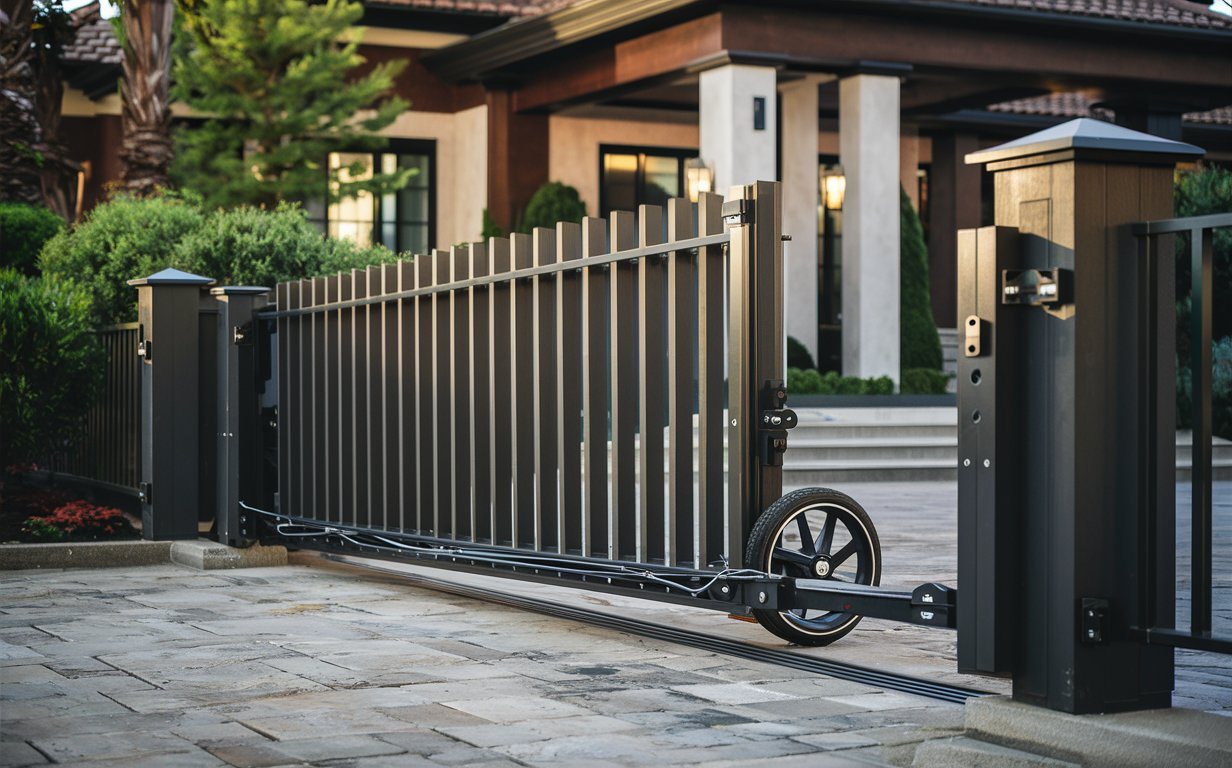
Consider the driveway width. Is it a single lane? Double? The gate needs to accommodate traffic flow. Don’t make it so wide that it’s cumbersome to open. Or so narrow that you scratch your mirrors every time. Think about the swing radius too. Does it hit the sidewalk? The garden? Plan for movement. Space is precious. Use it wisely. Sliding gates are great for tight spaces. Swing gates need room to breathe. Know your constraints. Work with them, not against them.
And don’t forget the vertical element. Height matters. Too low, and it offers no privacy or security. Too high, and it feels like a wall. Find the balance. Six feet is standard for privacy. Four feet is friendly. Open. Inviting. Mix heights if you want. Solid panels at the bottom for privacy. Open slats at the top for air and light. It breaks up the visual mass. Makes the gate feel lighter. Less imposing. It’s all about harmony. The gate should feel like it belongs. Like it grew there. Not like it was dropped in from another planet.
Let’s be honest. Nobody likes chores. But ignoring your gate is a recipe for disaster. Rust. Rot. Sagging. It happens. Fast. Especially if you live in a humid or coastal area. Salt air eats metal. Moisture rots wood. So, pick materials that fight back. Aluminum is great for coastlines. Composite wood resists rot. Stainless steel handles humidity. Choose wisely. Your future self will thank you.
Regular checks are easy. Once a month, just look at it. Are the hinges loose? Tighten them. Is the paint chipping? Touch it up. Is there debris in the track? Clean it out. Small tasks prevent big problems. It’s like brushing your teeth. Do it regularly, and you avoid pain later. Lubricate moving parts. Keep sensors clean. Test the auto-reverse feature. Safety first. Always. It takes five minutes. Maybe less.
Think long-term. A cheap gate might save money now. But it’ll cost you in repairs. Or replacement. In three years. Invest in quality. It pays off. A well-built gate lasts decades. It becomes part of the home’s history. It ages gracefully. Wood turns silver. Metal develops a patina. It gains character. But only if it’s cared for. Neglect leads to decay. And decay kills curb appeal. Faster than you’d think. So, respect the gate. Treat it well. And it’ll treat you right. For years to come.
So, there you have it. The front gate. It’s not just a piece of metal or wood. It’s a statement. A shield. A welcome mat. In 2026, it’s time to give it the attention it deserves. Stop treating it like an afterthought. Start seeing it as a key design element. Choose materials that last. Tech that helps. Styles that speak. Make it yours. Make it count. Because first impressions? They really do matter. And your gate is the first thing people see. Make it a good one.
[sps_html tag=”img” src=”https://cdn.northcarolinafinearchitecture.com/2026/05/small-space-big-impact-clever-renovation-tips-for-compact-homes-within-gate-design.jpg” alt=”Small Space, Big Impact: Clever Renovation Tips For Compact Homes within Gate Design” style=”width: 100%; height: auto;”]
[sps_html tag=”img” src=”https://cdn.northcarolinafinearchitecture.com/2026/05/10-creative-gate-ideas-to-enhance-your-homes-exterior-design-foyr-for-small-spaces-big-impact-clever-gate-solutions-for-compact-city-homes.jpg” alt=”10 Creative Gate Ideas To Enhance Your Home's Exterior Design | Foyr for Small Spaces Big Impact Clever Gate Solutions for Compact City Homes” style=”width: 100%; height: auto;”]
[sps_html tag=”img” src=”https://cdn.northcarolinafinearchitecture.com/2026/05/small-space-big-impact-custom-renovations-for-compact-homes-oakwood-for-small-spaces-big-impact-clever-gate-solutions-for-compact-city-homes.jpg” alt=”Small Space, Big Impact: Custom Renovations For Compact Homes - Oakwood … for Small Spaces Big Impact Clever Gate Solutions for Compact City Homes” style=”width: 100%; height: auto;”]
[sps_html tag=”img” src=”https://cdn.northcarolinafinearchitecture.com/2026/05/yardstick-infras-interior-solutions-for-compact-homes-with-regard-to-small-spaces-big-impact-clever-gate-solutions-for-compact-city-homes.jpg” alt=”Yardstick Infra’s Interior Solutions For Compact Homes with regard to Small Spaces Big Impact Clever Gate Solutions for Compact City Homes” style=”width: 100%; height: auto;”]
[sps_html tag=”img” src=”https://cdn.northcarolinafinearchitecture.com/2026/05/small-spaces-big-impact-interior-design-tips-for-compact-homes-kern-for-small-spaces-big-impact-clever-gate-solutions-for-compact-city-homes.jpg” alt=”Small Spaces, Big Impact: Interior Design Tips For Compact Homes – Kern … for Small Spaces Big Impact Clever Gate Solutions for Compact City Homes” style=”width: 100%; height: auto;”]