Have you ever looked at your monthly electric bill and just sighed. Or maybe you’ve watched the news, seen another extreme weather event, and wondered how safe your house really is against the elements. You are definitely not alone. In 2026, the idea of a home isn’t just about having a roof over your head anymore; it’s about creating a personal sanctuary that takes care of you while taking care of the planet.
Building a self-sustaining eco-home used to mean living in a cramped cabin in the middle of nowhere without internet or hot water. Thankfully, times have changed. Today, going off-grid is actually quite luxurious, blending cutting-edge tech with ancient building wisdom. Let’s dive into how you can design a space that generates its own power, catches its own water, and stands strong for decades to come.
Smart Design Starts with the Sun
Before you even buy a single solar panel, you have to look at how your house sits on the land. This is what architects call passive solar design, and it’s completely free energy. By simply angling your home to face the sun—south if you live in the northern hemisphere—you can heat your entire living space during cold winter months without turning on a furnace.
It’s all about placement and materials. High-mass materials like concrete floors or stone walls act like natural batteries, soaking up daytime heat and slowly releasing it when the temperature drops at night. Combine this with deep roof overhangs that block out the harsh summer sun, and you’ve solved half your heating and cooling problems before even touching the thermostat.
Powering Your Life with Modern Tech
Once your house layout is locked in, it’s time to talk about electricity. Solar panels are still the reigning kings of green energy in 2026, but the tech has gotten incredibly efficient. Micro-inverters and next-gen solar shingles mean you can capture energy even on cloudy or overcast days, making renewable power reliable almost anywhere.
But panels are only half the battle; you need a place to store that energy for when the sun goes down. Modern home battery storage systems have become much smaller, safer, and cheaper over the last couple of years. These smart batteries talk directly to your appliances, ensuring your fridge and well pump keep running smoothly without wasting a single watt.
Catching and Reusing Every Drop
Water is quickly becoming our most precious asset, and a truly self-sustaining home treats it like liquid gold. A robust rainwater collection system is the backbone of off-grid living. Rain falls on your roof, channels through gutters, passes through a series of filters, and fills up large underground storage tanks to keep your water cool and clean.
Inside the house, we separate this water into two categories: greywater and blackwater. Greywater from your shower and washing machine doesn’t need to go down the sewer; instead, you can route it through a simple filtration setup to water your garden or flush your toilets. It’s a simple loop that cuts your total water usage almost in half.
Building Materials That Breathe
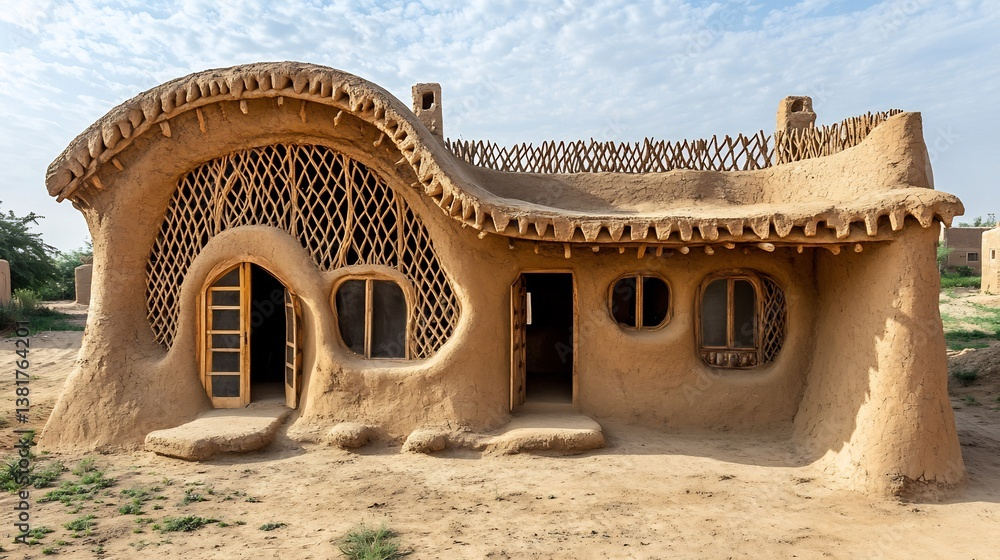
What your house is made of matters just as much as how it runs. Traditional construction relies heavily on plastics, chemical-laden insulation, and toxic glues that ruin indoor air quality. Eco-homes in 2026 favor natural, breathable materials like rammed earth, hempcrete, and sustainably harvested timber.
Hempcrete is especially amazing because it is literally carbon-negative—meaning it traps more carbon dioxide than it takes to manufacture. It regulates indoor moisture naturally, resists mold, and provides incredible insulation. Living inside walls made of natural elements just feels different; the air is cleaner, and the rooms feel remarkably quiet.
A home isn’t fully self-sustaining if you are still entirely dependent on distant supermarkets for your meals. Integrating a food production system right into your living space is the ultimate step toward true independence. This doesn’t mean