The coffee maker clicks on at 6:00 AM, and the mechanical rumble travels straight up the drywall, echoing through the master hallway like an amplified train. Downstairs, the refrigerator hums a low, persistent drone that weaves invisibly through the open-concept living area, merging with the clatter of silverware and the tinny audio of a tablet video. By midday, you have a dull headache, though you cannot quite trace its source. You blame the screen time, the long work queue, or the changing weather. You rarely blame the room itself.
Most homeowners treat interior space purely as a visual canvas. We agonize over paint swatches, floor tile grout lines, and the precise placement of a sectional sofa, completely ignoring the invisible geometry that dictates how every decibel behaves. Sound is a physical force, a series of invisible pressure waves crashing against hard boundaries, bouncing around, and compounding into an exhausting sonic soup. We live inside giant echo chambers of our own making, surrounded by quartz countertops, polished concrete floors, and expansive glass walls that reflect sound waves up to ninety-five percent of the time.
Step into an acoustics laboratory, and the priorities flip entirely. Researchers who spend their lives studying structural vibration, sound transmission loss, and reverberation times look at our modern dream homes with a mixture of awe and pity. They see environments engineered for maximum auditory stress. The average domestic space is a disaster of hard, parallel surfaces that trap and multiply noise. The good news is that understanding how sound moves requires no engineering degree, just a fundamental shift in how you perceive the invisible architecture of your home.
The modern domestic acoustic crisis stems from a massive design mismatch. For decades, home construction prioritized open-plan living, minimalist aesthetics, and hard-surface durability over human sensory comfort. Architectural trends favored high vaulted ceilings, oversized sliding glass doors, and luxury vinyl plank flooring laid directly over subfloors. While these choices look stunning on digital design boards, they create a nightmare for the human nervous system. Every footstep, every slammed door, and every spoken word ricochets through the dwelling with zero structural mercy.
Acoustic researchers measure this phenomenon using metrics like Reverberation Time (RT60)—the duration it takes for sound to decay by 60 decibels after a source stops. In a well-designed room, RT60 sits comfortably around 0.4 to 0.6 seconds. In a contemporary open-concept house with hardwood floors and bare walls, that number can skyrocket, causing speech intelligibility to plummet and background noise to compound. When sound waves bounce endlessly between parallel walls, they create standing waves and flutter echoes that force our brains to work overtime just to hold a conversation across a kitchen island.
Compounding the problem is the changing nature of home construction materials. Lightweight framing, thin drywall, and engineered wood joists offer far less mass than old-growth timber and plaster-and-lath walls of the past. Mass is the ultimate enemy of sound transmission. When a wall lacks mass, low-frequency sounds—like the bass from a home theater, a passing truck outside, or the heavy thud of a washing machine spin cycle—pass right through structural barriers as if they were made of paper. Homeowners spend fortunes on smart home gadgets and air purifiers, yet suffer daily from acoustic pollution that elevates cortisol levels and disrupts sleep architecture without their conscious realization.
The Physics of Domestic Noise and Why Hard Surfaces Destroy Peace
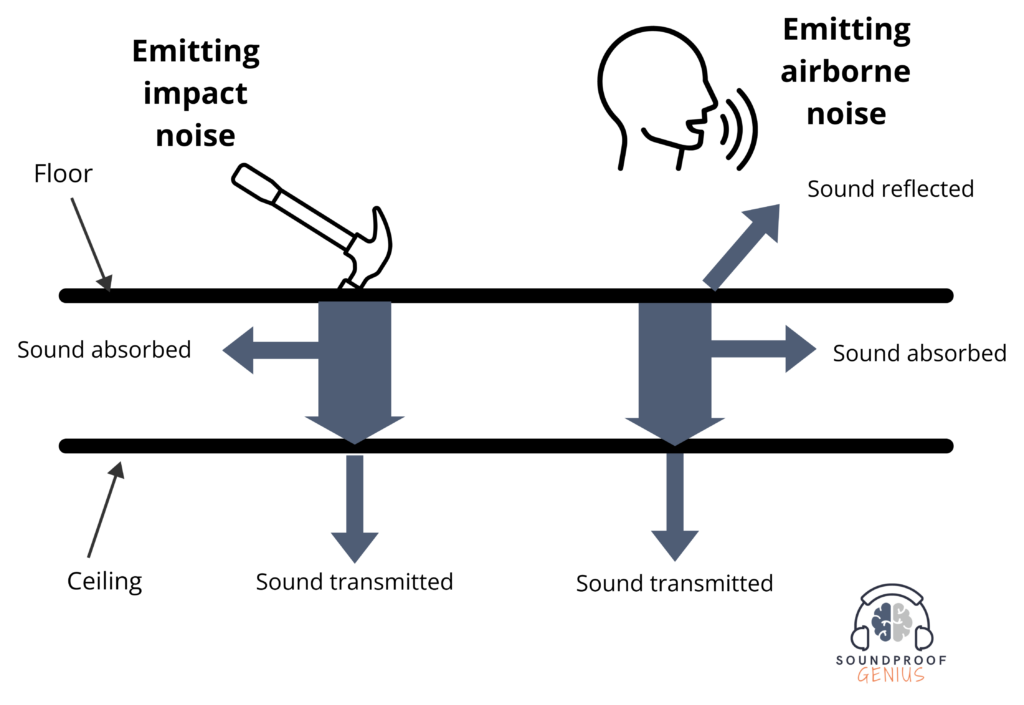
To master indoor acoustics, you must stop thinking of sound as music or voices and start thinking of it as kinetic energy. When a sound is generated, it radiates outward in spherical waves, carrying mechanical energy through the air. Upon striking a surface, this energy must go somewhere. It is either reflected back into the room, transmitted through the material to the space beyond, or converted into microscopic amounts of heat through friction. Hard, dense materials like glass, concrete, stone, and rigid drywall are terrible at energy conversion. They act as acoustic mirrors, reflecting upwards of ninety percent of the wave energy right back into the living space.
This constant reflection creates a build-up of ambient sound energy known as the reverberant field. In a reverberant room, you do not just hear the direct sound coming from a person speaking across the table; you hear their voice bounced off the ceiling, the floor, the back wall, and the refrigerator door, arriving at your ears milliseconds later. Your brain must instantly filter out these overlapping reflections to understand speech—a cognitive load known as the "cocktail party effect." When your home forces your brain to perform this filtering task constantly, it induces mental fatigue.
Equally important is the distinction between airborne sound and structure-borne sound. Airborne sound waves travel through the air and can be blocked by adding mass and sealing air gaps. Structure-borne sound, however, is mechanical vibration traveling directly through the framing of the house. When someone walks heavily on an upper-level floor, their footfall excites the joists, turning the entire ceiling assembly below into a giant loudspeaker diaphragm. No amount of decorative wall art will stop a structure-borne vibration; it requires decoupling—physically separating the finished surface from the structural framing using resilient channels or specialized clips.
Understanding these foundational principles changes how you evaluate your living environment. You begin to notice that a room does not feel loud simply because people are being noisy; it feels loud because the room has nowhere for the acoustic energy to go. By recognizing that sound energy must be absorbed, deflected, or blocked, you stop guessing at solutions and start targeting the exact physical mechanisms causing your domestic acoustic distress.
Differentiating Between Sound Absorption and Sound Isolation
One of the most common misconceptions among homeowners is that hanging egg-crate foam or plush blankets on a wall will block noise from traveling into the next room. This confusion stems from conflating sound absorption with sound isolation—two entirely different branches of acoustic engineering that utilize opposite physics. Confusing the two leads to wasted money, ruined interior aesthetics, and zero reduction in unwanted noise.
Sound absorption is designed to control what happens inside a single room. Materials like dense fiberglass batts, mineral wool, porous acoustic panels, and heavy fabrics are absorbers. Their job is to catch sound waves as they travel through the air, forcing air molecules to rub against the internal fibers of the material and convert that kinetic energy into tiny amounts of heat. Absorbers reduce echo, shorten reverberation time, and make a room feel acoustically dead or comfortable. However, sound waves pass right through lightweight absorbers with ease. A porous acoustic panel hung on a thin hollow-core door will do almost nothing to stop the sound of a television playing in the hallway.
Sound isolation, conversely, is designed to stop sound from traveling between spaces. Isolation relies on three primary principles: mass, damping, and decoupling. If you want to stop sound from entering a home office, you need massive barriers (such as multiple layers of heavy drywall or mass-loaded vinyl), dampening compounds that dissipate vibrational energy between layers, and decoupled framing that prevents sound waves from bridging the gap from one side of a wall to the other. Isolation keeps outside noise out and private conversations in.
Recognizing this dichotomy prevents costly mistakes. If your problem is excessive echo during dinner parties, you need acoustic absorption. If your problem is hearing your teenager practice the electric guitar through the floorboards, you need sound isolation. Researchers emphasize that treating a room without diagnosing whether you need to manage internal reflections or block transmission vectors is like taking a painkiller without knowing the source of your ache—it might mask the symptom temporarily, but it solves nothing.
Step-by-Step Practical Implementation Guide for Home Acoustic Optimization
Achieving a balanced acoustic environment does not require tearing down your home’s framing. By following a structured, methodical approach, you can systematically upgrade your home’s sound profile room by room.
- Step 1 (Acoustic Audit and Mapping): Walk through your home during peak hours and identify your primary acoustic pain points. Note which rooms have excessive flutter echo by clapping your hands sharply. Identify noise transmission paths, such as hollow doors, unsealed door sweeps, or rattling HVAC vents, and document whether your primary issues are internal reverberation or external noise intrusion.
- Step 2 (Treating First-Reflection Points): In living areas, home offices, and media rooms, locate the primary reflection points on your walls and ceiling—the exact spots where sound bounces off a surface on its way from the speaker or person speaking to your ears. Mount fabric-wrapped, high-density mineral wool or fiberglass acoustic panels (at least two inches thick) at these precise locations to instantly clear up speech intelligibility.
- Step 3 (Soft Furnishing and Boundary Interventions): Mitigate hard boundary reflections without installing studio-grade treatments by deploying soft furnishings strategically. Install heavy-weave draperies with full folds over large windows, lay down thick wool rugs with dense felt underlays over hardwood floors, and introduce upholstered furniture with organic fabrics rather than slick leather or vinyl.
- Step 4 (Airtight Sealing and Door Upgrades): Address the weakest links in your interior sound barriers by upgrading hollow-core doors to solid-core wood or MDF alternatives. Install heavy-duty perimeter rubber gaskets and automatic drop-seals at the bottom of bedroom and office doors to eliminate the gaps where sound leaks freely between rooms.
- Step 5 (Decoupling and Mechanical Isolation): For stubborn vibration and noise issues, employ advanced isolation techniques. Place rubber vibration-isolation pads under washing machines, subwoofers, and HVAC compressors, and decouple home theater stud walls using resilient sound isolation clips and hat channels to prevent structural rattle from bleeding into adjacent living spaces.
Common Pitfalls, Acoustic Myths, and Field-Tested Workarounds
The consumer market is flooded with quick-fix acoustic products that promise recording-studio silence with minimal effort. Unfortunately, much of this marketing relies on pseudoscience, leaving homeowners frustrated and out of pocket. Understanding these common pitfalls saves time, money, and structural integrity.
- Pitfall 1 (Buying Thin Foam Panels): Many homeowners purchase cheap, one-inch-thick acoustic foam tiles online, slap them on walls, and wonder why the room still echoes. Thin foam only absorbs high-frequency sounds, leaving mid and low frequencies completely unmitigated, resulting in a muddy, unbalanced acoustic profile. Workaround: Invest in minimum two-inch-thick rigid fiberglass (such as Owens Corning 703) or Roxul rockwool panels wrapped in acoustically transparent fabric, which absorb a much wider, more natural spectrum of frequencies.
- Pitfall 2 (Ignoring Low-Frequency Bass Buildup): Homeowners often place rectangular acoustic panels flat against walls, assuming total coverage equals better sound control. However, low-frequency sound waves pool heavily in room corners, creating uneven bass nodes that muddy speech and music. Workaround: Install thick porous bass traps specifically in the vertical and horizontal corners of the room where sound pressure accumulates most intensely.
- Pitfall 3 (Relying Solely on Bookshelves as Diffusers): While loaded bookshelves scatter sound waves and provide mild diffusion, packed paperbacks act as unpredictable, uneven scatterers that rarely cover the frequency ranges needed for true acoustic balance. Workaround: Combine bookshelves with dedicated absorption panels behind or between shelves, or use mathematical quadratic residue diffusers designed specifically for acoustic treatment.
- Pitfall 4 (Neglecting Flanking Paths): Homeowners frequently spend thousands soundproofing a shared wall, only to find the noise still penetrates easily. Sound travels like water; if there are electrical outlets cut back-to-back, unsealed ductwork, or hollow gaps at the ceiling line, sound will bypass the wall entirely. Workaround: Seal all electrical boxes with acoustic putty pads, offset outlet locations during remodeling, and ensure sound paths through ceiling plenums and return air ducts are properly baffled.
- Pitfall 5 (Over-Deadening the Space): In an effort to eliminate echo, some DIYers cover every square inch of wall and ceiling with heavy absorption materials, creating an unnaturally dead, oppressive room that feels airless and uncomfortable to inhabit. Workaround: Aim for a balanced acoustic ratio by treating roughly 20 to 30 percent of total room surface area, leaving some bare walls and hard boundaries to preserve natural liveness and room warmth.
Holistic Perspectives, Wellness, and the Long-Term Value of Acoustic Design
Acoustic comfort is not merely an aesthetic luxury or a convenience for audiophiles; it is a profound public health issue that directly impacts human physiology. Chronic exposure to low-level environmental noise—such as traffic hum, HVAC drones, and household appliance noise—keeps the sympathetic nervous system in a low-grade state of fight-or-flight. This constant physiological stress elevates blood pressure, increases baseline cortisol production, disrupts circadian rhythms, and fragments deep restorative sleep, even when individuals claim they have "gotten used to" the noise.
When homeowners invest in proper acoustic design, the benefits ripple across every facet of domestic life. Children in quieter homes show improved reading comprehension and enhanced cognitive focus. Family members experience fewer tension headaches and report greater emotional regulation during high-stress moments. The home transitions from a chaotic pressure cooker of bouncing noise into a true sanctuary of restorative calm.
Furthermore, integrating acoustic principles into residential construction represents a growing frontier in real estate value and sustainability. As building standards evolve, smart developers and forward-thinking architects recognize that sound insulation is just as vital to structural integrity as thermal insulation. Homes built with superior acoustic performance require less mechanical white noise masking, promote healthier indoor lifestyles, and command higher market valuations because buyers increasingly prioritize peace, privacy, and acoustic refuge in an increasingly loud world.
Actionable Recommendations and Key Takeaways for Every Homeowner
Transforming your home’s acoustic landscape does not require an immediate, whole-house renovation. By adopting a systematic framework of evaluation and targeted intervention, any homeowner can achieve dramatic improvements in indoor sound quality.
- Prioritize Mass for Isolation: Remember that stopping sound transmission requires physical mass, airtight sealing, and structural decoupling, not merely hanging decorative textiles or thin foam.
- Target First-Reflection Points First: Identify where sound bounces directly from its source to your ears in active living spaces, and treat those specific areas with high-density absorption panels.
- Balance Absorption with Liveness: Avoid deadening rooms completely; maintain a healthy equilibrium between soft absorbing surfaces and hard reflective boundaries to preserve natural acoustic warmth.
- Seal the Gaps: Inspect doors, windows, and electrical penetrations for air gaps, as sound leaks effortlessly through the smallest openings, neutralizing expensive soundproofing efforts elsewhere.
We shape our buildings, and subsequently, our buildings shape our auditory experiences. For too long, domestic architecture has treated sound as an afterthought—an invisible byproduct of modern living to be endured rather than managed. By embracing the wisdom of acoustic researchers, we begin to see our homes not just as collections of visual surfaces, but as living, breathing acoustic ecosystems that directly influence our mental clarity, physical health, and daily peace of mind.
Taking control of your indoor sound environment is an act of self-care and architectural stewardship. As you walk through your home tonight, listen past the obvious noises. Notice the subtle hums, the distant echoes, and the unseen vibrations that color your waking hours. With a handful of deliberate, physics-based adjustments, you can reclaim the quiet sanctuary you deserve, turning your living space into a true haven of tranquility.