The digital clock on the bedside table flickers, then holds steady. Outside, a summer storm tears branches from the ancient maple tree, plunging the neighborhood into an opaque, frustrating blackout. Yet inside, the refrigerator hums quietly, the Wi-Fi router blinks its emerald status lights, and the central air conditioning unit maintains its cool whisper. There is no frantic scramble for flashcandles or the deafening roar of a gasoline generator sputtering on the back patio. Instead, the home quietly feeds on the kilowatt-hours it harvested from the afternoon sun, safely locked away in a sleek metallic box mounted against the garage wall.
For generations, residential electricity operated on a rigid, one-way street. Power plants burned fossil fuels or harnessed distant rivers, pushing electrons down high-voltage transmission lines straight into passive homes that consumed power the exact second it was generated. If demand spiked or a transformer blew, the lights went out. Homeowners were perpetual tenants in an aging electrical grid, completely at the mercy of volatile utility rates and crumbling infrastructure.
That historical paradigm has evaporated. The widespread adoption of residential battery energy storage systems (BESS) has turned the traditional house from a passive consumer into an active, intelligent microgrid. By capturing excess solar generation or cheap off-peak grid power, modern batteries rewrite the rules of domestic consumption. They shield families from soaring utility rate hikes, safeguard against worsening grid instability, and even allow homeowners to sell stored energy back to the grid for a profit. This is not a futuristic projection; it is the daily reality reshaping how millions of households power their lives in 2026.
The Chemistry of Independence: How Modern Home Batteries Operate
At the heart of this domestic energy revolution lies rapid chemical engineering. Modern residential energy storage relies almost exclusively on lithium-ion chemistry, with Lithium Iron Phosphate (LFP) emerging as the gold standard for home environments. Unlike the nickel-manganese-cobalt (NMC) chemistries common in electric vehicles, LFP cells offer superior thermal stability, significantly reduced fire risk, and a much longer cycle life. An LFP home battery can cycle thousands of times—charging up every morning and draining every evening—before its overall storage capacity degrades to 70 or 80 percent of its original factory rating.
Understanding how these systems integrate into a household requires looking past the battery cabinet itself. A complete installation includes a battery inverter, a smart energy meter, and an automated transfer switch. The inverter acts as the literal brain of the operation, translating direct current (DC) electricity from rooftop solar panels or the battery cells into alternating current (AC) electricity that household appliances demand. Meanwhile, the smart energy meter constantly monitors electrical loads, deciding in milliseconds whether to pull power from the panels, store it in the chemistry, send it to the utility grid, or draw from the reserve tanks.
The architectural choice between AC-coupled and DC-coupled systems dictates how efficiently this energy moves. DC-coupled systems wire the solar panels and the battery to a single hybrid inverter, minimizing conversion losses because the solar energy never has to be inverted to AC before being stored as DC. AC-coupled systems, conversely, allow the solar panels to retain their own dedicated string inverter while the battery operates on a separate AC inverter. This setup makes retrofitting batteries onto existing solar installations much simpler, though it incurs a minor efficiency penalty due to double-conversion steps.
Chemistry and wiring configurations translate directly into everyday utility. When a household runs a heavy load—say, turning on the clothes dryer while the oven is preheating—the battery steps in instantaneously to supplement grid or solar power, preventing main breaker trips. This seamless blending of energy sources happens entirely behind the scenes, governed by sophisticated firmware that continuously learns the household’s usage patterns. Over time, the system optimizes itself, predicting when the family will wake up, when peak electricity rates begin, and when the weather forecast demands a full emergency backup reserve.
Slaying the Peak-Rate Dragon: The Economics of Smart Storage
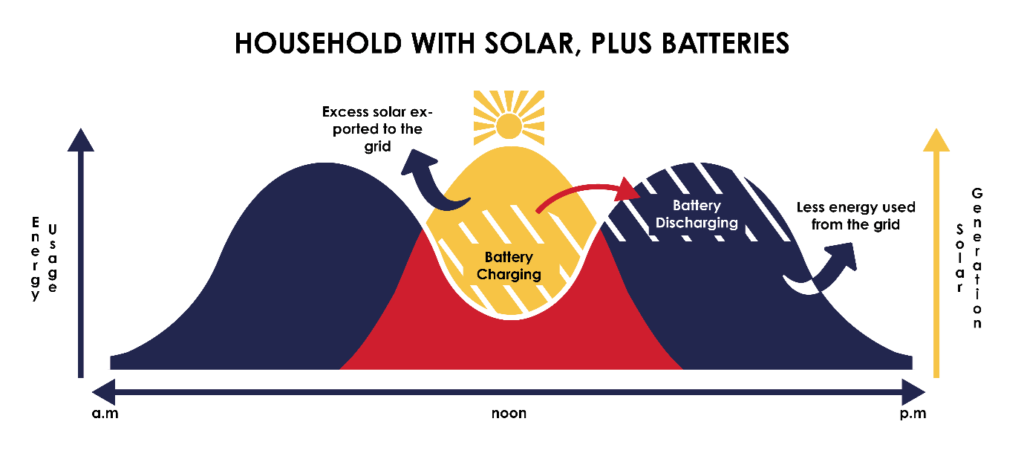
Electricity has never been a flat-rate commodity, though many utility customers discover this only when opening a punishing summer bill. Time-of-Use (TOU) rate structures penalize homeowners heavily for running appliances between 4:00 PM and 9:00 PM—the exact window when families return from work, crank up air conditioners, cook dinner, and wash laundry. Traditional solar panels offer little protection here because their production drops off sharply just as peak utility rates kick in.
Battery storage completely breaks this exploitative economic cycle through a strategy known as peak shaving and load shifting. By programming the battery to charge exclusively during the middle of the day—either via cheap solar production or when grid electricity is cheapest—homeowners can completely isolate themselves from peak-hour pricing. When the utility charges fifty cents per kilowatt-hour at 6:00 PM, the home effectively disconnects from the grid, drawing its power entirely from the low-cost energy stored hours earlier.
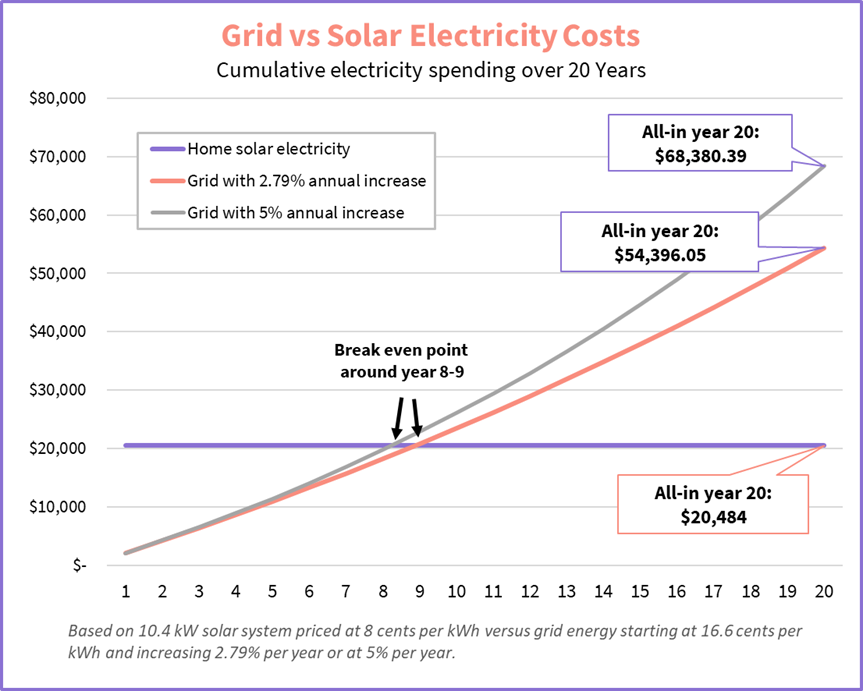
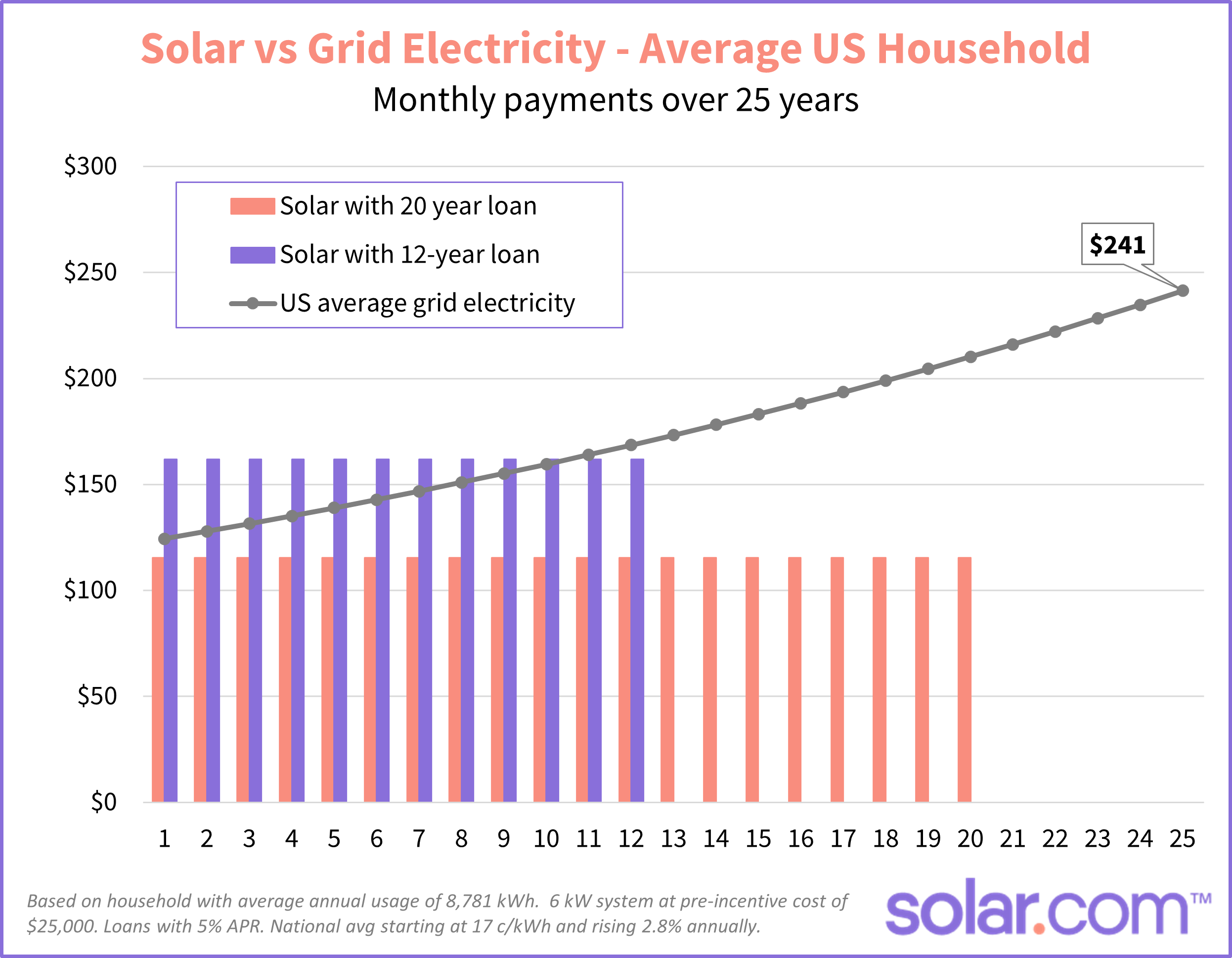
The financial calculus extends far beyond simple bill arbitrage. With the expiration of federal residential tax credits in various regions, the market has matured to stand on its own economic merits, driven by plummeting battery hardware costs and rising utility tariffs. Homeowners are finding that a well-sized LFP battery system pays for itself within a handful of years simply by eliminating peak-rate consumption charges. Furthermore, modern virtual power plant (VPP) software programs allow homeowners to enroll their batteries in utility demand-response networks. During critical grid stress events, the utility can tap a tiny fraction of the stored home energy to stabilize the neighborhood, compensating the homeowner financially for their participation.
This economic shift transforms the home energy profile from an unavoidable monthly expense into an appreciating asset. Instead of paying a utility company for every kilowatt-hour consumed, the household behaves like an independent merchant of energy. Smart software constantly evaluates wholesale market prices, weather patterns, and home battery states of charge, executing automated trades of energy that lower the cost of homeownership while strengthening the regional grid against rolling brownouts.
The Step-by-Step Methodology for Designing and Installing a Home Storage System
Transitioning a home to battery storage requires rigorous planning, precise mathematical sizing, and strict adherence to electrical codes. Rushing into an installation without a clear blueprint can result in an undersized system that blacks out during a storm or an oversized investment that takes decades to recover financially.
- Step 1 (Load Profiling and Energy Audit): Review past utility bills to identify your average daily kilowatt-hour consumption and, crucially, your peak load demand in kilowatts. Walk through the house and list essential circuits—refrigerators, medical devices, well pumps, heating systems, and internet routers—that must remain powered during an extended grid outage.
- Step 2 (Battery Capacity and Power Sizing): Calculate your required storage capacity (measured in kilowatt-hours, or kWh) based on your essential load profile. A standard 10kWh to 13.5kWh battery can run essential appliances for roughly 12 to 24 hours of conservative use, while larger 25kWh+ systems can sustain a modern home through multi-day grid failures. Match this with an inverter power rating (measured in kilowatts, or kW) capable of handling the surge demand of motor-driven appliances like refrigerators and heat pumps.
- Step 3 (Hardware and Architecture Selection): Decide between AC-coupled and DC-coupled layouts based on whether you already own solar panels. Select a battery chemistry—prioritizing UL 9540-certified Lithium Iron Phosphate systems for indoor or garage installations—that offers robust thermal management, IP65 weather-rating, and a minimum 10-year capacity warranty.
- Step 4 (Permitting, Interconnection, and Engineering Review): Partner with a licensed electrical contractor to draft single-line diagrams, submit building and fire department permits, and file interconnection applications with your local utility provider. Ensure the design includes rapid shutdown capabilities and proper rapid-fire disconnects to comply with National Electrical Code (NEC) standards.
- Step 5 (Physical Installation and Commissioning): Mount the battery cabinet to a structurally sound wall or concrete pad, adhering to strict clearance distances from windows, doors, and gas meters. Once wiring, conduits, and sub-panels are inspected by local authorities, power up the system, configure the smart management software, and run a complete simulated grid-outage test.
Navigating the Traps: Common Mistakes and Field-Tested Workarounds
While residential battery systems are increasingly plug-and-play, the intersection of high-voltage electricity, complex software, and thermal chemistry leaves little room for amateur error. Many well-intentioned homeowners run into severe operational roadblocks by overlooking critical engineering constraints.
- Pitfall 1 (Undersizing the Inverter Surge Capacity): Homeowners often match battery capacity (kWh) to their daily usage while ignoring continuous and surge power output (kW). When the refrigerator compressor and the well pump kick on simultaneously, an undersized inverter trips immediately. Workaround: Always calculate motor starting surges—which can be three times higher than running wattage—and select an inverter with adequate peak surge ratings.
- Pitfall 2 (Ignoring Temperature Extremes): Lithium-ion batteries possess strict thermal operating windows. Installing batteries in unconditioned outdoor spaces subject to freezing winters or scorching desert summers will drastically degrade battery capacity or trigger protective thermal shutdowns. Workaround: Install systems inside temperature-regulated spaces like a finished garage or utility room, or select industrial-grade batteries equipped with internal liquid thermal management systems.
- Pitfall 3 (Failing to Separate Essential and Non-Essential Loads): Trying to back up an entire modern home during a multi-day blackout will drain a standard battery in a matter of hours. Workaround: Work with your installer to wire a critical loads sub-panel, isolating high-draw, non-essential appliances like electric vehicle chargers, electric pool pumps, and clothes dryers from the backup circuit.
- Pitfall 4 (Neglecting Local Fire and Building Codes): Placing energy storage systems in forbidden zones—such as sleeping quarters, egress hallways, or directly beneath structural stairwells—violates fire codes and fails local inspections. Workaround: Consult the latest iterations of the International Fire Code (IFC) and NFPA 855 standards during the initial design phase to ensure compliant placement.
- Pitfall 5 (Orphaned Software and Closed Ecosystems): Locking into proprietary hardware that cannot communicate with future solar arrays, EV chargers, or emerging VPP networks leaves homeowners trapped with obsolete technology. Workaround: Insist on open-protocol systems (such as those supporting IEEE 2030.5 or OpenADR standards) that ensure interoperability with third-party smart home platforms.
The Macro View: How Distributed Storage Stabilizes the National Grid
Zooming out from the individual garage reveals a profound macroeconomic shift. For a century, electrical grids operated on a massive, centralized model: heavy centralized power plants pushed power down long lines to meet instantaneous demand. As coal and gas plants retire and variable renewable energy sources like wind and solar scale rapidly, utility operators face a terrifying balancing act. When the sun sets and wind speeds drop while air conditioner demand spikes, the grid experiences severe ramps that traditional plants struggle to match.
Distributed battery energy storage systems act as a multi-billion-dollar shock absorber for this structural transition. Rather than forcing utilities to build multi-billion-dollar peaker plants that run for only a few hundred hours a year, millions of residential batteries can absorb excess midday solar generation and discharge it back into the grid during peak evening hours. This distributed model reduces transmission congestion, prevents local substation overloads, and drastically lowers the carbon intensity of regional electricity grids.
Furthermore, this decentralization enhances national security and civil resilience. A centralized grid is a soft target for cyberattacks, extreme weather events, and physical sabotage. When power generation and storage are distributed across millions of individual homes, the grid develops an immune system. Even if a major transmission corridor fails, individual neighborhoods retain baseline power, water purification, and communication capabilities. Home battery storage is no longer just a luxury upgrade for affluent eco-conscious consumers; it is becoming a foundational pillar of modern civil infrastructure.
Practical Frameworks for Maximizing Home Energy Independence
Achieving true energy independence requires looking past the hardware purchase and adopting a holistic mindset toward domestic energy management. A battery system alone cannot compensate for wasteful habits or poorly insulated building envelopes.
To maximize the return on your energy storage investment, align your daily routines with your system’s operational profile. Program heavy electrical appliances—such as dishwashers, washing machines, and water heaters—to run during the late morning and early afternoon hours when solar production peaks and batteries are fully charged. By shifting your consumption habits to match renewable generation curves, you minimize the depth of discharge your battery experiences overnight, extending its operational lifespan by years.
Simultaneously, treat energy efficiency as the first line of defense. Upgrading attic insulation, sealing drafty windows, and replacing aging HVAC equipment with high-efficiency cold-climate heat pumps dramatically reduces your overall kilowatt-hour demand. When a home requires less energy to maintain comfort, a standard residential battery storage system goes much further during an extended grid outage.
Finally, maintain an active relationship with your system’s software interface. Modern home energy management apps provide real-time visibility into production, consumption, and storage metrics. Reviewing these analytics monthly allows you to spot abnormal energy draws, adjust TOU pricing schedules as utility tariffs shift, and ensure your system is participating in the most lucrative VPP programs available in your region.
The transformation of everyday home energy is a quiet revolution. There are no dramatic smokestacks or roaring turbines in the front yard. Instead, there is only the hum of a silent metal box on the garage wall, managing electrons with microscopic precision. Yet the implications of this technology ripple across global economies, environmental landscapes, and individual households alike.
By decoupling our daily comfort from the frailties of centralized utility grids, home battery storage restores a fundamental sense of security and self-reliance to modern living. It turns weather forecasts from sources of anxiety into predictable harvests of free energy. It transforms a routine monthly utility expense into an appreciating household asset.
As material sciences advance and software intelligence deepens, the home of the near future will not simply consume electricity—it will generate, store, trade, and balance it autonomously. The transition is already underway, proving that the most powerful energy plant in the modern world is not located miles away in the desert, but right inside your own garage.