There is something inherently captivating about a raw electric arc. Long before the humble LED took over our living rooms and indicator lights, arc lamps were illuminating the world with an intensity that felt almost godlike. They gave us the power to project massive cinematic worlds in movie theaters and simulate the actual sun in scientific research labs.
But let’s be honest for a moment. Historically, these lamps have been an absolute nightmare to maintain. For over a century, scientists and engineers have been locked in a stubborn battle against the fundamental laws of physics to keep these high-intensity light sources from tearing themselves apart. Fortunately, by the time we hit 2026, a wave of modern engineering breakthroughs has started rewriting the rulebook.
The Relentless Battle Against Electrode Wear
The biggest historical flaw of any short-arc or long-arc lamp has always been the erosion of its electrodes. Inside a sealed quartz chamber filled with high-pressure gas, an electric current jumps across a gap between two tungsten tips. This process generates temperatures upwards of 6,000 Kelvin—which is literally hotter than the surface of the sun. Under that kind of thermal stress, even pure tungsten starts to vaporize and change shape over time. When the shape changes, the arc becomes unstable, and the light begins to fail.
To solve this age-old headache, modern manufacturers have turned to advanced metallurgy and ceramic-to-metal seals. Instead of traditional raw tungsten, engineers now use specialized alloys infused with rare-earth elements that lower the work function and distribute heat more evenly. Companies like Ushio have even rolled out compact ceramic bodies that secure the electrodes with incredible precision. This keeps the gap perfectly aligned, preventing the physical shift that used to ruin lamps in just a few hundred hours.
Taming the Infamous Flickering Arc
If you have ever stood near an old-school searchlight or film projector, you probably noticed a distinct, fast pulsing or flickering. This flicker happens because an electric arc is essentially a controlled lightning bolt. It wants to wander, dancing across the surface of the electrode as air currents or magnetic fields shift inside the bulb. For precision work like surgical endoscopy or solar simulation testing, even a tiny micro-flicker can ruin the entire operation.
The solution in 2026 isn’t just about building a better bulb; it’s about building a smarter brain for the bulb. Modern electronic ballasts and high-frequency digital power supplies can monitor the current thousands of times per second. By instantly adjusting the voltage to counter any micro-shifts in the plasma field, these systems lock the arc in place. Whether running in a constant current or constant power mode, the light remains rock-solid, giving scientists the stable daylight spectrum they need.
Cracking the Code on Thermal Management
When you trap that much energy inside a tiny glass or ceramic envelope, things get incredibly hot. Traditional arc lamps required bulky, loud external fan systems to keep the quartz from melting or cracking. If the cooling was uneven, the thermal shock would shatter the lamp instantly. Managing this concentrated heat has always been one of the biggest roadblocks to making arc lighting more practical and portable.
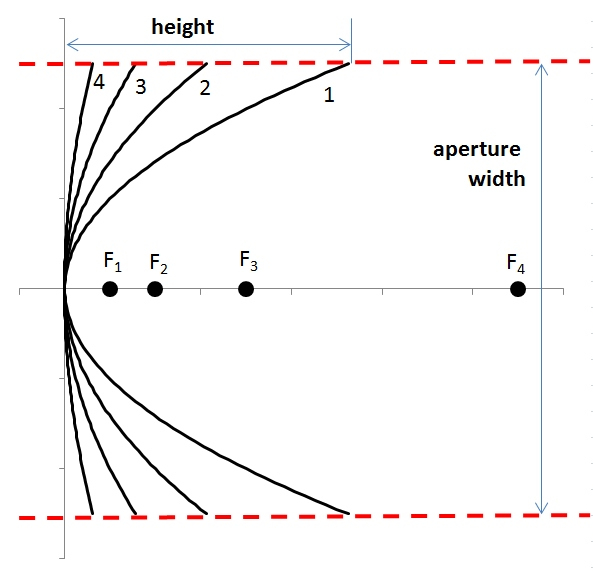
Today, engineers are solving this by incorporating integrated parabolic reflectors and universal heatsink mounting patterns directly into the lamp design. These modern enclosures utilize advanced thermal interface materials that pull heat away from the critical ceramic-to-metal seals seamlessly. By designing the lamp housing to serve as an active heat-dissipating element, systems achieve much safer operating temperatures without requiring roaring, industrial-grade cooling fans.
The Quest for Ultra-Pure Gas and Constant Pressure
An arc lamp relies entirely on the gas sealed inside its chamber—usually high-pressure xenon or krypton. If even a microscopic amount of impurity enters the mix during manufacturing, the lamp’s life expectancy drops off a cliff. Furthermore, as the lamp heats up and cools down, the intense pressure fluctuations test the physical limits of the container seals.
[Gas Purity Level] ---> [Arc Stability] ---> [Extended Lifespan]To counter this, modern production lines have gone fully automated, utilizing specialized high-purity gas processing. Suppliers now deliver xenon gas that is certified pure down to parts-per-billion levels. Combined with new window protection designs that stop surface contamination during assembly, these ultra-clean chambers ensure that the internal gas chemistry remains perfect throughout the lamp’s entire service life.
Beating the Threat of UV and Ozone Degradation
Because arc lamps burn so incredibly hot, they naturally emit a massive amount of shortwave ultraviolet radiation. While this is great if you are trying to build an environmental weathering chamber to test outdoor plastics, it is a massive hazard for indoor operations. Standard UV radiation splits oxygen molecules in the air, creating toxic ozone gas that requires expensive, heavy ventilation systems to manage safely.
Modern envelope engineering has finally bypassed this safety hurdle. Engineers now apply specialized shortwave UV-blocking coatings directly onto the exterior fused silica or quartz glass. These "ozone-free" lamps block the dangerous, ultra-short wavelengths while letting the valuable visible light pass through unhindered. This allows medical teams to use high-intensity xenon illumination in tight, sterile operating rooms without worrying about air quality.
Real-Time Automation and Smart Sensing Loops
In the past, operating a high-intensity arc lamp system required constant manual tweaking. As the lamp aged, technicians had to manually crank up the power supply to maintain the same level of brightness, which often accelerated the lamp’s ultimate demise. It was a constant, frustrating balancing act.
Fast forward to 2026, and modern arc lamp systems are fully automated. Integrated optical sensors continuously measure the exact irradiance and color temperature of the output light. If the system detects a slight drop in intensity due to normal electrode aging, the digital controller automatically makes micro-adjustments to compensate. This smart feedback loop ensures a perfectly flat, reliable light output from day one until the lamp finally needs a routine replacement.
While modern LEDs have certainly taken over standard commercial lighting, the high-intensity arc lamp remains irreplaceable where absolute spectral accuracy, massive brightness, and a perfect daylight simulation are required. Thanks to these incredible engineering feats, the oldest flaws of this century-old technology are finally being laid to rest.
By blending advanced material science, smart digital power regulation, and precise thermal engineering, today’s developers have transformed a volatile, high-maintenance lightning bolt into a precise, dependable tool. The electric arc is no longer an unpredictable beast to be tamed—it is a mastered science.