The alarm goes off at six in the morning, and the sterile white glow of fluorescent bathroom lights hits your retinas like an interrogation lamp. You step onto unyielding, ice-cold porcelain tile, the morning chill cutting straight through your socks. The space smells faintly of bleach and damp grout, completely devoid of soul. You wash your face, looking into a frameless mirror that reflects not a moment of peace, but rather the looming pressure of the workday ahead. It is a functional room, engineered for efficiency, but it offers zero psychological sanctuary.
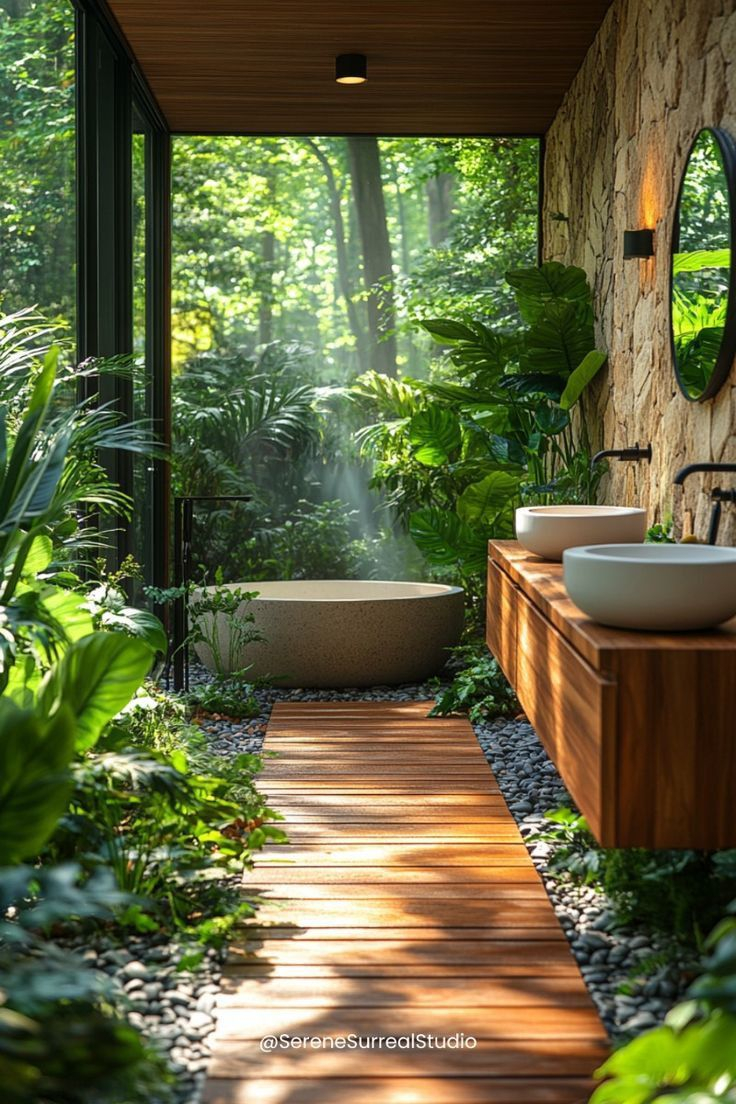
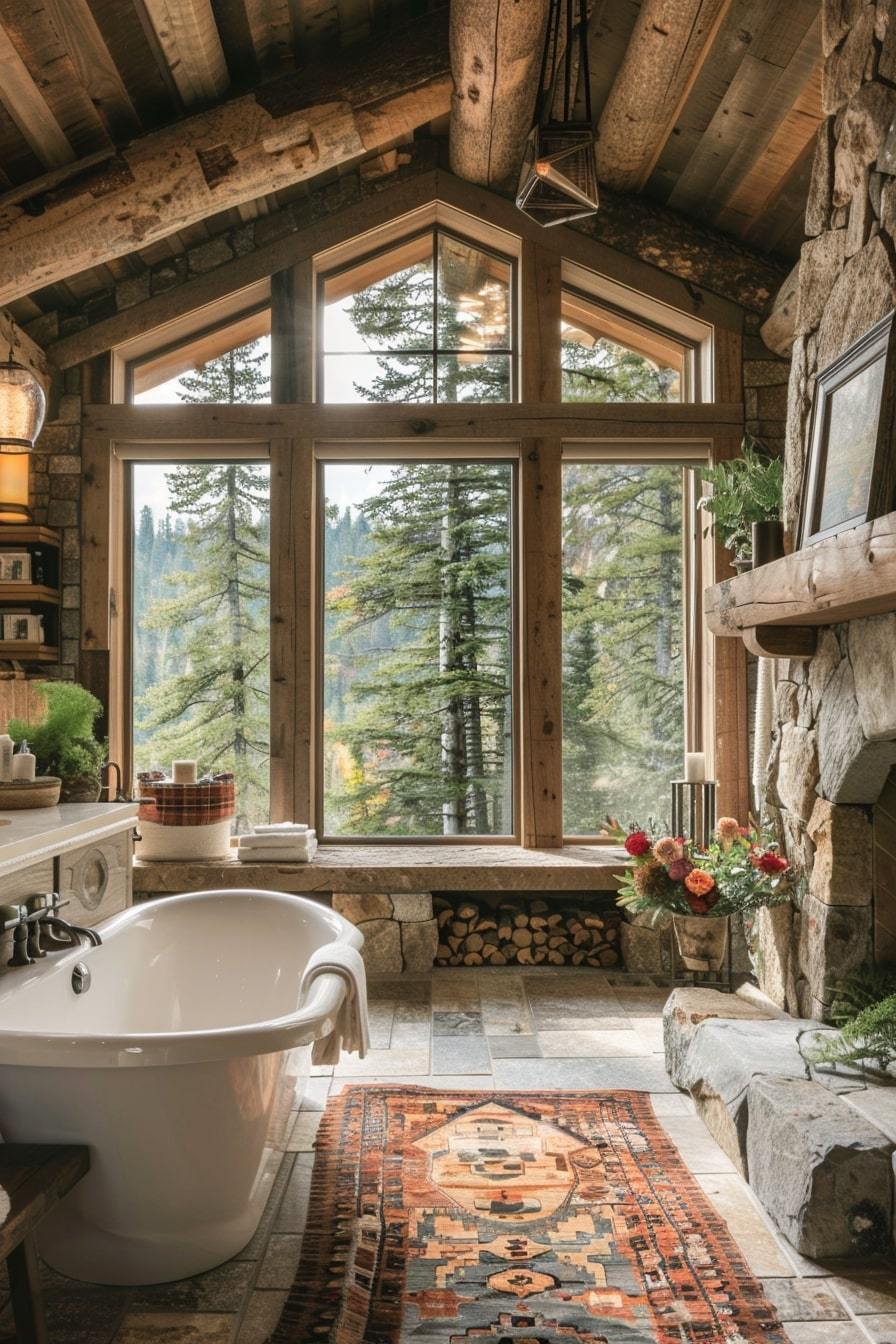
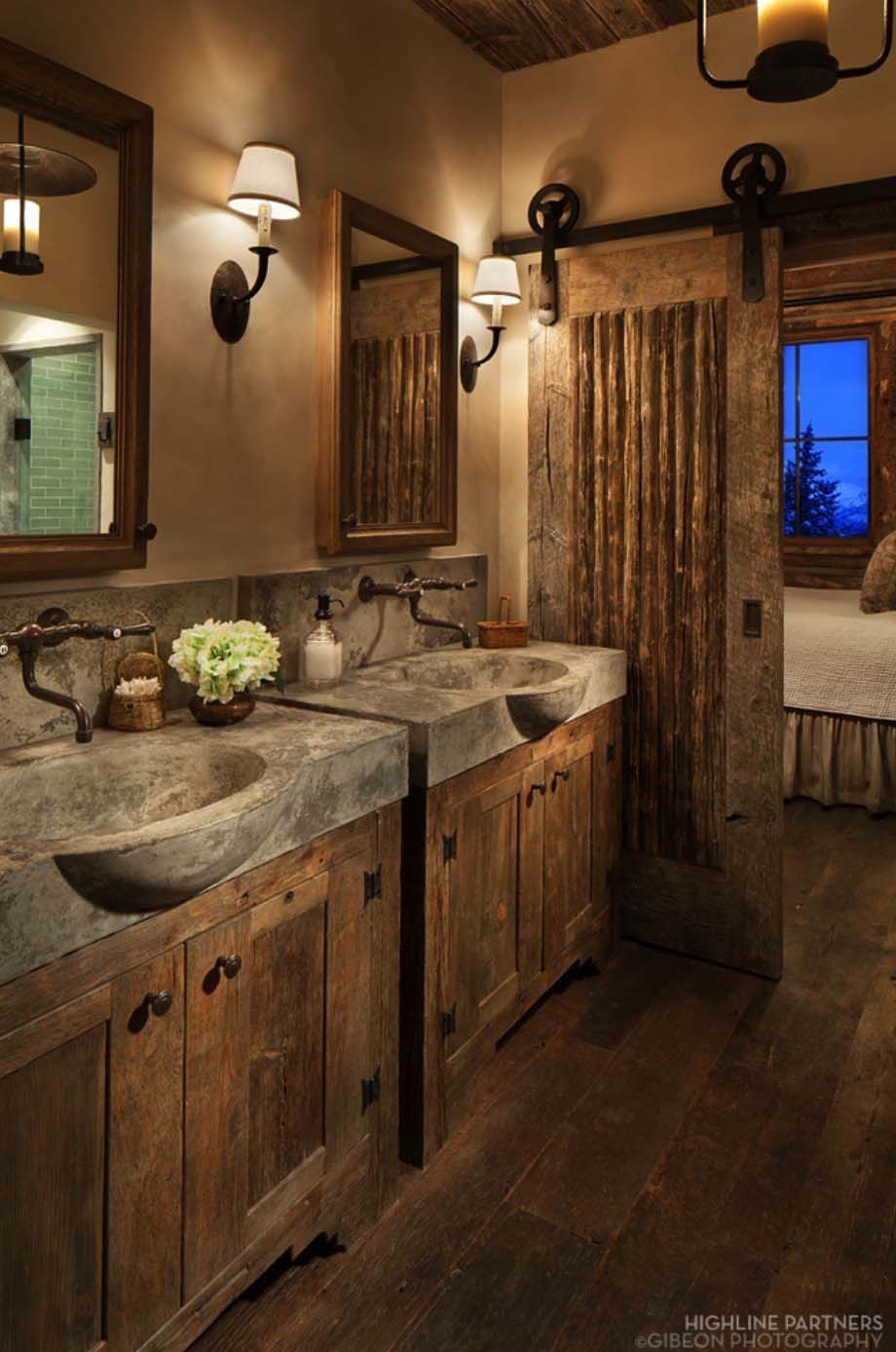
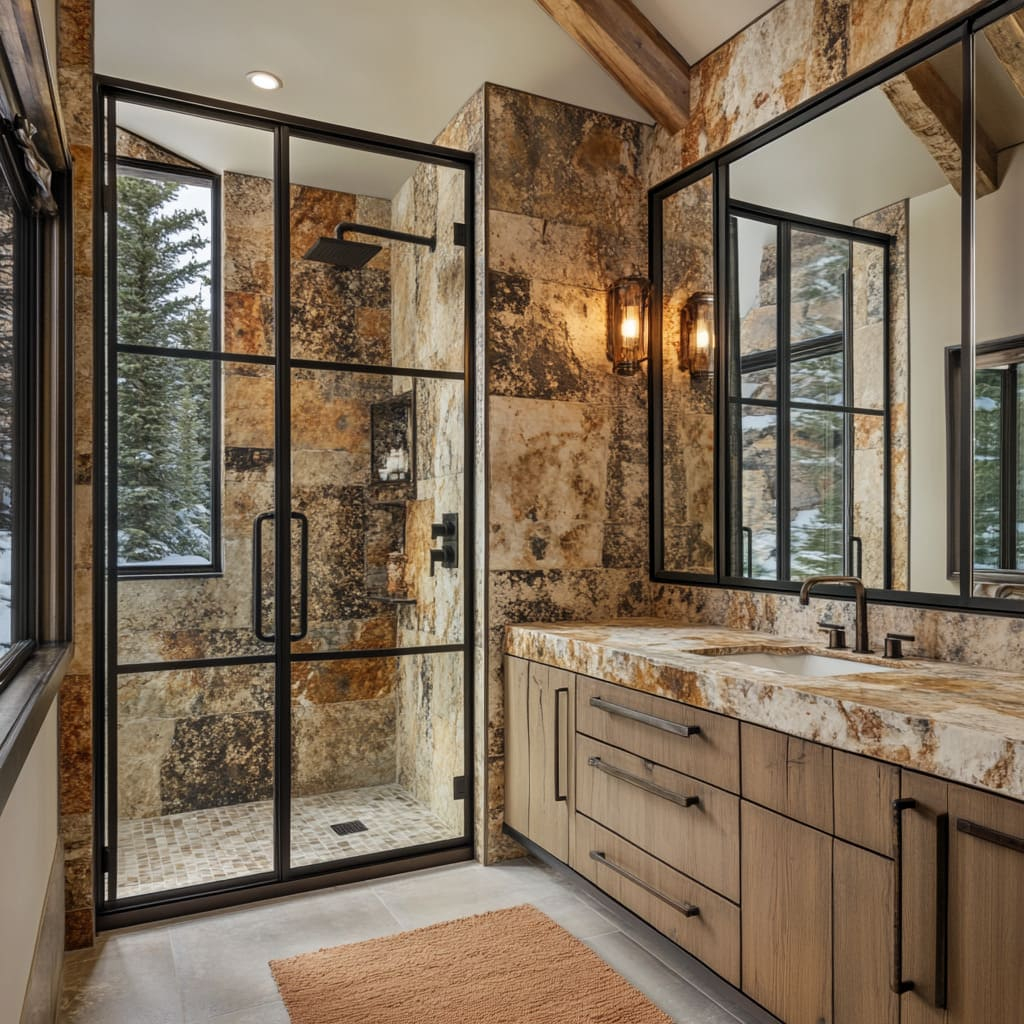
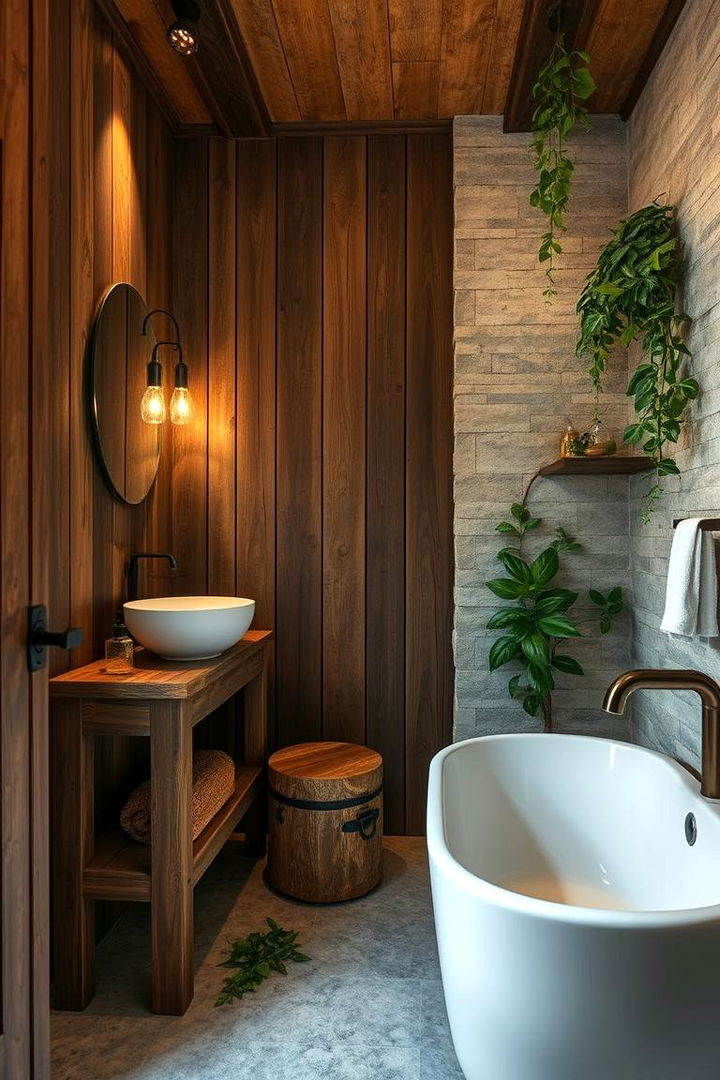
Now, contrast that sensory shock with a different reality. Imagine stepping out of a steaming shower onto the hand-scraped, oil-rubbed surface of white oak salvaged from a 19th-century Pennsylvania barn. Instead of blinding white light, warm amber illumination plays across the jagged, earthy face of stacked ledgestone flanking your mirror. The air carries the faint, rich aroma of cedar and natural tung oil. Your shoulders drop an inch before your feet even touch the bathmat. You are no longer standing in a suburban or urban drywall box; you are standing in a high-altitude alpine lodge, wrapped in the quiet permanence of the mountains.
Recreating this atmospheric shift inside a standard residential bathroom is not merely a matter of slapping some brown paint on the walls and calling it rustic. Achieving an authentic mountain cabin aesthetic requires a deliberate marriage of geology and history. It demands heavy, honest materials that carry a narrative—timbers that weathered decades of alpine snowstorms, and stones born from ancient tectonic pressure. When brought together inside a climate-controlled, moisture-heavy environment like a bathroom, these organic elements perform a psychological alchemy, turning a utilitarian chamber into a restorative retreat.
The Architectural Psychology of Alpine Design
Human beings possess an innate, evolutionary craving for connection with the natural world—a concept environmental psychologists call biophilia. When we surround ourselves with raw, unvarnished materials like aged timber and heavy stone, our nervous systems respond measurably. Heart rates slow, cortisol levels drop, and the hyper-vigilance induced by modern concrete-and-glass living begins to recede. A mountain cabin retreat works so effectively as a design archetype because it relies on maximum tactile variety. Every surface tells a story of physical weight, weathering, and endurance.
In a typical home build, bathrooms are treated as waterproof plastic bubbles. They feature smooth fiberglass surrounds, polished chrome, and perfectly uniform ceramic tiles. This sterile perfection actually triggers mild subconscious anxiety because it feels artificial and fragile. Introducing reclaimed wood and stone breaks this clinical spell. The erratic grain patterns of salvaged pine or chestnut provide visual complexity that engages the human eye without overwhelming it. Meanwhile, the irregular clefts of natural stone offer a grounding counterweight, anchoring the airy verticality of the room to the earth.
Understanding this dynamic shifts your renovation strategy from superficial decoration to structural storytelling. You are not just picking out tile samples at a big-box home improvement center; you are curating geological strata and historical artifacts. Every knot in a wooden beam and every fossilized mineral vein in a slate tile contributes to an immersive micro-environment. This approach transforms the bathroom from the most neglected room in the house into its emotional anchor, a private cabin nestled deep in the Rockies or the Blue Ridge Mountains, available every morning before the rest of the world wakes up.
Sourcing and Selecting Authentic Materials Without Compromising Durability
The primary challenge of building a mountain retreat inside a room dedicated to water usage lies in material selection. Real wood rots, warp, and breeds mold if it meets constant moisture without proper intervention. Similarly, certain stones are porous sponges that will absorb soap scum, mineral deposits, and body oils until they are ruined. Success hinges on knowing which woods and stones can survive a steamy shower environment, and how to prep them so they look better with age rather than succumbing to decay.
For the woodwork, skip fresh-cut lumber entirely. Fresh pine or fir lacks the character, dimensional stability, and deep patina that only decades of UV exposure, temperature swings, and settlement can provide. Instead, look for reclaimed structural timbers, joists, and siding salvaged from barns, factories, and warehouses. Heart pine, old-growth Douglas fir, and white oak are the holy trinity of cabin hardwoods. Heart pine offers incredible resistance to rot due to its dense, resinous core, making it an exceptional choice for vanity cabinets, wall paneling, and ceiling beams.
When it comes to stone, your palette should mimic the geology of a specific mountain range. Think charcoal slate, ledgestone quartz, tumbled river rock, or rugged fieldstone veneer. Avoid polished granite or high-gloss marble, which belong in a slick urban penthouse rather than a rustic cabin. Instead, prioritize honed, flamed, or split-face finishes. Split-face ledgestone creates stunning shadow lines behind a freestanding soaking tub or vanity mirror, especially when grazed by warm sconce lighting. For flooring, matte-finish slate or textured flagstone provides essential slip resistance when wet while delivering that authentic foot-of-the-mountain feel.
Step-by-Step Practical Implementation Guide
Executing a mountain cabin transformation requires a precise sequence of construction phases. Skipping a waterproofing step or rushing wood conditioning in a bathroom will lead to expensive remediation down the road. Follow this structured roadmap to build a durable, visually stunning alpine retreat.
- Step 1 (Subfloor and Waterproofing Overhaul): Strip the bathroom down to the studs and subfloor. Install a continuous, heavy-duty waterproof membrane system, such as a bonded Schluter-DITRA or liquid-applied waterproofing barrier over cement backer board. Because natural stone is heavy and wood expands with humidity, a rock-solid, moisture-proof foundation is non-negotiable to prevent shifting and mildew.
- Step 2 (Installing the Stone Feature Wall or Shower Surround): Select your ledgestone or slate tiles and dry-lay them on the floor first to mix color variations and textures. Use a modified thin-set mortar designed for heavy stone veneers. Apply the stone to your designated focal point—typically behind the vanity or inside the shower enclosure—using spacers to maintain tight, organic joints or a dry-stack appearance depending on the stone type.
- Step 3 (Preparing and Mounting Reclaimed Timber Features): Mill your reclaimed wood to uniform thicknesses for easier installation, while preserving the original face grain and saw marks. Treat all wood surfaces with a penetrating, marine-grade hard-wax oil or a multi-coat breathable polyurethane specifically rated for high-moisture environments. Secure tongue-and-groove boards or paneling to wall studs using construction adhesive and blind-nailed galvanized finish nails.
- Step 4 (Building or Modifying the Custom Vanity): Transform an antique wooden washstand or build a custom vanity using reclaimed barn beams for the countertop and base frame. Seal the wood countertop with multiple layers of an epoxy-resin or hard-wax finish that completely repels water pooling around the sink basin. Install an undermount or vessel sink made of hammered copper, matte black cast iron, or natural carved stone to complete the rustic look.
- Step 5 (Layering Warm Lighting and Iron Fixtures): Ditch cold white LED bulbs in favor of 2200K to 2700K Edison-style or warm LED filament lamps. Install matte black, oil-rubbed bronze, or brushed brass plumbing fixtures with cross-handle valves. Add wrought iron wall sconces with seeded glass shades to cast dramatic shadows across your newly installed stone and wood surfaces.
Navigating Common Pitfalls and Field-Tested Workarounds
Transforming a bathroom with organic materials is deeply rewarding, but it introduces unique construction hazards that weekend warriors and inexperienced contractors frequently mishandle. Anticipating these friction points saves you from catastrophic water damage and aesthetic missteps.
- Pitfall 1 (Treating Reclaimed Wood Like Normal Indoor Trim): Applying standard interior latex paint or cheap varnish to salvaged wood in a bathroom traps moisture underneath the finish, causing the wood to rot from the inside out and the coating to peel. Workaround: Always strip away old dirt, treat the wood for wood-boring insects if necessary, and saturate the pores with a professional-grade penetrating polymer oil or matte marine spar varnish that allows the wood to breathe while repelling liquid water.
- Pitfall 2 (Failing to Seal Porous Natural Stone): Leaving slate, sandstone, or unpolished ledgestone unsealed in a wet room results in permanent staining from bath oils, hard water, and soap scum that cannot be scrubbed out. Workaround: Apply a penetrating, breathable impregnating sealer to the stone before grouting to prevent grout haze from locking into the pores, and reapply a maintenance coat every 12 to 18 months.
- Pitfall 3 (Overwhelming a Small Space with Heavy Materials): Covering every single wall, floor, and ceiling in dark, heavy timber and black stone can turn a modest bathroom into a suffocating, cave-like box rather than an airy cabin. Workaround: Balance the heavy textures by keeping the ceiling painted in a crisp, warm off-white, and incorporate a large mirror with a simple black iron frame to bounce natural light around the room.
- Pitfall 4 (Neglecting Subfloor Weight Capacity for Stone): Stacking hundreds of pounds of natural stone veneer and heavy slate flooring on standard, undersized residential floor joists can cause sagging, cracked grout lines, and structural compromise. Workaround: Consult a structural engineer or general contractor to verify joist deflection ratings, and sister existing joists or add plywood subfloor reinforcement if stone weight exceeds structural tolerances.
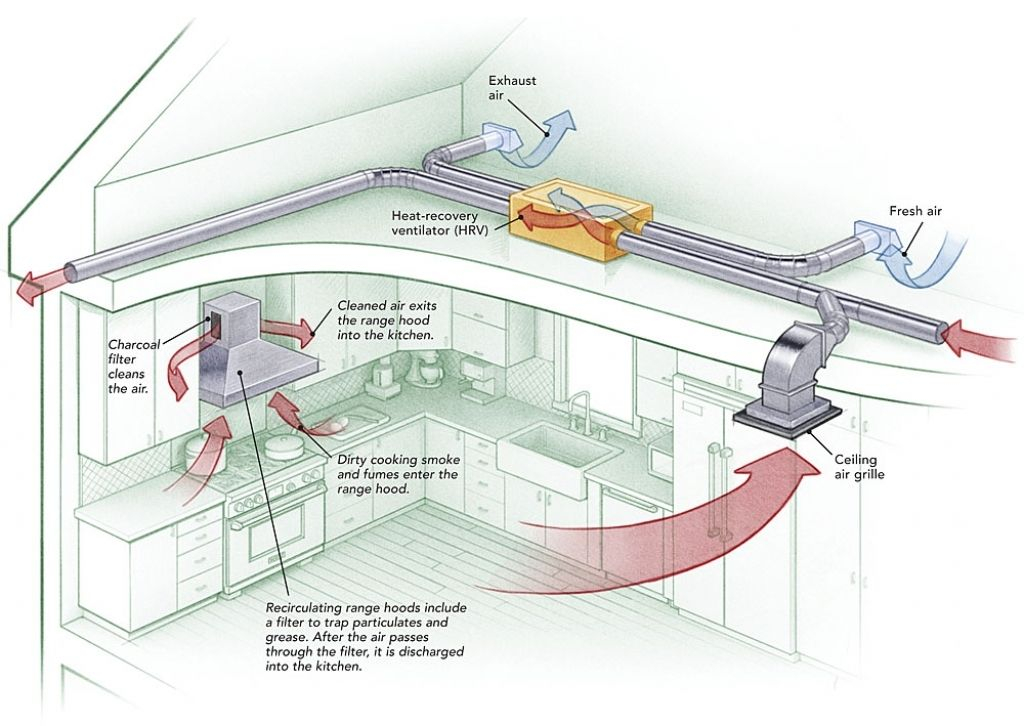
- Pitfall 5 (Ignoring Proper Ventilation for High Humidity): A mountain cabin bathroom generates dense steam during showers that, without aggressive air evacuation, will warp wood panels and breed black mold behind stone tile arrays. Workaround: Install a high-cfm, ultra-quiet exhaust fan tied to a humidity-sensing wall switch that automatically runs for twenty minutes after you step out of the shower.
The Broader Impact on Home Value and Personal Wellness
Designing a mountain cabin bathroom transcends simple interior decoration; it represents a deliberate investment in your daily psychological health and your property’s long-term market appeal. In an architectural landscape dominated by mass-produced, sterile developer specials, homes that feature genuine historical materials and bespoke craftsmanship stand out immediately. Real estate markets consistently reward authenticity. When prospective buyers step into a bathroom anchored by a century-old pine vanity and hand-laid mountain stone, they perceive high-end custom value that cheap laminate and ceramic tile can never replicate.
Beyond resale economics, this design choice fundamentally alters your home’s ritualistic rhythm. Bathrooms are where we transition between public personas and private vulnerability. Stripping away the plastic facade of modern building materials and replacing them with substances that have endured decades—or centuries—of natural forces changes how you inhabit the space. It forces you to slow down. When you touch a rough-hewn wooden sink counter or trace the mineral striations of a slate wall, you are reminded of deep time, grounding you against the frantic pace of contemporary work and digital life.
Furthermore, committing to reclaimed wood and natural stone aligns with sustainable building practices. Diverting old barn beams and factory flooring from local landfills and repurposing them into residential finishes reduces the demand for newly harvested lumber and virgin quarry extraction. You are essentially preserving pieces of regional heritage, giving discarded timber a second life where its weathered character can be appreciated for generations to come. This fusion of ecological mindfulness and rugged aesthetics creates a space that feels both deeply ethical and effortlessly luxurious.
Actionable Recommendations for Your Cabin Transformation Project
To ensure your bathroom renovation proceeds smoothly from concept to completion, rely on a structured framework of best practices. Do not attempt to source everything in a single weekend; authentic mountain design requires patience and a discerning eye.
- Establish a Material Hierarchy: Designate one primary hero material—such as a massive reclaimed timber accent wall or a dramatic ledgestone shower backdrop—and let all other elements play supporting roles to avoid visual clutter.
- Source Locally When Possible: Visit architectural salvage yards, local demolition sales, and regional stone yards to find materials that match the native geology and history of your specific geographic area, creating a more authentic sense of place.
- Test Finishes in Advance: Always purchase sample boards of your reclaimed wood and stone, apply your chosen sealers and grouts, and test them under your exact bathroom lighting conditions before committing to a full installation.
- Incorporate Soft Textiles: Contrast the hardness of wood and stone by introducing thick waffle-weave organic cotton towels, a plush wool bath mat, and sheer linen window treatments if you have natural light sources.
- Embrace Imperfection: Remember that true cabin style rejects factory perfection. Bows, minor checks, color variations, and weathering marks in wood and stone are features of authenticity, not defects to be hidden.
Transforming an everyday bathroom into a warm mountain cabin retreat is an exercise in intentional storytelling. It requires looking past the bland conveniences of modern construction and choosing materials that carry weight, history, and raw physical presence. By carefully sourcing durable reclaimed hardwoods, treating them with breathable protective finishes, and grounding the room with authentic mountain stone, you build a physical sanctuary that shelters you from the noise of the outside world.
The ultimate measure of success for this project won’t show up in a real estate appraisal or an interior design magazine layout, though both are likely outcomes. It will show up on a random Tuesday morning, when the alarm rings, the house is cold, and you step across the threshold into your own private alpine lodge. As the warm light hits the weathered grain of the timber and the textured face of the stone, you will take a deep, slow breath, knowing that you have carved out a timeless piece of the wilderness right inside your own home.