The garden hose lies coiled and bone-dry behind the tool shed, a silent testament to an optimistic weekend spent digging up turf three summers ago. Back then, planting rows of gray-green lavender, feather reed grass, and tough-as-nails manzanita felt like a high-stakes gamble against rising municipal water bills and punishing July heatwaves. Gardening manuals promised a magic bullet: the low-water oasis. They talked endlessly about drought-tolerant palettes, porous decomposed granite pathways, and clever drip lines. But they rarely lingered on what happens when the training wheels finally come off.
Ask any seasoned landscape designer or dedicated homeowner what keeps them awake at night, and they will rarely mention the installation phase. It is the awkward, high-stress transition marking the end of year two and the dawn of year three that separates thriving ecosystems from expensive botanical graveyards. The nursery crutch is gone. Municipal establishment-period subsidies or strict hand-watering schedules have evaporated. Now, the soil, the root systems, and the native rainfall patterns must hold up their end of the bargain.
Stepping past the initial establishment window requires confronting the reality of subterranean architecture. For the first twenty-four months, plants exist in a manufactured bubble of attentive irrigation, even if that water is applied sparingly. Roots tend to linger near the surface where moisture is easily accessible. When that comfort zone is abruptly pulled away, the garden faces its true crucible. Navigating this threshold demands an understanding of soil physics, physiological adaptation, and the subtle art of reading plant stress long before leaves turn brittle and brown.
Decoding the Subterranean Shift That Occurs After Month Twenty-Four
The invisible theater of a low-water landscape unfolds entirely out of sight, deep within the soil profile. During the first two years of a xeriscape’s life, root systems are essentially toddlers—reliant, localized, and easily startled by sudden environmental changes. By month twenty-four, however, perennial species and woody shrubs undergo a radical physiological shift. Their taproots and lateral networks plunge downward in search of native moisture tables and stable thermal masses. This downward migration changes everything about how a garden interacts with weather extremes.
Soil structure acts as the primary engine driving this transformation. In a well-designed low-water garden, the soil has transitioned from a sterile planting mix to a complex biological web populated by mycorrhizal fungi, earthworms, and beneficial bacteria. These microscopic partners form symbiotic bridges with plant roots, trading minerals and water for photosynthesized sugars. When surface soils bake hard under August suns, a mature root system operating three to five feet underground remains blissfully insulated.
Yet, this transition period creates a vulnerable window where well-meaning gardeners often panic. As irrigation frequencies are intentionally reduced to force deeper rooting, plants may exhibit minor flagging or temporary leaf curl. Misinterpreting this normal hardening-off process as mortal drought stress frequently leads to over-watering, which halts root descent and creates a lazy, surface-dependent plant. Understanding that a drought-tolerant garden at year three looks different, feels different, and breathes differently than a first-year planting is the foundational secret to long-term success.
Anatomy of the Taper: Weaning Your Landscape Off Supplemental Irrigation
Cutting the umbilical cord of regular irrigation requires a methodical, almost surgical approach rather than an abrupt cutoff. By the beginning of the third year, the irrigation controller must be reprogrammed to reflect seasonal dormancy and deep-soaking logic rather than frequent, shallow sips. Turf replacement projects and newly installed perennial borders cannot survive a cold turkey transition without sustaining significant canopy dieback. The goal is to train the soil and the plant to lock arms against aridity through controlled stress intervals.
The frequency of watering should be stretched out while the volume per application is temporarily increased. This encourages water to percolate deep into the subsoil, drawing roots down behind it. For instance, a drip zone that ran three times a week during year one should shift to once every ten days by mid-year two, and eventually to a deep monthly or bi-monthly soak during prolonged dry spells in year three. This regime mimics natural precipitation cycles in arid and semi-arid environments, where rare, heavy downpours sustain vegetation for weeks at a time.
Equally critical is monitoring local evapotranspiration (ET) rates and seasonal shifts. A mature lavender or sagebrush in Mediterranean climates may require zero supplemental water once fully established, but a mixed border containing ornamental grasses and flowering perennials might need targeted support during unprecedented heat domes. The key distinction is that water is no longer applied to keep plants alive day-to-day; it is delivered as an occasional emergency backup when natural rainfall drops below survival thresholds.
Step-by-Step Implementation Guide for Long-Term Drought Resilience
Transitioning a low-water garden from its pampered youth to self-sufficient maturity demands a clear, repeatable operational framework. Implement these field-tested practices to ensure your landscape thrives without becoming a daily chore:
- Step 1 (Audit the Subsurface Moisture): Before altering your watering schedule in year three, drive a 12-inch soil probe or a thick metal rod into the ground near your primary shrubs. If the rod pushes easily through damp soil, your root zone is adequately hydrated; if it hits concrete-like dry clay at two inches, your current drip emitter layout is failing to penetrate deeply enough.
- Step 2 (Recalibrate Irrigation Zones): Group your remaining plants strictly by hydro-zones, separating ultra-low water natives like Ceanothus and Arctostaphylos from moderate-water perennials that still appreciate a monthly summer drink. Adjust or cap off individual emitters so that drought-adapted specimens receive virtually no direct overhead or drip water outside of natural rainfall.
- Step 3 (Re-Evaluate Mulch Depths and Topdressing): Strip away decomposing organic wood mulches that have thinned to less than two inches, and replenish them with a 3-to-4-inch layer of coarse, local arborist wood chips or mineral gravels. Keep mulch pulled at least two inches away from the main stems of woody plants to prevent collar rot and suffocating fungal growth.
- Step 4 (Implement Strategic Structural Pruning): As plants enter their third and fourth seasons, prune back woody perennials by one-third immediately after their primary bloom cycle finishes. This reduces the total transpirational surface area of the plant, helping it conserve internal moisture during peak summer months without sacrificing structural integrity.
- Step 5 (Establish a Dry-Season Monitoring Protocol): Walk your garden every fortnight during the hottest quarter of the year, inspecting plants for early warning signs of vascular distress such as premature leaf drop, unnatural dullness in foliage sheen, or brittle stem tips. Address these isolated symptoms with targeted hand-watering rather than turning whole irrigation zones back on.
Common Pitfalls and Field-Tested Workarounds for Mature Xeriscapes
Even experienced gardeners stumble when managing a low-water landscape past its initial establishment window. Recognizing these silent traps prevents catastrophic plant loss and protects your initial investment:
- Pitfall 1 (The Over-Watering Trap): Landowners often continue running high-frequency summer irrigation schedules out of sheer habit, drowning mature plants that no longer need artificial moisture. Workaround: Install a smart soil-moisture sensor or commit to physical soil checks before manual irrigation, letting the soil dry out completely between soakings.
- Pitfall 2 (Ignoring Creeping Organic Matter Accumulation): Over three years, decaying leaves, dropped seed pods, and breaking-down mulch create a rich, sponge-like surface layer that retains too much ambient summer humidity and invites shallow weed germination. Workaround: Rake away excessive surface humus beneath arid-adapted plants, exposing mineral soil or coarse gravel that sheds summer moisture rapidly.
- Pitfall 3 (Neglecting Structural Crown Maintenance): Fast-growing native shrubs can become top-heavy and leggy by year three, making them highly susceptible to root-rocking and windthrow during autumn storms. Workaround: Practice corrective tipping and structural thinning during late winter to build thick, rigid root-to-shoot ratios capable of withstanding severe weather.
- Pitfall 4 (Relying Solely on Overhead Sprinklers): Using spray heads in a mature low-water garden wets foliage unnecessarily, promoting fungal leaf spots while losing up to 50% of applied water to wind drift and surface evaporation. Workaround: Convert remaining spray zones to sub-surface drip tubing or heavy-duty inline emitters tucked securely beneath the mulch layer.
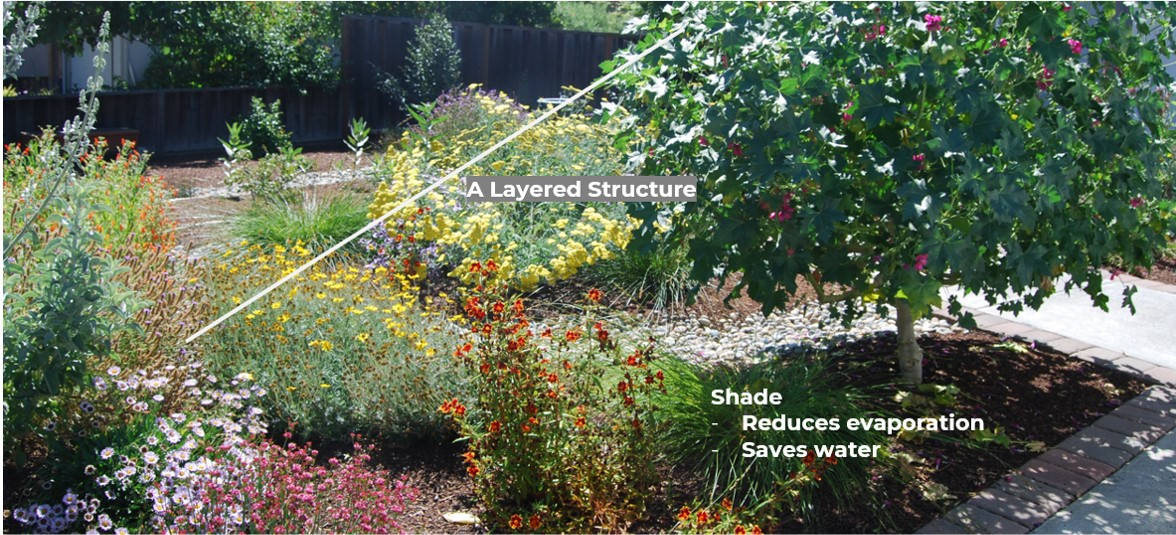
- Pitfall 5 (Failing to Adapt to Microclimate Shifts): Trees planted nearby grow larger, casting new shade patterns that alter the water needs of sun-loving groundcovers beneath them. Workaround: Annually map sun and shade patterns across your garden bed, moving struggling sun-worshippers to open sunny spots while shifting shade-tolerant understory plants into the newly formed canopy shadows.
The Broader Ecological and Economic Dividend of Mature Low-Water Gardens
When a low-water garden successfully bridges the gap past its first two years, it ceases to be merely a yard and transforms into a functioning local ecosystem. Municipal water purveyors across drought-prone regions increasingly recognize mature xeriscapes as vital urban infrastructure that dampens peak summer demand on municipal grids. Homeowners reap direct financial rewards through slashed utility bills, but the secondary economic value—lower maintenance labor hours, reduced fertilizer costs, and diminished green-waste disposal fees—compounds significantly over a five-to-ten-year horizon.
Ecologically, the transition to a low-water landscape marks the arrival of specialized wildlife that avoids high-maintenance, heavily sprayed turfgrass environments. Native bees, specialized solitary wasps, migratory butterflies, and insectivorous birds find reliable habitat within the seed heads, hollow stems, and dense thickets of mature drought-tolerant flora. Soil microbes multiply exponentially when chemical fertilizers are replaced with natural leaf litter cycling, creating a resilient living matrix that filters stormwater runoff and replenishes local aquifers naturally.
This shift also redefines human engagement with the land. Instead of spending every Saturday wrestling with lawnmowers, edging walkways, and adjusting malfunctioning sprinkler heads, the gardener becomes an observer and a gentle steward. The landscape develops a wild, textural authenticity that reflects the regional climate rather than fighting it. In an era marked by climatic unpredictability and resource scarcity, this alignment with natural systems represents the ultimate evolution of residential horticulture.
Actionable Recommendations for Sustaining Peak Performance Year After Year
Sustaining a vibrant, water-wise garden over the long haul requires discipline, observation, and an adherence to natural ecological rhythms. To keep your landscape performing at its highest level without escalating resource inputs, apply these core recommendations:
- Embrace Seasonal Aesthetics: Accept that low-water plants have distinct seasonal rhythms, going dormant or browning slightly during peak heat before flushing green with autumn rains; treat this dormancy as a natural design feature rather than a maintenance failure.
- Audit Your Soil Biology Annually: Apply a light topdressing of finished compost or inoculated biochar once a year beneath non-native or demanding feature plants to maintain microbial diversity without forcing rapid, weak top-growth.
- Keep Detailed Garden Logs: Document your irrigation run times, seasonal rainfall totals, and plant performance notes in a dedicated journal or digital app, creating a personalized reference library for your specific microclimate.
- Source Locally Adapted Stock: When replacing plants that fail to make it past the two-year mark, source replacement specimens from local native plant nurseries rather than big-box retailers to ensure genetic compatibility with your regional soil and weather patterns.
Looking across a garden that has weathered its third summer without a gulp from the municipal tap reveals a profound shift in perspective. The frantic anxiety of keeping every single leaf pristine and green yields to a deeper appreciation for resilience, structural variety, and natural cycles. A low-water garden past its first two years is no longer a fragile construction project; it is a self-willed entity finding its own equilibrium with the sky, the soil, and the sun.
As water scarcity and climate shifts redefine how we live with our landscapes, the choices made in these private spaces ripple outward. Every square foot of turf converted into a deep-rooted, self-sustaining xeriscape is a vote for ecological health and long-term sustainability. The journey requires patience through those awkward establishment months, but the reward is a living, breathing landscape that grows more resilient, beautiful, and independent with every passing year.