The quietest revolution in modern suburban life does not announce itself with sirens or marching bands. It arrives in the mail as an envelope containing a utility bill totaling $4.12—mostly mandatory connection fees—or as an automated smartphone notification at 3:15 AM informing a homeowner that their dwelling is currently drawing power entirely from a lithium-iron-phosphate battery in the garage while the grid outside remains pitch-black.
For decades, transitioning a home to solar arrays, wind micro-turbines, or geothermal heat pumps was treated as a fringe environmental statement or a eccentric hobby for off-grid enthusiasts. Today, sitting in the year 2026, it represents a calculated financial restructuring. With regional electricity costs continuing their erratic climb and utility companies shifting toward complex time-of-use pricing models, millions of residential properties have crossed the threshold into micro-generation. Yet, the brochures provided by clean energy installers rarely capture the day-to-day reality of inhabiting an eco-powered home.
The journey from signing a clean energy contract to living under a self-powered roof involves a distinct psychological and logistical evolution. The initial euphoria of watching a glossy black monocrystalline panel array get bolted to the rafters quickly gives way to granular behavioral shifts. Homeowners quickly learn the rhythm of passing cloud cover, the hidden parasitic loads of household appliances, and the peculiar satisfaction of running laundry at high noon simply because the sun is paying for it. Understanding this post-installation reality separates the satisfied adopter from the frustrated consumer.
The Reality Check of Month-One Utility Bills and Meter Adjustments
The first thirty days following grid interconnection produce a very specific kind of suspense. Most new renewable energy adopters check their monitoring applications with the frequency of a day trader watching a volatile stock. The initial discovery is often humbling: the power bill rarely drops to zero instantly, and the synchronization process between local utility companies and smart bidirectional meters can introduce bizarre billing artifacts.
Navigating net metering policies—or the evolving alternative tariff structures that have replaced traditional net metering in many states—requires a steep learning curve. Homeowners quickly realize that generating kilowatt-hours at 11:00 AM does not carry the same financial weight as consuming them at 7:00 PM when solar production has plummeted and household demand peaks. This economic mismatch drives the rapid adoption of home battery storage systems. When solar owners watch their excess afternoon generation get credited to the grid at wholesale rates, only to buy power back at retail rates a few hours later, the arithmetic of installing a backup battery suddenly becomes undeniable.
Beyond the numbers, a subtle shift occurs in how people perceive domestic energy consumption. Electricity stops being an invisible, infinite utility that magically flows from behind the drywall. It transforms into a tangible resource with a weather-dependent supply chain. Families start noticing phantom loads—the constant trickle of power drawn by gaming consoles in standby mode, old garage door openers, and multi-zone entertainment centers. The home effectively becomes an active power plant, and the resident transitions from a passive consumer to an amateur grid operator managing local supply and demand.
Behavioral Shifts and the Gamification of Domestic Power Consumption
Human psychology adapts remarkably fast when financial incentives are tied to weather patterns. Within a few months of switching to renewable energy, households routinely undergo a cultural transformation regarding appliance usage. Dishwashers, washing machines, and electric vehicle chargers are no longer turned on haphazardly before bed; they are programmed to fire up during peak solar production windows between 10:00 AM and 3:00 PM.
This behavioral pivot often manifests as a form of domestic gamification. Smartphone apps provided by inverter manufacturers like Enphase, SolarEdge, or Tesla become morning reading material alongside the weather forecast. A clear blue sky is greeted with quiet satisfaction, while an unexpected summer afternoon thunderstorm triggers a mental calculation of lost generation and battery state-of-charge.
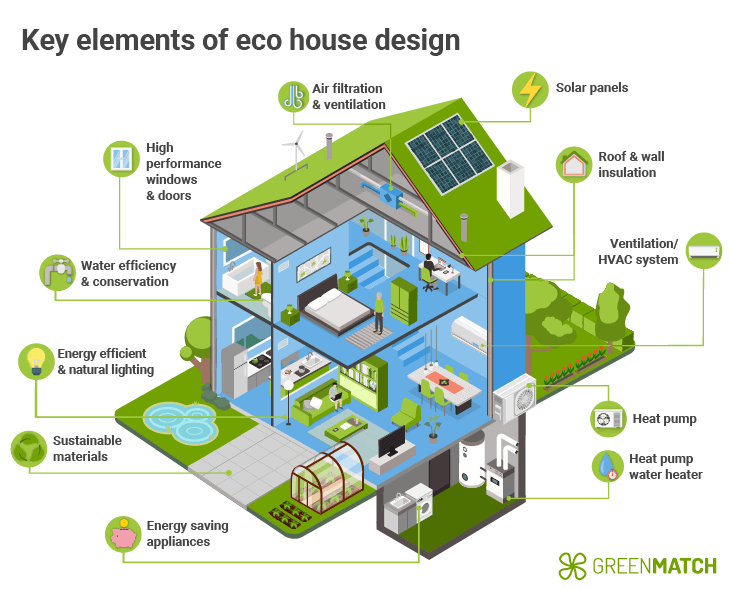
Furthermore, the transition frequently accelerates broader electrification efforts inside the home. Once a rooftop array or ground-mount system is producing surplus clean energy, the economic calculus for replacing natural gas appliances shifts dramatically. Homeowners begin eyeing heat pump water heaters, induction cooktops, and mini-split HVAC systems. Heating water or cooking dinner using electrons generated directly from your own roof creates a closed-loop efficiency that feels fundamentally different from relying on fossil-fueled municipal grids. The home ceases to be a collection of disconnected energy sinks and evolves into an integrated, self-regulating ecosystem.
Step-by-Step Practical Implementation Guide for Maximizing Your Clean Energy System
Transitioning to residential renewables requires careful planning to avoid common bottlenecks. Follow this structured roadmap to ensure a seamless integration from initial audit to post-installation optimization:
- Step 1 (Comprehensive Energy Audit): Before sizing a solar array or wind turbine, conduct a thorough home energy audit using a plug-in watt meter or smart home monitor to identify baseline loads, drafty insulation, and inefficient appliances that need replacement first.
- Step 2 (Load Profiling and Future-Proofing): Calculate your annual kilowatt-hour usage while factoring in future lifestyle changes, such as purchasing an electric vehicle or installing a geothermal heat pump, to ensure your renewable system is scaled for tomorrow rather than yesterday.
- Step 3 (Vetting Installers and Hardware Quality): Obtain at least three detailed engineering quotes, scrutinizing the tier-1 panel manufacturer warranties, inverter efficiency ratings, and the installer’s track record with local utility interconnection permitting.
- Step 4 (Interconnection and Meter Commissioning): Coordinate closely with your utility provider during the inspection phase to ensure your bidirectional smart meter is correctly programmed for net metering or local export tariffs before turning the system online.
- Step 5 (App Monitoring and Behavioral Fine-Tuning): Dedicate the first ninety days to studying your generation and consumption curves, adjusting appliance timer settings to maximize self-consumption during peak production hours.
Common Pitfalls and Field-Tested Workarounds for Renewable Energy Adopters
Even the most meticulously planned renewable energy installations encounter unexpected friction points. Avoiding these common missteps ensures long-term system health and financial return on investment:
- Pitfall 1 (Underestimating Winter Production Drops): Assuming solar generation remains flat year-round leads to winter sticker shock; the field-tested workaround is modeling your system output based on worst-case December and January solar irradiance rather than summer peaks.
- Pitfall 2 (Ignoring Shingle and Roof Lifespan): Installing solar panels on an aging roof that requires replacement five years later incurs thousands in costly de-installation and re-installation labor; always inspect and replace your roof before mounting solar hardware.
- Pitfall 3 (Neglecting Panel Maintenance and Soiling Losses): Believing that rain naturally keeps panels clean results in a gradual 5% to 20% energy loss from pollen, dust, and bird droppings; establish an annual soft-wash schedule, especially in arid or agricultural regions.
- Pitfall 4 (Relying Solely on Grid-Tied Systems During Outages): Realizing standard grid-tied solar systems automatically shut down during blackouts for safety reasons; invest in a hybrid inverter and battery storage bank if grid resilience is a primary goal.
- Pitfall 5 (Overlooking Insurance Policy Riders): Assuming standard homeowners insurance automatically covers rooftop renewable generation equipment; proactively contact your insurance carrier to ensure your policy covers the updated replacement value of the home.
The Long-Term Economic and Architectural Value of Self-Sustaining Homes
Beyond monthly utility savings, the long-term impact of renewable energy reshapes the fundamental equity of residential real estate. Properties equipped with solar arrays and integrated storage batteries command a distinct valuation advantage in modern housing markets. Buyers increasingly recognize that a home with negligible energy overhead protects them against future utility rate hikes. This economic shielding translates directly into higher resale velocity and appraisal values.
Architecturally, the integration of renewables forces a re-examination of how homes interact with their local climate. Passive solar design principles, strategic shading, and advanced thermal envelope sealing become critical partners to active generation systems. A home that requires less energy to begin with makes renewable sizing far more affordable and efficient.
Moreover, as communities face aging electrical infrastructure and increasingly erratic weather events driven by climate volatility, the decentralized nature of rooftop generation provides localized grid stabilization. When thousands of homes feed surplus energy back into local transformers during peak heatwaves, the entire neighborhood experiences reduced strain. The individual act of switching to renewables thus ripples outward, transforming private property into an active participant in regional energy resilience.
Actionable Recommendations and Key Takeaways for Future Adopters
Approaching the renewable energy transition requires a pragmatic, engineering-minded mindset rather than relying purely on marketing promises. Implement these core frameworks to maximize your return:
- Prioritize Efficiency Before Generation: Reduce your overall thermal and electrical demand through insulation upgrades and LED retrofitting before sizing expensive generation hardware.
- Factor Storage Into the Equation: Treat battery storage not as an optional luxury, but as an essential financial buffer against declining net metering export rates and unpredictable grid stability.
- Design for Modularity: Choose modular microinverter systems or scalable battery chemistries that allow your home energy ecosystem to expand as your family’s needs evolve over the coming decade.
The decision to sever dependence on fossil-fueled municipal utilities is ultimately about reclaiming autonomy. Walking out to your garage, listening to the faint hum of an inverter, and watching your home power itself using the sun overhead alters your relationship with the built environment. It replaces passive consumption with active stewardship.
As residential energy technology continues to mature, the dividing line between consumer and producer will blur even further. Homeowners are no longer trapped at the end of a one-way energy pipeline; they are nodes in a decentralized, resilient web of clean power. For those willing to navigate the initial learning curve, the rewards extend far beyond financial savings—delivering a quiet, enduring sense of self-reliance that illuminates the house long after the grid goes dark.