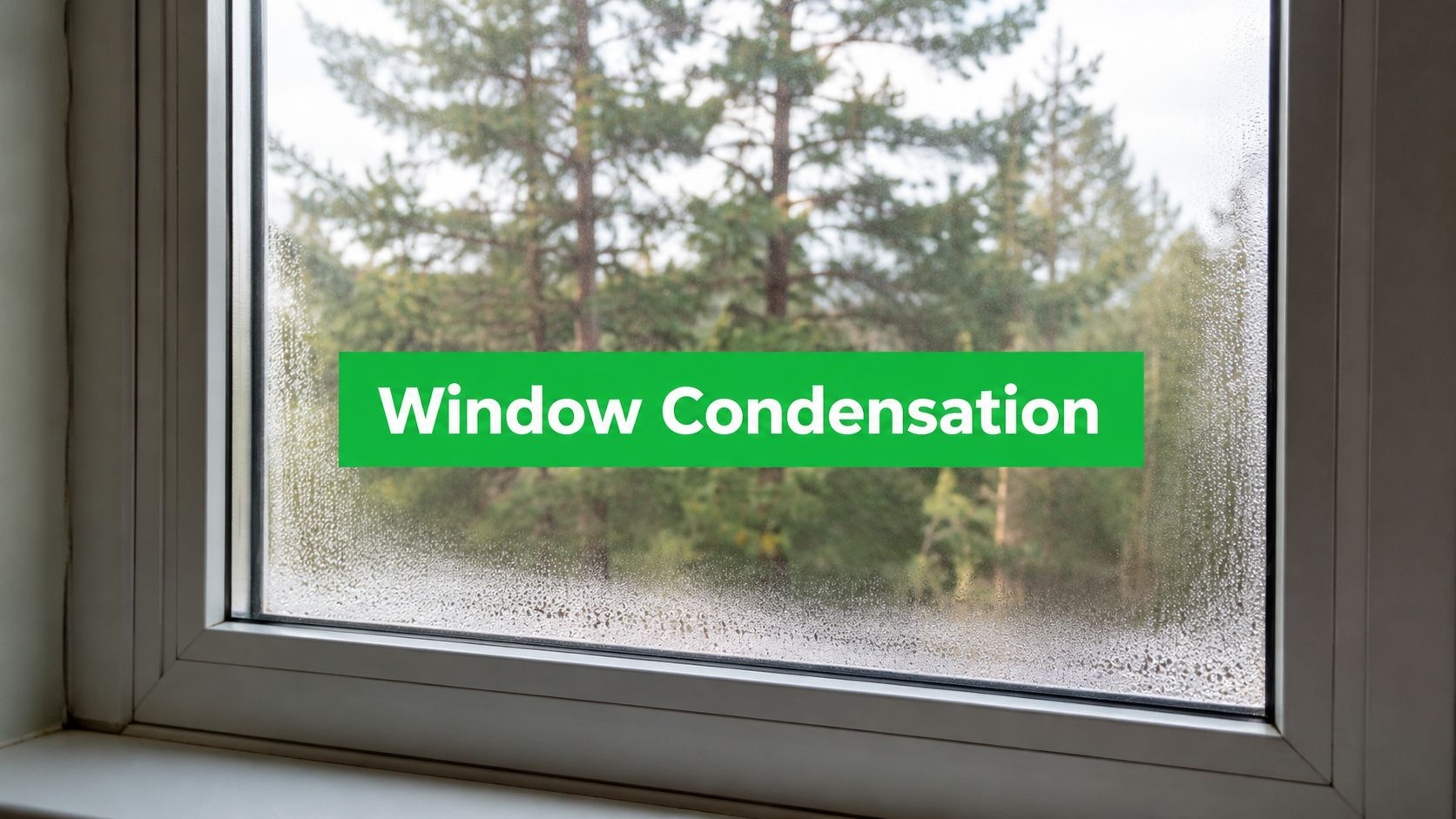
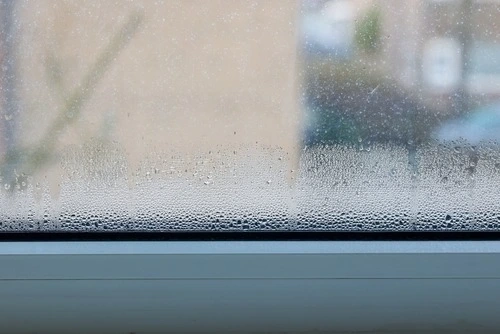
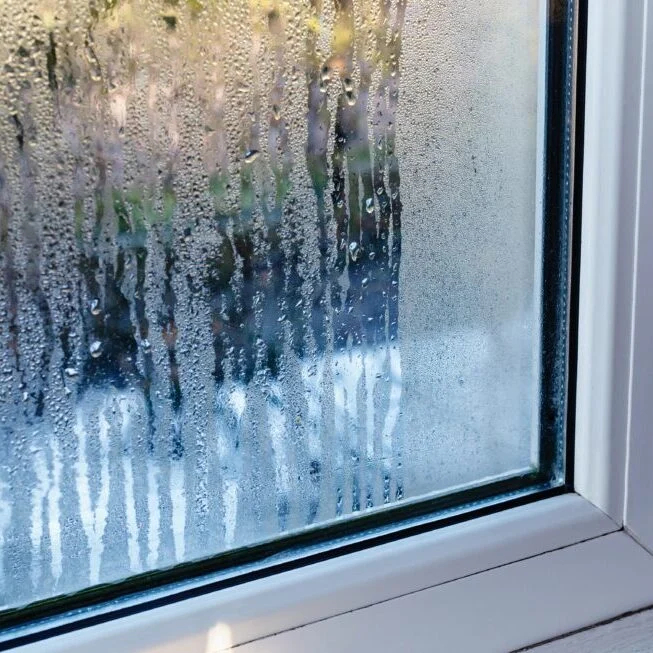
A foggy window does not tell you, by itself, what needs fixing. Moisture you can wipe off from indoors, dew on the outdoor surface, and haze trapped inside a sealed glass unit are different observations. Andersen separates these three locations in its condensation guidance; finding the location is a better starting point than immediately shopping for replacement windows.[5]
This guide gives US homeowners a simple way to document the problem before changing equipment or requesting service. It is an observation checklist, not an instruction to dismantle glass, diagnose hidden damage, or perform repairs from a ladder. Work only from a safe, accessible position and follow the instructions for your particular window.
Start by locating the moisture, not naming the repair
Choose one affected window and write down its room and location. Take a photograph before wiping anything. From indoors, gently wipe a small accessible area with a clean, dry cloth. Note whether the cloudy patch clears on that surface. If it does, you have identified roomside moisture at that spot. This does not prove that every other wet area has the same cause.
If the interior surface is dry, look from another angle. Check the outdoor surface only when it is safely accessible without leaning out or climbing. Record what you can actually establish: inside wet, outside wet, or location uncertain. A separate storm window or removable panel adds another surface, so identify the window assembly before describing the fog as trapped inside sealed glass. Ask the manufacturer when the construction is unclear.
For your notes, sketch three boxes labeled indoors, outdoors, and sealed glass space. Mark the box only when you have evidence. An honest question mark is more useful to a service technician than an unsupported diagnosis.
If the roomside glass is wet, check moisture and airflow
Marvin explains that moisture in indoor air can collect on cooler glass. Its guidance also points to everyday moisture sources and the importance of outdoor-vented bathroom and kitchen exhaust. A recent window replacement can change the situation: a tighter house may retain moisture that previously escaped through air leakage.[4]
Look for a pattern rather than changing several things at once. Does the window become wet after a shower or cooking? Are several rooms affected, or just one? Is a humidifier operating? Write these observations alongside the time. They are clues for the next conversation, not proof that a particular appliance is defective.
Marvin recommends keeping window coverings open during the day when cold-weather condensation is an issue, and checking that the home’s ventilation works as intended.[4] Try an observation with the shades open while preserving privacy where necessary. Do not cover a supply vent to change the appearance of one window, and leave ventilation changes to someone qualified to assess the whole system.
Measure humidity, but avoid a single nationwide setting
A humidity meter adds a measurement to the photograph. Record the room’s relative humidity and temperature, and include the outdoor temperature in degrees Fahrenheit. Use the same location for repeat readings so your notes remain comparable. Write down where the meter sits rather than assuming one reading represents every room.
The EPA’s general moisture guide advises keeping indoor relative humidity below 60 percent and, if possible, in the 30 to 50 percent range. It also advises drying wet surfaces and reducing the moisture source when condensation appears.[2] Those general ranges are not a guarantee that every cold window will remain dry.
The EPA’s separate moisture-control guidance shows lower recommended indoor humidity as outdoor temperatures fall.[1] That is why a coastal home and a home experiencing a deep freeze should not receive an identical instruction based only on the calendar. Consult the window manufacturer’s guidance and a qualified building or heating professional if moisture persists. Do not keep adjusting humidity indefinitely while a sill remains wet.
If the outside surface is wet, observe what happens later
Andersen describes exterior condensation as dew that forms when outdoor glass is cooler than the outdoor dew point. It commonly appears on spring or fall mornings and may disappear as sunlight warms the glass. This outdoor dew alone is not evidence that the window has failed.[5]
Take a second photograph later from the same safe position. Record whether the exterior haze cleared while the indoor surface stayed dry. Keep those observations separate from water on interior trim or a wet wall. Do not climb outside simply to wipe away morning dew. If you cannot establish which surface is wet, describe that uncertainty when asking for help.
If haze is between sealed panes, request a product-specific assessment
Andersen identifies condensation between the sealed panes of insulating glass as a sign of seal failure.[5] Before requesting service, photograph the haze and any accessible manufacturer label without removing parts. Describe what happened when you checked the accessible surfaces.
Ask the service provider to identify the assembly and explain the proposed scope of work. Is the recommendation a glass unit, a sash, or a complete window? What is included, and what warranty documentation is needed? These are questions for a product-specific quotation, not a promise that any particular component can be replaced separately. Do not drill the glass or take apart the sealed unit as a diagnostic experiment.
Keep a short record and know when observation is not enough
Use this compact record for each affected window:
- Room and window location, plus a photograph before wiping.
- Which surface is wet, or why the location remains uncertain.
- Time, indoor temperature, relative humidity, and outdoor temperature.
- Recent showering, cooking, humidifier use, or other relevant observations.
- Whether moisture returned, cleared later, or left the sill wet.
For an illustrative entry, write: “Kitchen window, morning; inside wiped clear; shade closed; photograph saved.” Add actual readings when available. Do not fill missing values with estimates presented as measurements. Compare another window in the same room before concluding the whole house has one problem.
If water continues collecting or the surrounding materials remain wet, arrange an assessment rather than repeating the checklist indefinitely. The EPA emphasizes drying wet surfaces and addressing the moisture source.[2] This guide does not determine whether hidden damage exists.
If you separately identify a draft, our discussion of door and window weatherstripping addresses a different maintenance topic; it is not evidence that condensation requires new seals.
The useful outcome is not an instant diagnosis. It is a clear description of where the water appears, when it appears, and what remains uncertain. With that record, you can ask focused questions and choose the next step without treating every foggy window as the same repair.