There is a distinct, primal comfort in watching a flame dance against the dark. For millennia, humanity anchored its evenings to the chaotic, rhythmic sway of burning tallow, wax, and wood. We evolved alongside fire, reading its subtle shifts in luminance to gauge safety, warmth, and the passing of time. When electric lighting arrived, it brought efficiency and safety, yet stripped away that visceral, biological connection. Rooms became uniformly bright, flat, and sterile.
Enter the modern era of domestic illumination, where engineering meets atmospheric art. For years, attempting to replace open flames with electric alternatives meant settling for cheap novelty bulbs that blinked on and off with the irritating predictability of a dying neon sign. They looked mechanical because they were mechanical. Today, however, lighting engineers have cracked the code of organic movement. By blending advanced solid-state electronics, custom microcontrollers, and micro-scale optical diffusers, modern candelabra LED bulbs transform stark electricity into a convincing, mesmerizing simulation of a living fire.
The shift is not merely cosmetic; it represents a massive leap in material science and psychological design. Homeowners, hospitality designers, and historic restorationists no longer have to choose between the searing heat and soot of real wax and the lifeless glare of standard LEDs. Instead, they can install specialized E12 or E14 base candelabra bulbs that cast a warm, undulating glow across antique iron chandeliers and brass wall sconces. Understanding how these tiny marvels achieve such natural realism requires looking past the glass envelope and examining the complex circuitry humming quietly within.
The Micro-Architecture of Simulated Combustion
Replicating a natural flame requires breaking down the physics of actual combustion. A real candle flame does not flicker randomly in a white noise pattern; its movement is governed by convection currents, fuel vaporization rates, and micro-turbulences in the surrounding air. The light it emits is heavily weighted toward the lower end of the Kelvin scale, usually hovering between 1800K and 2200K, producing a deep amber hue. To translate this into semiconductor technology, manufacturers had to design hardware capable of manipulating light output at microscopic intervals without causing eye fatigue or premature diode degradation.
At the heart of a high-end candelabra flame bulb lies a specialized integrated circuit (IC) or a tiny microcontroller unit (MCU). Unlike standard dimmable LEDs that rely on external wall dimmers to adjust voltage smoothly, these bulbs contain internal logic boards programmed with sophisticated algorithms. These algorithms draw inspiration from chaos theory, specifically simulating stochastic processes—random variables that follow a defined statistical distribution. The MCU rapidly modulates the electrical current sent to the microscopic gallium nitride (GaN) diode chips, causing micro-fluctuations in brightness that mimic the erratic drafting of air across a burning wick.
Furthermore, the physical arrangement of the emitters matters immensely. Many premium bulbs utilize a vertical, slender LED filament coated in a thick layer of silicone phosphor. Instead of a single static point source, these elongated filaments flex light outward in a 360-degree pattern. When the internal chip cycles power across sections of the filament or shifts the overall drive current, the light appears to bend and sway vertically. This creates an optical illusion of a physical tongue of fire stretching and contracting within the glass chimney.
Optical Diffusion and the Psychology of Warmth
Electronics alone cannot sell the illusion; light must interact with its environment just as real fire does. Real flames cast soft, diffuse shadows because the light source is small yet dimensional, creating a penumbra that softens the edges of objects in a room. Early LED attempts failed because the light emanated from harsh, concentrated points or flat circuit boards, casting sharp, unnatural shadows that immediately broke the spell of realism.
Modern manufacturers solve this by utilizing frosted, amber-tinted, or milk-glass envelopes paired with specialized internal prismatic coatings. As the modulated light passes through the glass, it scatters uniformly in all directions, softening the transitions between bright peaks and dim valleys. This diffusion mimics the way soot particles and heated gases in a real flame disperse photons through the air. The eye perceives a soft cloud of warm illumination rather than a blinking pixel.
Color temperature consistency is another critical battleground. Real fire shifts its spectral output slightly as it flickers—hotter bursts lean toward a slightly brighter, cleaner yellow-orange, while cooler, dipping moments drag the color temperature down into a deep, moody ember red. Advanced candelabra LEDs replicate this phenomenon, known as "dim-to-warm" or dynamic color shifting. As the light dims during a flicker cycle, the color temperature drops proportionally, tricking the human brain into registering the psychological warmth of cooling wax and hot gas.
Implementing Realistic Ambient Lighting in Period Fixtures
Installing these specialized bulbs requires a strategic approach, especially when dealing with vintage or high-end architectural fixtures. Because candelabra bulbs are frequently exposed in open chandeliers, wall sconces, and carriage lanterns, the aesthetic of the bulb itself when turned off is just as important as its performance when powered on. Choosing the wrong bulb can ruin the daytime aesthetic of a 19th-century crystal chandelier with an unsightly plastic base or a glaringly bright yellow phosphor strip.
To achieve an authentic atmosphere, careful planning must go into bulb selection, fixture pairing, and control integration. The following step-by-step methodology ensures optimal results when upgrading a space with flickering LED technology:
- Step 1 (Audit the Fixture and Socket Type): Inspect your light fixtures to determine whether they utilize E12 (candelabra base in North America) or E14 (European small Edison screw) sockets. Verify the maximum wattage rating of the fixture, keeping in mind that while LEDs draw very little power (usually 1.5 to 4 watts), ensuring physical clearance inside glass globes or fabric shades is paramount.
- Step 2 (Select the Right Color Temperature): Purchase bulbs rated strictly between 1800K and 2200K. Avoid standard "warm white" 2700K bulbs marketed as flickering options, as 2700K contains too much blue spectrum light and will look clinical and stark against a dark evening backdrop.
- Step 3 (Evaluate the Flicker Algorithm): Test a single sample bulb before outfitting an entire chandelier. Look for organic variability—the bulb should spend long stretches glowing steadily with gentle, subtle breathing shifts, punctuated by occasional, rapid dips that simulate a sudden draft. Avoid bulbs that loop their flicker pattern visibly every few seconds.
- Step 4 (Manage Dimmer Compatibility): Determine if your wall switch is a standard dimmer. Many flickering LED bulbs feature internal microcontrollers that conflict with TRIAC or trailing-edge wall dimmers, resulting in audible buzzing, strobing, or erratic resetting. Opt for non-dimmable flickering bulbs designed to run at full line voltage, letting the internal chip handle all dynamic adjustments.
- Step 5 (Optimize Ambient Placement): Position the bulbs in fixtures where they can cast light against textured surfaces, dark wood paneling, or brick hearths. The interplay between the dynamic light output and a textured background dramatically enhances the illusion of a dancing flame.
Navigating Common Pitfalls in LED Flame Simulation
Despite remarkable technological strides, introducing flickering LEDs into a home design project comes with distinct hazards. Because the market is flooded with inexpensive novelty items manufactured for seasonal holiday displays, quality varies wildly. Failing to understand the technical limitations of these specialized chips can result in a frustrating installation that feels more like a disco than a cozy fireside retreat.
Experienced lighting designers and savvy homeowners know how to sidestep the most frequent mistakes made during the selection and installation process. Awareness of these operational hurdles saves both time and money:
- Pitfall 1 (The Loop Effect): Cheap bulbs use basic, short-cycle microchips that repeat the exact same flickering sequence every 4 to 8 seconds. Once the human brain detects this repetitive loop, the illusion shatters completely. Workaround: Invest in commercial-grade or architectural bulbs powered by true random-number-generator (RNG) microcontrollers or long-tail stochastic algorithms that do not repeat for hours.
- Pitfall 2 (Incompatible Dimmer Strobing): Attempting to dim an internal flickering circuit with an external wall dimmer causes voltage starvation, leading to frantic flashing or complete circuit lockup. Workaround: Always use non-dimmable flame bulbs on standard, un-dimmed toggle or switch circuits, allowing the bulb to receive steady 120V or 230V power so its internal logic board functions without interference.
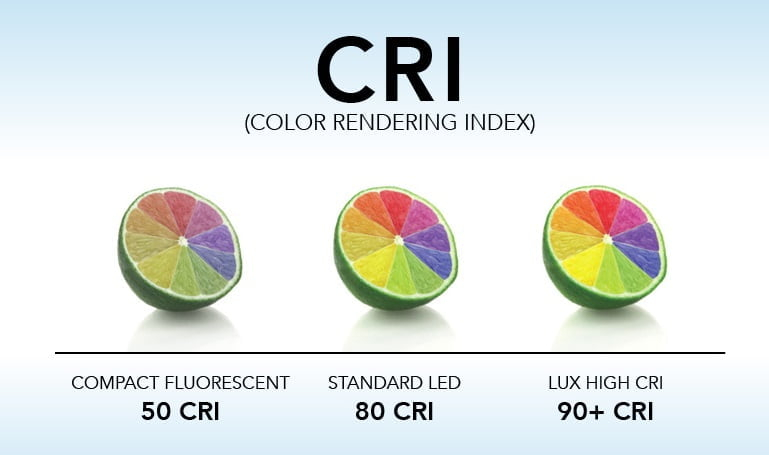
- Pitfall 3 (Excessive Blue Peak Spikes): Low-cost phosphor coatings fail to block high-energy visible blue light, resulting in a sickly, greenish-yellow tint during bright phases. Workaround: Inspect the product’s spectral distribution chart or look for bulbs explicitly certified as low-blue-light emitters with high color rendering indexes (CRI > 80 or 90).
- Pitfall 4 (Visible Plastic Heat Sinks): Many budget bulbs feature a bulky, white thermoplastic housing at the base to dissipate heat, ruining the look in open glass chandeliers. Workaround: Select "clear glass chimney" or "flame tip" style bulbs where the LED driver is miniaturized inside the base screw thread, leaving the upper glass envelope completely transparent or uniformly frosted.
- Pitfall 5 (Electromagnetic Interference): Poorly shielded internal drivers in cheap imported bulbs can emit radio frequency interference (RFI), disrupting nearby Wi-Fi signals, Bluetooth devices, or AM/FM radio reception. Workaround: Purchase bulbs that comply with FCC Part 15 Class B standards or carry recognized safety certifications like UL, ETL, or CE.
The Broader Cultural Shift Toward Biomimetic Illumination
The demand for hyper-realistic flame simulation points to a deeper cultural shift in how we think about interior spaces. For decades, modern architecture championed minimalism, sleek lines, and clinical, high-lumen illumination designed to maximize productivity and visibility. Yet, as our lives have become increasingly dominated by screen time and artificial blue light, our biological need for restorative, analog-feeling environments has intensified. Lighting is no longer just about seeing; it is about emotional regulation and circadian alignment.
Biomimetic design—the practice of learning from and mimicking strategies found in nature—has emerged as a dominant philosophy in home automation and architectural lighting. Firelight represents the original human technology for gathering, storytelling, and winding down at the end of the day. By successfully encoding the behavior of fire into solid-state electronics, modern engineering bridges the gap between high-tech energy efficiency and deep-seated human psychology.
Furthermore, the economic and environmental implications are profound. Traditional wax candles contribute to indoor air pollution, releasing soot, volatile organic compounds (VOCs), and paraffin residues into tightly sealed modern homes. They also present severe fire hazards, accounting for thousands of residential fires annually. Candelabra LED bulbs consume a fraction of a watt, run completely cool to the touch, last for upwards of 15,000 to 25,000 hours, and eliminate the open flame hazard entirely while delivering 95% of the psychological and aesthetic benefits of real combustion.
Strategic Frameworks for Selecting Architectural Flame Bulbs
Integrating these bulbs into a comprehensive lighting plan requires moving away from treating lighting as an afterthought and treating it as a primary design layer. Ambient fire-glow lighting works best when isolated from task lighting and cool overhead fixtures. By layering illumination levels—pairing low-output floor lamps with flickering wall sconces—homeowners can sculpt spaces that feel intimate, historical, and deeply grounded.
To maximize the impact of modern flame-simulation technology, consider the following structural recommendations for your next lighting project:
- Prioritize Flame-Tip Silhouettes: For traditional candelabra sockets, select "torpedo" or "flame-tip" shaped bulbs with twisted or curved glass tops. The physical curvature of the glass enhances the upward trajectory of the light simulation, making the illusion of a rising flame far more convincing from across the room.
- Group in Odd Numbers: In large multi-arm chandeliers, mixing flickering bulbs with standard dimmable amber bulbs can sometimes dilute the effect. For maximum realism, outfit the entire fixture with flickering variants, or group them in clusters of three or five within multi-tiered spaces to create a natural, rolling wave of illumination.
- Utilize Smart Home Scheduling: Pair your candelabra fixtures with smart switches or astronomical timers programmed to activate the flickering circuit precisely at dusk. This automates the transition from active daytime productivity to evening relaxation, aligning your home environment with natural circadian rhythms without requiring manual intervention.
The journey from the flickering tallow candles of antiquity to the sophisticated semiconductor algorithms of today reveals our enduring obsession with the dance of fire. We are creatures of light and shadow, wired to find peace in the erratic, warm glow of combustion. While technology has stripped away the danger, smoke, and soot, it has successfully preserved the soul of the experience.
As microcontrollers shrink and phosphor chemistry advances, the fidelity of simulated flame will only deepen. We are entering an era where our living spaces can honor historical aesthetics and embrace modern safety simultaneously, proving that technological progress does not have to come at the cost of human warmth. By understanding the mechanics behind these tiny glowing filaments, we can curate environments that soothe the senses, protect our homes, and keep the ancient, comforting spirit of the hearth alive in the twenty-first century.