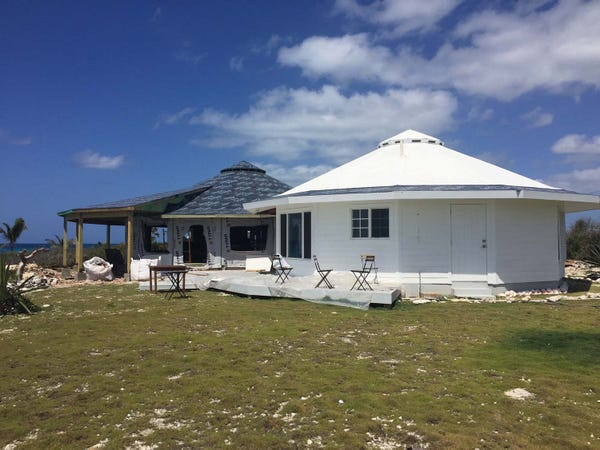
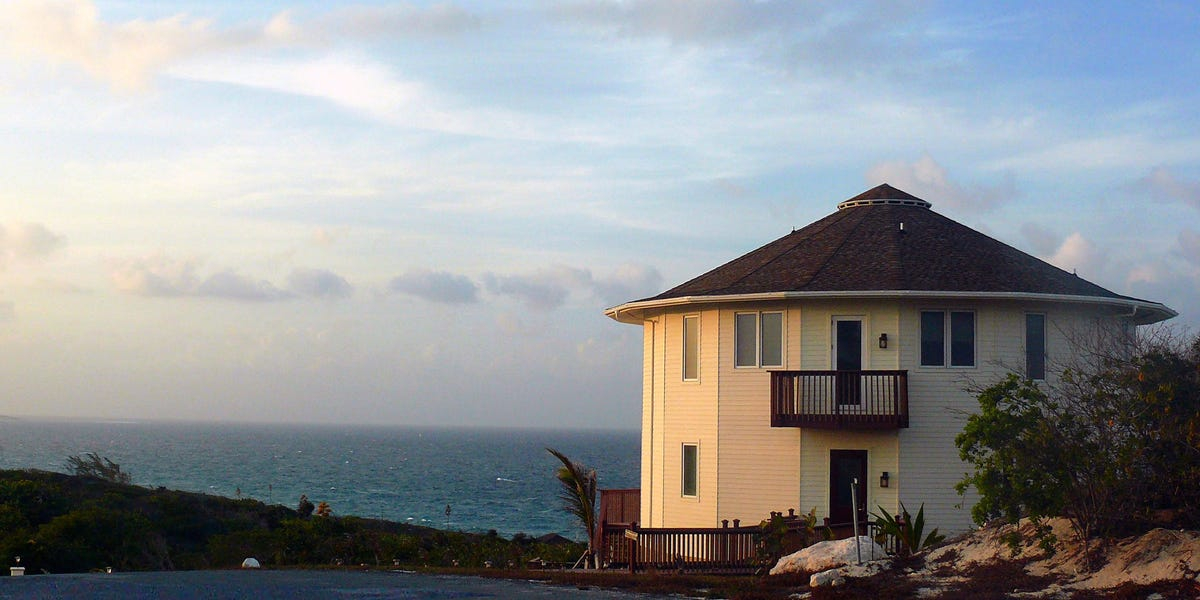
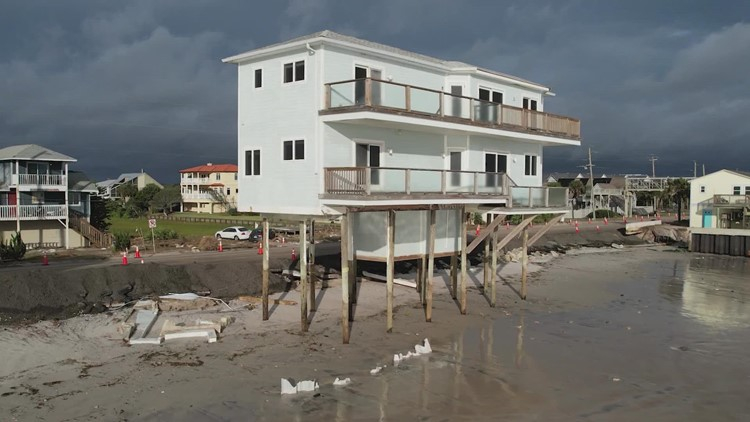
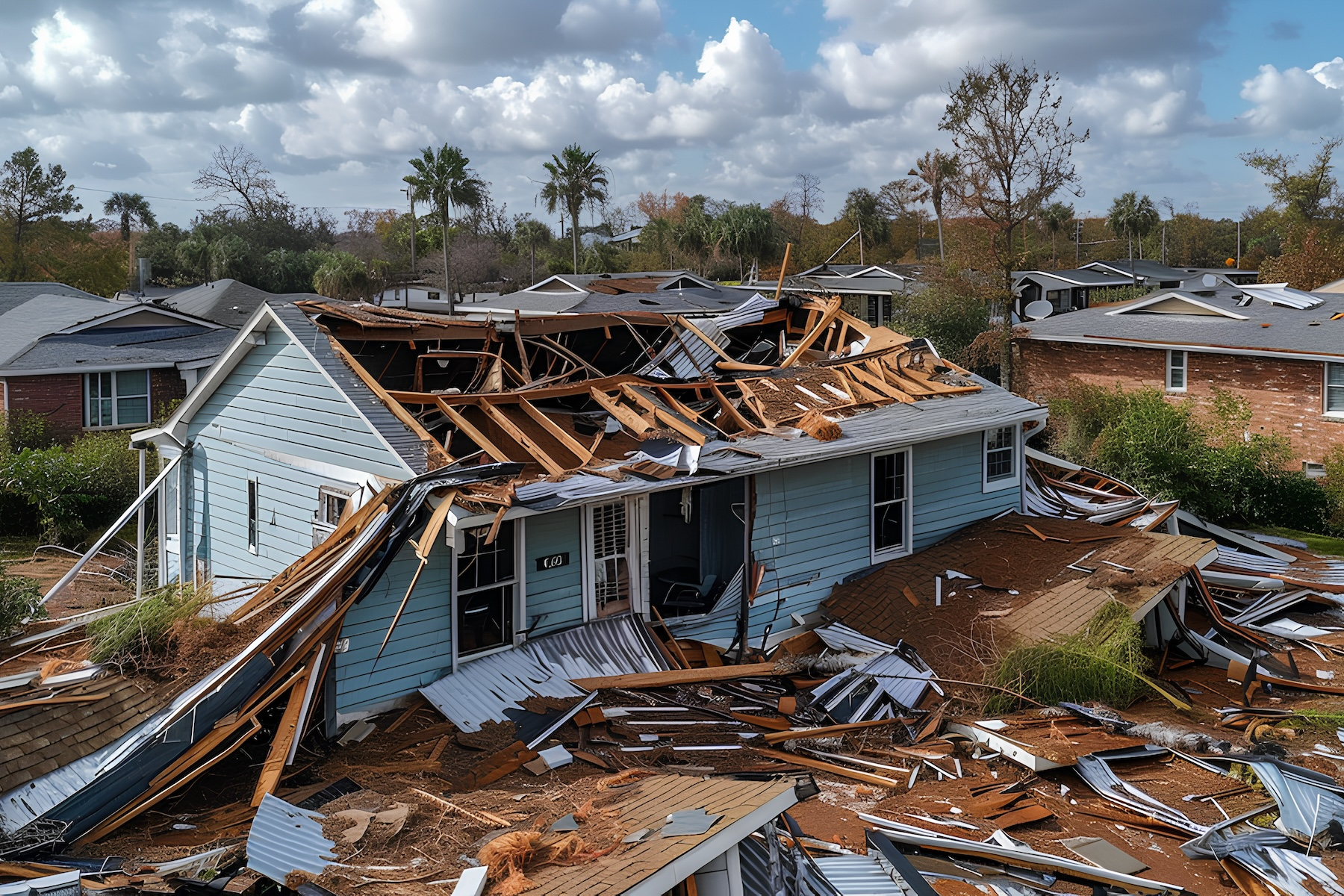
You’ve seen the footage. It’s everywhere on the news every storm season. A neighborhood looks like a bomb went off. Roofs are peeled back like sardine cans. Walls are flattened. But then, right in the middle of that devastation, there’s one house. Maybe it’s got a weird shape. Maybe it looks like a silo or a yurt. And it’s still standing. Not just standing, but looking pretty much fine while everything around it is rubble.
It feels almost unfair, doesn’t it? Like cheating. But it’s not magic. It’s just geometry. For decades, we’ve built our lives in boxes. Squares and rectangles are easy to frame. They’re easy to furnish. But when the wind starts howling at 150 miles per hour, those sharp corners become liabilities. Nature doesn’t do straight lines. Wind doesn’t move in grids. So why do we keep building homes that fight against the very forces trying to tear them down?
The answer lies in flow. When you stop fighting the wind and start letting it glide past you, things change. Round homes aren’t just a quirky architectural trend for eco-enthusiasts anymore. In 2026, with storms getting stronger and more frequent, they are becoming a serious survival strategy. Let’s dig into why a circle might be the safest shape you can live in.
The Physics of Flow: Why Corners Are the Enemy
Think about sticking your hand out of a car window. If you hold your palm flat against the wind, what happens? Your arm gets shoved back hard. The air hits your hand and has nowhere to go but to push against it. That’s exactly what happens to a square house. The wind slams into the flat wall, creating massive pressure. This pressure tries to push the wall in. At the same time, as the wind rushes over the top and around the sides, it creates suction that tries to pull the roof off. It’s a tug-of-war, and the house is the rope.
Now, curl your fingers and make a loose fist, or better yet, hold your hand out with the side of your palm cutting through the air. The wind slides around it. It doesn’t stop; it just moves aside. That’s aerodynamics. A round home works the same way. Because it has no flat walls facing the wind directly, the air doesn’t crash. It flows. The pressure is distributed evenly around the entire circumference of the structure. There’s no single point taking the full brute force of the storm.
This isn’t just theory. Engineers have known this for ages. It’s why airplane wings are curved. It’s why race cars are sleek. When you remove the corners, you remove the weak points. In a square house, the corners are where stress concentrates. Cracks start there. Structural failures begin there. In a round house, the stress is shared. It’s like the difference between poking a balloon with a needle versus pressing it with your whole hand. One pops instantly; the other just bends.
Real World Proof: Surviving the Unsurvivable
Numbers on a page are one thing. Seeing a house stand after a Category 4 hurricane is another. Take Hurricane Charley, for instance. It tore through Florida with devastating force. News reports from the time highlighted a specific round house that survived while neighboring traditional structures were wiped out. It wasn’t luck. It was design. The wind simply didn’t have anything to grab onto.
Then there’s Deltec Homes. They’ve been building these circular prefabs since 1968. Based in Asheville, North Carolina, they’ve spent decades refining the craft. Their stats are pretty wild. They claim a 99.9% survival rate for major hurricanes over the last three decades. That’s not a typo. Nearly perfect. Their homes are rated to withstand winds up to roughly 190 mph. To put that in perspective, that’s well into Category 5 territory.
In 2026, this track record matters more than ever. Homeowners in the Atlantic south and Gulf Coast aren’t just looking for pretty views; they’re looking for insurance that actually pays out because their house is still there. Deltec and other builders like Florida Steel Homes have seen a surge in interest. People are tired of rebuilding. They want something that stays put. The evidence is literally standing in the aftermath of every major storm. While boxy homes get flattened, the round ones remain, often with just minor cosmetic damage.
Structural Integrity: The Strength of the Dome
It’s not just about the walls. The roof is usually the first thing to go in a hurricane. High winds create lift, sucking the roof off like a lid from a pot. Traditional gable roofs are particularly vulnerable. But round homes often use dome-like or conical roof systems. These shapes are inherently stable. They don’t have large, flat surfaces for the wind to get under and pry up.
The construction methods matter too. Many round homes use panelized systems that lock together. Imagine a barrel. The staves of a barrel support each other. If you push on one side, the whole barrel resists. You can’t just break one piece easily because the tension is held by all the other pieces. This hoop strength is incredible. It makes the entire structure act as a single, unified shell rather than a collection of separate walls and beams.
Meg Gore, the CEO of Deltec, has pointed out that this circular footprint reduces pressure points that lead to failure. It’s a holistic approach. The foundation, the walls, and the roof all work together. In a square house, if a window blows out, the pressure inside spikes and can blow the rest of the house apart from the inside out. In a well-sealed round home, the aerodynamic shape helps prevent that initial breach. And even if a window breaks, the curved walls are less likely to collapse inward because the force is dispersed.
Energy Efficiency and Comfort Beyond the Storm
Here’s a bonus that doesn’t get enough attention. Round homes aren’t just tough; they’re efficient. Think about surface area. A circle encloses the most space with the least amount of perimeter. That means less exterior wall surface exposed to the hot sun or cold wind. In summer, there’s less heat gain. In winter, less heat loss. This translates to lower energy bills, which is nice any time of year, but especially when the power grid is shaky after a storm.
Inside, these homes feel different. Without corners, the air circulates more naturally. You don’t get those dead zones where dust settles and air stagnates. Many round homes feature vaulted ceilings that follow the curve of the roof. This makes the interior feel much larger than the square footage suggests. Meg Gore noted that the round form factor makes small-footprint units feel bigger. It’s an optical illusion, but a pleasant one.
For families living in hurricane-prone areas, this efficiency adds a layer of resilience. If you lose power for a week, a round home will stay cooler (or warmer) longer than a boxy one. It holds its temperature better. That’s not just about comfort; it’s about safety. Keeping food fresh and maintaining a livable temperature without electricity can be a lifesaver in the days following a major disaster.
The Modern Shift: Why 2026 is Different
Ten years ago, calling your house a "round home" might have gotten you some strange looks. It was seen as eccentric. Maybe a bit hippie. But the conversation has shifted. In 2026, climate change isn’t a distant threat; it’s the daily weather report. Hurricanes are becoming more frequent and more destructive. Insurance companies are raising rates or pulling out of states entirely. People are desperate for solutions that actually work.
Builders are responding. We’re seeing more than just full-size family homes. There’s a new generation of accessory dwelling units (ADUs) that are round. These smaller structures are perfect for guest houses, home offices, or rental income. They’re cheaper to build, faster to assemble, and just as resilient. The technology has improved too. Modern materials like steel framing and advanced composites make these homes lighter yet stronger. Prefabrication means they can be built in a factory under controlled conditions, ensuring higher quality than site-built homes.
Social media has played a role too. Videos of round homes surviving storms while neighbors’ houses vanish go viral quickly. People see the practicality. It’s no longer just about aesthetics; it’s about smart investing. Why pour money into a structure that has a high probability of failing? The stigma is gone. Now, it’s seen as forward-thinking. It’s the smart choice for anyone who values their safety and their wallet.
Practical Considerations: Is It Right for You?
So, should you knock down your square house and build a circle? Probably not immediately. But if you’re building new, or rebuilding after a storm, it’s worth serious consideration. The cost used to be a barrier, but as more companies enter the market, prices are becoming competitive. Deltec offers homes ranging from 300 to over 2,500 square feet. There’s a size for almost every need.
Furnishing can be tricky. Standard rectangular sofas don’t fit perfectly against curved walls. But this has spurred a creative interior design niche. Custom built-ins work beautifully. Circular rugs define spaces. The lack of corners actually frees up floor plan options. You can arrange furniture in clusters rather than lining it up against walls. It encourages a more social, open layout.
Permitting can vary by location. Some local zoning laws are still caught up in the 20th century and might have odd restrictions on non-traditional shapes. However, as these homes become more common, codes are adapting. It’s always wise to check with local builders who have experience with round structures. They’ll know the ins and outs of getting approval in your specific area. The key is finding a builder who understands the engineering, not just the look.
At the end of the day, a home is supposed to be a sanctuary. It’s where you retreat from the world. When the sky turns green and the wind starts to scream, that feeling of safety is priceless. Round homes offer that. They don’t just resist the wind; they respect it. They work with nature instead of trying to dominate it. And in a world where nature is showing us who’s boss, that seems like a pretty wise strategy.
We’ve spent centuries forcing the land to fit our boxes. Maybe it’s time we changed our shape to fit the land. The technology is here. The proof is in the ruins of past storms. And the peace of mind? That’s something you can’t put a price on. Whether you’re in Florida, the Carolinas, or anywhere else the wind blows hard, the circle might just be the strongest line you can draw.
So next time you see a storm forecast, don’t just board up the windows. Think about the shape of your shelter. Because when the pressure drops and the winds rise, being round isn’t just a style choice. It’s a survival skill. And honestly? It’s about time we started building smarter.