The smoke rises lazily over the poured concrete patio, carrying the rich, savory scent of charred ribeye and rosemary. But look closer at the setup. There is no wobbling cart on caster wheels, no propane tank dangling by a frayed fabric strap, and no tangled mess of tools cluttering a plastic side shelf. Instead, the cooking apparatus looks like it was born right out of the masonry itself—flush-mounted, anchored in hand-laid stacked stone, flanked by smooth granite prep counters and an under-counter refrigeration drawer that hums quietly against the heat.
This scene is playing out in backyards across the country. Outdoor cooking has broken free from its traditional weekend-hobby box and morphed into a full-scale lifestyle transformation. Homeowners are no longer satisfied dragging a generic black cart out of the garage every time the weather warms up. They want permanence. They want architecture.
The residential landscape has shifted beneath our feet. While standard freestanding grills still hold a massive footprint in terms of raw unit sales, the built-in segment is surging forward at nearly twice the growth rate. Driven by a booming $26 billion outdoor living industry, backyards are being reimagined as true open-air living spaces. The grill is no longer just an appliance; it is the absolute gravitational center of the modern patio, dictating the flow of conversation, the design of countertops, and the architectural rhythm of the home.
The Architectural Shift from Mobile Carts to Permanent Patio Anchors
For decades, the backyard grill was a temporary tenant on the patio. It lived on four caster wheels, designed to be rolled into a shed when winter arrived or pushed against a brick wall when the lawn needed mowing. That mobility, once considered the ultimate convenience, now feels like a compromise. Carts wobble, side tables sag under the weight of heavy platters, and exposed propane tanks or grease traps ruin the clean visual lines of a well-designed outdoor space.
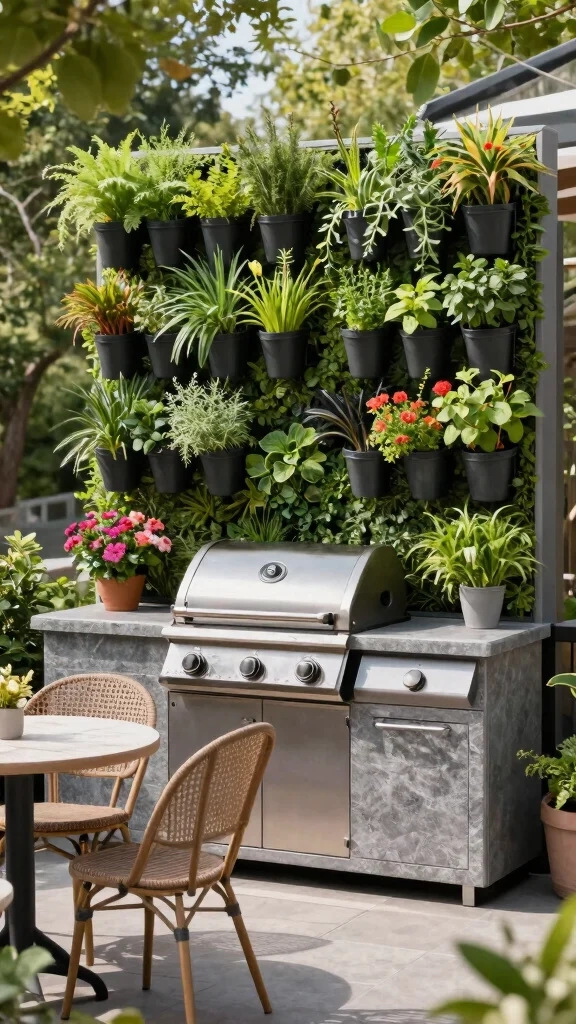
Built-in grills change the entire geometric and functional vocabulary of a backyard. When you drop a heavy-gauge stainless steel grill head into a custom masonry island or a modular cabinet frame, you lock the cooking apparatus into the physical architecture of the home. It stops being an afterthought and becomes the primary anchor point around which every other patio element revolves. The prep zones, the trash pull-outs, the cocktail stations, and the bar seating all organize themselves naturally around this permanent fire source.
This structural permanence alters human behavior on the patio. When a grill is built into a dedicated kitchen island, the cook is no longer isolated in a corner, turning burgers with their back to the party. Instead, integrated peninsulas and counter alignments invite guests to pull up a barstool, hand the chef a drink, and participate in the preparation. The psychological barrier between indoor hosting and outdoor cooking vanishes entirely. You are no longer "out grilling"; you are simply cooking in your second kitchen.
Material Longevity and the Engineering Behind Marine-Grade Stainless Steel
One of the primary catalysts driving buyers toward built-in units is the radical evolution in outdoor appliance manufacturing. Early attempts at outdoor kitchens often suffered from rapid degradation. Homeowners would build gorgeous stone islands only to watch standard steel grill chassis rust out, seize up, and pit within three or four coastal seasons.
Today’s built-in market operates on an entirely different engineering standard. Premium manufacturers rely heavily on 304 and marine-grade 316 stainless steel, heavy-duty cast brass burners, and ceramic infrared searing elements designed to endure extreme temperature fluctuations without warping. Because a built-in grill is permanently exposed to the elements without a protective cart housing to shield its undercarriage, every component must withstand rain, freezing winters, and intense UV exposure year-round.
Furthermore, purchasing a built-in grill forces a commitment to quality that cheap freestanding units rarely demand. When you invest time and labor into framing, pouring concrete footings, and applying stone veneer or stucco, you simply cannot afford to drop a flimsy, disposable appliance into the cutout. Homeowners recognize that replacing a built-in grill requires matching cutout dimensions and potentially tearing into masonry work. Consequently, buyers lean heavily toward professional-grade chassis with lifetime warranties, heavy-walled hoods, and robust ignition systems that require zero matches or batteries.
Designing the Ultimate Outdoor Workflow Around Your Built-In Grill
Installing a built-in grill is not merely a matter of dropping a metal box into a hole; it is an exercise in ergonomic design. If you get the layout wrong, your patio kitchen becomes an obstacle course of dropped tongs, frantic sprints to the indoor sink, and awkward turning radiuses. A successful outdoor kitchen mimics the efficiency of an indoor workspace, following the classic culinary triangle modified for open-air entertaining.
The integration of the grill dictates the placement of three critical zones: hot cooking, wet utility, and dry prep. Designing this flow requires meticulous planning before a single block is laid or gas line is trenched.
- Step 1 (The Hot Zone & Grill Placement): Position your built-in grill with adequate clearance from combustible materials, ensuring at least twelve inches of flat counter space on either side for resting hot pans and staging platters.
- Step 2 (The Cold & Wet Utility Zone): Integrate an under-counter outdoor refrigerator and a stainless steel prep sink within arm’s reach of the grill, allowing you to manage raw proteins and wash produce without trekking inside.
- Step 3 (Waste & Storage Integration): Install pull-out trash and recycling drawers directly beneath or adjacent to the primary prep counter to eliminate unsightly food waste exposure and pest attraction.
- Step 4 (Utility Line Rough-Ins): Run dedicated gas lines (sized correctly for high-BTU loads), low-voltage electrical wiring for integrated hood lighting and rotisseries, and water supply lines before pouring any concrete base.
- Step 5 (Surface Finishing & Ventilation): Apply heat-resistant stone veneer or stucco around the island frame, and ensure proper rear or bottom ventilation panels are installed to prevent hazardous gas pooling.
Navigating Structural Pitfalls and Avoiding Costly Installation Mistakes
While the aesthetic payoff of a built-in grill is undeniable, the installation process leaves very little room for error. Unlike a freestanding unit that you simply unbox and plug into a tank, a built-in grill demands absolute precision. A miscalculation of a quarter-inch in your masonry framing can leave your expensive appliance hanging awkwardly or refusing to drop into the cutout altogether.
Another frequent misstep involves underestimating the fuel supply requirements. Homeowners transitioning from portable 20-pound propane tanks to natural gas or large buried propane setups often fail to calculate the total BTU draw of their entire outdoor suite. If you run a high-output built-in grill alongside a dedicated searing station, a side burner, and an integrated pizza oven on a residential gas line that is too narrow, your burners will starve for pressure the moment you fire them all up simultaneously.
Ventilation is another non-negotiable engineering detail that DIYers frequently botch. Enclosed islands constructed of wood framing or composite materials require proper vent panels to allow heavier-than-air LP gas to dissipate safely in the event of a leak. Ignoring these safety clearances not only voids manufacturer warranties but creates genuine structural hazards. Working with certified patio contractors or referencing precise manufacturer framing specs down to the millimeter is the only way to safeguard your investment.
The Economic Reality and Resale Value of Permanent Patio Kitchens
There was a time when pouring money into backyard renovations was considered a lifestyle indulgence with a questionable financial return. In today’s housing market, however, that calculus has shifted dramatically. Real estate data consistently indicates that well-executed outdoor living upgrades yield substantial equity returns, particularly in sunbelt regions and suburban markets where outdoor entertaining dominates social life.
According to recent appraisal insights, a thoughtfully designed outdoor kitchen featuring a professional-grade built-in grill and durable stone countertops can recoup up to 70% to 85% of its initial cost upon resale. More importantly, realtors note that homes featuring fully integrated outdoor living spaces sell significantly faster than comparable properties with bare concrete slabs or aging wooden decks. Buyers shop for a lifestyle narrative; walking into a backyard and seeing a high-end built-in cooking station instantly signals that the home is move-in ready for entertaining.
This financial upside stems from perceived permanence. A freestanding grill looks like personal property that the seller will pack up and take with them on moving day. A built-in grill, conversely, is recognized as real property—an architectural improvement baked into the deed. It transforms the backyard from an empty patch of grass into usable square footage, effectively expanding the home’s footprint without the exorbitant cost of pouring a physical room addition.
Strategic Frameworks for Selecting the Right Fuel, Size, and Features
Choosing the right built-in grill requires cutting through an overwhelming array of BTU ratings, burner counts, and proprietary ignition technologies. The secret lies in aligning the hardware with your actual cooking habits rather than buying the largest, most expensive unit on the showroom floor simply because it looks impressive.
When evaluating fuel options, natural gas remains the gold standard for convenience in built-in setups. It eliminates the existential dread of running out of propane halfway through flipping a rack of baby back ribs for twenty guests. However, purists who demand the authentic smoke profile of lump charcoal or hardwood pellets often opt for built-in hybrid units or specialized ceramic kamado grills dropped seamlessly into custom masonry cutouts.
Size selection is equally critical. A 30-inch grill is typically more than sufficient for a standard family of four who occasionally hosts friends, while a 36-inch or 42-inch multi-burner chassis is practically mandatory for those who regularly cater large gatherings. Look for features that genuinely enhance performance: heavy cast stainless burners that distribute heat evenly, ceramic briquette trays that vaporize drippings to prevent flare-ups, and halogen interior lights that allow you to grill long after the sun dips below the horizon line.
The humble backyard grill has come a long way from the rusty sheet-metal charcoal braziers of the mid-20th century. Today’s choice to install a built-in grill on the patio is a deliberate vote for permanence, architectural cohesion, and elevated living. It reflects a cultural return to the hearth—a desire to gather around real fire, share good food, and slow down in spaces built to endure.
As outdoor appliance technology continues to integrate smart diagnostics, precision zone heating, and marine-grade materials, the backyard will only continue to absorb functions once reserved strictly for the indoor kitchen. Investing in a built-in grill is not about following a fleeting design fad; it is about permanently upgrading how you inhabit your home. Measure your space twice, source your materials with longevity in mind, and build a patio centerpiece that will feed your family and friends for decades to come.