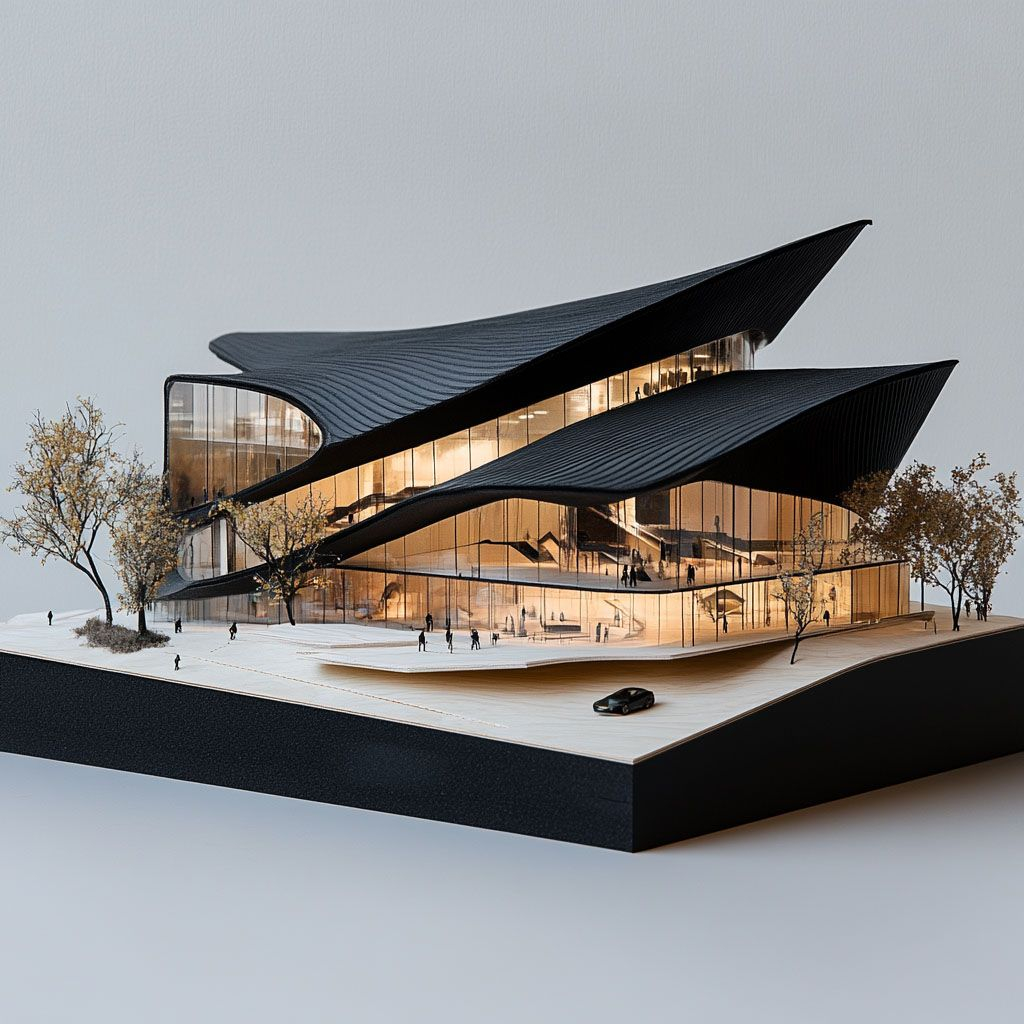
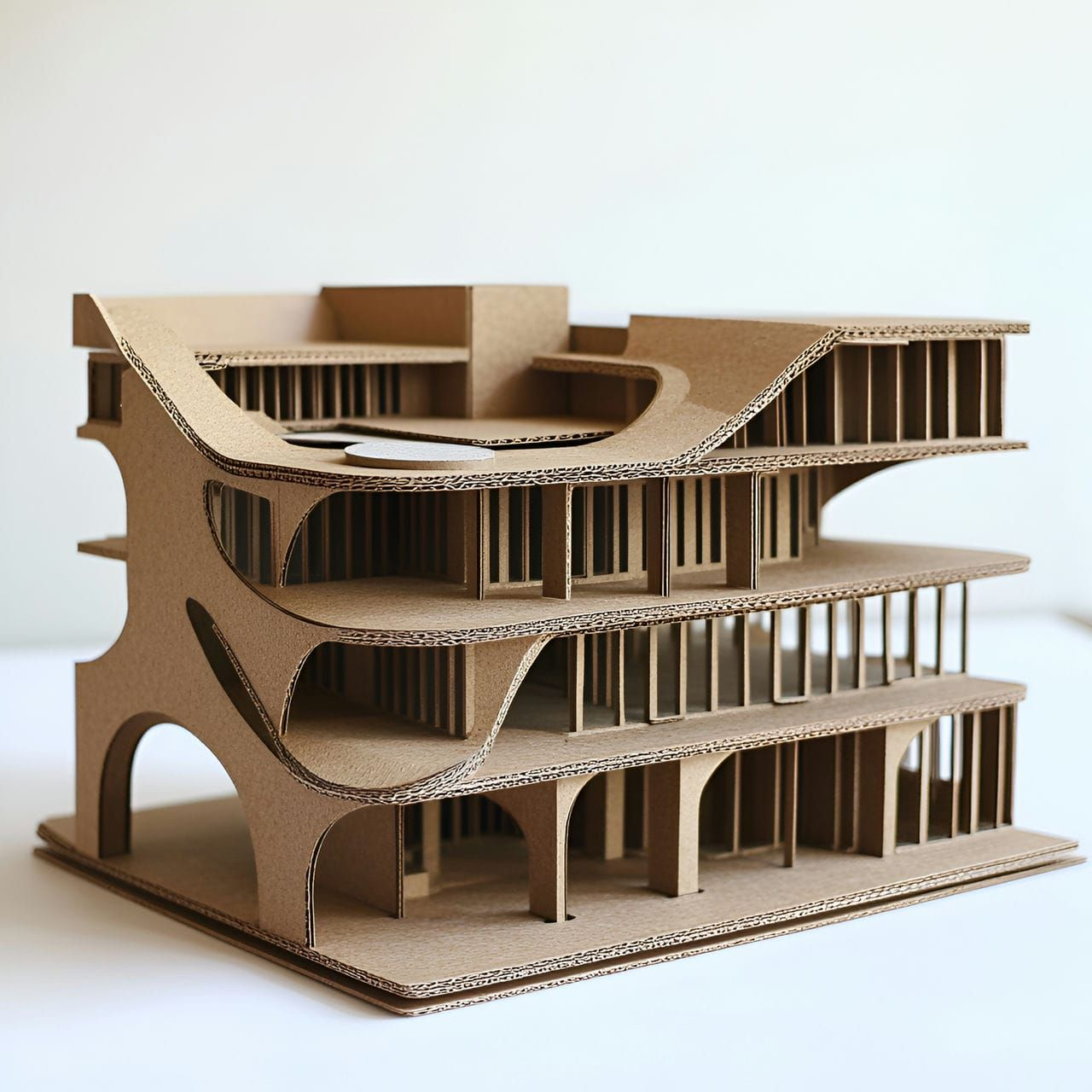
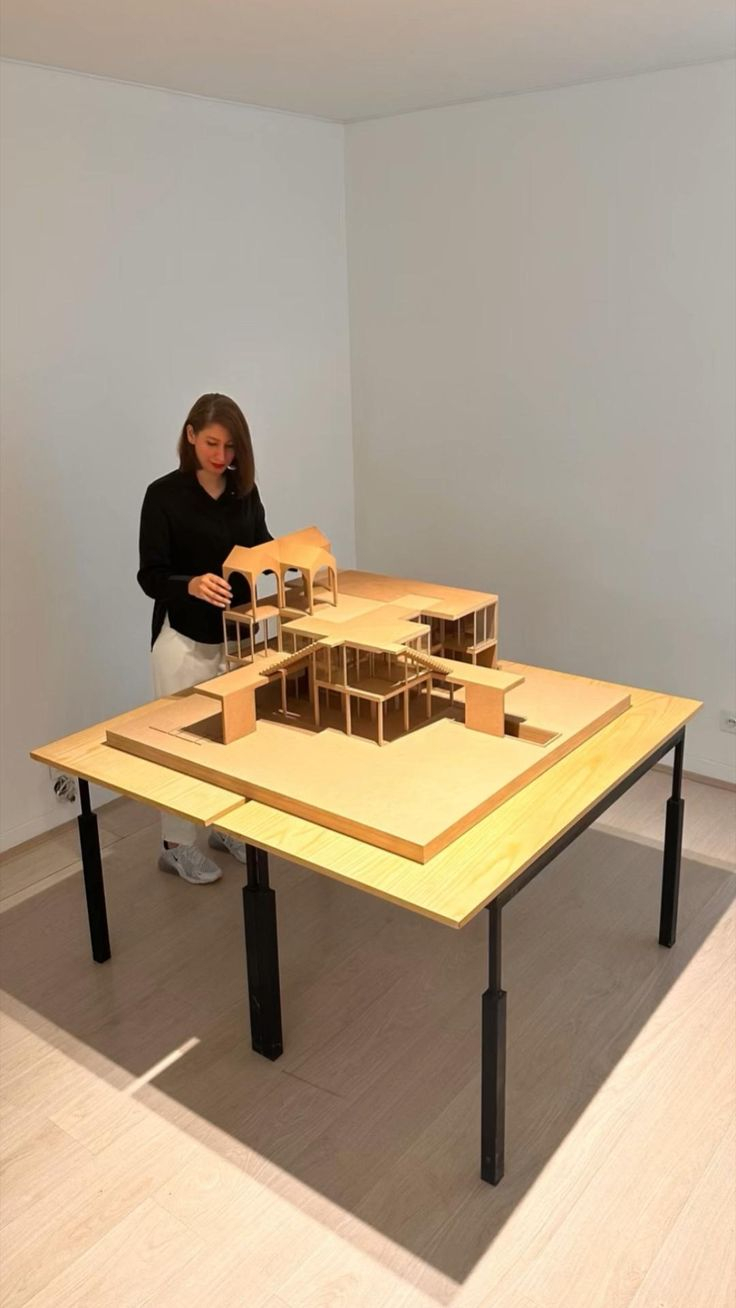
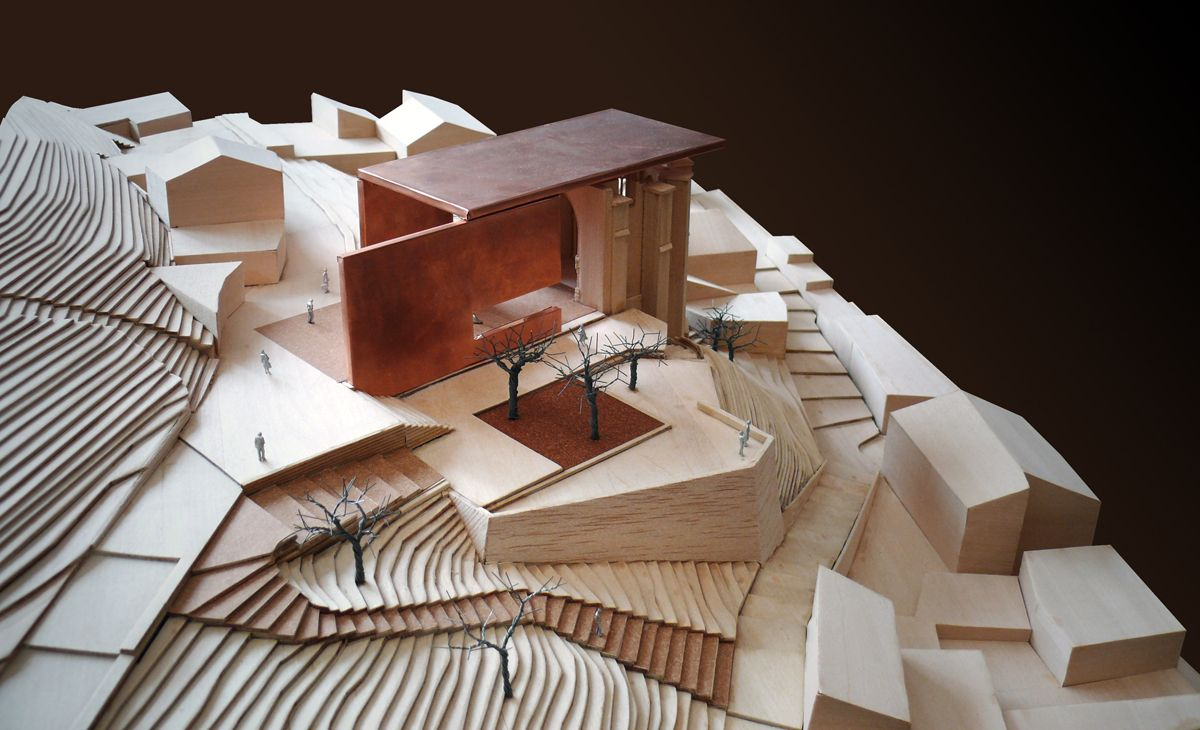
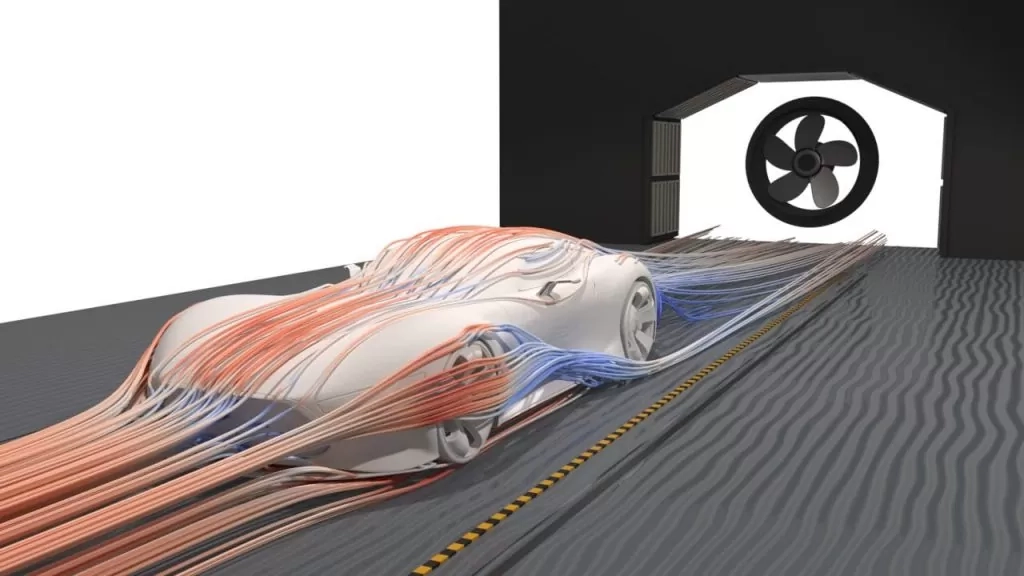
The blue-light glow of a 27-inch monitor illuminates a cluttered drafting table where a crumpled ball of tracing paper sits next to a state-of-the-art stylus. On screen, a hyper-realistic 3D render spins with effortless fluidity, boasting ray-traced reflections, accurate material bump-maps, and mathematically perfect shadows cast by a simulated sun. It is a masterpiece of digital computation. Yet, the senior architect at the desk frowns, clicks away from the rendering software, reaches for a block of high-density polyurethane foam, a scalpel, and a tube of cyanoacrylate adhesive.
For the next three hours, the hum of the graphics card is replaced by the rhythmic scraping of sandpaper and the sharp slice of blades carving into foam. Shavings pile up like winter snow. When the crude, monochrome block model is finally pieced together, the architect picks it up, rotates it between calloused palms, and tilts it toward the window. Suddenly, a flaw in the massing—invisible across hundreds of high-definition digital iterations—reveals itself with brutal clarity. The proportions feel top-heavy. The transition between public plaza and private threshold fails to invite human movement.
This scene plays out daily in workshops, industrial design labs, and architectural offices around the globe. While software ecosystems like Rhino, Revit, Blender, and Unreal Engine offer near-limitless visualization capabilities, they cannot fully replicate the cognitive friction and intuitive feedback loop of physical creation. The persistence of physical models in a digital-first era is not an act of nostalgic resistance against technology. Instead, it represents a calculated acknowledgment of how human brains process spatial reasoning, material truth, and physical scale.
The evolution of computer-aided design over the past four decades promised to render the physical workshop obsolete. Forecasters predicted that computer-generated imagery (CGI), immersive virtual reality headsets, and real-time digital twins would make building tangible prototypes redundant. After all, why spend days cutting chipboard, casting resin, or 3D printing polycarbonate when a photorealistic render can be generated in minutes? Yet, physical model-making has not vanished; it has evolved. Modern designers utilize hybrid workflows, combining CNC milling, laser cutting, and multi-material 3D printing with traditional hand-crafting techniques.
This enduring reliance stems from a fundamental disconnect between digital screens and human biology. A computer monitor flattens three-dimensional space onto a two-dimensional plane governed by glass and pixels. Even when viewed through stereoscopic VR headsets, digital objects lack mass, thermal conductivity, and tactile resistance. When a stakeholder holds a physical architectural model, they engage multiple senses simultaneously. They feel the weight of the massing, measure the model against their own hands, and experience sunlight falling across actual physical surfaces rather than algorithmic simulations.
The Cognitive Mechanics of Tactile Interaction and Spatial Reasoning
Human spatial cognition is fundamentally rooted in physical interaction with the environment. From infancy, we learn the properties of the world by touching, stacking, lifting, and breaking objects. When a designer translates a mental concept into a physical object, they engage motor memory and spatial reasoning circuits that remain dormant while clicking a mouse or manipulating a viewport on a screen. This feedback loop is immediate and unfiltered. The hand feels the awkward transition of a curve; the eye catches an unintended asymmetry that the brain’s predictive rendering glossed over on a CAD workspace.
Digital interfaces impose a barrier of abstraction. To move an object in virtual space, a designer must translate three-dimensional intent into two-dimensional mouse coordinates or rely on controller telemetry. This translation step requires conscious cognitive load, diverting attention away from pure creative problem-solving. Conversely, working with clay, basswood, cardboard, or foam board allows for a fluid, subconscious dialogue between maker and material. The physical medium pushes back. A piece of cardstock resists a sharp bend; a block of foam carves away too quickly if the blade slips. These material resistances introduce happy accidents and structural constraints that often inspire innovative design solutions.
Furthermore, cognitive science demonstrates that physical manipulation enhances memory retention and design evaluation. When people interact with tangible objects, they utilize external spatial scaffolding—using the layout of items in physical space to organize complex thoughts. A collection of massing models arranged on a workshop table allows a design team to physically rearrange urban blocks, test sightlines, and evaluate programmatic relationships in a fraction of the time it takes to reconfigure complex assembly trees in digital software.
Bridging the Communication Gap Between Creators, Clients, and Communities
Presenting a design to clients, municipal boards, or non-technical stakeholders presents unique communication hurdles. Designers live inside their software ecosystems; they understand orthographic projections, wireframes, and rendering artifacts. Laypeople often struggle to interpret these abstractions. A photorealistic digital rendering, while visually stunning, can inadvertently communicate a false sense of finality. Clients frequently mistake a polished render for a completed project, making it difficult to solicit honest critique about core structural layouts or volumetric massing.
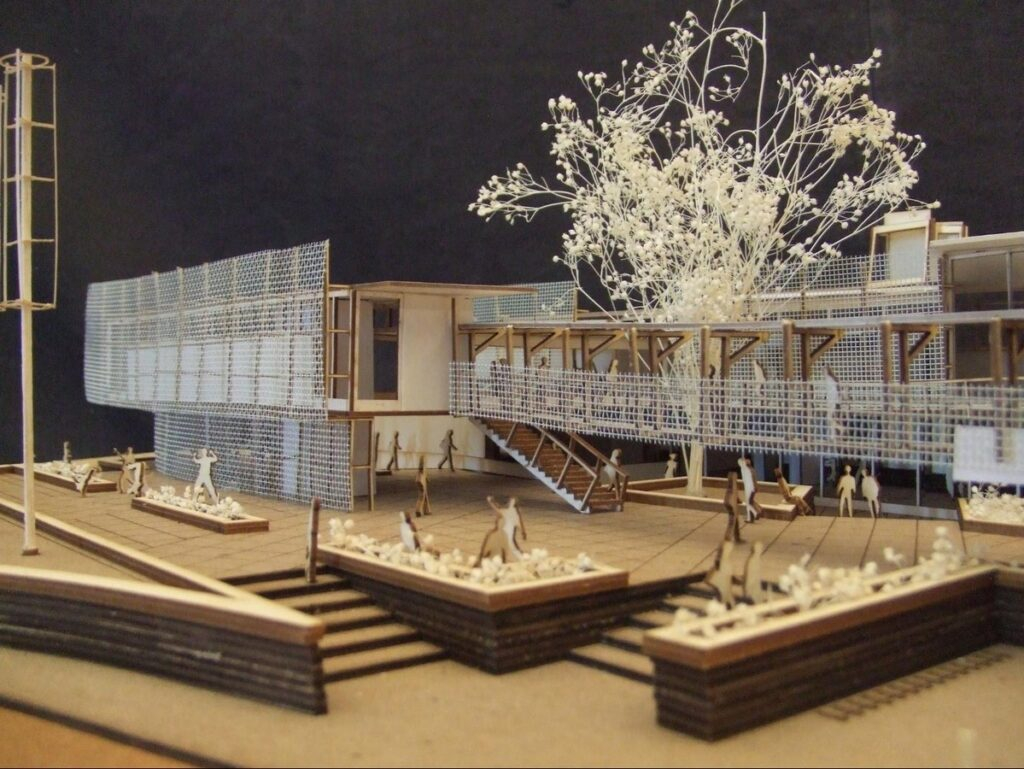
Physical models democratize the design conversation. Because a physical model—especially an early-stage conceptual massing model—is inherently abstract and unfinished, it invites participation. Stakeholders feel comfortable leaning over a table, pointing at a volume, and asking questions or suggesting alterations. It lowers the psychological barrier to critique. When a neighborhood association gathers to review a proposed civic building, a tactile wooden scale model allows them to understand how the structure relates to neighboring sidewalks, shadows, and human proportions instantly and intuitively.
In high-stakes client pitches and architectural competitions, physical models possess an undeniable psychological weight. They command presence in a room. In an era where digital saturation has made everyone numb to slick digital imagery, a meticulously crafted physical model feels authentic, deliberate, and valuable. It signals to the client that the design team has invested physical time, craftsmanship, and profound care into the realization of the project.
A Step-by-Step Methodology for Integrating Analog Prototyping into Digital Workflows
Successful contemporary design does not force a false dichotomy between analog and digital tools. Instead, top-tier firms build integrated pipelines where digital precision and physical tangibility reinforce one another. The most effective workflows leverage the speed of computation for optimization and the honesty of physical matter for validation.
- Step 1 (Parametric Digital Modeling & Optimization): Utilize CAD and parametric software (such as Rhino with Grasshopper or Revit) to generate geometries, analyze structural loads, test environmental performance, and optimize material usage before touching any physical medium.
- Step 2 (Hybrid Fabrication & Rapid Prototyping): Translate optimized digital files into physical components using additive and subtractive manufacturing tools, including SLA/FDM 3D printers, laser cutters for acrylic and chipboard, and CNC routers for dense foams or hardwoods.
- Step 3 (Manual Assembly and Surface Post-Processing): Clean, sand, glue, and assemble the machine-fabricated components by hand. Apply authentic surface finishes, textures, and contextual elements (such as miniature trees, figures, or topography contours) to establish human scale.
- Step 4 (Tactile Evaluation & Collaborative Critique): Place the completed physical model on a neutral surface under adjustable lighting. Invite cross-functional team members and stakeholders to physically interact with the model, test sightlines, and evaluate programmatic massing without screen distractions.
- Step 5 (Iterative Feedback Loop Integration): Document physical insights, unexpected shadow patterns, and ergonomic discoveries made during tactile evaluation, then feed these observations back into the digital model for the next iteration cycle.
Navigating Common Pitfalls and Practical Workarounds in Modern Model Making
Integrating physical modeling into a digitally dominated timeline introduces specific operational challenges. Designers often stumble when they treat physical modeling as an afterthought rather than a core investigative tool, leading to wasted resources and schedule friction.
- Pitfall 1 (Over-Finishing Early Concepts): Spending days polishing and painting an early conceptual massing model prevents rapid iteration. Workaround: Establish strict time-boxes and fidelity limits; early models should be crude, monochromatic, and built from cheap materials like foam core or corrugated cardboard to encourage quick disposal and redesign.
- Pitfall 2 (Ignoring Scale Discrepancies): Disconnecting digital units from physical scaling factors, resulting in models that are too small to evaluate ergonomic details or too large to handle conveniently. Workaround: Standardize office scale ratios (such as 1:50 or 1:100 for architecture, 1:1 or 1:5 for industrial design) and keep physical scale figures nearby during assembly.
- Pitfall 3 (Siloing Digital and Workshop Teams): Treating CAD operators and physical model makers as separate departments with minimal communication. Workaround: Cross-train digital designers in basic laser-cutter operation and hand-assembly so every team member understands both ends of the fabrication pipeline.
- Pitfall 4 (Neglecting Environmental Context): Building objects in isolation without considering surrounding context, topography, or neighboring structures. Workaround: Always fabricate surrounding contextual blocks, even in simplified form, to evaluate how the design interacts with its real-world environment.
- Pitfall 5 (Over-Reliance on Automated Machinery): Allowing 3D printers and CNC routers to do 100% of the work without incorporating human handcraft and critical evaluation during the build process. Workaround: Reserve machine fabrication for precise internal structures, using manual finishing and placement for the elements that require human judgement and aesthetic nuance.
The Broader Economic, Environmental, and Cultural Implications of Tangible Design
The choice between screen and substance extends far beyond office productivity. It touches upon profound economic, environmental, and cultural dimensions. In an economy dominated by intangible software, digital assets, and virtual spaces, physical objects anchor us to reality. When an architectural firm builds a physical model, it creates a cultural artifact that often outlives the digital files corrupted by obsolete software versions or forgotten hard drives.
From an environmental standpoint, the rise of digital tools initially promised a paperless utopia, yet modern server farms powering generative AI and cloud rendering consume staggering amounts of electrical energy. Conversely, physical modeling relies on materials—recycled chipboard, sustainable basswood, biodegradable PLA filaments, and cork—that can be sourced locally and reused across multiple iterations. While manufacturing scrap is inevitable, a well-managed workshop encourages material mindfulness, teaching designers the exact physical cost of their creative choices.
Culturally, the tactile model serves as a bridge across generations. Master model makers possess tacit knowledge—tricks of the trade regarding adhesives, grain alignment, material stress points, and cutting angles—that cannot be learned from a YouTube tutorial or an AI prompt. Preserving physical model-making workshops ensures that this lineage of craftsmanship survives, enriching the broader design culture with patience, precision, and physical intuition.
Actionable Recommendations for Cultivating a Tactile-Digital Hybrid Practice
Maximizing the value of physical models in a contemporary design practice requires intentional cultural and infrastructural adjustments within organizations. Studios must consciously carve out physical space and budget for experimentation, ensuring that the pressure to rush digital deliverables does not squeeze out tactile exploration.
- Establish Dedicated Prototyping Zones: Create well-lit workshop areas equipped with hand tools, cutting mats, hot-wire cutters, and rapid prototyping machinery, signaling that physical making is valued equally with digital rendering.
- Embrace Low-Fidelity Prototyping Early: Encourage teams to build quick cardboard and foam mockups during the schematic design phase before committing to expensive materials or high-precision 3D printing.
- Incorporate Tactile Reviews in Project Milestones: Make physical model review a mandatory gate in project schedules, requiring teams to present tangible prototypes during internal design reviews and client meetings.
- Document and Archive Physical Iterations: Photograph physical models from multiple angles under natural and artificial lighting to capture spatial qualities that can later inform digital lighting and animation pipelines.
- Encourage Cross-Disciplinary Collaboration: Pair junior digital designers with experienced model makers to facilitate the transfer of tacit hand-craft skills and foster a holistic appreciation for material behavior.
The digital revolution transformed how we imagine, calculate, and visualize the built environment. Cloud computing, generative algorithms, and immersive virtual reality have expanded our creative horizons in ways previous generations of designers could only dream of experiencing. Yet, as our virtual environments become increasingly sophisticated, our fundamental human biology remains stubbornly analog. We still inhabit physical space; we still experience weight, texture, scale, and gravity through our physical bodies.
Physical models endure not because digital tools are inadequate, but because the combination of digital precision and physical intuition creates a design process greater than the sum of its parts. When a designer picks up a physical model, they close the loop between mind and matter, transforming abstract code into tangible reality. In doing so, they ensure that our future spaces remain humane, grounded, and deeply attuned to the physical world we share.