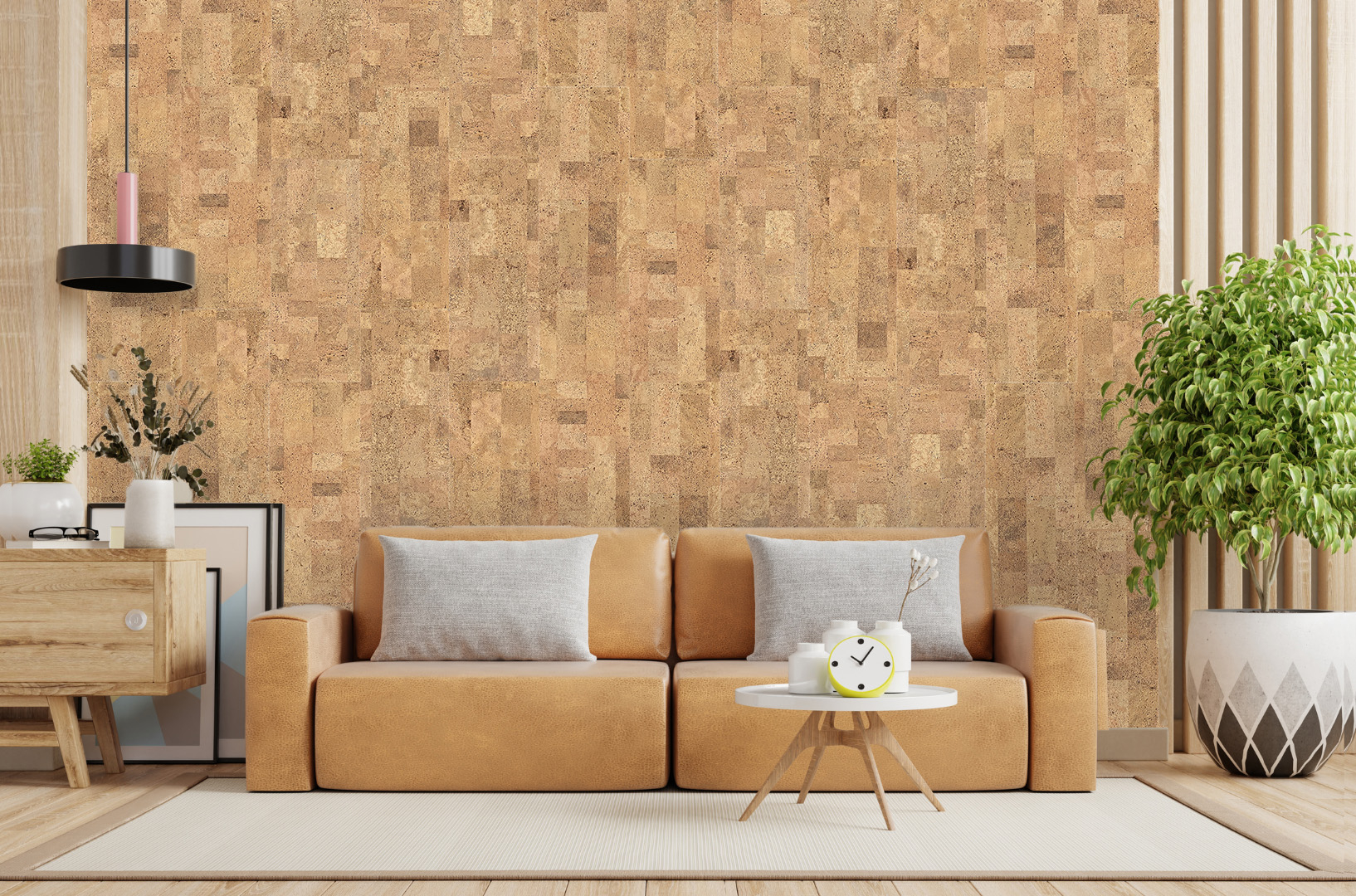
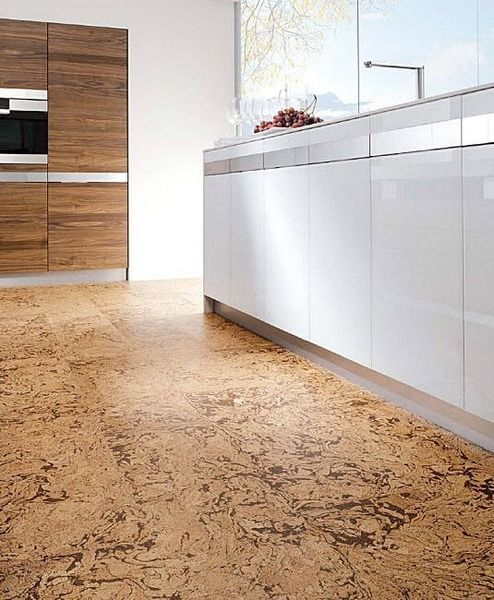
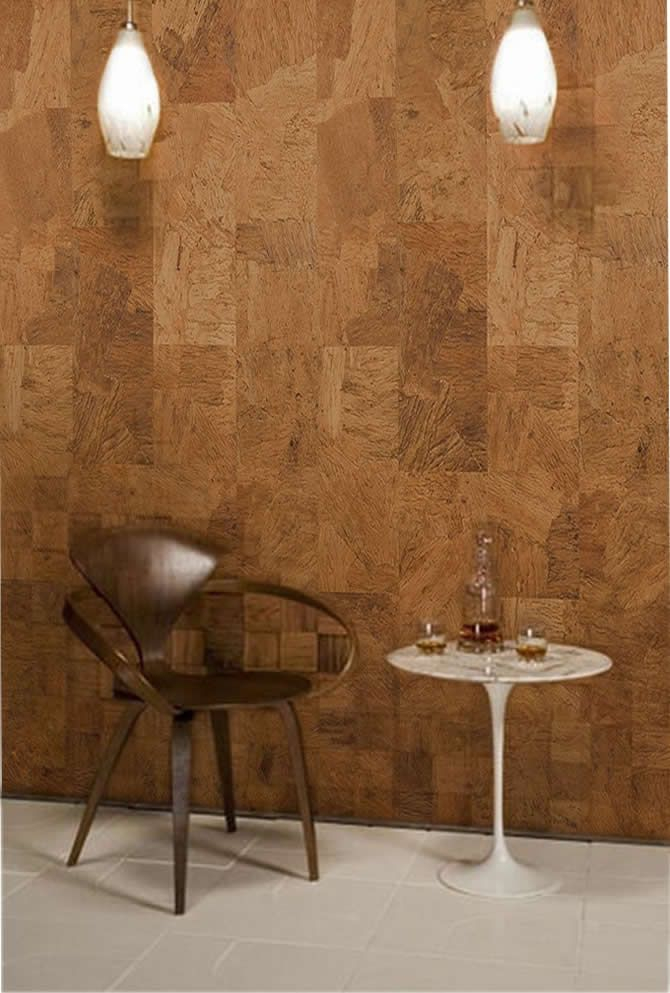
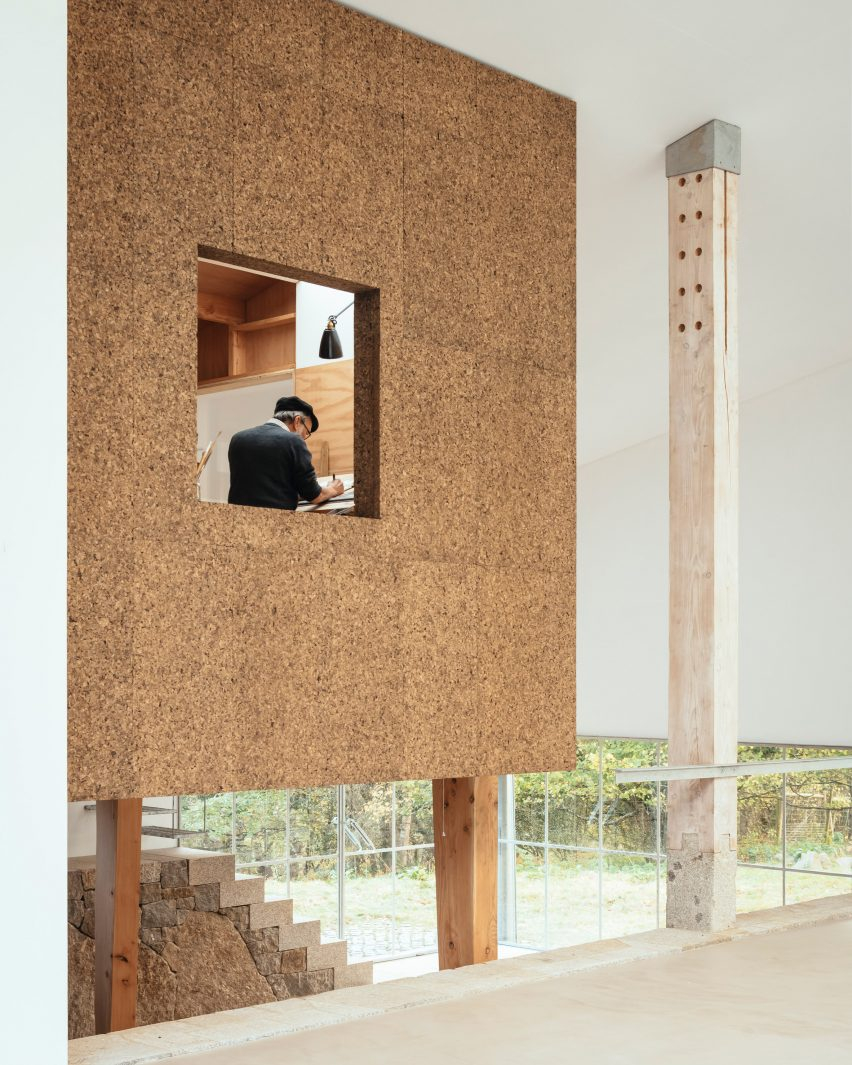
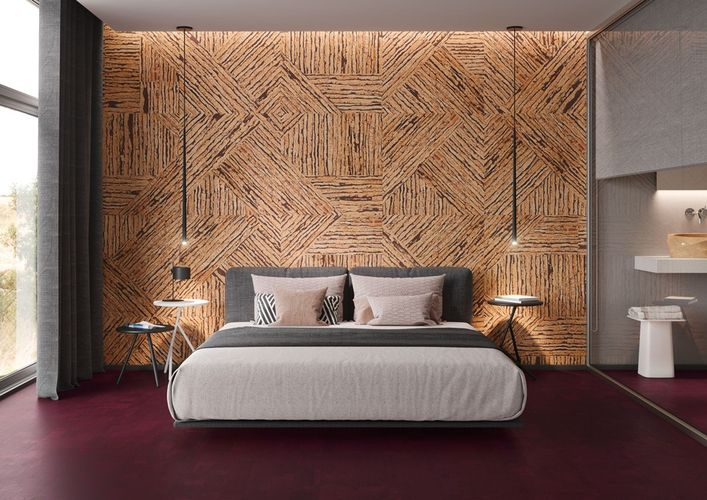
Step into a newly renovated corporate headquarters in downtown Chicago, and the first thing you notice is not the hum of the HVAC system or the clatter of keyboards. Instead, a profound, almost library-like tranquility hangs in the air, mediated by a striking, three-dimensional feature wall that ripples across the lobby like an architectural topographic map. Up close, the material defies easy categorization. It is warm, tactile, and unmistakably organic. This is not the fragile cork bulletin board of a high school classroom; it is a high-performance architectural medium engineered from repurposed wine-stopper byproducts, precision-molded into geometric blocks that swallow chaotic sound waves while commanding visual attention.
For decades, the commercial design industry labored under a punishing false dichotomy. Architects and interior designers were forced to choose between acoustic performance and aesthetic purity. If a space suffered from reverberation and noise pollution, the standard remedy involved slapping perforated fiberglass panels wrapped in industrial fabrics onto the walls—solutions that felt sterile, clinical, and decidedly temporary. Today, that compromise is rapidly dissolving. Through advanced manufacturing techniques and a renewed commitment to ecological circularity, raw cork has ascended to the upper echelons of interior architecture. It transforms flat, echoing drywall into sculptural, multi-faceted acoustic landscapes that satisfy both human sensory needs and rigorous building sustainability codes.
The evolution of this material stems from a quiet revolution in manufacturing partnerships, such as the high-profile collaboration between global textiles leader Momentum and natural cork innovator Muratto. By uniting modern design palettes with centuries-old harvesting traditions, manufacturers are producing modular systems—spanning Organic Blocks, PrimeCork surfaces, strips, and interlocking tiles—that entirely rewrite what a wall can do. These innovations prove that environmental stewardship and avant-garde spatial design are no longer mutually exclusive. As urban densification pushes commercial environments to maximize square footage, the demand for surfaces that manage noise without sacrificing beauty has never been more urgent.
The Material Physics of Bark and Sound Absorption
To understand why cork performs so exceptionally as an acoustic medium, one must look deep into its cellular anatomy. Harvested exclusively from the bark of the Quercus suber (cork oak) tree—which thrives in the Mediterranean basin—cork is nature’s own acoustic damper. Under a microscope, cork resembles a honeycomb matrix comprising millions of tiny, air-filled prismatic compartments. Approximately 80% to 90% of its volume consists of gaseous air trapped inside these microscopic cells. When airborne sound waves strike a cork surface, they do not simply bounce off as they would against concrete or glass. Instead, the acoustic energy penetrates the porous outer layer, forcing the trapped air within the cells to compress. This friction converts sound energy into minute amounts of heat, effectively trapping reverberant noise and reducing echoes within a room.
Beyond its inherent cellular structure, the sculptural geometry of modern cork innovations elevates acoustic performance to an entirely new tier. Flat cork sheets provide decent sound absorption, but three-dimensional configurations—such as the faceted profiles found in Muratto’s Organic Blocks—introduce varying angles of incidence. When sound waves hit a multi-faceted, undulating surface, they are scattered and diffused in multiple directions rather than reflected back coherently. This dual action of absorption and diffusion prevents flutter echoes and flattens out the room’s reverberation time (RT60), making open-plan offices, boardrooms, and hospitality lounges vastly more comfortable for human speech intelligibility.
Furthermore, cork’s lightweight nature simplifies the engineering required for installation. Traditional heavy acoustic treatments often demand reinforced wall framing, specialized drywall backing, or cumbersome mounting brackets. In contrast, modular cork blocks and tiles can be adhered directly to standard substrates without risking structural overload. This low dead-load weight is paired with exceptional dimensional stability. Cork naturally resists moisture, does not harbor dust mites, and contains suberin—a natural waxy substance that acts as an inherent fire retardant and discourages mold growth. These combined physical properties ensure that sculptural acoustic walls maintain both their acoustic integrity and visual allure over decades of heavy commercial use.
Ecological Circularity and the Carbon-Negative Lifecycle
The narrative of modern cork design is inextricably linked to one of the most sustainable agricultural cycles on earth. A single cork oak tree can live for up to two hundred years, and its thick, spongy bark can be harvested by hand every nine years without ever cutting down or harming the tree. In fact, harvesting the bark actually stimulates the tree to absorb significantly more carbon dioxide as it regenerates its protective outer layer. During a single harvest cycle, a single tree can yield upwards of one hundred pounds of raw material. This makes cork an inherently renewable resource, aligning seamlessly with the rigorous demands of LEED, WELL Building Standard, and Living Building Challenge certifications.
The sustainability story deepens when examining the provenance of the raw material used in high-end architectural products. Most commercial acoustic cork tiles and blocks are manufactured using leftovers and byproducts from the traditional wine-stopper industry. Instead of sending these high-density cork granules to landfills, innovators grind, mold, and bind them using low-impact, VOC-free resins. The resulting panels are 100% natural, PVC-free, biodegradable, and fully recyclable at the end of their operational lifecycle. This closed-loop manufacturing model drastically shrinks the embodied carbon of interior construction projects, offering a refreshing antidote to the petroleum-heavy synthetic foams and plastics that have long dominated the acoustic market.
Architects and specifiers are increasingly evaluating materials through the lens of occupant wellness alongside environmental impact. Synthetic acoustic panels frequently off-gas volatile organic compounds (VOCs) that degrade indoor air quality, triggering sensitivities in occupants. Natural cork, by contrast, is chemically inert and hypoallergenic. Its warm tactile quality also engages the human sense of touch, fulfilling the principles of biophilic design—the innate human tendency to seek connections with nature and other forms of life. Walking into a room lined with sculptural cork blocks registers psychologically as a grounding, organic experience, lowering cortisol levels and fostering a calmer, more focused working or living environment.
Precision Installation Methodologies for Sculptural Cork Walls
Transforming a raw commercial interior with sculptural cork blocks requires a blend of artisanal patience and rigorous technical precision. Unlike standard wallpaper or flat acoustic felt panels, three-dimensional cork systems demand careful layout planning to ensure seamless pattern continuity and precise alignment across expansive wall plates. Installers must account for substrate conditions, adhesive curing times, and environmental acclimatization to guarantee a flawless, enduring finish that withstands the rigors of commercial foot traffic and varying indoor humidity levels.
- Step 1 (Substrate Preparation & Conditioning): Inspect the wall substrate to ensure it is clean, structurally sound, dry, and completely free of dust, grease, or peeling paint. Acclimatize the cork panels or blocks in the installation space for a minimum of 48 hours within a controlled temperature range of 65°F to 75°F and a relative humidity between 40% and 55% to prevent post-installation expansion or contraction.
- Step 2 (Layout & Centerline Mapping): Measure the wall dimensions to establish precise horizontal and vertical centerlines. Use a laser level to project intersecting plumb lines onto the surface. Dry-fit a cluster of sculptural blocks along these axes to verify pattern flow, check for edge-cut symmetry, and avoid awkward, narrow slivers of material at the perimeter corners.
- Step 3 (Adhesive Selection & Application): Apply the manufacturer-specified, low-VOC contact adhesive or polyurethane-based construction adhesive using a notched trowel or cartridge gun. Ensure even coverage across both the wall substrate and the back of each cork component according to the specific open-time instructions of the adhesive formula.
- Step 4 (Precision Mounting & Tamping): Press each block or panel firmly onto the wall along your pre-marked layout lines, applying uniform hand pressure across the entire face. Use a rubber hand roller or gentle mallet taps on rigid block systems to ensure complete, uncompromised bond contact with the adhesive bed, immediately wiping away any excess squeeze-out with a damp cloth.
- Step 5 (Detailing, Edges & Post-Inspection): Cut perimeter pieces using a sharp utility knife with a straight edge, making multiple light passes rather than forcing a single deep cut. Once the entire wall is assembled, conduct a thorough visual and tactile inspection to confirm that all joints are tight, block faces are flush, and the acoustic installation is ready for immediate occupancy.
Navigating Common Installation Pitfalls and Practitioner Workarounds
Even experienced commercial contractors can encounter unforeseen challenges when working with three-dimensional natural materials. Because cork is a living organic substance that has been molded into modular blocks or textured sheets, it reacts dynamically to drastic environmental shifts. Failing to account for these material characteristics during the planning and execution phases can result in joint separation, adhesive failure, or compromised acoustic performance.
- Pitfall 1 (Ignoring Material Acclimatization): Installing cork straight off a cold shipping truck into a warm, dry interior often leads to severe dimensional instability as the material adjusts to ambient conditions. Practitioner Workaround: Always unpack boxes of panels or blocks and allow them to rest loosely stacked in the target room for at least two full days prior to adhesive application.
- Pitfall 2 (Using Incompatible Adhesives): Standard water-based drywall adhesives may lack the immediate grab required to hold heavy, multi-faceted three-dimensional cork blocks securely against vertical surfaces. Practitioner Workaround: Strictly utilize high-tack, manufacturer-approved polyurethane or specialized contact adhesives formulated specifically for dense cork composites to prevent slippage during the curing window.
- Pitfall 3 (Improper Substrate Priming): Porous or dusty drywall substrates can rapidly suck the moisture out of adhesives, creating weak bond lines that fail over time. Practitioner Workaround: Apply a compatible acrylic primer-sealer to raw gypsum board surfaces and let it cure fully before laying down any adhesive or cork components.
- Pitfall 4 (Neglecting Perimeter Expansion Gaps): Wall-to-wall installations tightly wedged between fixed masonry returns without minimal clearance can buckle if the building experiences extreme seasonal humidity spikes. Practitioner Workaround: Maintain a discreet 1/8-inch expansion gap at floor and ceiling junctions, concealing them cleanly with matching baseboards or shadow-line aluminum trims.
- Pitfall 5 (Inconsistent Pressure During Mounting): Spot-gluing cork blocks without applying uniform pressure across the entire back surface leads to hollow spots that weaken the overall installation and reduce low-frequency sound absorption efficiency. Practitioner Workaround: Use a weighted hand roller across every single block immediately after placement to guarantee 100% surface-area adhesion to the wall bed.
Holistic Perspectives on Architectural Acoustics and Spatial Design
The integration of sculptural cork walls into modern commercial architecture marks a profound philosophical shift in how we design human environments. For generations, indoor acoustic management was treated as a hidden engineering utility—something concealed behind drop ceilings, perforated metal grilles, and invisible fiberglass insulation. By bringing acoustic treatment out into the open as a sculptural, artistic focal point, designers are redefining walls as active participants in the sensory experience of a space. This shift mirrors a broader cultural movement toward holistic interior design, where the tactile, visual, and auditory layers of a room are harmonized to support human health, cognitive focus, and emotional well-being.
Economically, investing in high-performance natural acoustic materials delivers compounding returns over the lifecycle of a commercial building. In open-plan corporate offices, excessive noise is consistently cited as the primary driver of employee distraction, fatigue, and lost productivity. By installing high-NRC (Noise Reduction Coefficient) cork wall systems, facility managers can dramatically cut down ambient chatter and echoing without undertaking costly structural renovations. Furthermore, because cork is exceptionally durable, resistant to impact, and easy to maintain, it eliminates the frequent replacement cycles associated with fragile acoustic fabrics and painted drywall repairs, lowering long-term maintenance overhead.
Looking forward, the convergence of artisanal cork processing and digital fabrication tools opens up boundless customization possibilities for architects. Parametric design software now allows studios to map unique, algorithmic surface topographies onto modular cork blocks, creating bespoke feature walls that tell the specific brand story of a company while optimizing sound diffusion for unique room geometries. As building codes continue to tighten around embodied carbon, indoor air quality, and circular economy standards, natural cork stands out as a timeless material that meets the stringent demands of the future while remaining deeply rooted in the enduring wisdom of the natural world.
Strategic Recommendations for Specifying Sculptural Cork Walls
Successfully integrating sculptural acoustic cork systems into an architectural specification requires a methodical approach that balances aesthetic vision with technical performance metrics. To achieve optimal results, specifiers must evaluate projects through a multi-dimensional framework that prioritizes spatial acoustics, environmental certifications, and long-term durability.
- Conduct a Spatial Acoustic Audit: Before selecting panel thicknesses or block geometries, analyze the room’s volume, primary usage profile, and existing hard reflective surfaces to determine the required Noise Reduction Coefficient (NRC) and target reverberation times.
- Specify Certified Sustainable Materials: Insist on 100% natural, PVC-free cork products derived from responsibly harvested oak forests and wine-industry byproducts, ensuring compliance with LEED, WELL, and FSC standards.
- Prioritize Modular Flexibility for Maintenance: Choose modular tile or block formats rather than monolithic sheets, making it easy to inspect, clean, or selectively replace individual sections if localized damage occurs in high-traffic corridors.
- Collaborate Early with Specialized Installers: Engage certified wallcovering contractors during the schematic design phase to review substrate conditions, lighting integration angles, and adhesive specifications before final construction documents are issued.
- Leverage Biophilic Design Principles: Pair sculptural cork walls with living plant installations, natural wood finishes, and abundant daylighting to maximize the psychological and physiological wellness benefits for building occupants.
The resurgence of cork as a premier architectural medium is a powerful reminder that the most advanced solutions to modern design challenges often lie right beneath our feet—or, in this case, wrapped around the bark of an ancient tree. By elevating a humble agricultural byproduct into sculptural, acoustic masterpieces, contemporary designers have shattered the tired compromise between acoustic utility and visual elegance. These walls do not merely absorb sound; they absorb stress, softening the hard-edged geometry of contemporary interiors and replacing it with warmth, tactility, and acoustic serenity.
As we look toward the future of commercial and residential architecture, the imperative for sustainable, human-centric design will only intensify. Materials that carry high embodied carbon or degrade indoor air quality are rapidly becoming obsolete. Sculptural cork walls point the way forward—a testament to what happens when ecological responsibility meets unbridled creative vision. For architects, designers, and facility leaders ready to rethink the vertical planes of their spaces, natural cork offers an unmatched canvas: one that honors the past, performs flawlessly in the present, and protects the planet for generations to come.