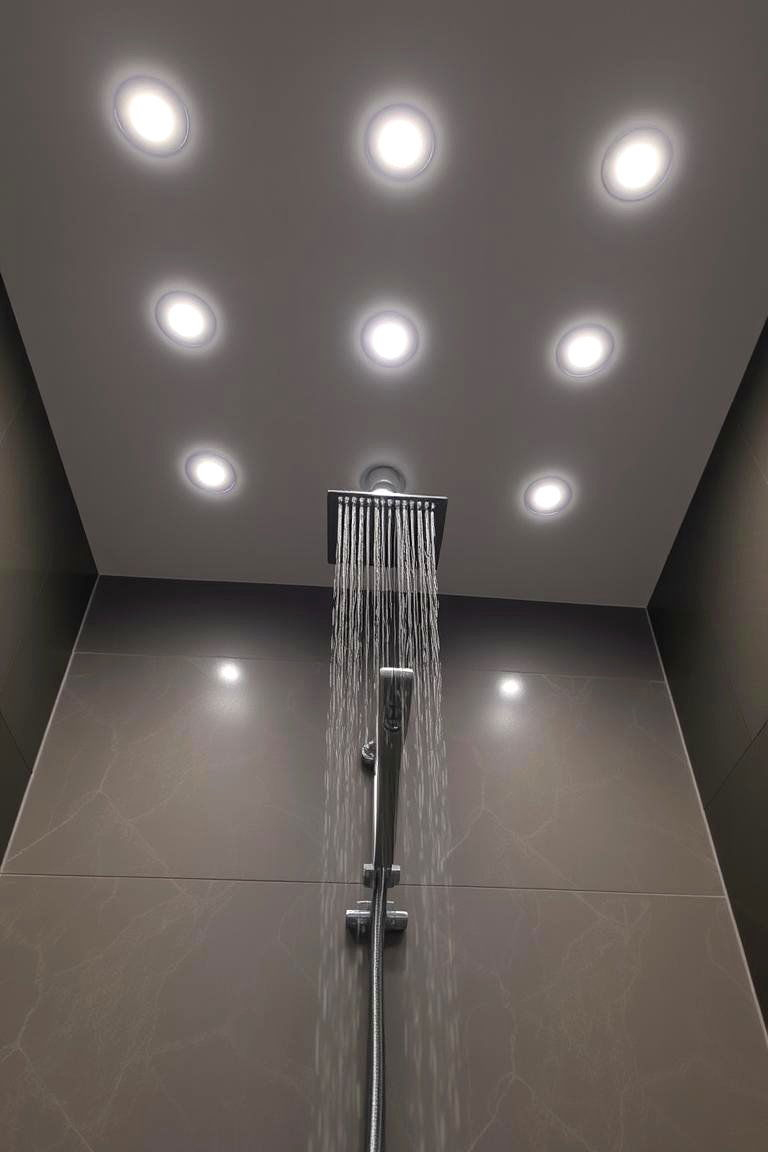
Buying a recessed light for a shower involves more than matching the white ring in the ceiling. Two lights can look almost identical while carrying different location ratings, using different mounting hardware, or requiring different housings. Start with the exact product documentation and the conditions at the intended location. Choose the appearance only after those checks pass.
This guide is a shopping and documentation checklist for US homeowners, not a wiring procedure or a nationwide electrical-code ruling. Have an electrician confirm suitability for your actual shower, existing equipment, and locally adopted requirements. A listing printed on a product page is useful evidence, but it does not approve every possible combination of parts.
Start with the location rating on the exact model
Look for an explicit statement covering the intended use, such as a wet-location listing and manufacturer guidance for shower applications. A product described only as a bathroom light needs more investigation. A photograph of a tiled bathroom is not the same evidence as the rating and installation instructions for the catalog number you will purchase.
For a concrete example, the HALO LT Series product page identifies wet-location listing among the series features and discusses installation above a shower. The page also describes covered outdoor locations. Those statements help identify a product family to investigate; they should not be extended to every HALO product or every mounting situation.
Save the exact catalog number from the carton or order confirmation. Then open the corresponding specification sheet and installation instructions. If a retailer listing, package, and manufacturer document disagree, resolve that discrepancy with the manufacturer before proceeding. Do not combine the most favorable statement from several similar models into an imaginary specification.
Identify whether you have a housing or need a different system
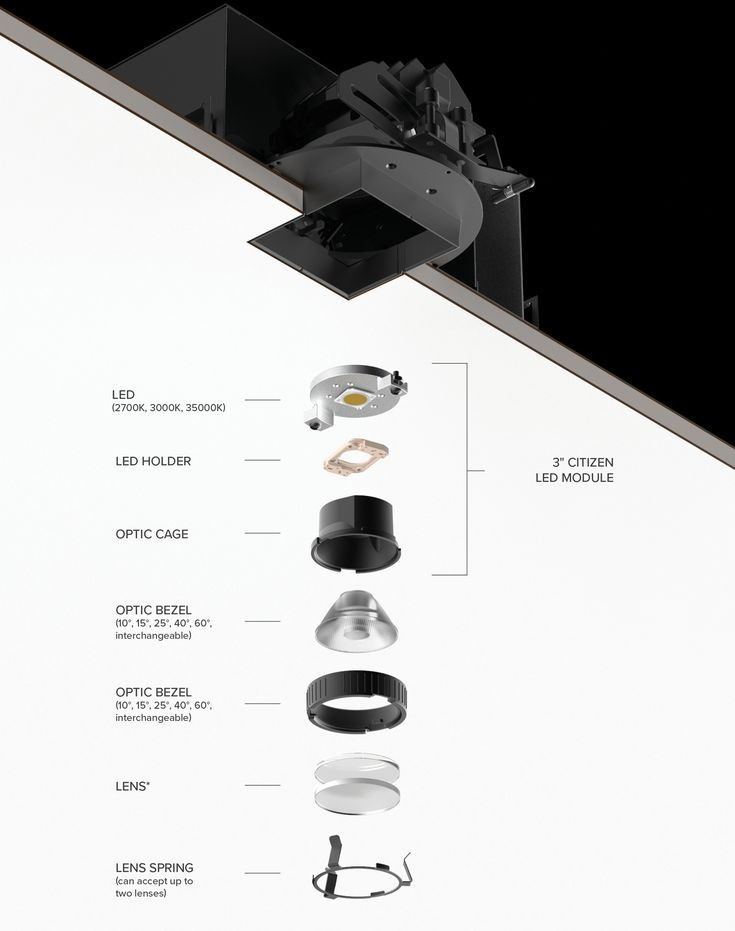
A retrofit LED trim is designed to work with an existing compatible recessed housing. A canless product is a different purchase path. The visible opening does not tell the whole story: the hardware above the ceiling and its documentation determine what can be used. Ask the electrician to identify the existing assembly rather than guessing from a photograph taken from the floor.
HALO describes its LT products as LED trims for new-construction or remodel recessed housings. Its page lists nominal 4-inch and 6-inch versions and says they are compatible with most recessed housings. The important word is most. A familiar nominal diameter is a starting point for research, not proof of a match.
The manufacturer’s LT/LA brochure shows why this distinction matters. It describes mounting features and separate sizes across the product family. Use it to understand the questions to ask, then obtain current instructions for the particular unit. Do not assume an older brochure’s output or accessory list applies to a newly revised catalog number.
Confirm the complete assembly, not just the visible trim
Build a short compatibility record containing the existing housing identification, proposed LED module or trim number, supplied mounting hardware, and the manufacturer’s applicable housing guidance. If identification is missing, give the manufacturer clear photographs and have the electrician inspect the installation. A successful mechanical fit alone does not answer the documentation question.
For example, the brochure describes clips on a 4-inch LT version and torsion springs on an LT56 version. Both may be white recessed lights, but that does not make their attachment details interchangeable. Preserve the parts supplied or specified for the chosen product. Do not improvise a mixed assembly because a different ring happens to cover the ceiling opening.
Also distinguish replacing a failed component from redesigning the installation. An electrician may find that the appropriate solution is a different complete system. Establish that scope before buying several trims that cannot be used. This avoids letting an early cosmetic purchase dictate a technical decision it cannot settle.
Read moisture, insulation, and air-sealing claims separately
The HALO page lists wet-location, IC, and AIR-TITE features separately. Keep them as separate questions when comparing products. A moisture-related statement is not a substitute for checking how the product is permitted to interact with ceiling insulation or how the selected assembly addresses air leakage.
Ask the electrician to check the exact installation conditions and the manufacturer’s instructions for each claim. Do not add insulation, seal openings, or substitute accessories solely because a product family page displays an appealing badge. Likewise, do not interpret a shower-use statement as permission for immersion, an uncovered roof installation, or any other application that the instructions do not authorize.
Choose light output and color after the compatibility checks
Once suitability and assembly compatibility are established, compare brightness and appearance. The current LT page describes multiple output versions, so the series name alone does not identify how much light a specific unit produces. Keep lumens and color temperature in separate columns on your comparison sheet. A higher color-temperature setting does not mean a higher brightness rating.
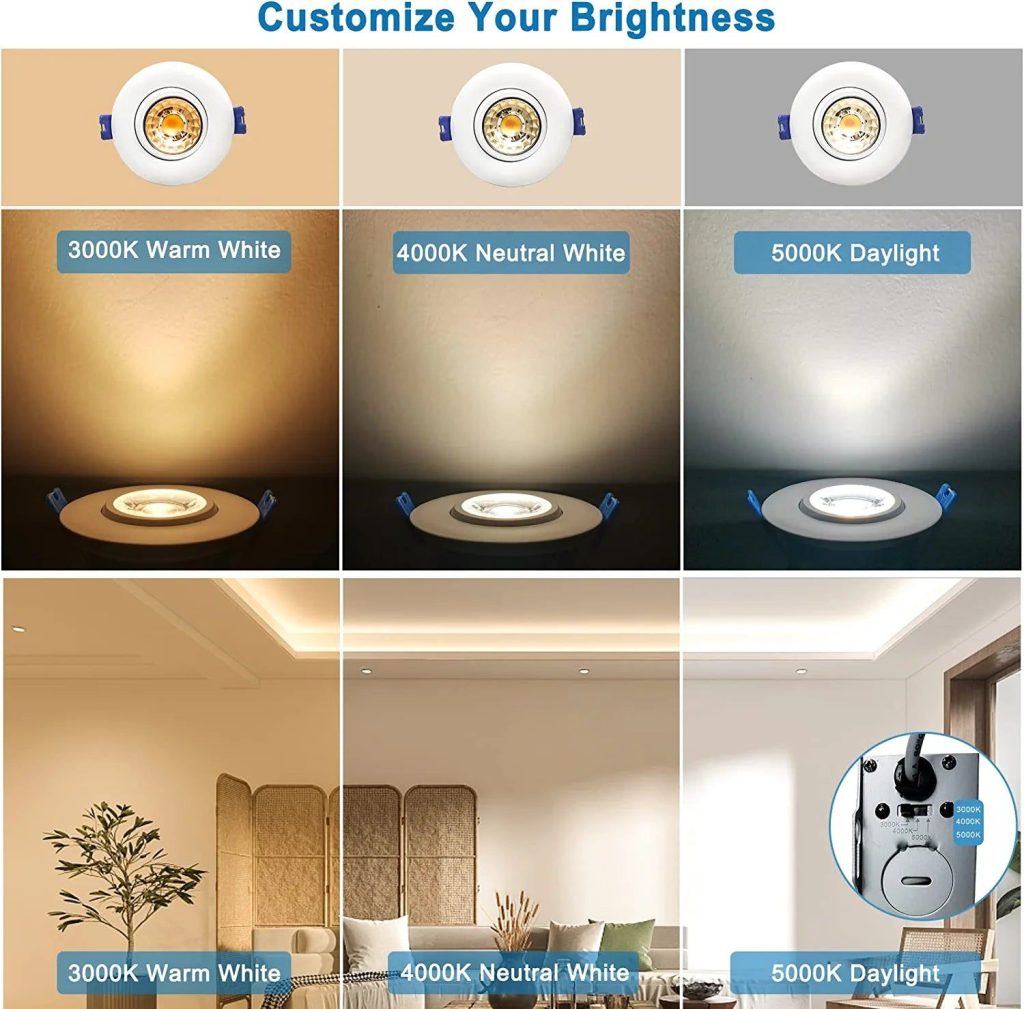
The page describes five selectable color temperatures from 2700K to 5000K. Consider the nearby vanity and general bathroom lighting when choosing a setting. If you can view a sample, compare it against your actual tile and wall finishes. A white tile sample viewed under a store’s lighting may look different at home; that is a reason to compare, not evidence that one color temperature is universally best.
Check the control before assuming dimming will work
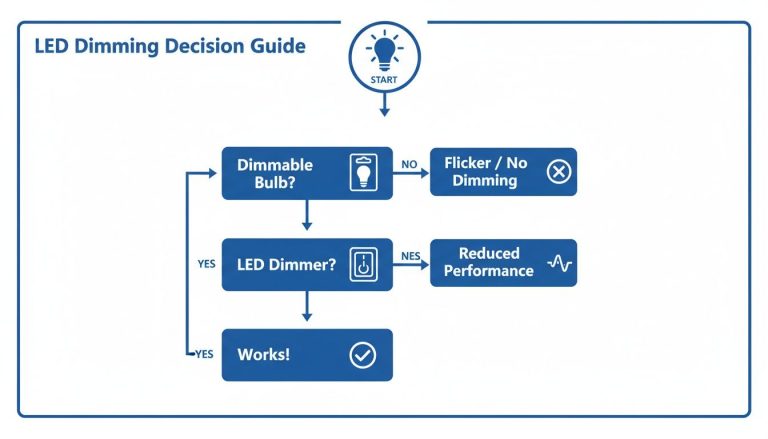
A dimmable product still needs an appropriate control. HALO qualifies its LT dimming statement with compatible dimmers, which is more specific than saying any dimmer will work. Record both the exact light model and the installed or proposed dimmer model, then check the manufacturer’s compatibility information and conditions.
Our guide to checking LED and dimmer compatibility explains the separate model-matching task. For a shower-light purchase, keep that record with the location and housing documentation. Attractive light at full brightness does not answer whether the planned control combination is supported.
Keep a purchase record that can be checked later
Before ordering, collect the proposed catalog number, location-use statement, housing compatibility evidence, required hardware, output choice, color setting options, and control information. Save the instruction document as well as the shopping-page link. Have the electrician review the unresolved items before installation rather than after opening every box.
The useful end point is a documented match between the light, the existing or planned system, and the actual shower location. With that settled, the trim finish becomes a straightforward design choice instead of a guess about what is hidden above the ceiling.