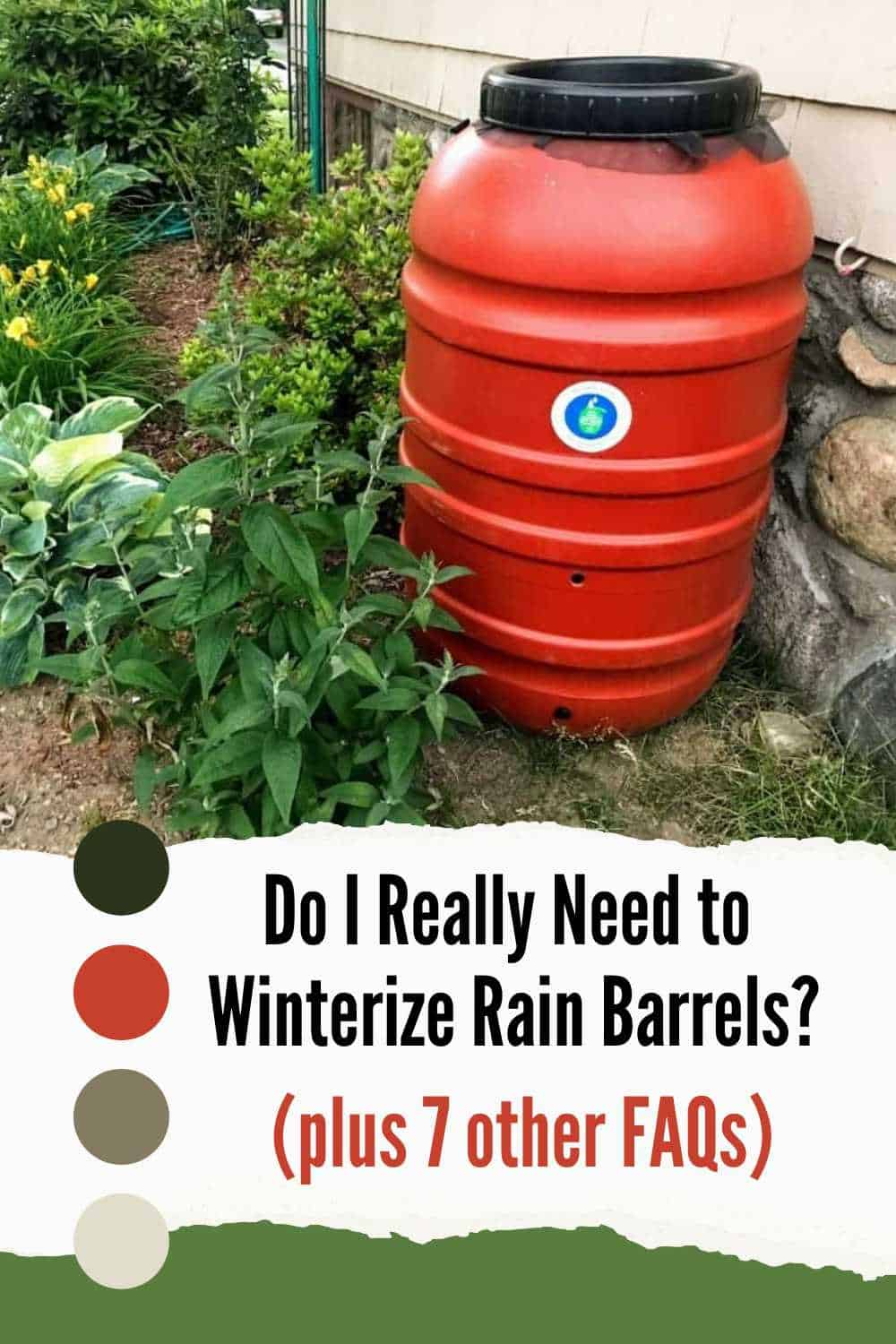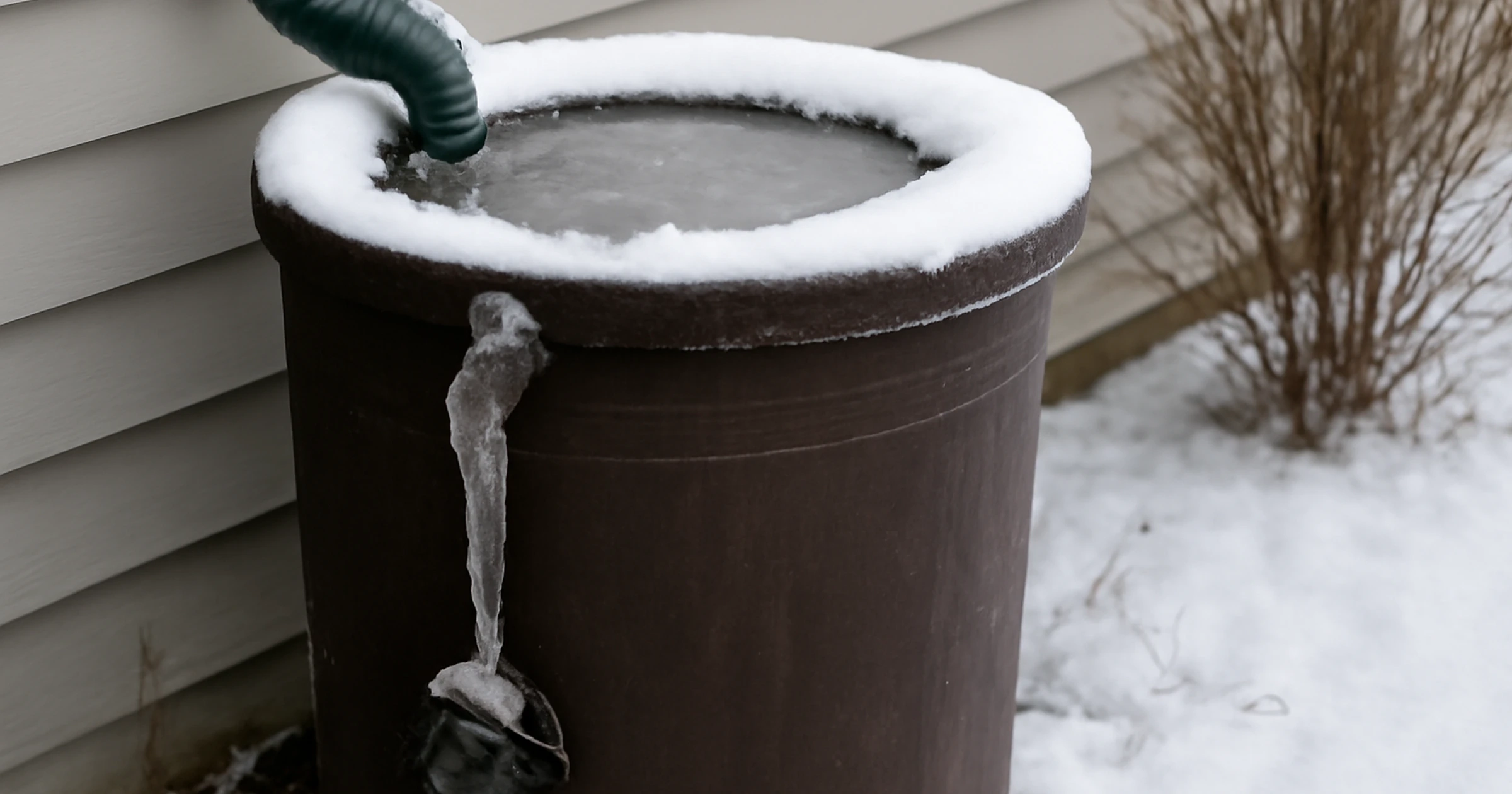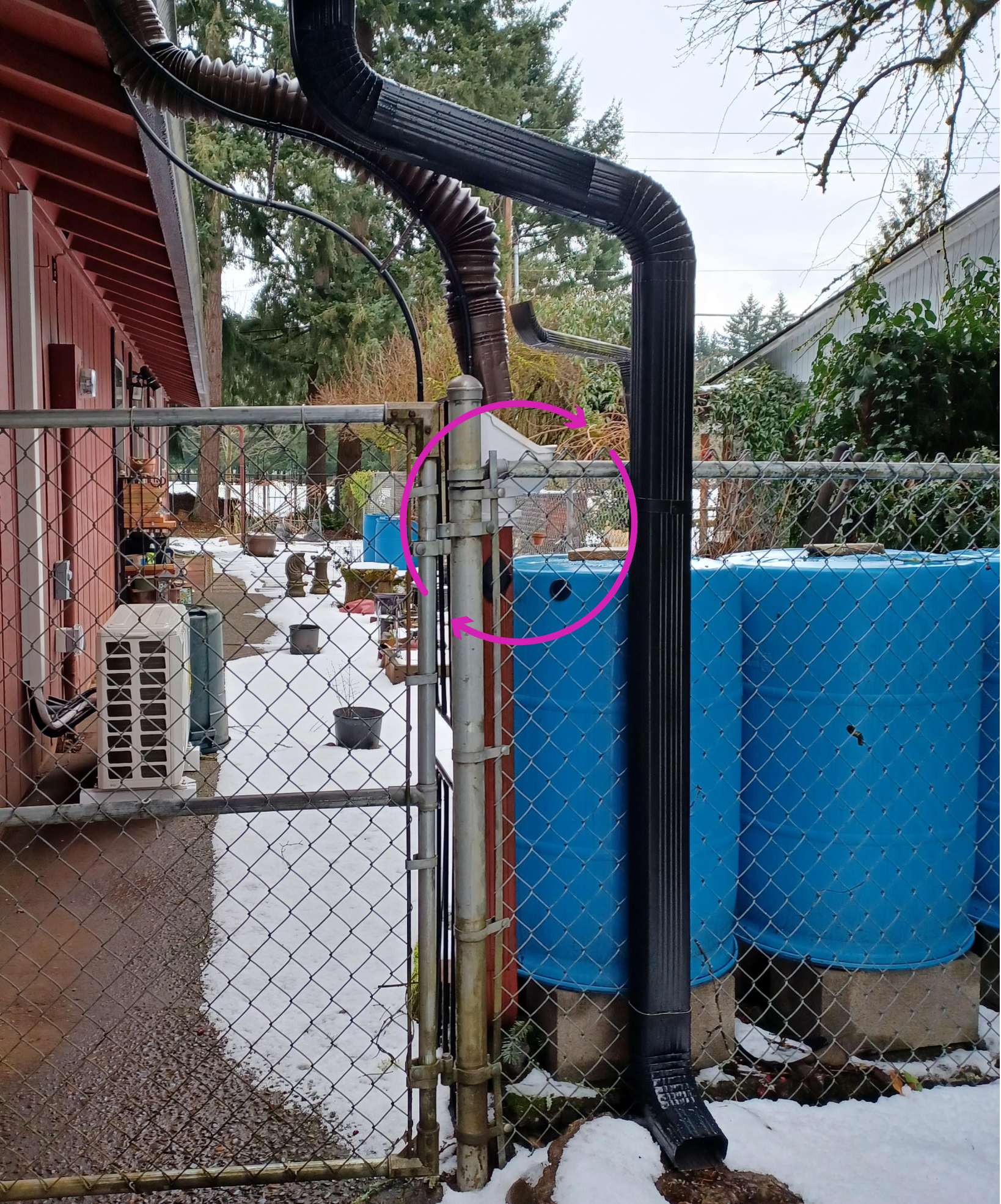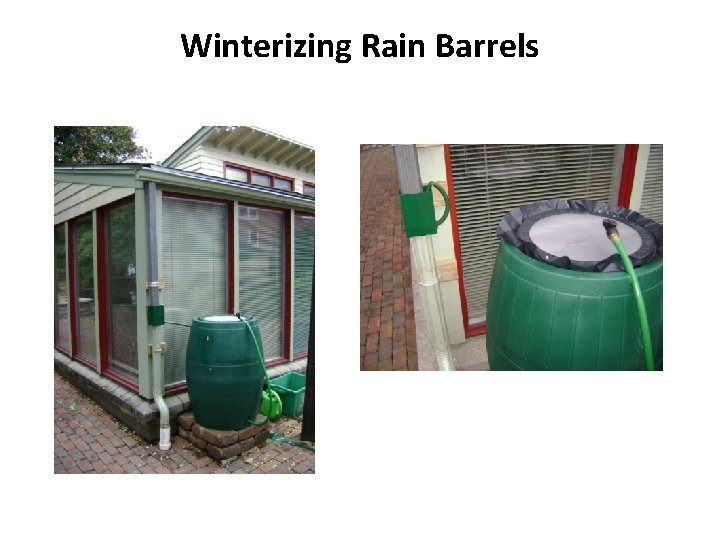
Winterizing a rain barrel involves two separate jobs: protecting the container and keeping roof runoff moving away from the house. Emptying the barrel solves only the first. If a shortened downspout is left discharging beside the foundation, the next rain can reveal a problem that the summer collection setup was hiding.
This checklist is for homeowners preparing a basic, above-ground rain barrel for a freezing season. It is not a shutdown procedure for an underground cistern, a pumped irrigation network, or a system connected to household plumbing. Follow the instructions for your actual barrel and diverter; different connections need different winter parts.
Choose a shutdown date for your climate, not the calendar alone
October is a useful time to make a plan, but it is not a nationwide deadline. A yard in a cold inland region and a coastal yard with mild winters need different timing. Check the local forecast and the equipment manufacturer’s guidance rather than waiting for a particular holiday.
The Minnesota Pollution Control Agency advises disconnecting and emptying rain barrels before winter to prevent freezing damage. Its instructions also call for reconnecting a downspout extension to carry water away from the foundation.[10] That second step deserves a place on the same checklist as draining.
Pick a day when you can finish the whole changeover. Start by locating the winter fittings, the original downspout section if you kept it, and somewhere suitable to store the empty container. Finding a missing connector before you disconnect anything is easier than solving it during rain.
Identify how your barrel connects to the downspout
Stand back and trace the path from gutter to ground. Is the downspout feeding directly into an opening in the barrel? Or is a small hose attached to a diverter while the main downspout continues toward the ground? Photograph the connection and look for a manufacturer or model label.
These layouts are not interchangeable. Philadelphia’s Rain Check program, for example, supplies a diverter-equipped barrel whose excess water returns through the downspout. Its winter instructions include detaching the barrel and using a supplied plug to close the connection hole.[8] A barrel placed directly beneath a cut downspout needs its roof-drainage route restored instead.
- For a direct-feed setup, identify the downspout section or extension needed when the barrel is absent.
- For a diverter setup, find the winter cover or plug specified for that particular fitting.
- For linked barrels, identify every connection and follow the system’s complete shutdown instructions.
Do not buy a plug solely because it looks close in a photograph. Match the documented fitting and connection type.
Drain the water before moving the barrel
Plan where the remaining water will go. Use a suitable garden area without sending water back toward the house or across a walking route. If you are unsure about the property’s drainage, resolve that question before opening the tap. A full container is not something to wrestle off a raised stand.
Let the barrel drain through its intended outlet, then follow its manual for removing residual water. The absence of flow from the tap does not tell you whether a low pocket or an attached line still contains water. Check the container and accessories separately rather than assuming one open valve drained everything.
BlueBarrel’s winterization guide specifically highlights draining ball valves and irrigation lines in hard-freeze conditions. For attached gravity-fed irrigation, it also describes removing and draining accessories such as filters and timers for seasonal storage.[11] Apply the relevant instructions to the parts you actually own; a more complex system may require professional servicing.
Restore the roof-water route before calling the job finished
Once the barrel is disconnected, inspect the complete downspout again. A winter plug belongs in the connection port identified by the diverter manufacturer, not across the main downspout outlet. The roof still needs a route for rain and snowmelt while the barrel is out of service.
For a direct-feed arrangement, reconnect the appropriate downspout section or extension. Use the property’s established drainage arrangement rather than improvising a new discharge point onto a sidewalk, a neighbor’s yard, or a low area beside the house. There is no single extension length that resolves every slope and lot configuration.
If the existing outlet already causes pooling, treat that as a separate drainage problem. Emptying a barrel is not a substitute for correcting it. Our guide to planning a home for lower maintenance discusses drainage as part of the larger design picture; use site-specific advice for an actual alteration.
Clean, inspect, and store the disconnected pieces
Before storage, remove accessible sediment and debris using the barrel’s intended access points. Rain Check recommends cleaning accumulated leaves and sediment through its barrels’ removable top caps.[8] Follow your own product’s cleaning instructions rather than introducing an improvised chemical mixture.
With the parts visible, make a short repair list: damaged screen, missing gasket, split hose, or connection that did not seal properly. Label removable parts and keep them together. A photo of the assembled setup and a bag of identified fittings can make spring reassembly less confusing.
Choose a storage position that prevents the barrel from filling again. Minnesota’s guidance offers an upside-down outdoor position or moving the empty barrel into a garage or basement.[10] Follow any different requirements for your container, and keep it stable and clear of doors or passageways.
Check the winter setup after the next rainfall
A useful final check happens when water is moving. Observe from a safe, ground-level location: does the downspout discharge along the intended route? Does the disconnected barrel remain empty? Is a loose hose collecting water? Do not climb onto a wet roof to investigate.
Consider two illustrative outcomes. In the first, the barrel is dry but water spills from a missing diverter cover; the connection still needs attention. In the second, the cover is secure but an extension has shifted toward the house; the drainage path needs correcting. Neither problem is solved by checking the barrel alone.
Before restarting in spring, inspect the stored parts, confirm that the relevant freezing risk has passed, and restore the operating arrangement according to the manual. For now, the finish line is straightforward: an empty protected barrel, drained accessories, and a working roof-water route. Completing all three is more useful than simply turning a tap and walking away.