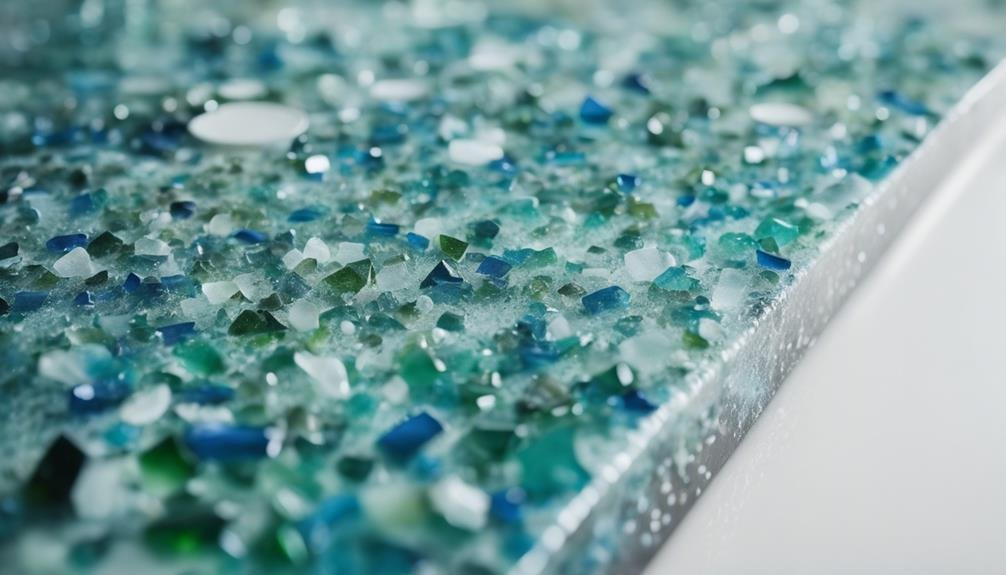
The morning sunlight hits the kitchen island, catching glints of cobalt blue and seafoam green trapped inside a polished slab of concrete and crushed bottles. Five years ago, when Sarah and Mark renovated their suburban bungalow, this surface was the crown jewel of their eco-conscious remodel. It represented a tangible triumph over waste: beer bottles from backyard barbecues and discarded windshields given a second life as bespoke luxury. Back then, scrolling through design feeds felt like a continuous parade of these luminous, jewel-toned slabs, championed as the ultimate intersection of high design and ethical consumption.
Fast-forward to the current kitchen landscape, and the romance has begun to fray around the edges. Sarah stands by the sink, running a fingertip over a faint hairline fracture that spiderwebs out from the undermount basin—a legacy of an unyielding cast-iron skillet dropped clumsily during dinner prep. Worse yet are the cloudy, dull patches near the coffee maker, stubborn chemical etching where an errant squeeze of lemon juice sat too long on a resin binder not quite tough enough for daily household chaos. They aren’t the only ones feeling a quiet sense of buyer’s remorse; contractors and stone fabricators across North America report a noticeable cooling effect as clients look past the glossy marketing brochures and ask harder questions about everyday performance.
This shift does not mean people have suddenly stopped caring about the planet or sustainable building practices. Instead, kitchen design has entered a more pragmatic phase. Homeowners investing serious capital into their homes want surfaces that can withstand heavy cooking, chemical cleaners, and screaming toddlers without requiring the baby-sitting attention of a fragile antique. The reckoning facing recycled glass countertops isn’t an indictment of recycling itself, but rather a collision between idealistic material science and the messy, unscripted reality of domestic life.
The Chemistry of Compromise: Understanding How These Surfaces Are Built
To understand why sentiment is shifting, one has to look beneath the polished surface and examine the manufacturing DNA of recycled glass countertops. These surfaces generally fall into two distinct camps: resin-based slabs and cement-based slabs. The former suspends high percentages of post-consumer or industrial glass aggregate within a petroleum-derived polymer or polyester resin binder, much like traditional engineered quartz. The latter binds the glass pieces inside a modified concrete matrix, offering a more organic, industrial aesthetic but introducing entirely different vulnerabilities.
The core tension lies in the structural mismatch between the aggregate and the binder. Glass is exceptionally hard, non-porous, and chemically inert. Resins and cementitious binders, however, possess entirely different expansion rates, hardness ratings, and chemical sensitivities. When thermal shock occurs—such as placing a hot Dutch oven directly onto the counter—the glass expands at a different rate than the surrounding polymer or concrete, often resulting in micro-cracking or stress fractures that can compromise the structural integrity of the slab over time. Furthermore, while the glass shards themselves will never stain, the matrix holding them together is often surprisingly vulnerable.
Fabricators also grapple with the sheer inconsistency of the raw materials. Because the aggregate consists of recycled bottles, jars, or industrial panes, the size, density, and distribution of the pieces can vary wildly from one end of a slab to the other. This lack of uniformity makes precise cutting, seaming, and edge profiling a high-stakes guessing game. Installers often find themselves battling chipping along the cut lines, where the diamond blade transitions from soft resin to hard glass, creating micro-fissures that become accumulation points for dirt and bacteria down the road.
Aesthetic Fatigue and the Shifting Tides of Modern Interior Design
Beyond structural and maintenance realities, design sensibilities have evolved away from the high-contrast, busy aesthetics that dominated the early 2020s. Recycled glass countertops, particularly those featuring large chunks of multi-colored bottles, create an intensely vibrant visual texture. While striking in an empty showroom, this high-energy pattern often clashes with the desire for calm, grounding sanctuary spaces that currently define contemporary interior architecture. Homeowners are finding that a countertop packed with crushed emerald, brown, and clear glass leaves very little room for flexibility when it comes to changing backsplashes, cabinet colors, or decorative accents.
Design trends have decisively shifted toward quiet luxury, monolithic continuity, and tactile subtlety. Monochromatic quartzites, soapstones with soft veining, and matte-finished porcelain slabs have surged in popularity because they recede into the background, allowing architectural details and natural light to take center stage. By contrast, a heavy-aggregate glass countertop demands visual attention, often dominating a room in a way that feels dated or overly thematic as design preferences mature toward timeless minimalism.
Moreover, the perception of luxury has evolved. Ten years ago, the novelty of reclaimed materials carried significant cultural currency, signaling that the homeowner was forward-thinking and environmentally responsible. Today, sustainability is expected rather than showcased through gimmicky aesthetics. Homeowners no longer feel the need to broadcast their eco-credentials through a loud, multicolored kitchen island; they prefer sustainable materials that whisper rather than shout, blending high performance with understated elegance.
Evaluating the Installation and Fabrication Realities on the Job Site
Working with recycled glass requires specialized expertise that many general fabricators simply do not possess in-house. Because these slabs behave unpredictably under fabrication tools, the margin for error is razor-thin. Homeowners embarking on a kitchen overhaul need to understand the practical hurdles involved in moving from a raw block to a finished, functional workspace.
- Step 1 (Material Sourcing and Inspection): Request physical slab samples rather than relying on digital catalogs, as batch variations in recycled content can drastically alter the final look and structural density of the product.
- Step 2 (Fabricator Vetting): Confirm that your chosen fabricator has specific, documented experience cutting and installing high-aggregate glass surfaces, as standard quartz or granite techniques will lead to costly fractures.
- Step 3 (Templating and Seaming Strategy): Work closely with the installer to map out seam placements, ensuring that heavy glass clusters are balanced and structurally supported, particularly around sink cutouts and overhangs.
- Step 4 (Substrate and Cabinet Leveling): Ensure kitchen cabinets are perfectly level and reinforced; because recycled glass slabs—especially cement-based variants—are exceptionally heavy and brittle, any twist in the sub-base will cause cracking.
- Step 5 (Edge Profile Selection): Opt for eased or half-bullnose edges rather than sharp 90-degree corners, as sharp profiles are notoriously prone to chipping when struck by heavy cookware.
Navigating Maintenance Realities and Common Surface Failures
The day-to-day upkeep of recycled glass countertops often surprises homeowners who expected a bulletproof, low-maintenance surface. While the glass pieces are impervious to stains and acids, the surrounding binder—whether epoxy, polyester resin, or cement—demands constant vigilance. Understanding these vulnerabilities before installation prevents expensive disappointments later in the kitchen’s lifecycle.
- Pitfall 1 (Acidic Etching on Resin Binders): Spills of lemon juice, vinegar, or wine left sitting on exposed resin portions will dull the polish, creating hazy white spots that require professional repolishing. Workaround: Wipe up acidic liquids immediately and use neutral, pH-balanced stone cleaners rather than aggressive household disinfectants.
- Pitfall 2 (Thermal Shock Fractures): Placing hot pans straight from the stovetop onto resin-based recycled glass can melt the polymer binder or crack the slab due to uneven thermal expansion. Workaround: Strictly enforce the use of trivets and hot pads for all cookware, regardless of manufacturer claims about heat resistance.
- Pitfall 3 (Seam Discoloration): Poorly sealed seams or inferior epoxy can yellow over time when exposed to UV light or absorb food oils, resulting in dark, unsightly lines across the island. Workaround: Insist on UV-stable, high-grade structural epoxies during installation and reseal cement-based variants annually.
- Pitfall 4 (Surface Chipping at High-Traffic Zones): Edges around dishwashers and sinks are prone to chipping because the glass aggregate can pop out of the softer binder under heavy impact. Workaround: Choose rounded edge profiles and exercise caution when loading heavy pots near undermount basin rims.
- Pitfall 5 (Inconsistent Sealing Requirements): Cement-based recycled glass requires periodic impregnating sealers to prevent staining, confusing homeowners who assume all glass surfaces are non-porous. Workaround: Establish a strict annual maintenance schedule for applying manufacturer-approved penetrating sealers on cementitious slabs.
The Broader Ecological Calculus and Economic Implications
When evaluating recycled glass countertops, the conversation inevitably circles back to sustainability—the very attribute that drove their initial rise in popularity. However, the ecological math is more complicated than marketing slogans suggest. Transporting heavy glass aggregate to centralized manufacturing facilities, combining it with energy-intensive petroleum resins, and shipping fragile finished slabs across continents incurs a significant carbon footprint that can sometimes outweigh the benefit of diverting bottles from local landfills.
From an economic standpoint, these specialty surfaces occupy a peculiar tier. They are rarely budget-friendly; in fact, premium resin-based recycled glass often commands a price per square foot comparable to high-end exotic quartzites or premium marbles. Yet, unlike those natural stones—which typically maintain or even enhance a home’s resale value due to their timeless appeal—recycled glass surfaces can sometimes polarize potential buyers during a home sale. A polarizing kitchen finish that screams a specific design era can translate into a price reduction request from hesitant prospective purchasers.
This economic reality forces a hard look at lifecycle value. A countertop is not merely a decorative purchase; it is a long-term infrastructure investment in the home. When homeowners calculate the cost of potential repairs, specialized maintenance products, and eventual replacement due to aesthetic fatigue or structural damage, the calculus shifts toward more durable, versatile alternatives like engineered quartz, sintered stone, or enduring natural granites.
Practical Recommendations for Modern Kitchen Renovators
For those still drawn to the unique aesthetic of recycled glass, success lies in strategic application rather than blanket adoption. Blindly installing it across every horizontal surface in a bustling family kitchen is an invitation for frustration. Instead, smart designers and homeowners are deploying the material where its strengths shine while minimizing its exposure to high-wear hazards.
- Limit High-Impact Zones: Reserve recycled glass for low-impact vertical applications like backsplashes, bathroom vanities, or accent shelving rather than primary prep islands.
- Prioritize Quality Binders: If using the material for countertops, invest exclusively in premium brands that utilize advanced, UV-stable, high-density resin matrices designed to resist scratching and thermal degradation.
- Pair with Durable Workhorses: Consider a hybrid kitchen design—pairing a resilient quartz or soapstone around the active cooking and cleaning zones with a recycled glass surface on a secondary bar or entertaining island.
- Consult Independent Fabricators: Always talk directly to the stone cutter who will fabricate your slabs rather than relying solely on showroom salespeople; experienced fabricators will give you an honest appraisal of the material’s limitations in your specific household environment.
The shifting perspective on recycled glass countertops highlights a mature evolution in how we think about sustainable home design. We have moved past the era where slapping an eco-friendly label on a product excuses it from the rigorous demands of daily life. Today’s homeowners demand materials that harmonize environmental responsibility with uncompromised functionality and timeless beauty.
As material science continues to advance, the next generation of eco-surfaces will likely solve many of the brittleness and binder issues that plague current iterations. Until then, approaching recycled glass with open eyes, realistic expectations, and strategic placement ensures that your kitchen remains both beautiful and bulletproof for years to come.