The overhead fluorescent panels at 8:00 AM buzz with a sterile, flat 4000K hum, casting the exact same steely glare across the open-plan office that they will output at 4:30 PM. By mid-afternoon, desks are half-shadowed by monitors, eyes are strained, and collective cognitive fatigue settles over the room like a heavy wool blanket. We have spent decades engineering offices for HVAC efficiency, ergonomic seating, and acoustic dampening, yet we have treated the invisible architecture of light as an afterthought—an on-off switch meant simply to chase away the dark.
For generations, interior illumination was judged by rudimentary metrics: foot-candles measured at desk height and raw wattage consumed per square foot. That mechanical paradigm is shattering. Light is not merely a utility for vision; it is a primary biological stimulus. Photons strike the retinal ganglion cells, signaling the suprachiasmatic nucleus in the brain to regulate cortisol rhythms, melatonin secretion, alertness, and core circadian alignment.
When organizations fail to model how natural daylight interacts with architectural geometry and artificial fixtures over the course of a shifting year, they invite chronic fatigue, presenteeism, and sleep disruption. Leveraging advanced lighting performance predictions using machine learning and artificial neural networks (ANNs) allows facilities teams to shift from static illumination to living, responsive environments. This deep dive unpacks how predictive computational design is rewriting the playbook for human-centric architecture and employee well-being.
The Biological Imperative of Photopic Real Estate
Standard architectural lighting has long treated the human eye as an optical camera lens rather than a neuroendocrine receptor. Traditional layout strategies aimed for uniform lux levels across a floor plate to satisfy archaic code minimums, ignoring how human biology actually processes spectral distribution and spatial gradients. When office occupants are starved of dynamic blue-enriched daylight during morning hours, their cortisol awakening response flattens. The result is an invisible drain on vitality that no amount of afternoon caffeine can sustainably patch.
Human-centric lighting (HCL) changes the equation by modulating correlated color temperature (CCT) and illuminance across the day. Morning schedules push toward cooler, high-intensity spectrums—around 5000K to 6500K—that suppress melatonin and sharpen executive function. As the afternoon wanes, the system shifts gracefully toward warmer, amber-leaning tones (2700K to 3000K) that signal the winding down of the biological day. Yet, achieving this manually is an administrative nightmare, and static schedules fail miserably when cloud cover rolls in or seasonal sun angles shift.
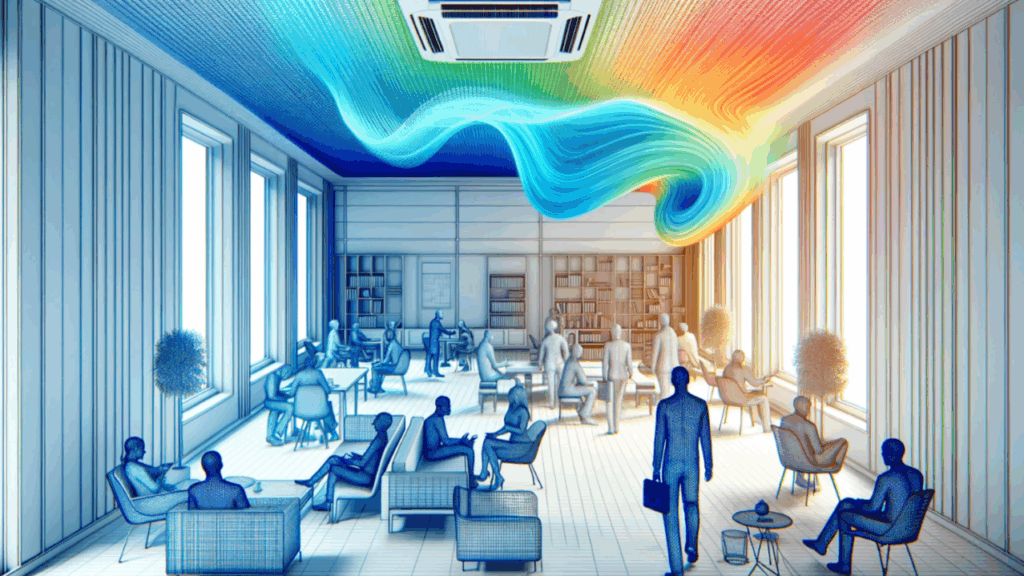
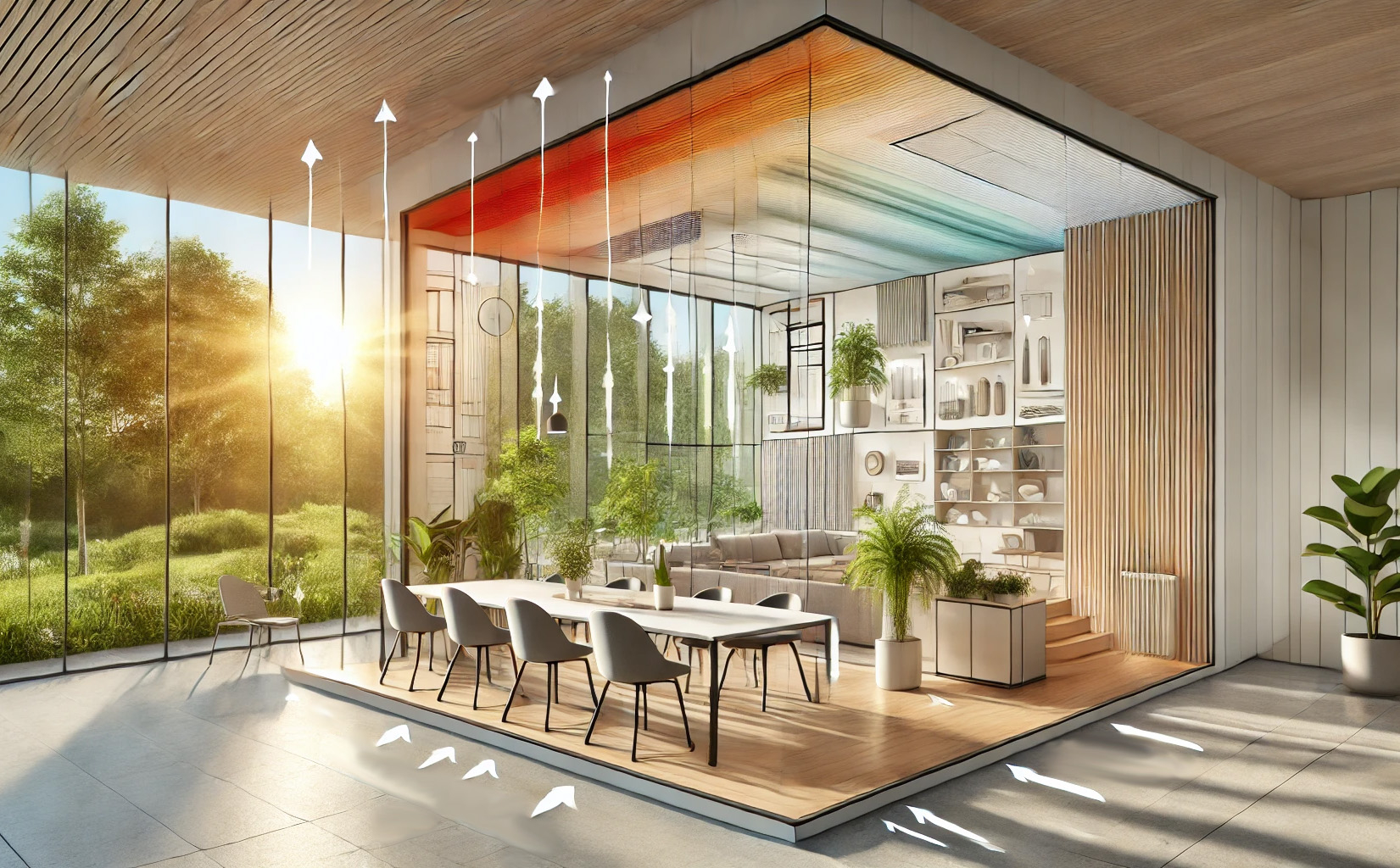
This is where predictive modeling bridges the gap between biological theory and physical reality. Computational design supported by artificial intelligence allows engineers to simulate spatial distribution, light intensity, and spectral shifts before a single fixture is wired. By mapping how direct sunlight penetrates a glass facade across every hour of the equinoxes and solstices, computational models anticipate glare hotspots and shadow zones. Organizations no longer guess whether a desk layout supports focus work or screen-intensive tasks; they simulate the exact photopic and melanopic lux delivery at every workstation coordinate throughout the year.
Beyond Static Lux: How Neural Networks Model Indoor Illumination
Predicting indoor light intensity is notoriously complex. Light bounces off polished concrete floors, absorbs into dark fabric acoustic panels, and refracts through tinted low-E window glass in non-linear ways. Traditional ray-tracing software can calculate these physics, but rendering complex architectural changes in real time requires massive computing power. Enter neural network-based prediction models, which transform how lighting engineers approach dynamic environments.
Recent computational studies demonstrate that artificial neural networks (ANNs) and deep learning architectures can estimate workplace illumination intensity with staggering accuracy using sparse sensor inputs or RGB image feeds. By training a model on historical weather data, facade orientations, and sensor arrays, the system learns to predict lighting performance dynamically. If an unexpected thunderstorm darkens the eastern sky at 10:30 AM, the neural network doesn’t wait for a manual override or a sluggish photocell; it anticipates the drop in natural daylight and recalibrates adjacent LED arrays instantaneously.
This environment-aware prediction extends to personalized lighting control. Modern workers have vastly different visual and biological needs based on task intensity, age, and individual circadian rhythms. Machine learning algorithms analyze occupancy patterns, user adjustments, and ambient conditions to generate a personalized luminous envelope. The system learns that a design team collaborating over physical sketches requires higher horizontal illuminance than an engineering squad deep in code debugging, adjusting the output seamlessly without manual intervention.
A Step-by-Step Methodology for Deploying Predictive Lighting Systems
Implementing advanced lighting performance predictions requires a rigorous, multi-phase engineering approach. Facilities managers and architectural designers must move past plug-and-play smart bulbs and adopt a systemic framework that integrates data science with spatial design.
- Step 1 (Environmental Baseline Audit): Map existing daylight penetration, architectural obstructions, facade orientations, and surface reflectance values across the entire floor plate using high-dynamic-range (HDR) photography and lux meter grids.
- Step 2 (Neural Network Model Training): Deploy sparse IoT sensor arrays across representative zones to collect real-time data on natural light fluctuation, occupancy, and current energy draw over a minimum two-week baseline period.
- Step 3 (Simulated Performance Modeling): Feed baseline and spatial geometry data into computational design platforms utilizing ANN algorithms to predict annual circadian stimulus (CS) metrics, melanopic equivalent daylight illuminance (EDI), and energy consumption profiles.
- Step 4 (Intelligent Hardware Integration): Install tunable white LED fixtures equipped with DALI or Zigbee protocols, paired with localized edge-computing gateways capable of running real-time predictive control algorithms without cloud latency.
- Step 5 (Continuous Calibration and User Feedback Loop): Monitor post-occupancy metrics through qualitative wellness surveys and automated sensor feedback, allowing the machine learning models to fine-tune predictive accuracy based on actual human response.
Navigating Complex Roadblocks and Technical Pitfalls
Deploying high-performance predictive lighting is not without friction. Rushing into implementation without accounting for software fragmentation, privacy concerns, or hardware limitations can derail even the most well-funded workplace wellness initiative.
- Pitfall 1 (Over-reliance on Static Cloud Assumptions): Many design teams rely solely on standard weather files that fail to account for local urban microclimates or adjacent skyscraper reflections. Workaround: Supplement standard meteorological datasets with local, historical cloud-cover analytics and deploy adaptive outdoor irradiance sensors on the roof.
- Pitfall 2 (Ignoring Visual Comfort and Glare): Chasing high melanopic lux targets can result in excessive vertical illuminance, causing severe computer screen glare and eye strain. Workaround: Program predictive models to prioritize glare-probability indices (like DGP) alongside circadian metrics, integrating automated motorized blinds with the lighting schedule.
- Pitfall 3 (Data Privacy Anxiety): Occupancy tracking sensors and RGB image feeds can make employees feel surveilled, breeding resistance to smart building initiatives. Workaround: Utilize anonymous, passive infrared (PIR) sensing or millimeter-wave radar for occupancy tracking rather than optical cameras that record identifiable features.
- Pitfall 4 (System Complexity and UI Overload): Giving users manual app controls that offer infinite color temperature tweaking often leads to chaotic workspace aesthetics and frustrated employees. Workaround: Design intuitive, context-aware user interfaces with simple preset modes (Focus, Collaborate, Relax) while letting the AI handle background micro-adjustments.
- Pitfall 5 (Neglecting Energy Code Compliance): Aggressive human-centric lighting layouts can inadvertently spike peak lighting power density (LPD), violating energy efficiency standards like ASHRAE 90.1. Workaround: Implement daylight harvesting dimming schedules and task-tuning limits to balance biological efficacy with strict net-zero carbon goals.
The Broader Horizon: Economic Value and Sustainable Building Synergy
The integration of predictive lighting performance into commercial architecture represents a fundamental shift in how corporations view real estate. Historically, office lighting was evaluated strictly as a capital expense and a monthly utility cost. Today, predictive human-centric systems are recognized as strategic assets that directly impact talent retention, sick-leave reduction, and cognitive throughput. When employees work under lighting conditions that actively support sustained alertness and deep circadian alignment, error rates drop, afternoon slumps diminish, and overall job satisfaction climbs.
Furthermore, predictive modeling unlocks unprecedented energy efficiency. Traditional smart lighting reacts to conditions after they occur, often leading to over-correction and wasted wattage. Neural network-based systems anticipate illumination needs based on predictive weather modeling and historical occupancy curves, dimming fixtures before natural light floods a workspace. This precise orchestration slashes commercial building energy consumption significantly, aligning corporate wellness initiatives with aggressive ESG (Environmental, Social, and Governance) reporting mandates.
The synergy between lighting predictions and broader indoor environmental quality (IEQ) metrics is equally profound. Modern green building certifications, such as WELL and LEED, increasingly reward projects that demonstrate tangible occupant health outcomes rather than just prescriptive design features. By documenting how predictive lighting models maintain optimal melanopic ratios throughout the working day, facility operators provide concrete, verifiable proof of a health-promoting workplace environment.
Frameworks for Success: Actionable Recommendations for Facilities Leaders
To successfully transform a commercial workspace through advanced lighting predictions, leadership must abandon siloed thinking and foster cross-functional collaboration between facilities management, IT infrastructure teams, and human resources.
First, establish clear key performance indicators (KPIs) that encompass both energy reduction and occupant wellness. Track metrics such as reduction in artificial lighting run-time, employee self-reported alertness scores, and absenteeism rates related to fatigue or seasonal affective issues. Second, invest in modular, upgradeable hardware. Lighting technology and sensor miniaturization evolve rapidly; locking a building into a proprietary, closed-ecosystem fixture lineup limits future software adaptability.
Finally, prioritize change management and education. Advanced lighting systems that shift dynamically throughout the day can feel disorienting to employees accustomed to static, unchanging environments. Communicate the biological rationale behind shifting color temperatures and light intensities. When staff understand that the warm, amber glow at 4:00 PM is actively protecting their evening sleep architecture rather than just dimming to save electricity, cultural adoption accelerates.
We are standing at the threshold of a new era in interior architecture, one where buildings are no longer static containers for human labor, but responsive, biological ecosystems. The realization that light is a potent pharmaceutical agent—capable of altering mood, focus, and long-term health—demands that we approach lighting design with the same rigor we apply to structural engineering and clean air delivery.
By harnessing neural networks, predictive computational design, and human-centric lighting controls, we possess the tools to heal the indoor disconnect. We can synchronize our workspaces with the rhythms of the natural world, fostering environments where people do not merely survive the workday, but thrive within it. The future of work is bright, adaptive, and intelligently tuned to the human soul.