Picture 7:15 on a Tuesday morning. The apartment is quiet except for the low hum of the refrigerator. You reach blindly into a low, dark cabinet to grab a heavy cast-iron skillet, your wrist twisting at an awkward, unnatural angle as you maneuver the pan past a tight door frame. A sharp, familiar tweak shoots up your forearm. You wince, pull the skillet out, and silently vow to fix the kitchen layout this weekend.
We spend thousands of dollars agonising over quartz countertops, backsplashes, and high-end induction cooktops, yet we subject our bodies to daily micro-injuries every time we interact with poorly engineered storage. The kitchen is a workplace—a high-output culinary laboratory—and its drawers are the primary tools of trade. When those drawers lack proper weight ratings, smooth-glide hardware, and intuitive internal zoning, cooking shifts from a creative ritual to an ergonomic endurance test.
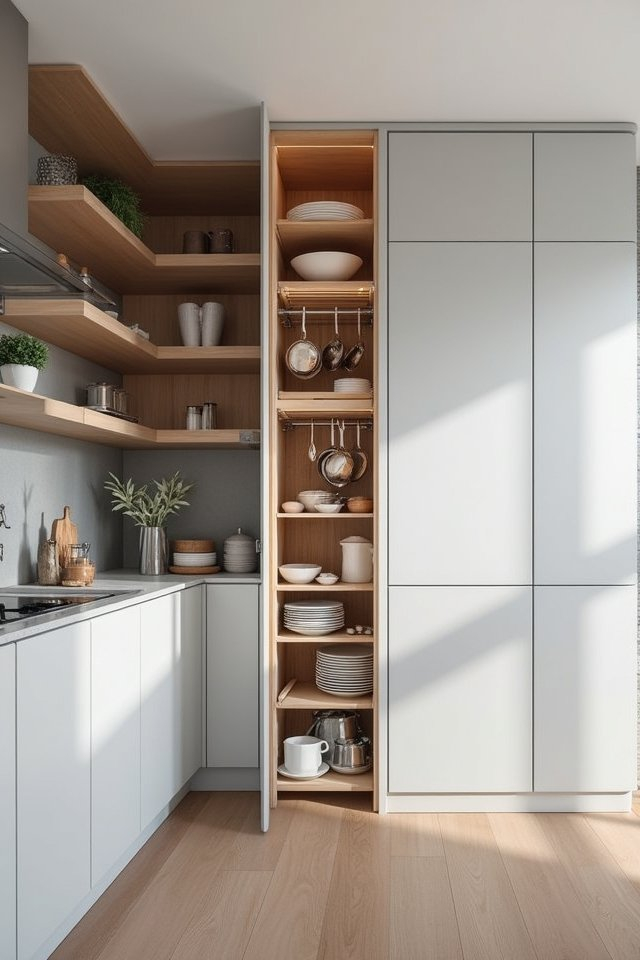
For decades, American and European residential architecture relied heavily on lower cabinet doors with fixed shelves. To retrieve a stockpot, you had to crouch down on cold tile, dig through the shadows, and haul out three other pots just to reach the one at the back. The physical toll on lower backs, knees, and wrists was simply accepted as part of cooking. Fortunately, modern kitchen ergonomics have shifted dramatically. Contemporary hardware engineering, heavy-duty under-mount slides, and modular drawer layouts mean we no longer have to contort our bodies to prepare a meal. Designing drawers that protect your joints and save your mornings is no longer a luxury upgrade; it is a fundamental baseline for human-centric interior design.
The Ergonomic Anatomy of a Wrist-Friendly Kitchen Drawer
The mechanics of pulling a drawer open or lifting a heavy plate stack involve complex kinetic chains running from your fingers through your carpal tunnel up to your shoulder girdle. When a drawer binds, sticks, or requires uneven pulling force, your wrist absorbs that asymmetric torque. Over years of daily meal prep, these repetitive strains compound. To eliminate wrist and hand fatigue, the physical interaction between human and hardware must be optimized down to the millimeter.
Under-mount soft-close slides represent the gold standard in modern cabinetry physics. Unlike older side-mounted epoxy-coated metal slides that sag under load and require a hard shove to close, high-end under-mount slides attach beneath the drawer box, concealing the mechanics while offering synchronized roller bearings. This ensures that even if you pull a wide pot drawer by its left handle alone, the mechanism glides smoothly without racking or jamming. Racking creates friction, which forces you to jerk or yank the drawer—the exact motion that triggers wrist sprains and spills hot coffee grounds or loose utensils.
Weight capacity is another critical factor frequently overlooked by amateur kitchen designers. A standard kitchen drawer box made of 1/2-inch particle board on light-duty slides is rated for perhaps 50 pounds. Load that drawer with ceramic dinner plates, heavy glassware, and canned goods, and you exceed its structural limits instantly. The slides buckle, the bottom panel sags, and the friction coefficient multiplies. Specifying heavy-duty, full-extension slides rated for 100 to 150 pounds ensures that even densely packed drawers glide with fingertip pressure. When opening a drawer requires less than five pounds of pulling force, your wrists remain in a neutral, strain-free position.
Reclaiming the Morning Rush Through Strategic Zoning
Mornings are a crucible of time management. Every second spent hunting for a measuring spoon, a coffee filter, or a protein powder scoop adds friction to your dawn routine. A truly functional kitchen is organized not by aesthetic symmetry, but by task-based ergonomics and frequency of use. If your most frequently grabbed breakfast items are buried across the kitchen from the kettle or espresso machine, your morning workflow is broken.
The primary rule of morning optimization is placing high-velocity items within the "strike zone"—the ergonomic sweet spot between your waist and shoulders where you can retrieve items without bending over or reaching overhead. Your coffee accessories, daily mugs, oatmeal bowls, and flatware should occupy top-tier drawers immediately adjacent to your prep and beverage stations. By establishing dedicated micro-zones, you eliminate cross-kitchen traffic jams and reduce the number of times you have to bend down before your first cup of coffee.
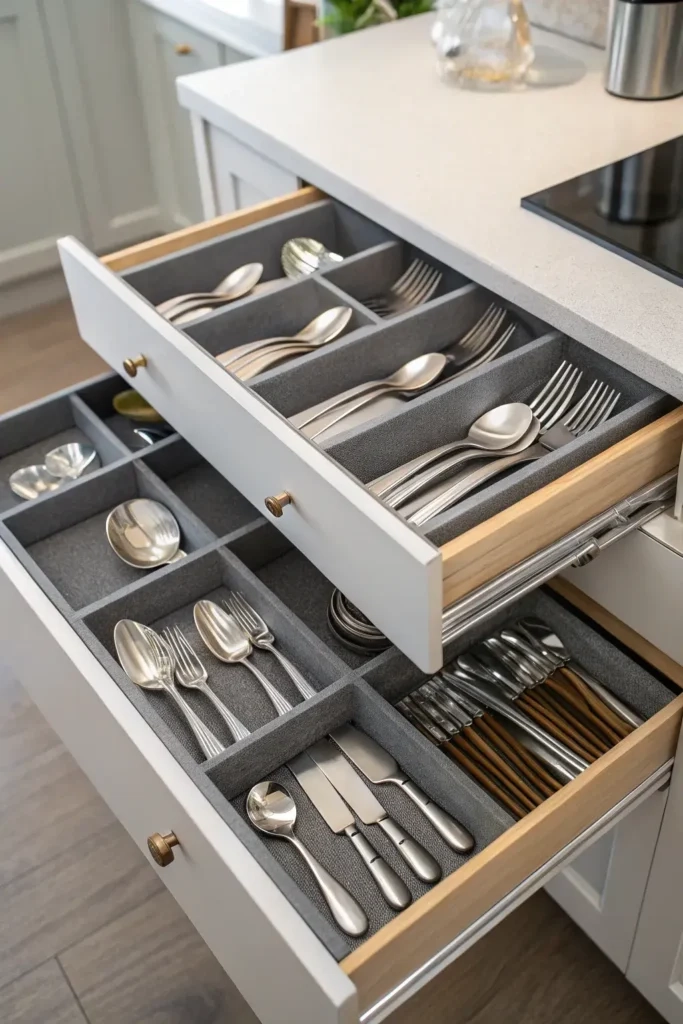
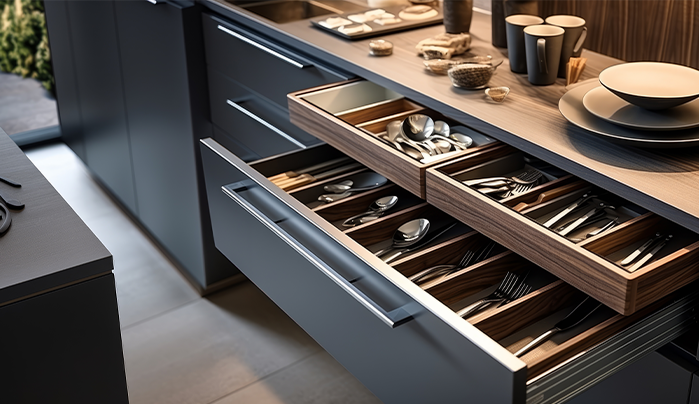
Layered drawer inserts are a secret weapon for high-efficiency morning storage. Instead of dedicating valuable drawer space to a single layer of flatware, contemporary hardware allows for sliding upper trays that glide over a deeper lower storage tier. Your everyday teaspoons and coffee spoons live on the top sliding tray, while less frequently used items like pastry servers or cloth napkins sit safely underneath. This doubles your usable vertical space without requiring you to dig through a chaotic jumble of mixed utensils.
Material Science and Structural Integrity of Modern Drawer Boxes
A drawer is only as strong as its joinery and floor panel. Cheaply constructed drawers built with staple guns and thin hardboard bottoms will inevitably fail under the rigorous demands of a busy kitchen. When designing custom or semi-custom cabinets, the construction specifications of the drawer box dictate its longevity and tactile feel.
Dovetail joinery remains the gold standard for box construction. The interlocking finger joints provide maximum surface area for wood glue, creating a permanent mechanical bond that resists the constant push-and-pull shear forces of daily use. Solid hardwoods like maple, birch, or white oak are preferred over low-density fiberboard because they hold screws securely and withstand the ambient humidity fluctuations typical of kitchen environments.
The bottom panel of the drawer box requires equal scrutiny. A sagging 1/8-inch bottom panel will eventually pop out of its groove when loaded with cast iron or stacks of ceramic bowls. Upgrading to a 3/8-inch or 1/2-inch captured bottom panel—where the floor is securely slotted into grooves on all four interior walls of the drawer box—distributes weight evenly across the under-mount slides. Furthermore, lining these bottoms with non-slip, washable rubberized matting prevents contents from sliding around and slamming into the drawer walls every time the mechanism soft-closes.
Step-by-Step Methodology for Designing Your Dream Drawer System
Designing a kitchen drawer layout requires a methodical audit of your physical habits, cooking style, and inventory. Skipping straight to aesthetic choices without analyzing your workflow guarantees an awkward kitchen. Follow this step-by-step framework to map out a system that protects your body and speeds up your mornings.
- Step 1 (Inventory and Ergonomic Audit): Empty every existing cabinet and drawer onto your dining table. Group items by frequency of use: daily essentials, weekly tools, and occasional specialty gear. Measure the physical weight and height of your bulkiest items, such as Dutch ovens and mixer attachments, to ensure adequate interior clearance.
- Step 2 (Establish the Zone Map): Divide your kitchen footprint into logical work zones—Prep, Cooking, Cleaning, and Beverage/Breakfast. Assign high-frequency drawers exclusively to the Prep and Beverage zones, keeping heavy pots near the range and everyday tableware near the dishwasher or dining transition point.
- Step 3 (Specify Hardware and Weight Ratings): Select full-extension, under-mount soft-close slides rated for a minimum of 100 pounds for standard drawers and 150 pounds for deep pot pull-outs. Avoid side-mount slides unless working with strict historical renovation constraints.
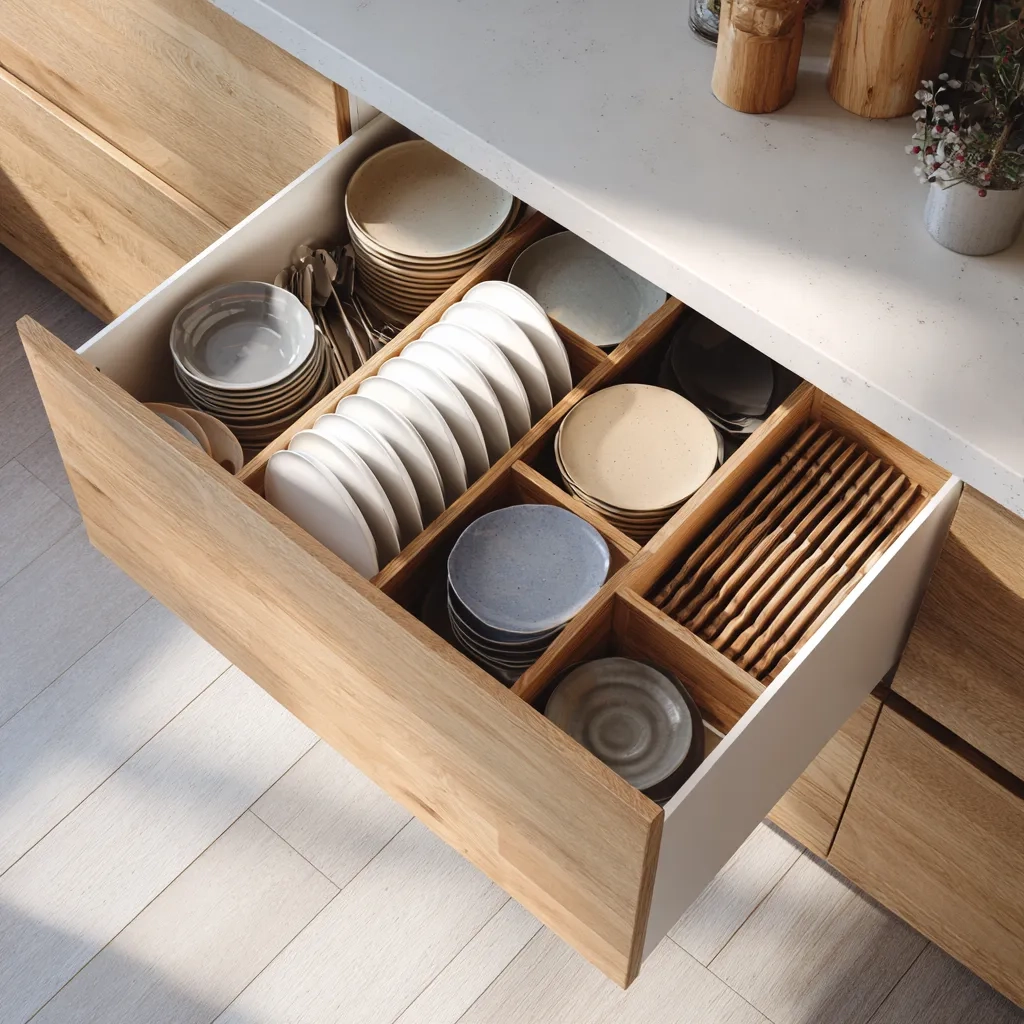
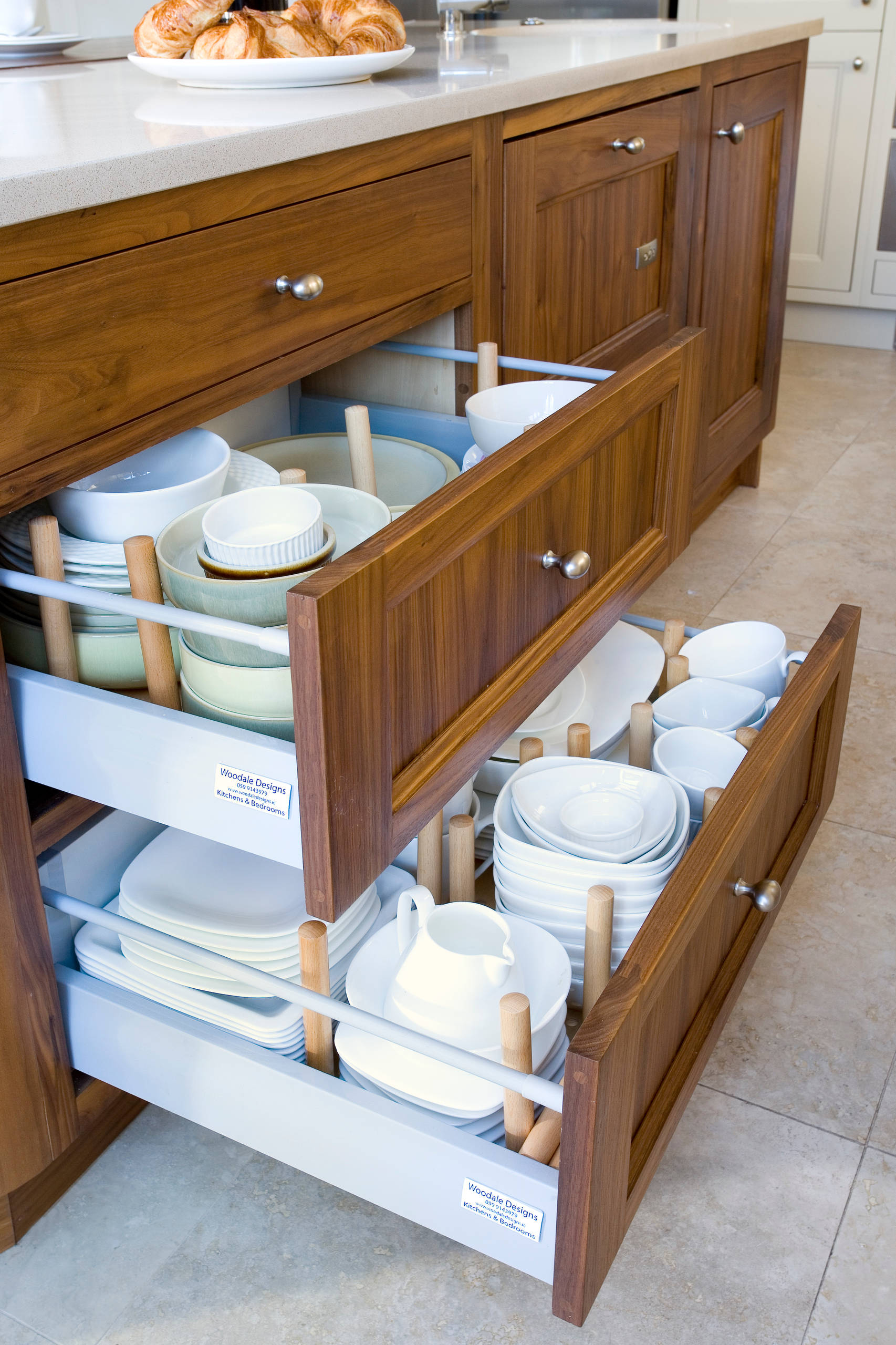
- Step 4 (Configure Modular Interior Dividers): Integrate customizable peg boards, vertical tray dividers, and modular wooden knife blocks rather than relying on loose plastic bins. Custom dividers keep tools stationary, preventing items from jamming against the cabinet frame when closing.
- Step 5 (Test and Adjust Vertical Spacing): Before finalizing your cabinet order, mock up your drawer heights with cardboard boxes filled with your actual gear. Ensure deep pot drawers have at least 12 to 14 inches of vertical clearance, while shallow utensil drawers remain between 4 to 6 inches to discourage clutter accumulation.
Common Pitfalls and Field-Tested Workarounds
Even experienced designers occasionally fall into functional traps when planning kitchen storage. Being aware of these frequent mistakes can save you from costly remodeling regrets and ongoing physical discomfort.
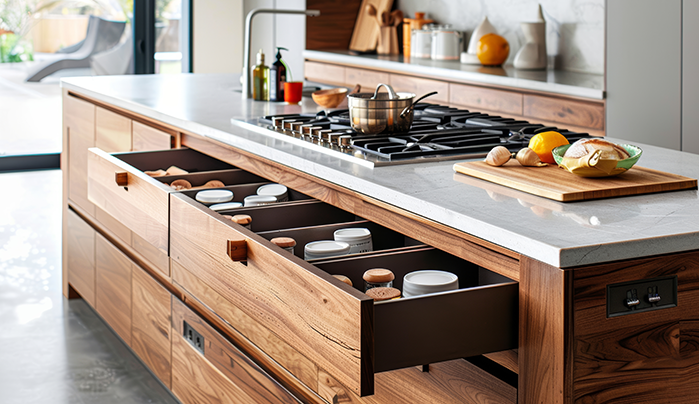
- Pitfall 1 (The All-Shallow Drawer Mistake): Designing a kitchen with five or six shallow, identical top drawers leaves no place for tall pots, blenders, or mixing bowls. Workaround: Adopt a cascading drawer stack model—one shallow top drawer for flatware, followed by one medium utility drawer, and one deep bottom drawer for cookware.
- Pitfall 2 (Ignoring Adjacent Appliance Clearance): Placing a wide drawer stack too close to a corner or an oven door handle can cause collisions, preventing drawers from opening fully or pinching your fingers. Workaround: Always include a 2- to 3-inch filler strip on inside corners to allow adjacent drawers to clear hardware pulls completely.
- Pitfall 3 (Overloading the Top Tier): Stacking heavy cast iron skillets in the upper drawers forces you to lift heavy objects above waist height, straining your wrists and lower back. Workaround: Reserve upper drawers exclusively for lightweight items like linens, foils, and utensils; store heavy iron in deep base drawers close to the floor.
- Pitfall 4 (Choosing Style Over Grip Ergonomics): Installing sleek, flush finger-edge profiles or tiny decorative knobs that require a fingertip pinch rather than a full-hand grasp. Workaround: Select substantial pulls or bar handles that allow you to engage your entire hand, distributing the pulling force across your palm and arm rather than isolating stress in your wrist joints.
- Pitfall 5 (Neglecting Interior Maintenance Access): Installing fixed, non-removable dividers that trap crumbs, moisture, and debris in inaccessible corners. Workaround: Insist on drop-in modular organizers that lift out entirely in seconds for effortless cleaning and sanitation.
The Long-Term Economic and Physical Value of Intelligent Design
Viewing kitchen storage through a purely aesthetic lens is a shortsighted financial and physiological gamble. Remodeling a kitchen represents a major capital investment, and the physical dividends of that investment depend entirely on operational efficiency and ergonomic foresight. When your kitchen functions seamlessly, cooking at home transitions from a chore to a restorative daily habit, directly influencing your nutrition, financial savings, and household well-being.
From a real estate valuation perspective, custom drawer configurations with premium hardware consistently outperform traditional door-and-shelf cabinets among modern homebuyers. Prospective buyers instantly recognize the value of deep pull-out pantry drawers and integrated utensil systems, associating them with high-end craftsmanship and thoughtful architecture. Furthermore, durable materials like solid maple dovetail boxes and heavy-duty steel slides insulate you against premature hardware failure, sagging panels, and expensive replacement cycles.
On a human level, reducing physical friction in the kitchen pays invisible dividends every single day. By eliminating the awkward wrist twists, heavy lifting strains, and chaotic morning searches, you preserve your physical energy for the things that matter. A kitchen designed with ergonomic empathy respects the human body, turning the heart of your home into a space of comfort, speed, and genuine peace.
The modern kitchen is evolving rapidly, merging smart home technology with timeless ergonomic principles. As we look ahead, the integration of touch-to-open electronic servo-drives for handleless cabinetry, automated interior lighting strips that activate upon sliding, and customizable 3D-printed organizational inserts will continue to redefine how we interact with our living spaces. Yet, no matter how advanced technology becomes, the fundamental goal remains unchanged: to serve the human body safely and efficiently.
Taking the time to evaluate your kitchen drawers is an act of self-care disguised as home improvement. Whether you are planning a full-scale architectural gut renovation or simply retrofitting existing cabinet bases with modern under-mount slides and modular inserts, every adjustment you make ripples outward into your daily routine.
Start small. Audit the single drawer you open most frequently during your morning coffee ritual. Replace its cluttered plastic tray with a bespoke wooden organizer, ensure the slides move with frictionless ease, and notice how much lighter your wrists feel when the kitchen works with you instead of against you.