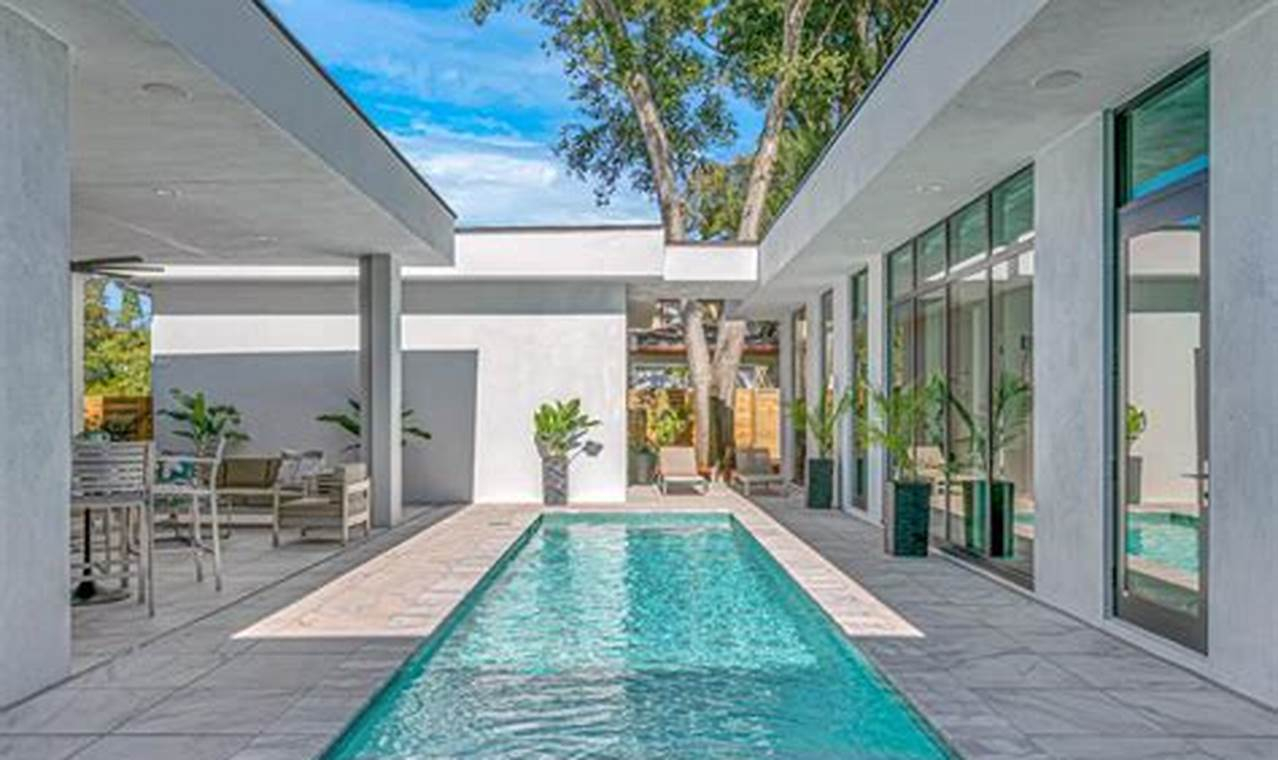
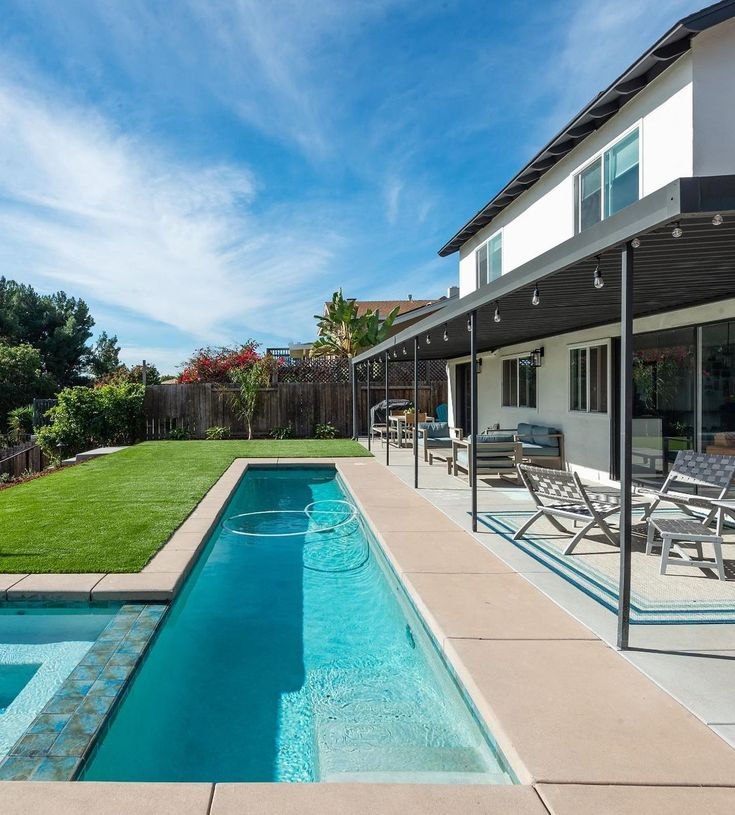
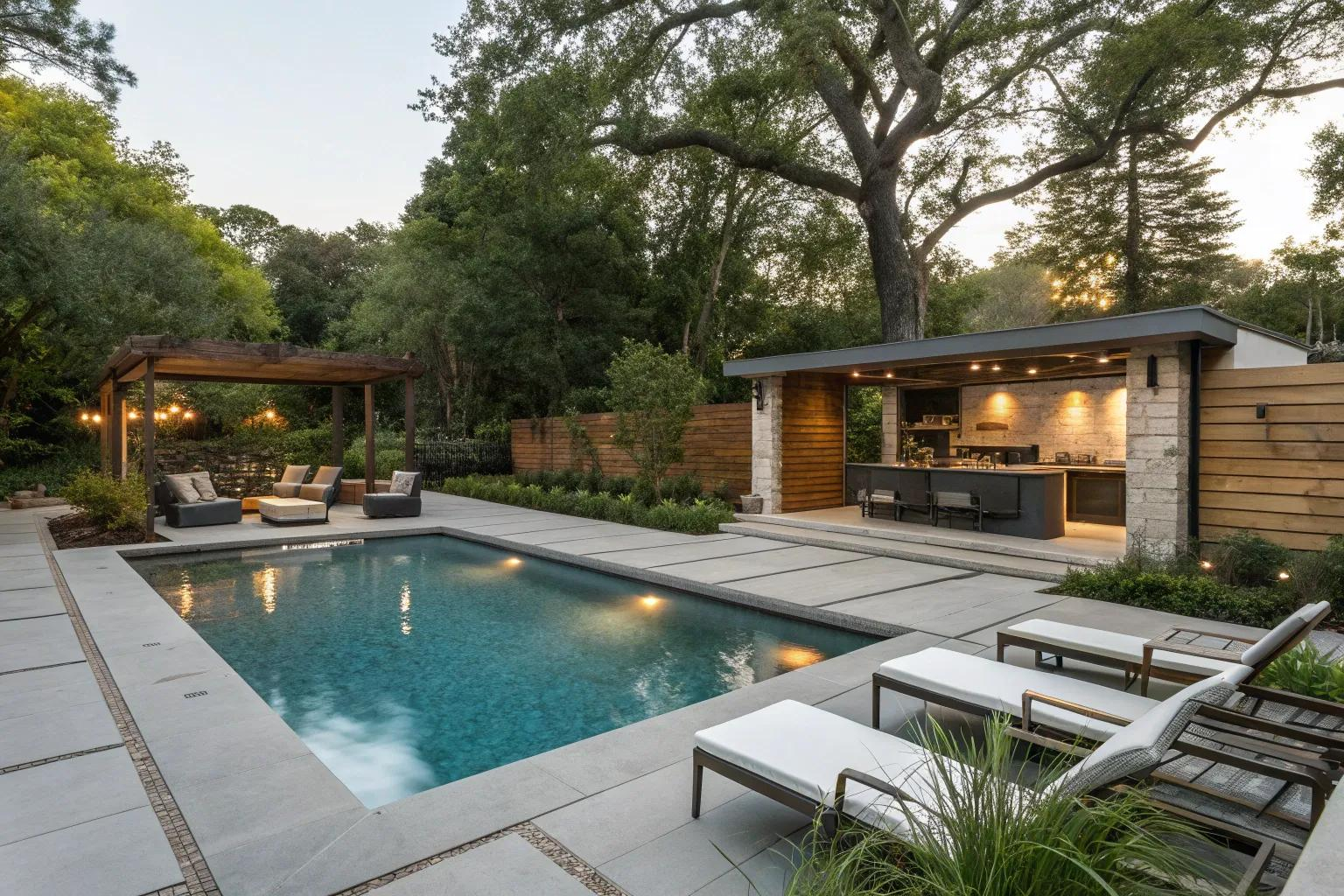
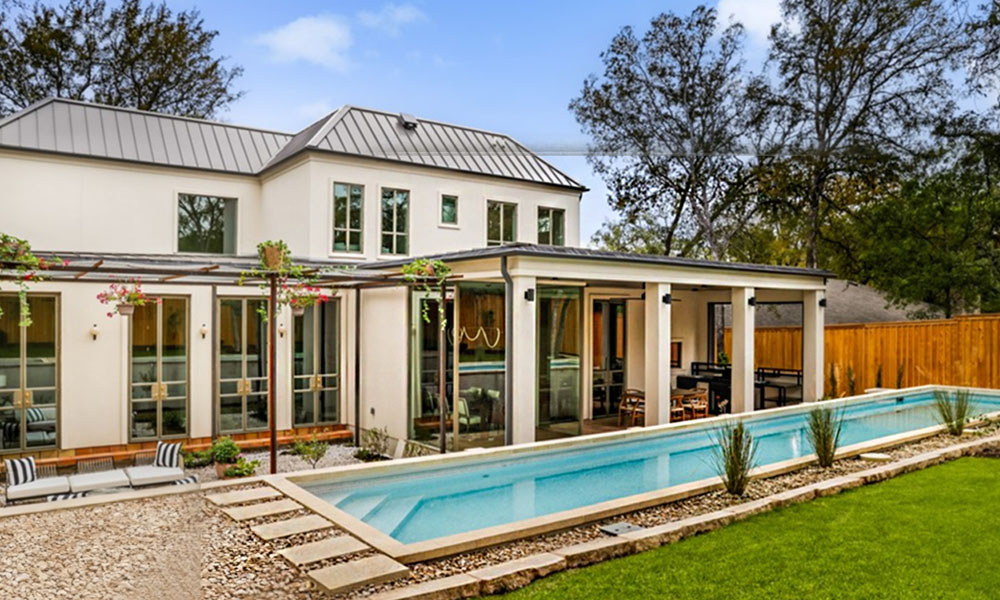
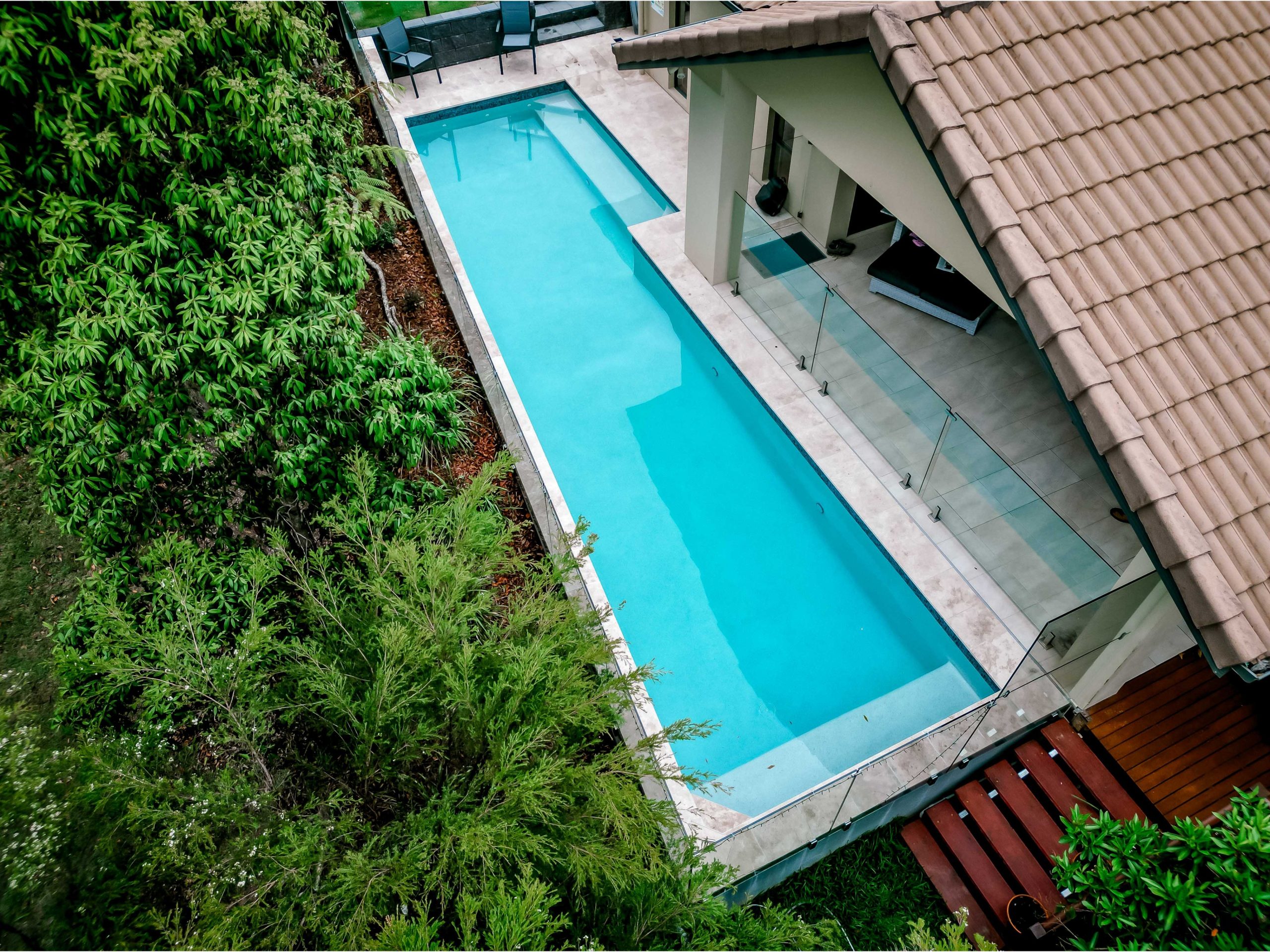
The pre-dawn air carries a crisp bite, and the only sound breaking the silence is the soft, rhythmic gurgle of water slipping over a negative edge. Outside your back door lies a narrow, flawlessly illuminated strip of crystal-clear water cutting through architectural concrete and lush feather reed grass. There is no crowded municipal locker room, no driving across town in rush-hour traffic to log your morning meters, and no waiting for an open lane. Your workout begins the moment you step off your patio, transitioning seamlessly from the quiet focus of exercise to the grounding stillness of outdoor living.
For decades, residential pools were designed primarily as weekend social hubs—shallow, kidney-shaped lagoons built for floating pool rafts, hosting noisy summer barbecues, and keeping children entertained for a few afternoon hours. But as our collective prioritization of health, mental wellness, and home-centric living has evolved, so too has the architecture of our yards. Homeowners are no longer satisfied with high-maintenance water features that sit empty for nine months of the year. Instead, the modern home wellness movement demands spaces engineered for daily performance, biomechanical efficiency, and restorative psychological sanctuary.
Achieving this balance requires an intentional shift away from decorative landscaping toward targeted, high-performance aquatic design. Whether you choose a sleek, traditional lap pool or a high-velocity, compact swim spa, creating an environment that nurtures both physical conditioning and deep mental relaxation is an exercise in rigorous spatial planning, hydrodynamics, and sensory design. The goal is to build a hyper-functional home retreat that feels organic to your property while performing with the precision of a professional training facility.
Choosing Your Aquatic Engine: Lap Pools Versus High-Velocity Swim Spas
The foundational decision in your backyard redesign lies in selecting the right water vessel for your specific space, fitness goals, and lifestyle. Traditional lap pools—typically ranging from 40 to 50 feet in length and 8 to 10 feet in width—offer an uninterrupted, natural swimming experience. Gliding down a classic lap lane allows for organic stroke mechanics, natural flip turns, and an unobstructed rhythm that endurance swimmers crave. However, a traditional long-form lap pool demands significant square footage, considerable earth-moving during installation, and higher chemical and heating overhead.
Enter the modern swim spa: a compact engineering marvel that compresses a professional training environment into a footprint as small as 12 by 8 feet. Utilizing adjustable propeller-driven water currents or high-pressure propulsion jets, a swim spa creates an endless aquatic treadmill. You swim or run in place against a smooth, laminar current that can be precisely calibrated to your exact pace—from a leisurely breaststroke to an anaerobic freestyle sprint. Furthermore, swim spas solve a critical design dilemma by integrating hot tub hydrotherapy zones directly into the vessel, offering dual-temperature functionality that supports intense athletic recovery followed by restorative heat therapy.
Integrating these systems into your landscape requires careful consideration of structural loads and utility access. Traditional concrete lap pools offer absolute customizability in depth, coping materials, and waterline tile, anchoring a grand architectural aesthetic. Conversely, self-contained acrylic swim spas can be installed above ground, partially sunken into a custom mahogany deck, or fully flush-mounted with surrounding stone pavers. Each approach carries distinct engineering demands, from reinforced concrete footings to heavy-duty electrical sub-panels capable of handling simultaneous heater and pump draws.
Engineering the Flow: Hydrodynamics, Filtration, and Water Quality
A stunning visual presentation means little if the water quality is poor or the swimming current is turbulent and choppy. In a backyard swim space designed for daily fitness, hydrodynamics dictate the overall quality of your experience. For lap pools, minimizing wall rebound—the chaotic bouncing of water waves off vertical pool walls—is essential to prevent wave interference that disrupts your stroke. This is managed through the installation of deep-gutter perimeter overflow systems or specialized, energy-absorbing tile bands that dissipate kinetic energy before it can bounce back into the swimmer’s path.
For swim spas, the quality of the current is entirely dependent on the propulsion technology. Traditional jet-driven spas often produce turbulent, aerated water that forces the swimmer’s hips down, making it difficult to maintain a horizontal body line. Premium swim spas utilize wide-stream propellers or flow-straightening grates that laminate the water, producing a solid, predictable, and wide column of water capable of supporting proper athletic form. Testing these currents prior to purchase is non-negotiable; a subpar current will quickly turn your daily workout into an exhausting battle against erratic turbulence.
Water sanitation infrastructure is the silent backbone of a stress-free aquatic space. Daily fitness use means high organic bather loads—sweat, skin cells, and sunscreen—which require robust filtration and chemical management. Moving beyond traditional chlorine tablets, successful designs incorporate multi-barrier sanitation systems combining ozone generators, high-output ultraviolet (UV-C) sterilizers, and salt-chlorine generators. UV-C light instantly neutralizes microorganisms and breaks down chloramines, drastically reducing chemical odors and skin irritation while keeping maintenance demands manageable.
Step-by-Step Blueprint for Integrating Your Swim Space into the Landscape
Building a resort-grade backyard swim space is a multi-phase architectural project that demands meticulous sequencing. Skipping steps or failing to coordinate utility rough-ins early will result in costly structural modifications down the line.
- Site Analysis and Microclimate Assessment: Map out sun angles, prevailing winds, and property boundaries to determine the optimal placement for privacy, solar heat gain, and wind protection during cooler months.
- Structural Engineering and Soil Testing: Hire a geotechnical engineer to evaluate soil load-bearing capacity, water table levels, and seismic requirements before finalizing whether your vessel will be inground, semi-inground, or surface-mounted.
- Utility Rough-In and Trenching: Coordinate with licensed electricians and plumbers to run dedicated high-amperage electrical service, gas lines for rapid water heating, automatic fill lines, and efficient drainage systems below the frost line.
- Vessel Placement and Hardscaping Integration: Position the lap pool or swim spa to align with indoor sightlines from your home, ensuring the aquatic feature acts as a living piece of art visible from your kitchen or living room.
- Surrounding Biophilic Landscaping: Layer textured, non-invasive plantings like ornamental grasses, architectural ferns, and columnar evergreens around the perimeter to soften hard edges, buffer road noise, and provide natural privacy screens.
Avoiding Critical Design and Operational Missteps
Many well-intentioned backyard transformations fail not from a lack of budget, but from overlooking foundational operational realities. Designing for daily fitness requires anticipating how the space will function under heavy, repetitive use across changing seasons.
- Pitfall 1 (Neglecting Drainage and Runoff Management): Improper grading around a sunken swim spa or lap pool often leads to pooling rainwater or runoff flooding the mechanical equipment pit. Workaround: Design a perimeter trench drain system connected to a gravity-fed or sump-pump-assisted dry well to keep rainwater entirely away from sensitive pump motors and heater housings.
- Pitfall 2 (Choosing Slick, Hazardous Surfacing Materials): Selecting highly polished marble or smooth travertine for coping and patio decks creates a severe slip hazard when wet feet transition from the water. Workaround: Specify textured, flame-finished natural stone, sandblasted concrete, or anti-slip composite decking with a minimum Dynamic Coefficient of Friction (DCOF) rating of 0.42 or higher.
- Pitfall 3 (Underestimating Electrical and Heating Operating Costs): Running a large water body year-round without thermal protection can result in staggering monthly utility bills. Workaround: Invest in a high-density, lockable insulating safety cover (minimum 4-inch to 6-inch tapered foam core) and pair it with a high-efficiency inverter heat pump or backup gas heater.
- Pitfall 4 (Forgetting Acoustic Privacy and Sound Mitigation): Pool pumps, variable-speed water jets, and pool equipment can produce a constant, low-frequency hum that shatters backyard tranquility. Workaround: House mechanical equipment in a dedicated, sound-dampened remote enclosure situated away from bedroom windows and neighbor property lines.
- Pitfall 5 (Ignoring Winterization Realities in Colder Climates): Failing to design an easy winter drainage and isolation system makes seasonal maintenance an arduous, high-risk chore. Workaround: Install dedicated winterizing blow-out ports and quick-disconnect unions on all plumbing lines to simplify professional closing and prevent catastrophic freeze damage.
The Intersection of Wellness, Biophilia, and Sensory Architecture
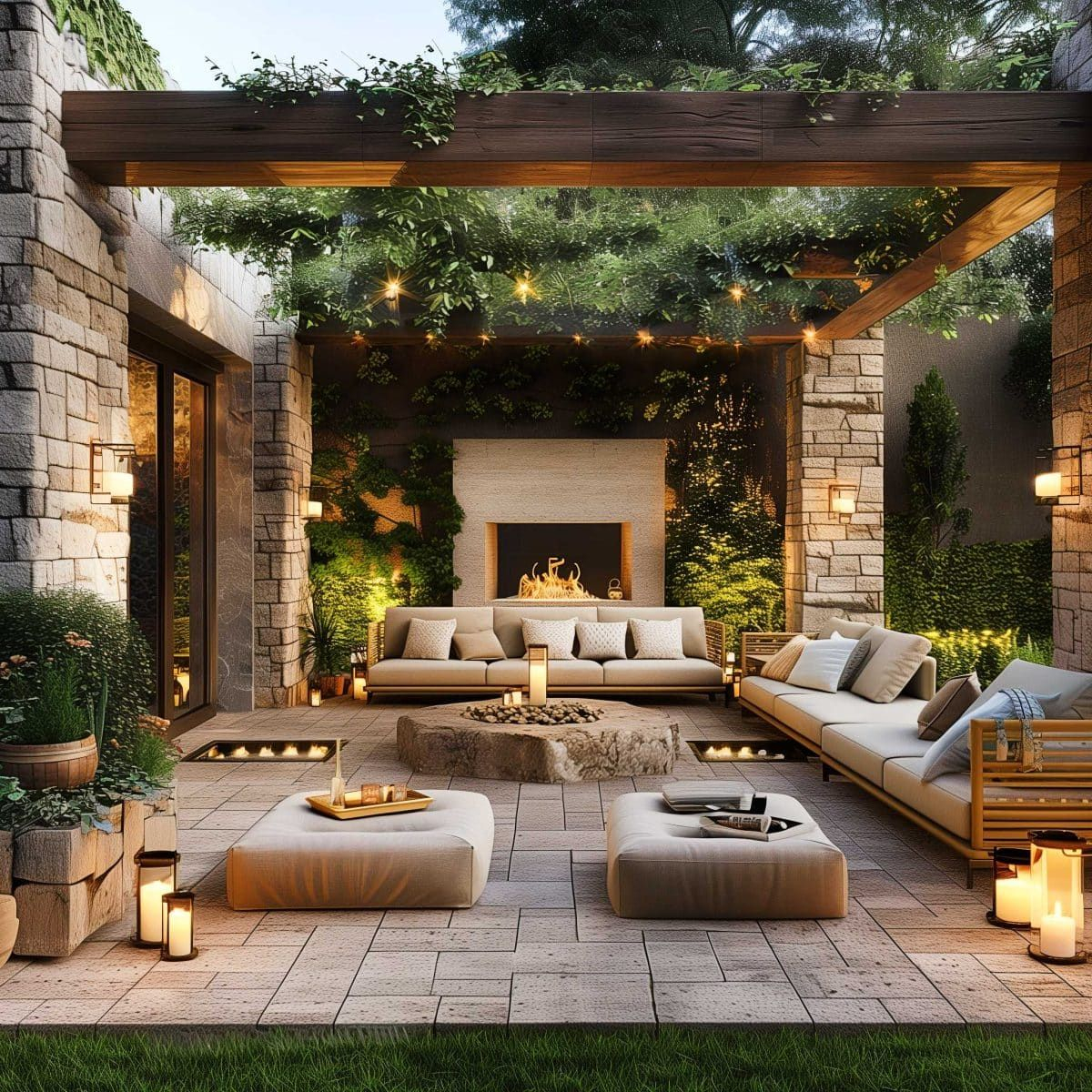
A true sanctuary does more than fulfill a physical workout routine; it recalibrates the nervous system. This is where biophilic design—the innate human tendency to seek connections with nature—transforms a backyard swim space from a simple exercise utility into a restorative psychological escape. Surrounding your water feature with living elements creates a multisensory envelope that signals safety, calm, and relaxation to the brain. Consider integrating tactile materials like charred Shou Sugi Ban wood fencing, rough-hewn basalt boulders, and fragrant plantings such as lavender or dwarf lemon trees whose scents drift across the water with the evening breeze.
Lighting is another critical layer of sensory architecture. Standard, glaring underwater pool white lights can feel harsh and clinical, turning your backyard into a suburban stadium at night. Modern aquatic lighting design favors warm color temperatures (2700K to 3000K), low-voltage integrated LED strip lighting under cantilevered coping stones, and subtle uplighting on nearby specimen trees. This layered illumination creates a floating, ethereal effect that reduces eye strain, encourages nighttime swimming routines, and highlights the tranquil movement of water against dark interior pool finishes like midnight blue or slate grey plaster.
Acoustic masking further elevates the environment. The gentle, continuous sound of water cascading from a sheer descent water feature or an integrated spa spillover acts as natural white noise, masking distant traffic, barking dogs, and neighborhood chatter. Combined with an integrated outdoor audio system playing soft ambient soundscapes or instrumental music, your backyard transforms into an immersive sensory sanctuary completely divorced from the stress of the outside world.
Maximizing Utility, Maintenance Efficiency, and Long-Term Value
Investing in a high-end backyard swim space represents a substantial capital expenditure, making long-term operational efficiency a primary design metric. If maintaining the water feels like a second job, your motivation to use the space for daily fitness will quickly wane. Therefore, automation must be embedded into the design from day one. Modern automation controllers allow you to monitor water chemistry, adjust current speeds, schedule filtration cycles, and manage water temperature directly from your smartphone, ensuring the water is perfectly balanced and heated the moment you step outside.
Cover selection is another vital factor in balancing ease of use with safety and thermal retention. Manual vinyl covers can be cumbersome and heavy, often leading to procrastination in covering the vessel after use. Automated slatted pool covers, which roll out smoothly at the turn of a key or press of a button, provide unmatched convenience while serving as a secure safety barrier that easily supports the weight of children or pets. Furthermore, these covers dramatically reduce chemical evaporation and heat loss, cutting energy consumption by up to 50 percent.
Beyond personal wellness and day-to-day enjoyment, a thoughtfully designed, architecturally integrated swim space delivers profound financial value. Real estate market analyses consistently show that premium outdoor living spaces—particularly those offering functional wellness amenities like lap pools and high-end swim spas—command high buyer appeal and impressive return on investment. By prioritizing timeless materials, superior hydrodynamics, and seamless landscape integration, your backyard evolution becomes both an investment in your personal longevity and a lasting enhancement of your property’s equity.
The modern backyard is no longer viewed as a passive patch of grass waiting for weekend foot traffic. It is an extension of our living space, our wellness clinic, and our sanctuary from an increasingly hyper-connected world. By shifting the paradigm from casual splashing to purposeful aquatic fitness and restorative peace, you create a dedicated arena where physical health and mental stillness intersect daily.
Whether you choose the sleek, meditative geometry of a traditional lap pool or the compact, high-velocity versatility of a luxury swim spa, success lies in the details of the journey. Prioritize hydrodynamic engineering, integrate resilient biophilic materials, automate your maintenance systems, and design with a relentless focus on sensory calm. When your backyard swim space is crafted with this level of intention, every single morning begins not with stress or rushing, but with the clean, deep breath you take before pushing off the wall into the quiet, welcoming water.