You know that sinking feeling. You’ve spent weeks framing a house. The lines are chalked, the studs are up, and everything looks crisp. Then, three months later, you walk back onto the site. The header over the garage door has bowed downward like a tired spine. A wall stud has twisted so bad it’s pushing the drywall out. It’s frustrating. It’s expensive to fix. And honestly? It’s entirely predictable if you’re using standard dimensional lumber.
But then there’s the other option. The stuff that stays put. Laminated Strand Lumber, or LSL. It doesn’t care about humidity swings. It doesn’t have a "bad side" that wants to cup toward the sun. It just stays straight. For builders in 2026, this isn’t just a nice-to-have feature; it’s the difference between a callback nightmare and a reputation for quality. But why does it work? Is it magic? Nope. It’s just really smart physics and a bit of industrial alchemy.
Let’s dig into why traditional wood betrays us and how engineered strands keep their promise.
The Anatomy of a Twist
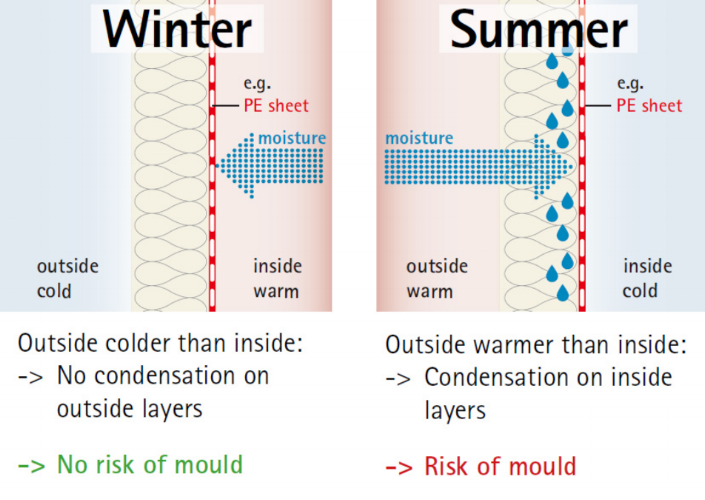
To understand why LSL wins, we first have to look at why regular wood fails. It’s not because the tree was "bad." It’s because wood is hygroscopic. That’s a fancy word meaning it loves water. It absorbs moisture from the air and releases it when things get dry. Here’s the kicker: wood doesn’t shrink and swell evenly.
When a board dries out, it shrinks significantly across its width (tangentially) and slightly less across its thickness (radially). But it barely shrinks at all along its length (longitudinally). Imagine a rectangular sponge that only shrinks on two sides. What happens? It warps. If one side of the board dries faster than the other—say, the side facing the sun versus the side in the shade—you get cupping. If the grain runs diagonally through the board, you get twisting.
Traditional lumber is sliced from a log. That means every single board has a unique grain pattern, unique tension, and unique weaknesses. One 2×10 might be perfectly straight today, but next winter, when the heating kicks in and the humidity drops, it could bow enough to crack your tile floor. It’s a lottery. And in construction, you don’t want to gamble on the structural integrity of your home.
Shredding the Problem Away
LSL takes that natural inconsistency and shreds it. Literally. Instead of slicing a log into boards, manufacturers take fast-growing hardwoods like aspen, birch, or poplar and shred them into long, thin strands. Think of it like making flaky pastry, but with wood fibers.
These strands are dried to a very specific moisture content—usually around 8% to 12%. This is crucial. By starting with dry material, you remove the "movement" potential right out of the gate. Traditional lumber often ships with higher moisture content, meaning it continues to dry and move after it’s installed in your wall. LSL is already stable before it ever hits the job site.
Once the strands are dry, they are coated with a moisture-resistant adhesive. This isn’t just glue; it’s a waterproof bond that locks the fibers in place. The strands are then oriented in a specific direction—mostly parallel to the length of the beam—to maximize strength. Finally, they are pressed into massive billets under high heat and pressure. The result is a homogeneous block of wood fiber that behaves consistently from end to end.
The Power of Randomization
Here is where the magic really happens. In a solid sawn board, a single knot or a patch of irregular grain can create a weak point or a stress concentration that leads to warping. In LSL, those defects are broken up.
Because the material is made of thousands of individual strands, any natural defect in a single piece of wood is diluted. A knot in one strand is surrounded by hundreds of perfect strands. The stress is distributed evenly across the entire cross-section of the beam. There is no continuous grain path for a twist to follow. It’s statistically impossible for the whole beam to warp because the internal forces cancel each other out.
This randomization also means LSL is incredibly consistent. You don’t have to "cull" through a pile of lumber to find the straight ones. Every single piece of LSL coming off the line meets strict engineering standards. For a framer, this saves hours of sorting and rejecting bad boards. For the homeowner, it means the walls are actually flat.
Moisture Resistance and Stability
We mentioned the adhesive earlier, but it deserves its own spotlight. The resins used in LSL production are designed to withstand moisture fluctuations. While LSL isn’t "waterproof" in the sense that you should leave it submerged in a pool, it is far more resistant to humidity changes than solid wood.
In 2026, building codes and energy standards are tighter than ever. Homes are sealed tighter, which can sometimes trap moisture or create rapid humidity shifts indoors. Traditional lumber reacts to these shifts by expanding and contracting. LSL, thanks to its engineered structure and resin bonds, resists this movement.
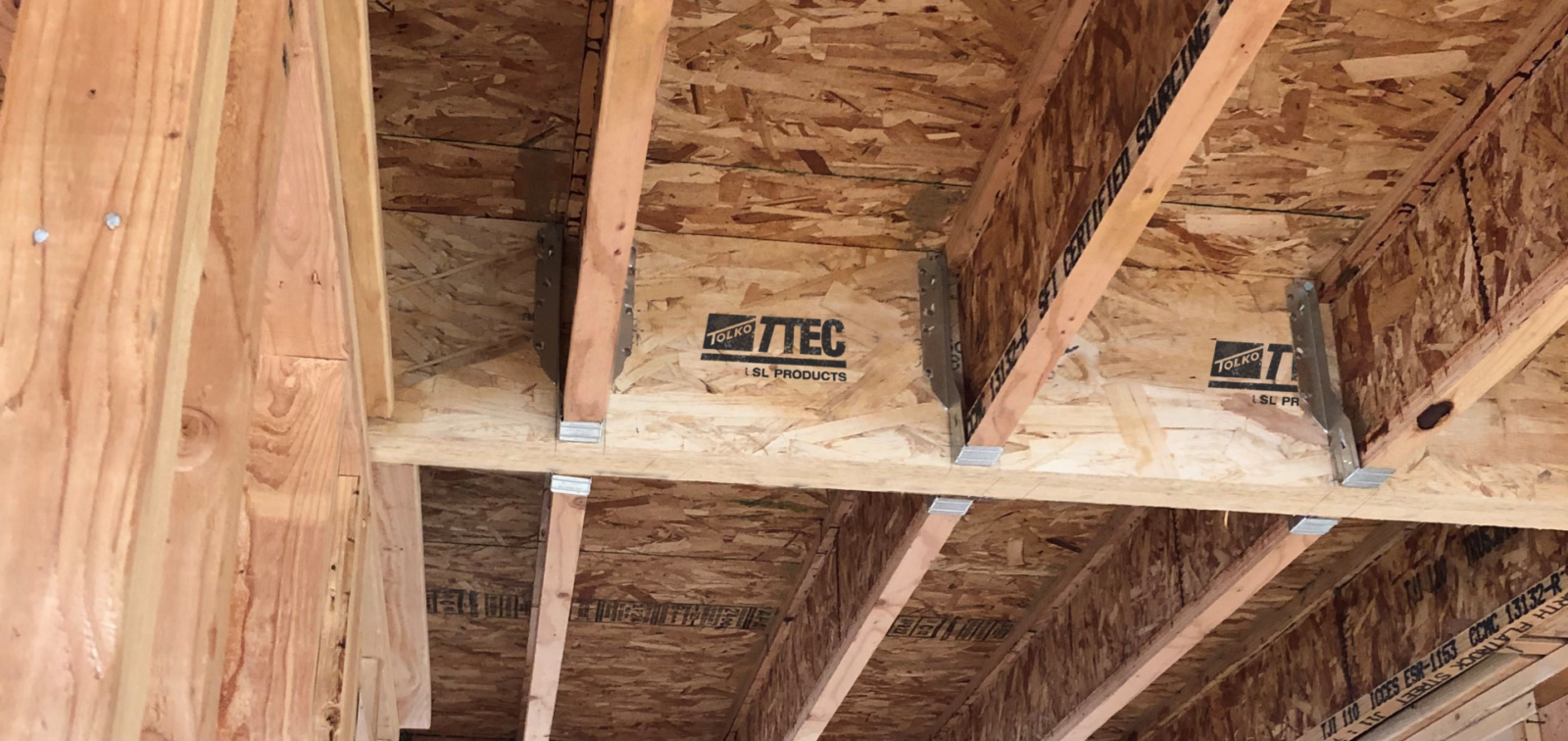
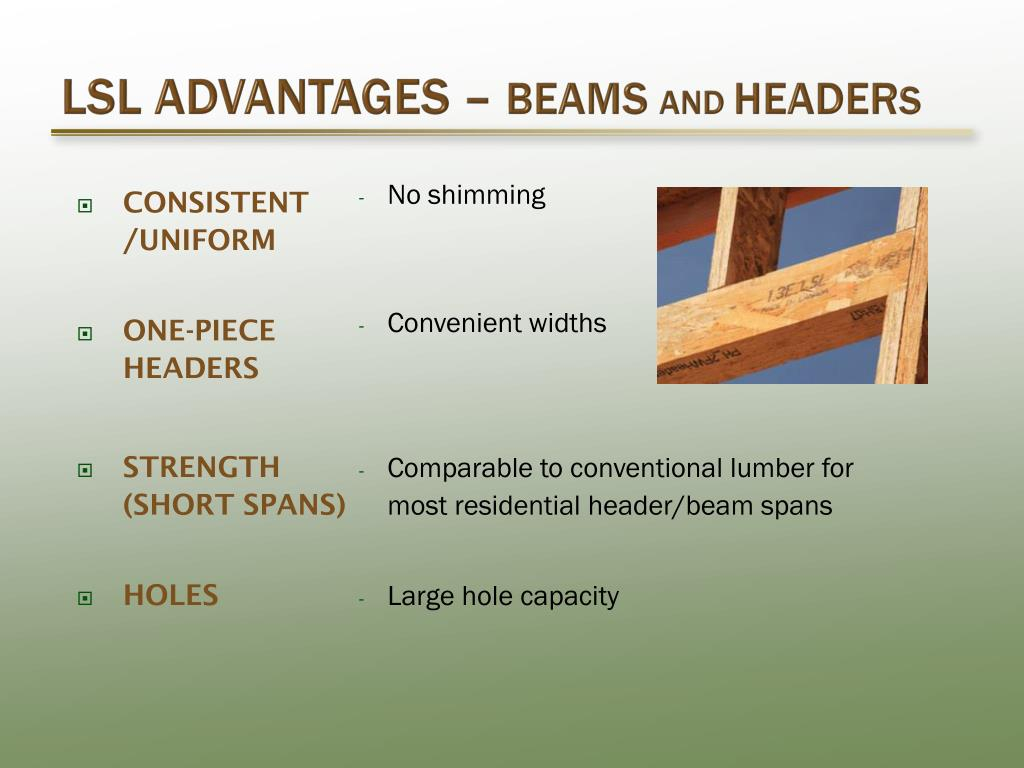
This stability is why you see LSL used in critical areas like headers, rim boards, and columns. These are places where movement causes the most damage. A warping header can stick a window shut. A twisting rim board can pull the floor away from the wall. LSL prevents these issues by maintaining its dimensions regardless of the seasonal weather outside.
Practical Benefits on the Job Site
Beyond just staying straight, LSL offers practical advantages that make life easier for contractors. One major benefit is the ability to drill larger holes without compromising structural integrity. Because the material is homogeneous and strong, you can run plumbing and electrical lines through LSL beams with fewer restrictions than you’d have with solid lumber or even some other engineered products.
For example, some LSL beams allow for holes up to 4 5/8 inches in diameter in a 14-inch beam. Try doing that with a standard 2×12, and you’ve basically cut the beam in half. With LSL, the surrounding strands redistribute the load around the hole. This flexibility speeds up installation and reduces the need for complex blocking or additional supports.
Also, LSL comes in long, continuous lengths. You can get pieces that are 60 feet long or more. This means fewer splices in long spans. Fewer splices mean fewer weak points and a cleaner, stronger structure. It’s a one-piece solution that reduces labor time and material waste.
At the end of the day, the choice between LSL and traditional lumber is about risk management. Traditional lumber is cheaper upfront. No doubt about it. But the cost of fixing warped walls, cracked drywall, and stuck doors five years down the road can dwarf those initial savings.
LSL provides peace of mind. It ensures that cabinets stay flush against the wall. It keeps tile grout from cracking due to shifting frames. It guarantees that windows and doors operate smoothly for decades. For homeowners, this translates to a higher quality living experience. For builders, it translates to fewer warranty calls and a better reputation.
In an era where sustainability is key, LSL also scores points. It utilizes fast-growing, low-value hardwood species that might otherwise go unused. It makes efficient use of the tree, reducing waste. So, you’re not just getting a straighter beam; you’re getting a more responsible product.
Choosing LSL isn’t just about avoiding a crooked wall. It’s about embracing a material that respects the physics of wood while overcoming its natural limitations. It’s engineering meeting nature, and in this case, engineering wins. The result is a home that stands true, season after season.
[sps_html tag=”img” src=”https://cdn.northcarolinafinearchitecture.com/2026/05/predictability-consistency-in-delivery-through-agile-methodologies-in-lsl-beam-design.png” alt=”Predictability: Consistency In Delivery Through Agile Methodologies … in Lsl Beam Design” style=”width: 100%; height: auto;”]
[sps_html tag=”img” src=”https://cdn.northcarolinafinearchitecture.com/2026/05/t-tec-lsl-headers-and-beams-tolko-industries-in-understanding-the-predictability-and-consistency-advantages-of-lsl-headers.png” alt=”T-Tec Lsl Headers And Beams - Tolko Industries in Understanding the Predictability and Consistency Advantages of LSL Headers” style=”width: 100%; height: auto;”]
[sps_html tag=”img” src=”https://cdn.northcarolinafinearchitecture.com/2026/05/understanding-usl-and-lsl-in-control-charts-pdf-within-understanding-the-predictability-and-consistency-advantages-of-lsl-headers.jpg” alt=”Understanding Usl And Lsl In Control Charts | Pdf within Understanding the Predictability and Consistency Advantages of LSL Headers” style=”width: 100%; height: auto;”]
[sps_html tag=”img” src=”https://cdn.northcarolinafinearchitecture.com/2026/05/lab-streaming-layer-lsl-integration-for-acqknowledge-biopac-for-lsl-beam-design.jpg” alt=”Lab Streaming Layer (Lsl) Integration For Acqknowledge | Biopac for Lsl Beam Design” style=”width: 100%; height: auto;”]
[sps_html tag=”img” src=”https://cdn.northcarolinafinearchitecture.com/2026/05/ppt-basic-facts-of-residential-engineered-lumber-powerpoint-with-regard-to-understanding-the-predictability-and-consistency-advantages-of-lsl-headers.jpg” alt=”Ppt - Basic Facts Of Residential Engineered Lumber Powerpoint … with regard to Understanding the Predictability and Consistency Advantages of LSL Headers” style=”width: 100%; height: auto;”]