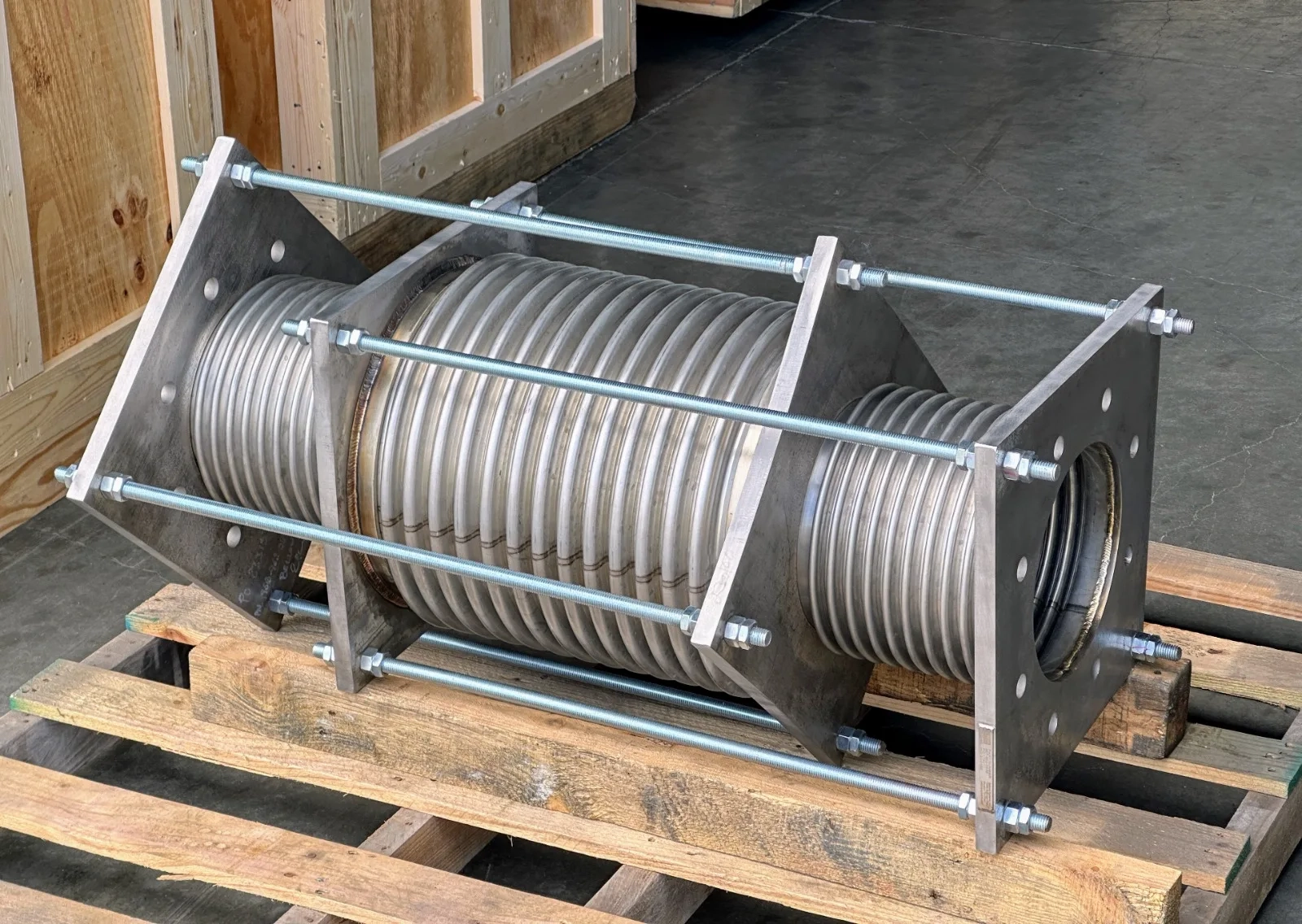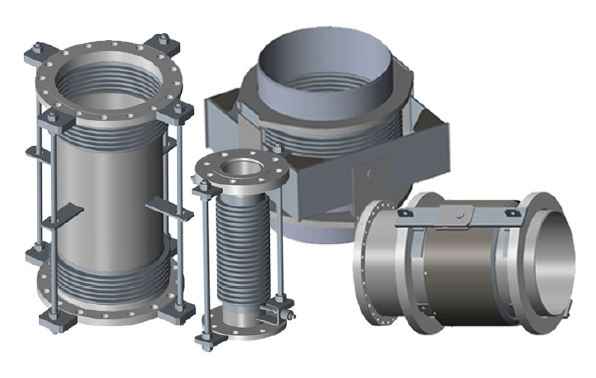
You’ve probably walked past them a thousand times. Maybe you work near them every day. Those accordion-like rings of steel tucked into massive pipelines, looking a bit out of place among the rigid, unyielding pipes. They seem simple, right? Just flexible metal. But don’t let that simplicity fool you. Inside those convolutions is a world of intense physics, fighting a constant battle against forces that want to tear everything apart.
When you’re dealing with high-pressure systems—think power plants, chemical refineries, or even aerospace fuel lines—there’s no room for error. A leak isn’t just a mess; it’s a catastrophe. And yet, these thin-walled metal bellows hold the line. They absorb thermal expansion, dampen vibrations, and keep toxic or explosive fluids contained, often at pressures exceeding 10,000 PSI. How do they do it? It’s not magic. It’s a delicate dance of material science, geometry, and fluid dynamics that most people never see.
The Elastic Heart of the Pipeline
At its core, a metal bellow is an elastic vessel. That’s the textbook definition, but what does it actually mean in practice? Imagine trying to stretch a piece of paper. It tears. Now imagine folding that paper into an accordion shape. Suddenly, it can expand and contract without breaking. That’s the basic principle here. The convoluted shell allows the component to compress or extend under pressure, then snap back to its original shape when the force is released.
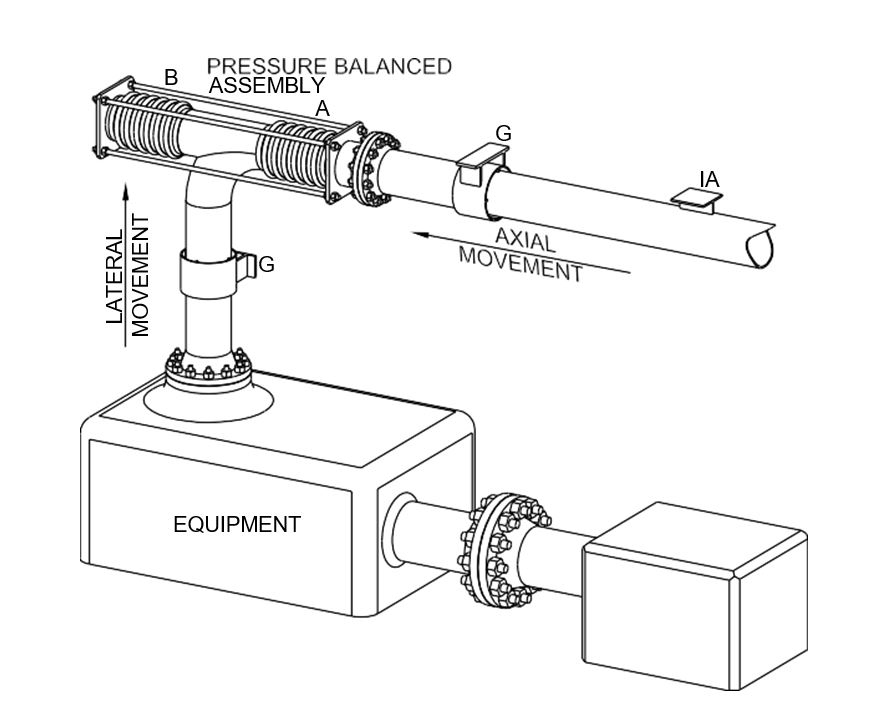
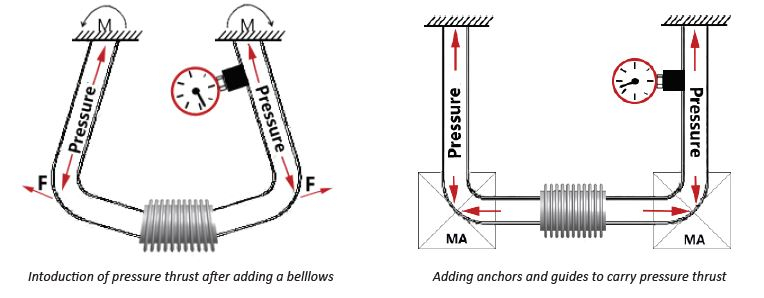
This elasticity is crucial because pipes are stubborn. When hot fluid rushes through a cold pipe, the metal expands. If the pipe is fixed in place, that expansion has nowhere to go. Stress builds up. Something has to give. Usually, it’s a weld or a flange, leading to a leak. The bellow acts as a shock absorber, taking that hit so the rest of the system doesn’t have to. It handles axial movement (stretching), lateral movement (shifting side-to-side), and angular deflection (bending).
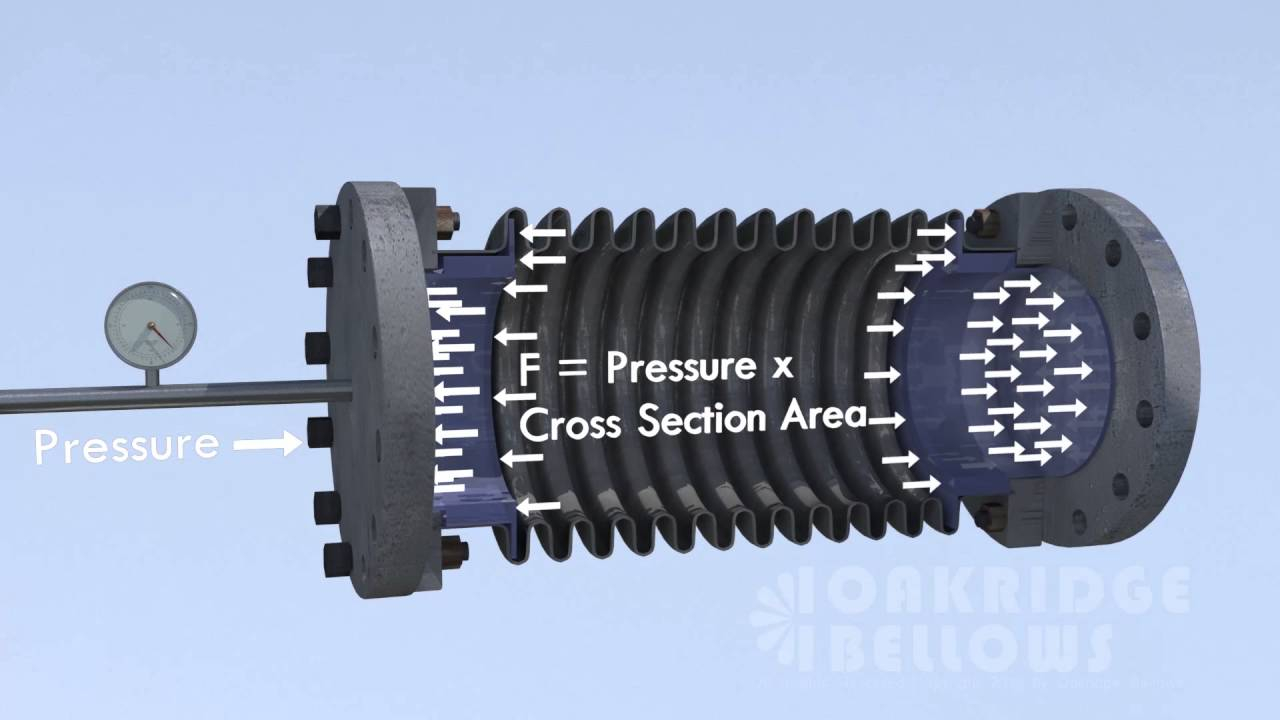
But it’s not just about moving. It’s about moving while holding back immense pressure. In high-pressure applications, the bellow walls are incredibly thin to allow for flexibility, yet they must withstand forces that would crush a standard pipe fitting. This paradox is where the engineering gets tricky. You need strength, but you also need compliance. Get the balance wrong, and the bellow either ruptures under pressure or becomes too stiff to absorb the movement it was designed for.
Geometry Matters: U-Shape vs. Omega
Not all bellows are created equal. The shape of the convolution—the "U" or the "Omega"—changes everything. For decades, the U-shaped profile has been the industry standard. It’s easier to manufacture and works well for general purposes. But when you crank up the pressure, U-shapes start to struggle. The roots of the U are stress concentrators. Under high internal pressure, they can buckle or deform permanently.
Enter the Omega-shaped bellow. Recent numerical investigations have shown that Omega profiles have a much better ability to endure high internal pressure compared to their U-shaped cousins. Why? The geometry distributes stress more evenly across the convolution. It’s like the difference between bending a straight wire and bending a coiled spring. The Omega shape offers greater stability, reducing the risk of what engineers call "column instability" or squirming.
Squirming is a nasty phenomenon. It happens when the bellow loses its parallelism under pressure. Instead of expanding evenly, one side bulges out while the other collapses. It’s a precursor to failure. The EJMA (Expansion Joint Manufacturers Association) standards define this clearly: if the distance between corresponding points of adjacent corrugations varies significantly, you’ve got a problem. Omega shapes resist this better, making them the go-to choice for critical high-pressure applications where safety margins are slim.
The Welded Advantage: Zero-Leakage Physics
In low-pressure systems, you might get away with formed bellows or even rubber joints. But in high-pressure environments, welded metal bellows are king. Why? Because they offer hermetic sealing. A welded bellow is made from multiple diaphragms fused together, creating continuous joints with no weak spots. Compare that to a rubber gasket, which can degrade, creep, or separate under extreme conditions.
The physics of leak-free sealing here relies on the integrity of the weld. There are no interfaces for fluid to sneak through. No porous materials to absorb contaminants. Just solid metal fusion. This is vital when you’re handling hazardous substances like liquid carbon dioxide in oil extraction or superheated steam in power generation. A single micro-leak can lead to corrosion, erosion, or worse, a catastrophic release.
Recent studies on low-temperature, high-pressure systems highlight this reliability. In harsh working environments, where temperatures swing wildly and pressures spike, welded bellows maintain their seal. They don’t rely on friction or compression like a gasket does. They rely on the molecular bond of the weld. This makes them ideal for applications where maintenance access is limited or where failure is simply not an option. It’s a zero-leakage performance that few other components can match at 10,000+ PSI.
Fluid-Structure Interaction: The Invisible Dance
Here’s where things get really interesting. A bellow isn’t just sitting there passively. It’s interacting with the fluid flowing through it. This is called fluid-structure interaction (FSI), and it’s a complex dynamic that’s still being fully understood. When high-speed fluid rushes through the convolutions, it creates turbulence. That turbulence exerts fluctuating forces on the bellow walls.
If the frequency of these forces matches the natural frequency of the bellow, you get resonance. Think of pushing a child on a swing. If you push at the right moment, the swing goes higher. If you push at the wrong time, it stops. In a piping system, resonance can cause violent vibrations that fatigue the metal rapidly. This is especially true in pressure-balanced bellows, which are designed to cancel out thrust forces but can be susceptible to dynamic instabilities.
Recent research in 2026 has focused on clarifying these dynamic response mechanisms. Engineers are using advanced simulations to model how external vibrations and internal flow speeds affect bellow life. It’s not enough to just design for static pressure anymore. You have to design for the chaotic, pulsing reality of fluid flow. Ignoring FSI is a common mistake that leads to premature failure, often mistaken for material defects when it’s really a physics problem.
Material Science: Choosing the Right Alloy
You can have the perfect geometry and the best welds, but if you pick the wrong material, you’re doomed. Stainless steel, like 304 or 316L, is the workhorse of the industry. It offers good corrosion resistance and mechanical properties for most applications. But "most" doesn’t cover the extremes. When you’re dealing with high temperatures, high pressures, and corrosive chemicals, you need something tougher.
That’s where superalloys come in. Inconel and Hastelloy are common choices for severe service. They retain their strength at temperatures where stainless steel would soften. They resist chloride stress corrosion cracking, a silent killer in many industrial plants. The choice of material isn’t just about strength; it’s about compatibility. Will the fluid react with the metal? Will cyclic heating cause embrittlement?
Consider a recent case involving a high-pressure steam line operating at 42 bar and 450°C. The original design used SS321 bellows rated for about 4,000 cycles. But the system was projected to undergo over 10,000 thermal cycles. The SS321 couldn’t handle the fatigue. Switching to a more robust alloy or redesigning the convolution profile was necessary to meet the life expectancy. It’s a reminder that material selection is a dynamic decision, not a checkbox.
Fatigue Life: Beyond the Cycle Myth
Let’s talk about fatigue. Every time a bellow flexes, it accumulates damage. It’s microscopic at first, but it adds up. The industry often cites a "7,000-cycle myth," suggesting that bellows have a fixed lifespan. But that’s misleading. Fatigue life depends on the amplitude of movement, the pressure, the temperature, and the material. A bellow moving a millimeter might last millions of cycles. One moving ten millimeters might fail in thousands.
Designing for fatigue requires a deep understanding of the operational profile. You can’t just guess. You need to know how much the pipe will expand, how often it will cycle, and what the peak pressures are. Modern design tools allow engineers to simulate these conditions accurately, predicting life with much greater precision than old rule-of-thumb methods.
However, real-world conditions are messy. Unexpected vibrations, water hammer events, or installation misalignments can drastically reduce life. That’s why regular inspection is key. Looking for signs of squirming, corrosion, or weld cracks can prevent unexpected failures. It’s not just about designing it right; it’s about maintaining it right. The hidden physics don’t stop once the system is online. They continue to exert their influence, day after day, cycle after cycle.
Metal bellows are unsung heroes. They’re small, often overlooked components that play a massive role in the safety and efficiency of high-pressure piping systems. Understanding the hidden physics behind them—the interplay of elasticity, geometry, fluid dynamics, and material science—is essential for anyone involved in their design, installation, or maintenance.
As we move further into 2026, the demands on these components are only increasing. Higher pressures, more extreme temperatures, and stricter environmental regulations mean we need bellows that are smarter, stronger, and more reliable. By respecting the complex physics at play, we can ensure these critical components continue to perform, keeping our industries running safely and efficiently.
So next time you see one of those accordion-like rings, take a second to appreciate it. It’s not just a piece of bent metal. It’s a masterpiece of engineering, holding back chaos with nothing but geometry and grit. And that’s pretty impressive.
[sps_html tag=”img” src=”https://cdn.northcarolinafinearchitecture.com/2026/06/beeflex-expansion-joints-everstrong-industrial-sales-for-expansion-joint-design.jpg” alt=”Beeflex Expansion Joints – Everstrong Industrial Sales for Expansion Joint Design” style=”width: 100%; height: auto;”]
[sps_html tag=”img” src=”https://cdn.northcarolinafinearchitecture.com/2026/06/how-does-a-pressure-balanced-expansion-joint-work-at-brooke-fitzroy-blog-within-expansion-joint-design.jpg” alt=”How Does A Pressure Balanced Expansion Joint Work At Brooke Fitzroy Blog within Expansion Joint Design” style=”width: 100%; height: auto;”]
[sps_html tag=”img” src=”https://cdn.northcarolinafinearchitecture.com/2026/06/expansion-joint-basics-pressure-thrust-in-understanding-pressure-reaction-forces-in-unrestrained-expansion-joint-systems.jpg” alt=”Expansion Joint Basics Pressure Thrust in Understanding Pressure Reaction Forces in Unrestrained Expansion Joint Systems” style=”width: 100%; height: auto;”]
[sps_html tag=”img” src=”https://cdn.northcarolinafinearchitecture.com/2026/06/expansion-joint-basics-pressure-thrust-within-expansion-joint-design.jpg” alt=”Expansion Joint Basics Pressure Thrust within Expansion Joint Design” style=”width: 100%; height: auto;”]
[sps_html tag=”img” src=”https://cdn.northcarolinafinearchitecture.com/2026/06/inline-pressure-balanced-expansion-joint-bellows-systems-in-expansion-joint-design.webp” alt=”Inline Pressure Balanced Expansion Joint | Bellows Systems in Expansion Joint Design” style=”width: 100%; height: auto;”]