Before sending roof runoff into a rain garden, find out whether the soil under the proposed bed lets water soak in. A shallow puddle in a lawn and a hole that stays full tell different parts of the story. Watch where runoff moves during a rain, then time how long a test hole drains after a second fill. Together those observations help you decide whether to keep a site on your shortlist, try another part of the yard, or ask for local design help.
Shortlist locations that can receive and release runoff
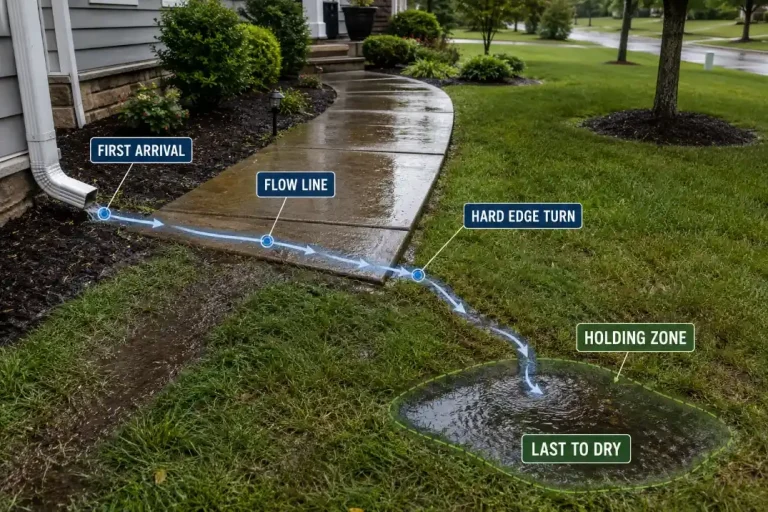
Start at the source, such as a roof downspout or the edge of a driveway. Watch where the water travels and where it goes after crossing the yard. Sketch the route and mark two candidate areas along it if you have room. Look for a spot that can intercept the flow and a route where excess water can continue after the garden fills. The North Carolina Department of Agriculture and Consumer Services advises against using the lowest spot or an area that stays wet long after a storm for a conventional rain garden. Its backyard guidance also calls for at least 10 feet from structures and places gardens beside or downslope of buildings with a basement or crawl space. Setbacks and site constraints deserve a check before digging, especially near a foundation, well, or septic drain field. [4]
Mark out your proposed test area and contact the local 811 service to have underground utilities located before digging. Also identify any private lines on the property, such as an irrigation line, before placing a hole. If you are unsure whether the downspout actually empties near either candidate, trace it before planning a new outlet. [4] Guide to checking where a downspout drains
Dig a test hole, wet it, then time the refill
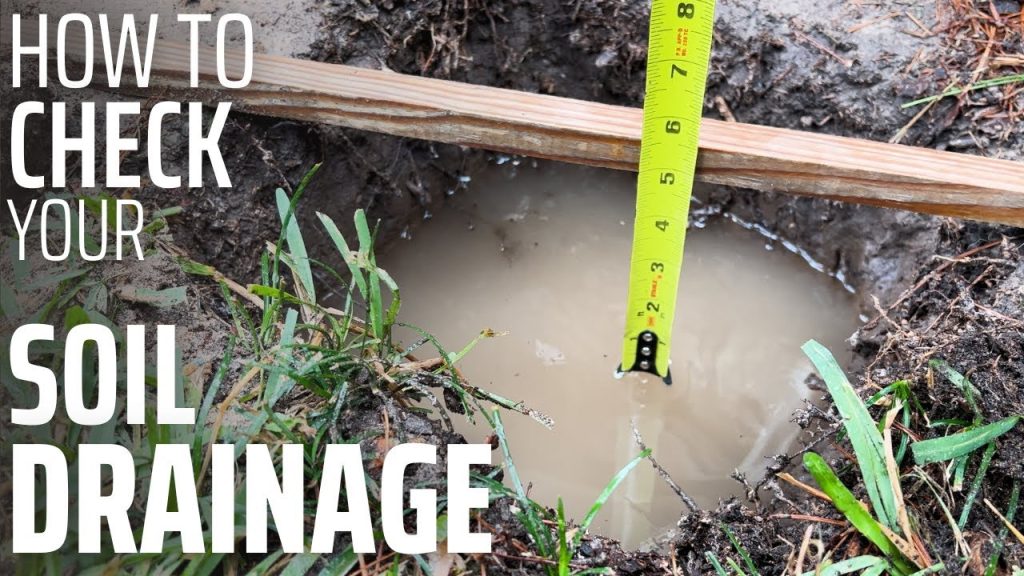
At each spot that meets the siting checks, dig a preliminary hole 1 foot deep. Set the removed soil aside so it cannot fall back into the opening. Label the hole on your sketch and note whether the ground is dry or already damp. Fill the hole with water, allow that first fill to drain, then fill it again. Write down the time immediately after you finish the second fill and record when the visible water disappears. The North Carolina backyard design guide uses this refill procedure. Using a consistent depth and starting water level at each location makes a comparison more useful. [4]
You do not need to stand over the hole all day. Check it at intervals and record the time and whether there is still visible water. If you last saw water at 5 p.m. and the hole was empty at 8 p.m., record that range rather than assigning a precise finish time. If rain falls during the test or runoff flows into the hole, write that down. Run the same test another day if additional water makes the timing unclear. Keep people and pets away from open holes and fill them back in after you finish.
Once you find a promising part of the yard, repeat the test in two or three more spots within the proposed footprint. North Carolina Cooperative Extension recommends additional holes after a promising preliminary test. Record each result so a slow part of the bed is visible in your notes. A corner that drains much more slowly than the others may deserve a smaller footprint or a second look at the soil before you lay anything out. [5]
Read the result against North Carolina guidance
The state’s backyard design guide uses three screening bands. A hole that drains in less than 12 hours can indicate a quick-draining rain garden site. A time from 12 hours through 3 days can indicate a standard rain garden site under that guide. A hole that takes longer than 3 days points toward a backyard wetland design or another location. These bands apply to the guide’s test method. The test does not size a garden, establish its overflow capacity, or resolve a high water table. Use the guidance for your local program if you are working with one. [4]
For example, imagine that the hole halfway across your lawn empties about seven hours after refilling, while the one at the foot of the slope still has water on the fourth morning. The first area is worth repeating if runoff can reach it and overflow can continue safely. The second area would be a poor choice for a conventional rain garden under the state guide. If either hole takes on water from the surrounding soil or you see signs of long-lasting saturation, pause before deciding. The state guide calls for a closer look at groundwater and wetland soils in low areas, floodplains, and sites east of Interstate 95. A good result on a dry afternoon may miss seasonal groundwater. [4]
Use the notes to decide where to plan the bed
Keep a short record with a sketch, the proposed runoff source, the likely overflow route, and a row for each hole. Include the depth, refill time, last wet check, first dry check, and anything unusual such as rain or a fill layer. You can take this to your county Cooperative Extension office or soil and water conservation district if the results are inconsistent or the site is close to a building or drainage feature.
Keep the locations that both drain and fit the rest of the yard. Leave the downspout as it is until you have planned the inlet, garden footprint, and overflow together. A completed drainage test should leave you with a place to investigate further, or a clear reason to test a different part of the property before moving soil or buying plants.