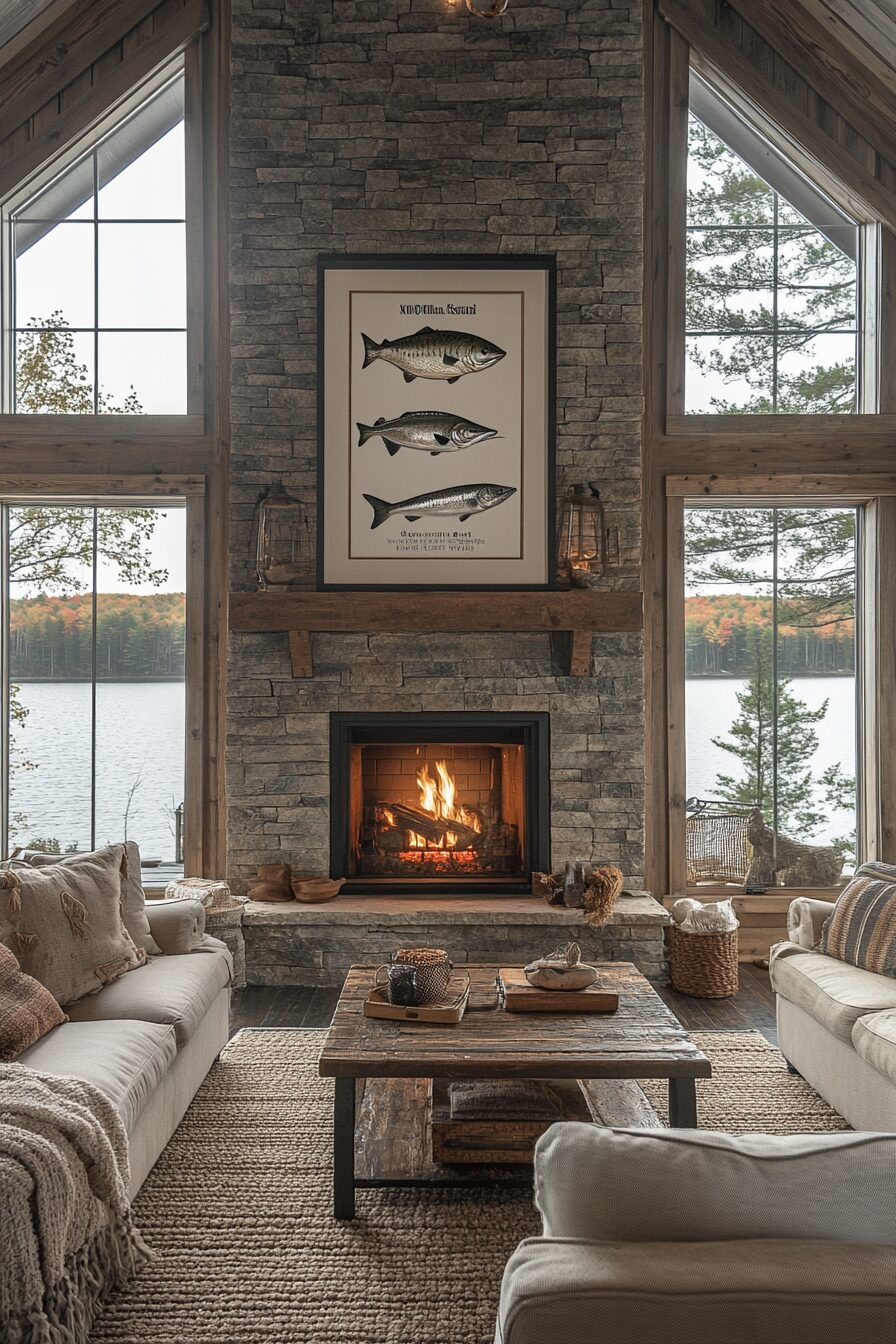
The screen door slams behind you, rattling the pine frames just enough to drop a fine dusting of pine needles onto the wide-plank oak floorboards. In your hands, you are lugging a damp 60-liter multi-day pack, two splitboards shedding meltwater from the morning’s skin track, a tangled web of climbing hardware, and a pair of Gore-Tex boots that smell faintly of river mud and pine sap. You pause in the center of the room. The woodstove is radiating a deep, honest heat, and the cedar walls smell like centuries of quiet mornings. But look down. Right now, that pile of high-performance polyethylene, cordura, and carbon fiber looks like an industrial staging area dropped into the middle of a Walden-esque sanctuary.
This is the eternal friction point of modern cabin life. We head to the woods to escape the logistical hyper-efficiency of urban living—the smart home alerts, the monochrome plastic storage bins stacked four-high in the garage, the relentless optimization of space. Yet, we bring with us a metric ton of high-tech gear designed to conquer sub-zero alpine ridges or class-IV rapids. The moment you dump that nylon avalanche airbag next to a hand-hewn rocking chair, the sanctuary narrative fractures. You no longer feel like a solitary naturalist; you feel like you are camping inside a REI retail stockroom.
Maintaining the soul of a cabin while managing a garage-worth of backcountry equipment requires a complete shift in how we think about storage. It is not merely about finding a closet or a corner to cram things into. It is about understanding that gear, by its very nature, demands a tactical transition from high-utility industrialism to silent, understated integration. When you master this balance, your equipment stops being an aesthetic offense and starts behaving like what it truly is: the physical machinery of your freedom, quiet and ready in the wings.
The Psychology of Cabin Space and Visual Noise
Walk into any poorly managed backcountry retreat, and you will instantly feel a subtle spike in your cortisol levels, even if you came there to unplug. The culprit is visual noise—an unregulated accumulation of neon zipper pulls, high-viz orange dry bags, reflective webbing, and synthetic mesh pockets that scream for attention against a backdrop of organic earth tones. Human brains are hardwired to process natural textures like knotted pine, stone masonry, and woven wool as signals for rest and restoration. Conversely, high-chromatic plastics and synthetic fabrics trigger an alert state, signaling human interruption and synthetic clutter.
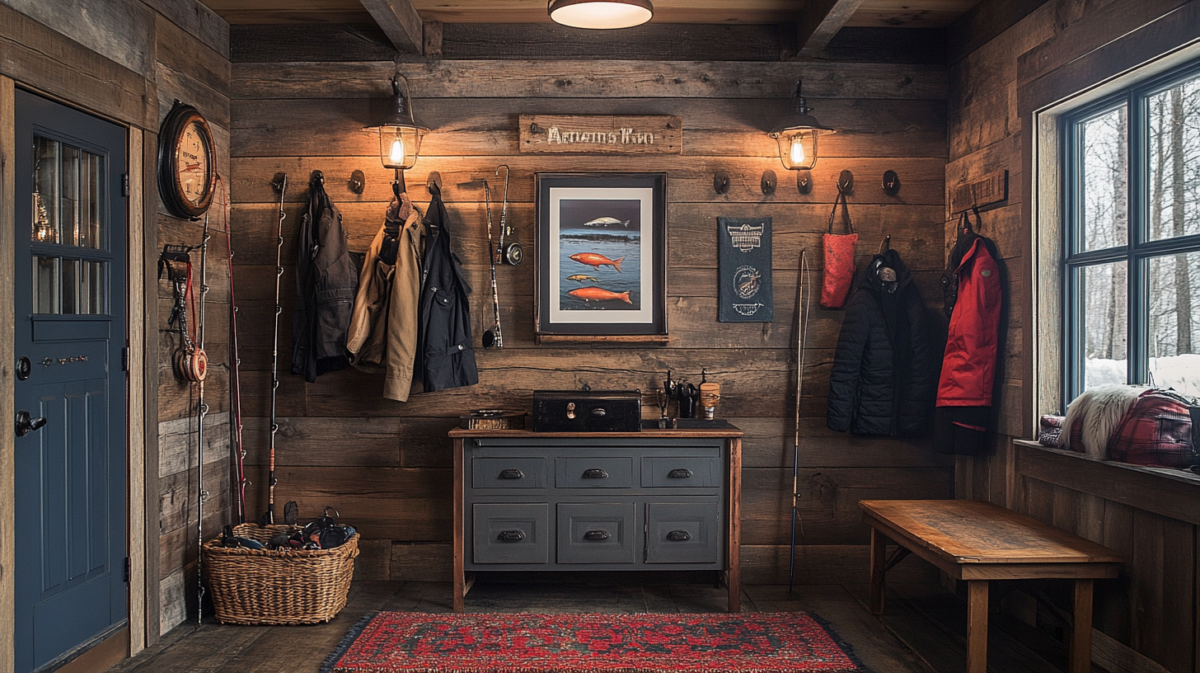
To preserve the cabin vibe, you have to wage a quiet war against high-visibility saturation. This does not mean you need to hide your gear away in hermetically sealed plastic totes shoved under a crawlspace; in fact, that creates its own functional nightmare when you are trying to find an avalanche beacon at 5:00 AM in the dark. Instead, it requires rethinking how material culture interacts with architecture. When you look at heritage mountain architecture—from alpine huts in the Dolomites to homesteads in the Pacific Northwest—equipment was historically treated as part of the architecture itself. Snowshoes hung from hand-forged iron wall hooks; wet woolens draped naturally over stone hearths; timber pegs held heavy pack frames.
The secret lies in matching the patina of your storage systems with the structural honesty of the cabin itself. Modern modular systems like Rux boxes, Yeti loadouts, or rugged aluminum storage trunks certainly have their place in a truck bed, but left sitting in a cabin living room, they break the visual harmony. By housing your high-tech gear within tactile, organic enclosures—such as reclaimed barn wood lockers, thick canvas drop-cloth curtains, or heavy leather straps—you bridge the gap between high-performance utility and rustic tranquility. The gear remains utterly accessible, yet visually it recedes into the background, letting the natural grain of the wood retake center stage.
Zoning Your Retreat for Mud, Moisture, and Maintenance
The physical reality of outdoor gear is that it is often wet, dirty, or outright aromatic. A cabin cannot maintain its serene atmosphere if moisture management fails during the first twenty-four hours of your stay. If you let snowmelt pool on hardwood floors or allow damp tent flies to dry in the middle of a sleeping loft, you invite mildew, warped timber, and an unmistakable olfactory background of stale sweat and river silt. Effective gear management begins with strict, unapologetic zoning that respects the natural hydrology and traffic patterns of your building.
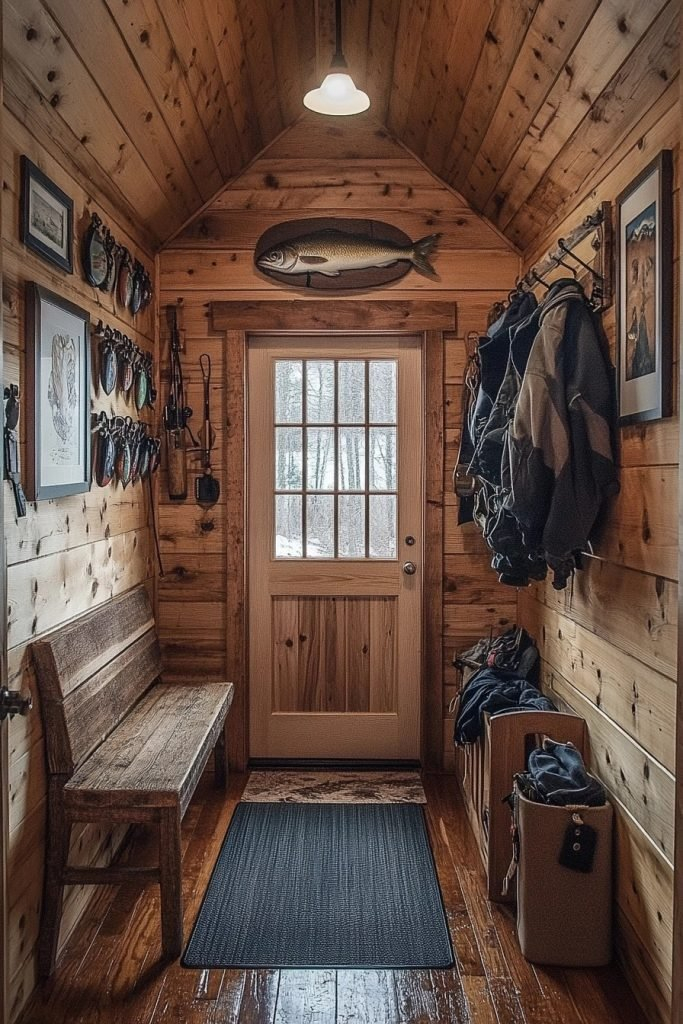
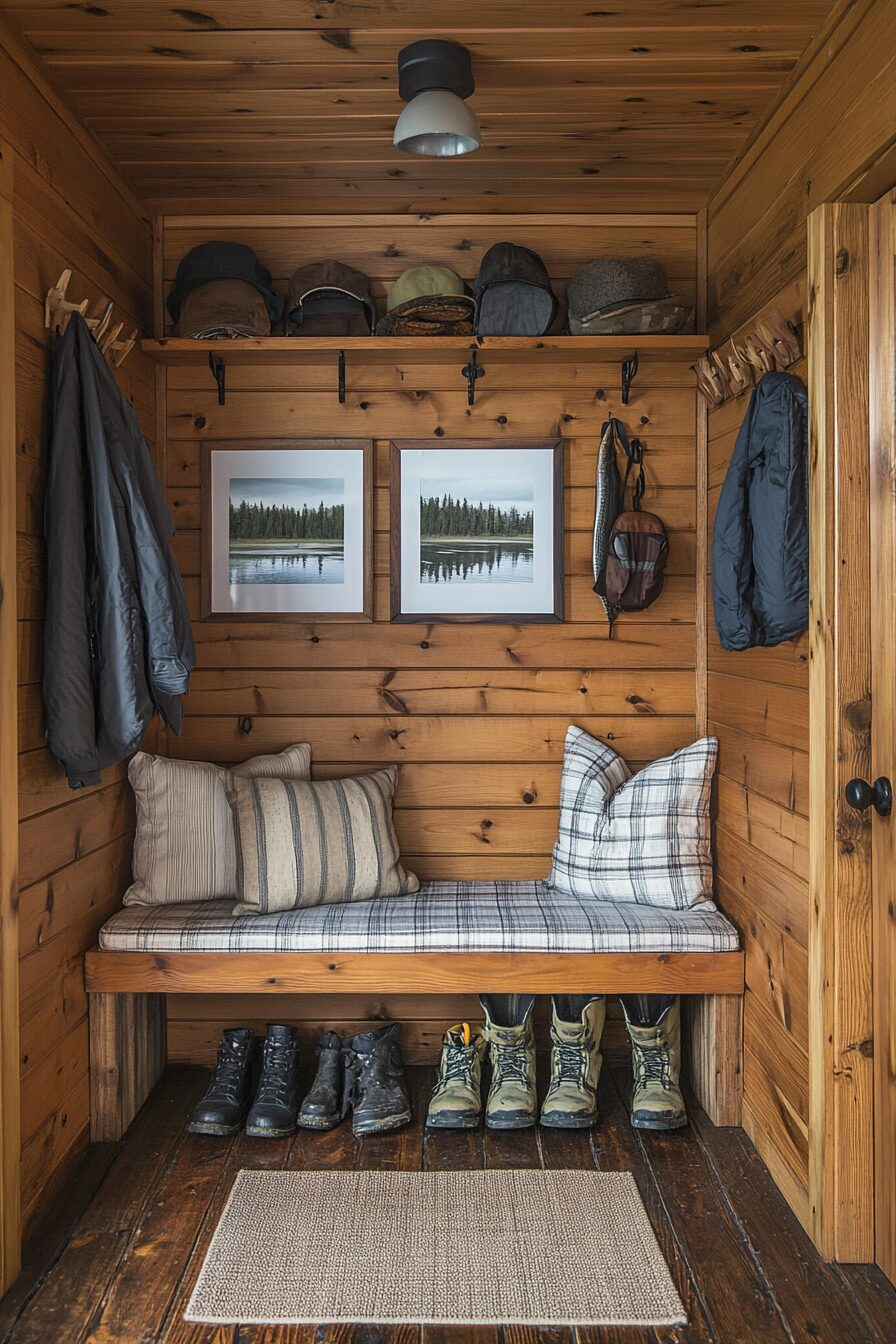
You need a designated deceleration zone the moment you cross the threshold—a mudroom or transition vestibule engineered to intercept the elements before they infiltrate the living spaces. If your cabin lacks a dedicated mudroom, you must carve out a micro-zone using architectural framing techniques that do not require major renovations. Lay down a heavy-duty, vulcanized rubber or natural coir boot tray large enough to catch the runoff from four pairs of saturated mountaineering boots. Above this, install deep-set cedar shelving or heavy cast-iron coat hooks anchored directly into the structural studs, not just the drywall or thin paneling.
Airflow is your best defense against both structural rot and gear degradation. Stashing wet synthetic sleeping bags or damp climbing ropes into sealed storage containers inside a cold cabin is a guaranteed recipe for ruined equipment. Your transition zone must feature active or passive ventilation—ideally a low-profile inline exhaust fan or a strategically placed operable window that allows wet air to escape. By creating a physical boundary where gear drops its dirt, water, and chaos, you protect the inner sanctum of the cabin from the logistical reality of your outdoor pursuits.
Step-by-Step Methodology for Discreetly Staging Your Equipment
Executing a seamless gear integration plan requires methodical staging rather than haphazard shoving. You must treat your cabin’s interior architecture as a canvas where utility meets minimalism. Here is a field-tested framework for cataloging, housing, and deploying your gear without breaking the visual spell of your mountain retreat.
- Step 1 (The Great Audit and Seasonal Curation): Empty your entire kit onto the floor and ruthlessly divide items into active-stay and off-season storage. Never keep your full quiver of winter splitboards, summer water sports gear, and shoulder-season trekking kits inside the cabin simultaneously; rotate heavy bulk items into an off-site climate-controlled cache or deep-storage shed.
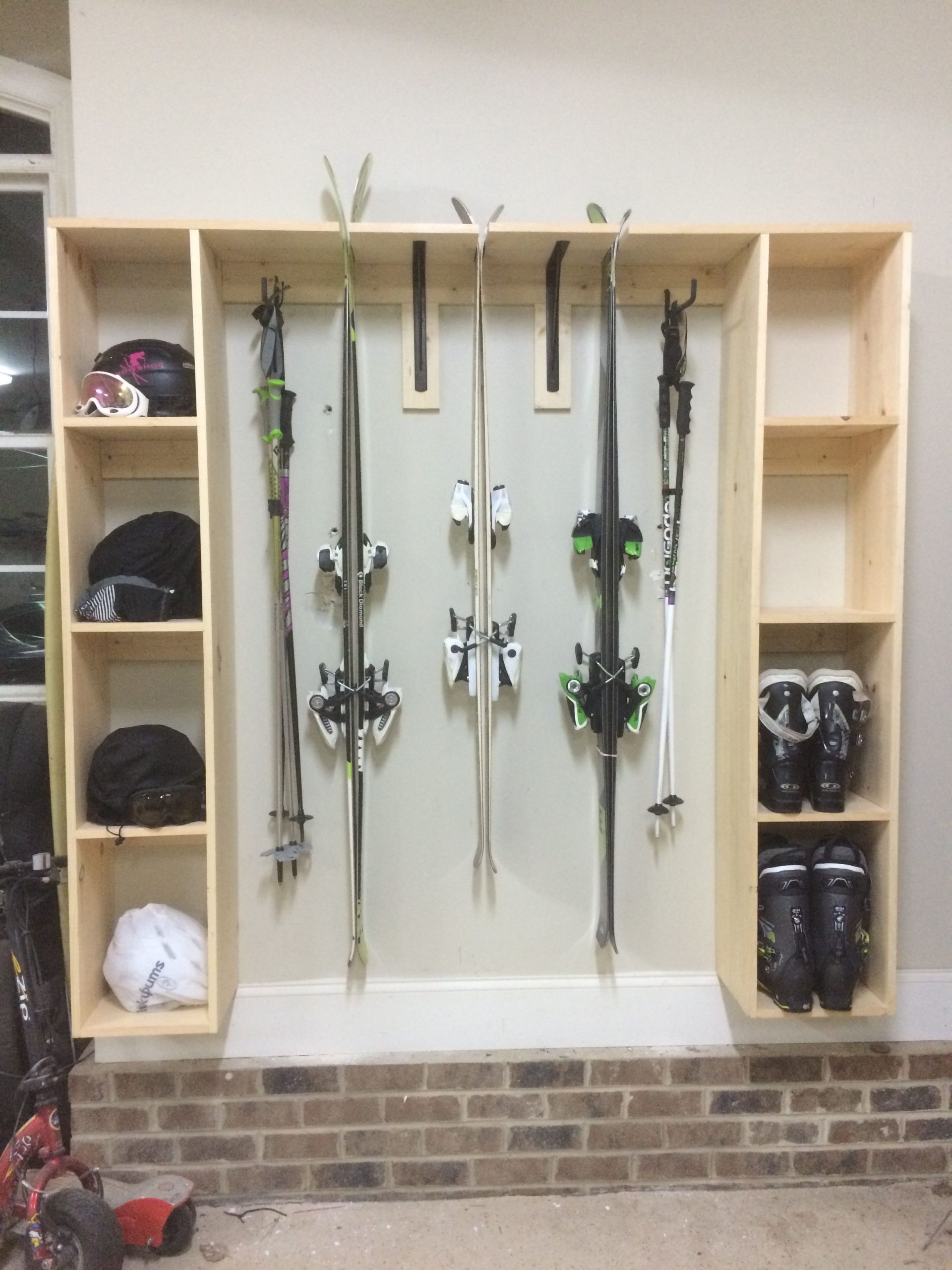
- Step 2 (Constructing the Hidden Armor): Install floor-to-ceiling floor-to-ceiling built-in cabinetry utilizing rough-sawn lumber that matches the existing wall paneling. Equip these cabinets with flush-mount touch-latch hardware or sliding barn-door tracks made of blackened steel, completely eliminating shiny brass knobs and modern plastic handles that disrupt the visual calm.
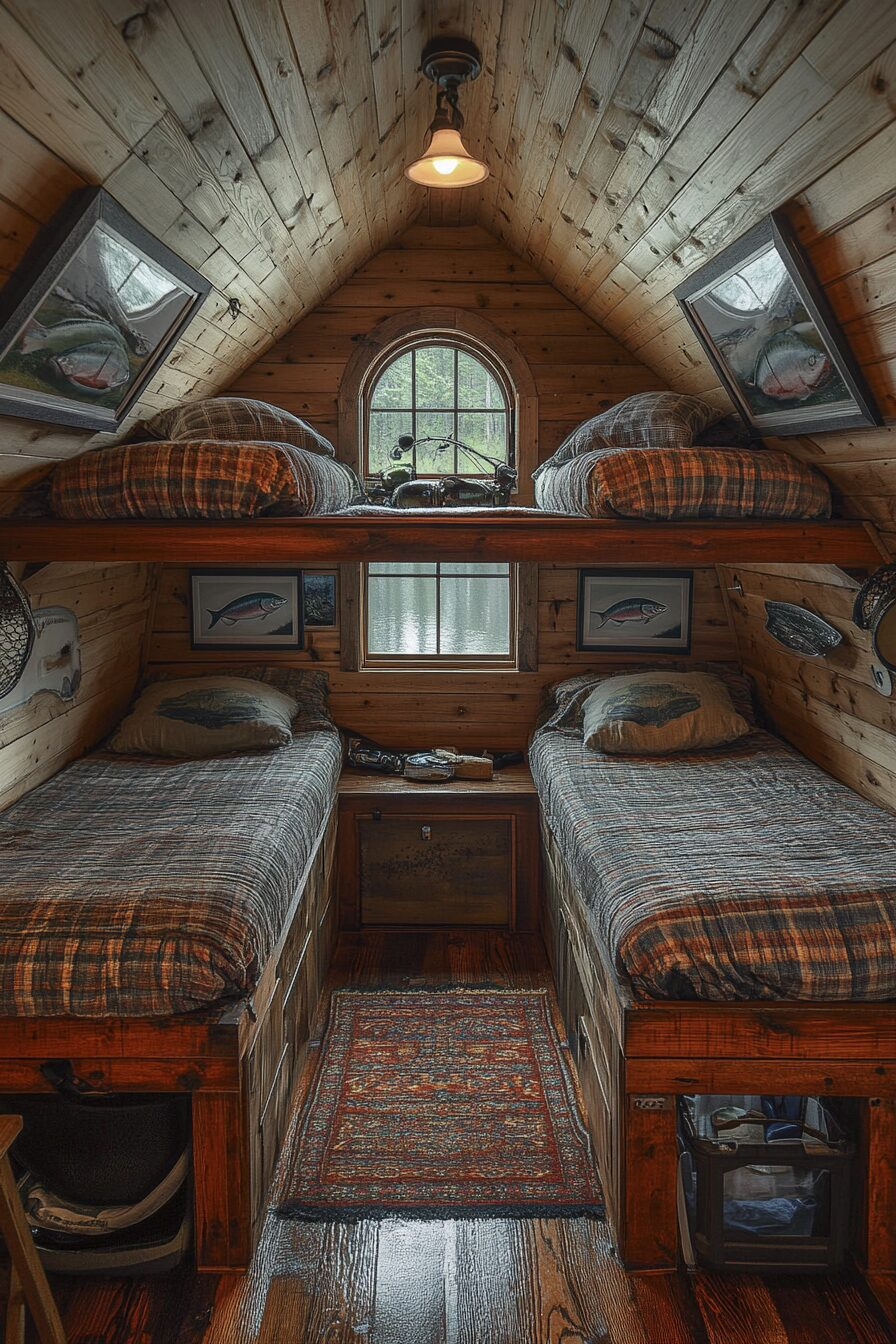
- Step 3 (Vertical Exploitation and Overhead Staging): Utilize the often-ignored dead space between standard door lintels and vaulted ceilings. Mount heavy-duty, powder-coated steel or forged iron brackets high on structural roof trusses to cradle kayaks, SUPs, or ski quivers horizontally, keeping them entirely out of your primary line of sight.
- Step 4 (Textile Containment and Color Muting): Transfer loose, brightly colored items—such as packing cubes, first-aid kits, and electronics bags—into neutral-toned waxed canvas bins, heavy wool duffels, or traditional wicker baskets. This instantly neutralizes high-chromatic visual noise while keeping related gear logically grouped and portable.
- Step 5 (Establishing the Quick-Draw Station): Designate a single, visually discreet drop zone near the exit for daily essentials—headlamps, multi-tools, trail maps, and microspikes. Use a small, weathered leather valet tray or an integrated wooden wall cubby so these frequently accessed items look like intentional decor rather than scattered clutter.
Navigating Structural Pitfalls and Aesthetic Disasters
Even the best-intentioned cabin owners frequently fall into classic organizational traps that instantly shatter the rustic ambiance. One of the most common mistakes is relying on standard commercial wire shelving or plastic utility racks sourced from big-box hardware stores. While these systems are cheap and easy to assemble, their shiny chrome finishes and injection-molded plastic components stand out inside a timber cabin like a neon sign in a quiet forest. They communicate industrial efficiency, clashing violently with the organic warmth of wood and stone.
Another major hazard is mismanaging weight distribution and structural load limits when hanging heavy gear in older cabins. Cabins constructed with non-standard framing or reclaimed timbers often lack the uniform wall stud spacing found in modern suburban construction. Bolting a heavy rack loaded with mountain bikes or mountaineering hardware directly into thin tongue-and-groove pine paneling can lead to catastrophic failure, ripping boards from the wall and gouging your flooring. Always locate the primary log purlins, vertical posts, or ceiling ties before hanging any weight-bearing gear system.
Moisture management pitfalls are equally devastating to both your gear and your cabin’s structural integrity. Storing damp synthetic tents, ropes, or damp canvas rucksacks inside unventilated closets or chests creates a micro-climate of humidity that breeds mold and rots natural fibers. If you must store gear in tight spaces, ensure that everything is bone-dry before packing it away, and use breathable cotton storage sacks instead of sealed plastic bags. Pay close attention to temperature fluctuations as well; extreme freeze-thaw cycles inside an unheated winter cabin can degrade technical adhesives, delaminate ski bases, and destroy expensive electronics left inside storage bins.
Balancing Modern Utility with Heritage Aesthetics
The broader challenge of modern cabin life lies in reconciling our obsession with high-performance gear with our deep craving for pre-digital simplicity. Today’s outdoor equipment is an engineering marvel—featuring aerospace-grade aluminum, ultra-lightweight Dyneema composites, waterproof-breathable membranes, and lithium-ion power banks. Placing these space-age artifacts inside a log cabin built by hand a century ago creates an inherent chronological and material tension. Resolving this tension requires viewing your gear not as an intruder, but as a modern tool set that deserves an honorable, quiet retirement between adventures.
Artisanal storage solutions are experiencing a massive resurgence among remote travelers and cabin owners who refuse to compromise aesthetics for utility. Rather than hiding everything away behind drywall, designers are leaning into the "rugged heritage" aesthetic, utilizing thick harness leather, hand-rubbed brass hardware that develops a natural patina, and heavy waxed canvas that softens with age. This approach acknowledges that your gear has a story and a tactile presence, allowing it to coexist peacefully with heirloom furniture and hand-hewn timbers.
Furthermore, the economic and environmental sustainability of this mindset cannot be overstated. When you build durable, integrated storage systems that protect your equipment from UV degradation, moisture damage, and careless handling, you drastically extend the lifespan of expensive technical gear. You stop buying replacements for gear crushed in poorly planned closets. By investing time and craftsmanship into your cabin’s infrastructure, you create a sustainable loop where the cabin cares for your gear, and your gear enables your deep immersion into the wild landscapes surrounding you.
Strategic Frameworks for Long-Term Cabin Order
Maintaining a serene cabin environment over years of hard use requires moving past temporary hacks and establishing a permanent, intuitive operational rhythm. When multiple people share a cabin—family members, climbing partners, or visiting guests—a storage system must be so blindingly obvious and frictionless that compliance requires zero conscious effort. If putting a pair of skis away feels like solving a puzzle, people will simply lean them against the living room wall.
Begin by labeling storage zones with subtle, tactile markers rather than printed plastic label makers. Burned wood tags, leather stamped insignias, or simple iron stamps driven into wooden bins provide clear categorization while keeping the visual language strictly analog. Group your gear by activity vector rather than item type; keep everything required for a backcountry ski tour—skins, beacon, probe, shovel, layers—in a single, dedicated locker rather than scattering apparel in the bedroom and hardware in the mudroom.
Finally, schedule a seasonal turnover ritual. At the equinoxes, when you transition from winter pursuits to summer objectives, take an hour to empty, clean, and re-curate your storage spaces. This biannual reset prevents the slow, insidious creep of gear accumulation that inevitably ruins a cabin vibe if left unchecked. It forces you to touch your equipment, inspect it for wear, and consciously curate your living environment so that it remains a true refuge from the noise of the outside world.
The true measure of a well-organized cabin is not how immaculate it looks when nobody is there, but how effortlessly it absorbs the organized chaos of your adventures and returns, within minutes, to a state of profound peace. When you design your storage systems with the same intentionality that you bring to planning a remote route or packing a multi-day kit, your gear ceases to be an aesthetic liability.
Instead, those neatly stowed packs, silent overhead boat racks, and hidden canvas lockers become the quiet punctuation marks of a life well-lived outdoors. They remind you of where you have been and hint at where you are going next, all while allowing the ancient, quiet spirit of the cabin to hold its ground against the modern world. Take a step back, look at the blank wooden walls and the clear floorboards, and realize that freedom and order are not mutually exclusive—they are simply waiting for you to build the bridge between them.