Remember the last time you tried to solve a really hard puzzle? You know, the kind where you stare at the pieces for hours, trying to force a fit that just isn’t there. That’s what traditional thermal optimization felt like for engineers. For decades, we’ve been stuck in a loop of trial and error. We’d sketch a shape, run a simulation, tweak it slightly, and run it again. It was slow. It was exhausting. And honestly? It often missed the best solutions because human brains aren’t wired to visualize the thousands of weird, organic shapes that actually move heat the best.
But something has shifted. Big time.
In 2026, we aren’t just tweaking designs anymore. We’re letting algorithms dream them up. Generative design has moved from a cool buzzword in tech blogs to the backbone of serious thermal engineering. It’s not about replacing the engineer; it’s about giving them superpowers. Imagine telling a computer, "I need to cool this chip, but I only have this much space and this much material," and watching it spit out fifty options that look like alien bone structures. Some of them work better than anything a human could have drawn. That’s the revolution. It’s messy, it’s exciting, and it’s changing how we build everything from skyscrapers to smartphones.
Breaking the Chains of Traditional Geometry
For most of modern engineering history, we’ve been limited by what we can manufacture and what we can imagine. If you needed a heat sink, you drew fins. Straight lines. Right angles. Maybe some curves if you were feeling fancy. Why? Because those shapes are easy to calculate and easy to machine. But nature doesn’t do straight lines when it comes to efficiency. Look at your lungs. Look at the veins in a leaf. They branch out in complex, fractal patterns because that’s the most efficient way to move fluids and gases.
Generative design flips the script. Instead of starting with a shape, you start with goals. You define the constraints—like where the heat source is, where the air can flow, and how much weight you can carry. Then, the software uses algorithms to grow a solution. It’s kind of like digital evolution. The program creates thousands of variations, tests them virtually, keeps the best ones, and mutates them further. The result? Geometries that look bizarre, almost biological. They have winding channels and irregular surfaces that maximize surface area while minimizing pressure drop.
This shift is huge because it breaks the mental block of "how things should look." Engineers used to be hesitant to trust these weird shapes. But data doesn’t lie. Recent studies show that these organic forms can reduce thermal resistance significantly compared to traditional fin arrays. It’s not just about looking cool (pun intended); it’s about physics. By allowing the software to explore the entire design space, we find pockets of efficiency that manual iteration would never touch. It’s liberating, really. You stop fighting the physics and start working with it.
Speed and Performance: The Numbers Don’t Lie
Let’s talk about time. In the fast-paced world of product development, time is money. Traditionally, optimizing a thermal system could take weeks or even months. You’d have a team of specialists running computational fluid dynamics (CFD) simulations, waiting days for each result, then arguing over which tweak to make next. It was a bottleneck. A big one.
Enter platforms like ColdStream Nxt. This cloud-native technology has changed the game entirely. According to recent whitepapers, adopting generative design in thermal engineering can slash design time by up to 80%. Think about that. What used to take two months now takes two weeks. Or less. That’s not just a convenience; it’s a competitive advantage. Companies can iterate faster, fail faster, and get better products to market sooner.
But speed isn’t the only win. Performance goes up too. The same sources indicate a 20% increase in cooling performance. That’s massive. In high-performance computing or electric vehicles, a 20% improvement in thermal management can mean the difference between a product that throttles under load and one that runs at peak efficiency. It also means you can use less material to achieve the same result, which ties directly into cost savings and sustainability. You’re getting more bang for your buck, literally. The smart algorithms overcome the limitations of traditional design, enabling complex geometries that are lighter, cheaper, and cooler. It’s a triple win.
From Micro-Chips to Macro-Cities
One of the coolest things about this tech is its scale. It works just as well on a tiny circuit board as it does on a city block. On the micro side, we’re seeing incredible advances in thermal metamaterials. These are materials engineered to control heat flow in ways natural materials can’t. Machine learning aids in the inverse design of these structures, meaning we can say, "I want heat to flow around this spot," and the AI figures out the microscopic structure needed to make it happen. This is crucial for next-gen electronics, where heat density is becoming a major hurdle.
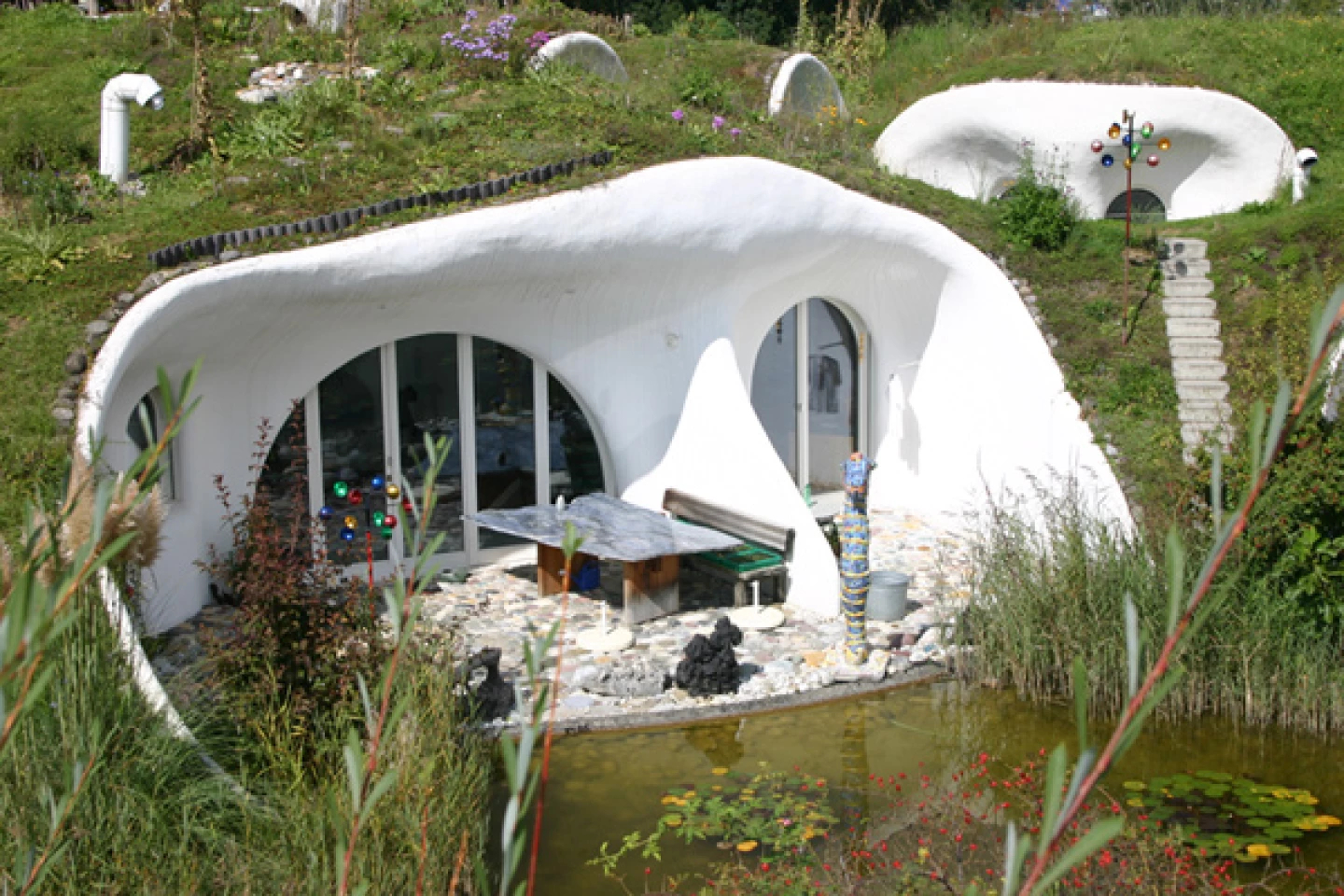
On the macro side, architects are using generative design to tackle urban heat islands. Buildings contribute heavily to energy consumption, mostly through heating and cooling. New frameworks integrate generative design with multi-objective optimization to evaluate thermal performance from the very early stages of building design. For example, algorithms can generate hundreds of building layouts for a residential area, optimizing for things like shadow area and vegetation coverage.
The goal here is to decrease incident radiation (the sun beating down on walls) while increasing natural cooling elements. One study highlighted how these methods focus on reducing carbon dioxide reduction rates by improving energy efficiency. It’s not just about one building; it’s about how buildings interact with each other and the environment. By simulating wind flow and solar exposure across an entire neighborhood, designers can create spaces that are naturally cooler, reducing the need for heavy HVAC systems. It’s holistic thinking, powered by brute-force computation.
The Reality Check: Where Simulation Meets Steel
Okay, let’s keep it real. Generative design isn’t magic. There’s a gap between what looks good on a screen and what works in the factory. This is the part vendor demos often gloss over. Sure, the software might give you a beautiful, lattice-like heat exchanger that promises amazing performance. But can you actually make it?
Additive manufacturing, or 3D printing, has made huge strides, but it’s not perfect. Complex internal channels can be hard to clean out. Support structures might be difficult to remove. And sometimes, the surface roughness from printing affects the thermal performance differently than smooth, simulated surfaces. Engineering teams in 2026 are still grappling with this "simulation vs. reality" disconnect.
That’s why the most successful projects involve a tight feedback loop. You don’t just generate and print. You generate, simulate, check for manufacturability, tweak, and then maybe print a test piece. It’s an iterative process, just faster. Also, not every application needs generative design. For simple, low-stakes components, traditional methods are still fine. The key is knowing when to bring out the big guns. If you’re pushing the limits of performance or space, that’s when generative design shines. If you’re making a standard bracket, maybe not. It’s about being smart with your tools, not just using them because they’re new.
Sustainability and the Green Angle
We can’t talk about thermal optimization without talking about the planet. Energy efficiency is a huge driver here. Every watt of energy saved by a more efficient heat exchanger or a better-insulated building is a watt that doesn’t need to be generated. In 2026, sustainability isn’t just a nice-to-have; it’s a requirement. Regulations are tighter, and consumers are smarter.
Generative design helps here by optimizing material usage. Traditional designs often over-engineer parts to be safe, using more metal or plastic than necessary. Generative algorithms strip away the excess, leaving only what’s structurally and thermally needed. This reduces waste during production and lowers the carbon footprint of the raw materials. Plus, lighter components mean less energy to transport them.
In the context of HVAC systems and power plants, AI-driven models like gradient-boosted regression trees are helping manage thermal loads more intelligently. This leads to smoother operation and less energy spikes. For solar thermal systems, generative design optimizes the shape of collectors to capture more sunlight throughout the day. It’s a ripple effect. Better thermal design leads to less energy use, which leads to lower emissions. It’s one of the most tangible ways engineering is contributing to climate goals. And honestly? It feels good to build things that help rather than hurt.
The Human Element in an AI World
So, does this mean engineers are obsolete? Absolutely not. In fact, their role is becoming more important, just different. The AI handles the heavy lifting of calculation and variation. The human provides the context, the creativity, and the judgment. You still need someone to define the problem correctly. Garbage in, garbage out, right? If you set the wrong constraints, you’ll get a perfectly optimized solution to the wrong problem.
There’s also the element of trust. Engineers need to understand why the AI chose a certain shape. Black-box solutions are risky. If a part fails, you need to know why. This requires a new skill set: interpreting AI outputs, validating results, and bridging the gap between digital models and physical reality. It’s a partnership. The AI is the junior engineer who never sleeps and can run a million simulations in an hour. The human is the senior engineer who knows which results matter and how to make them real.
This collaboration fosters innovation. When you’re not bogged down by the grunt work of manual optimization, you have more time to think creatively. You can ask bigger questions. "What if we changed the whole system architecture?" instead of "How do I make this fin 1mm thicker?" It elevates the profession. It makes the work more interesting. And for the everyday person, it means better, more reliable, and more sustainable products. Your phone doesn’t overheat as much. Your car goes further on a charge. Your home stays comfortable with less energy. That’s the human benefit.
We’re standing at a pretty exciting intersection of biology, physics, and code. Generative design isn’t just a tool; it’s a new way of seeing problems. It teaches us that the best solutions often look nothing like what we expect. They’re organic, efficient, and surprisingly elegant. As we move further into 2026 and beyond, this approach will become standard. It’ll be hard to remember a time when we didn’t use it.
The revolution in thermal optimization is quiet. It’s happening in servers, in labs, and on drafting tables. But its impact is loud. It’s making our technology faster, our buildings greener, and our engineering processes smarter. It’s not about letting machines take over. It’s about letting them handle the complexity so we can focus on the vision.
So, if you’re in the field, don’t fear the algorithm. Learn it. Play with it. See what weird shapes it comes up with. You might be surprised. And if you’re just observing, know that the next time you touch a device that stays cool under pressure, there’s a good chance a computer dreamed up its insides. It’s a small thing, maybe. But it’s part of a bigger shift toward a more efficient, thoughtful way of building our world. And that’s something worth warming up to.
[sps_html tag=”img” src=”https://cdn.northcarolinafinearchitecture.com/2026/05/what-property-of-matter-determines-the-direction-of-heat-flow-at-gerard-inside-thermal-study-design.jpg” alt=”What Property Of Matter Determines The Direction Of Heat Flow At Gerard … inside Thermal Study Design” style=”width: 100%; height: auto;”]
[sps_html tag=”img” src=”https://cdn.northcarolinafinearchitecture.com/2026/05/what-is-thermal-heat-charge-at-trevor-roy-blog-pertaining-to-thermal-study-design.png” alt=”What Is Thermal Heat Charge At Trevor Roy Blog pertaining to Thermal Study Design” style=”width: 100%; height: auto;”]
[sps_html tag=”img” src=”https://cdn.northcarolinafinearchitecture.com/2026/05/how-do-thermal-interface-materials-help-in-power-electronics-cooling-regarding-thermal-study-design.jpg” alt=”How Do Thermal Interface Materials Help In Power Electronics Cooling … regarding Thermal Study Design” style=”width: 100%; height: auto;”]
[sps_html tag=”img” src=”https://cdn.northcarolinafinearchitecture.com/2026/05/pcb-heat-management-techniques-for-reliable-electronics-design-with-thermal-study-design.jpg” alt=”Pcb Heat Management Techniques For Reliable Electronics Design with Thermal Study Design” style=”width: 100%; height: auto;”]
[sps_html tag=”img” src=”https://cdn.northcarolinafinearchitecture.com/2026/05/how-does-flow-rate-affect-heat-exchanger-performance-at-scott-fleming-blog-in-thermal-study-design.jpg” alt=”How Does Flow Rate Affect Heat Exchanger Performance At Scott Fleming Blog in Thermal Study Design” style=”width: 100%; height: auto;”]