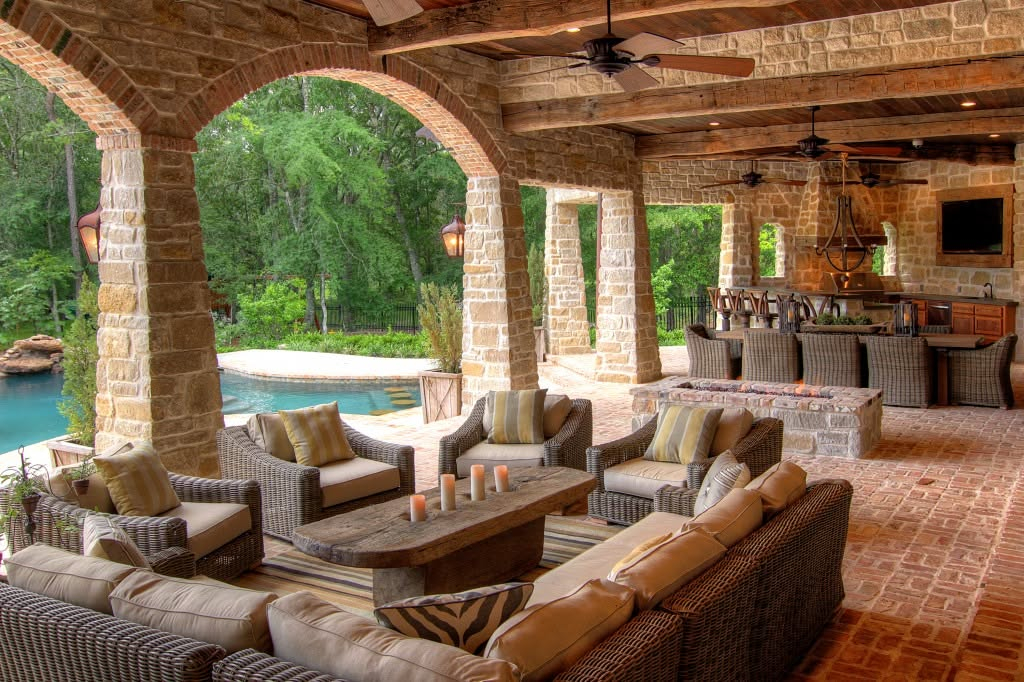
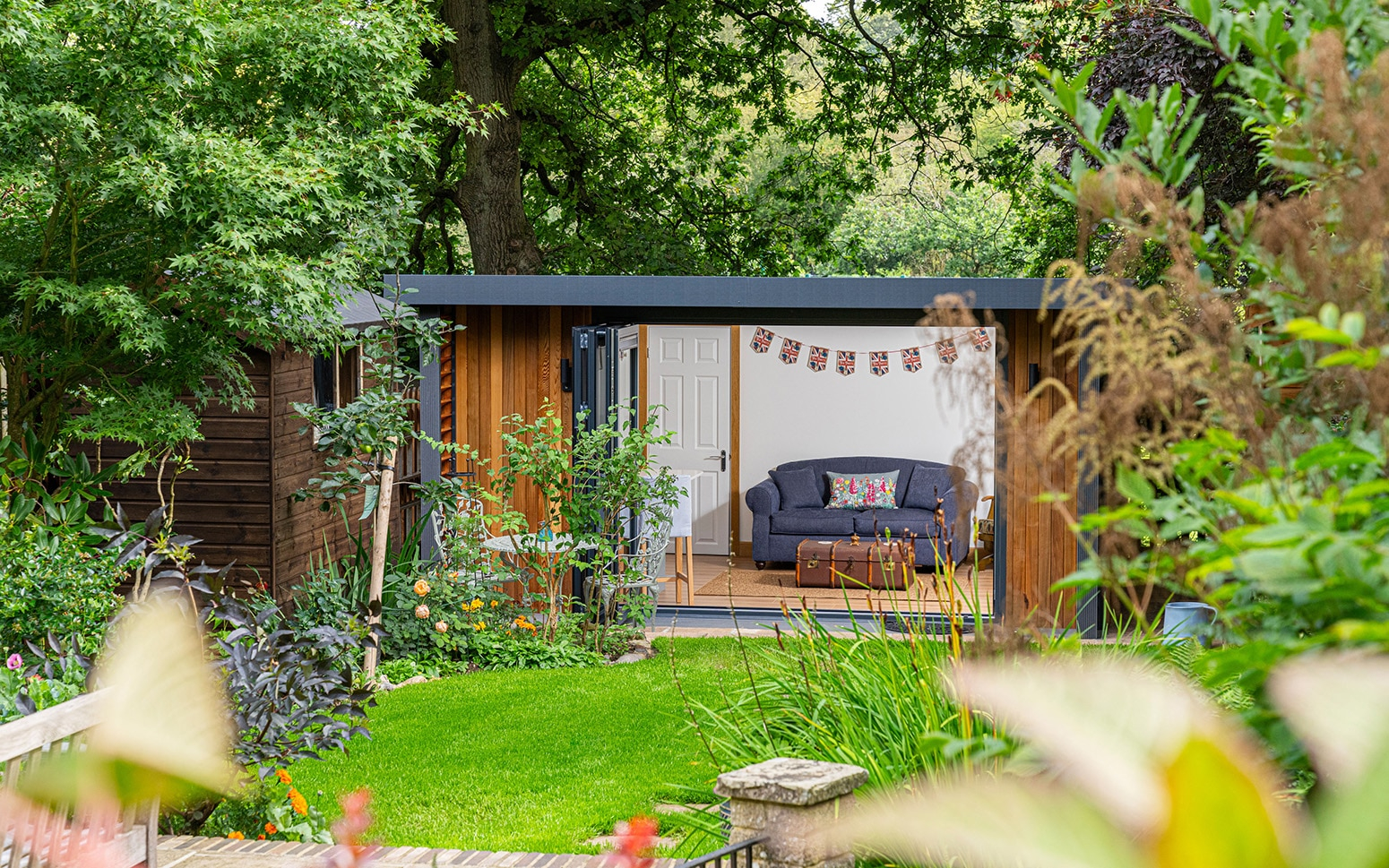
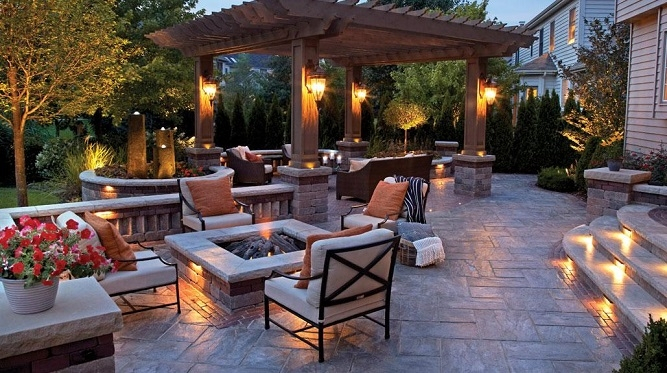
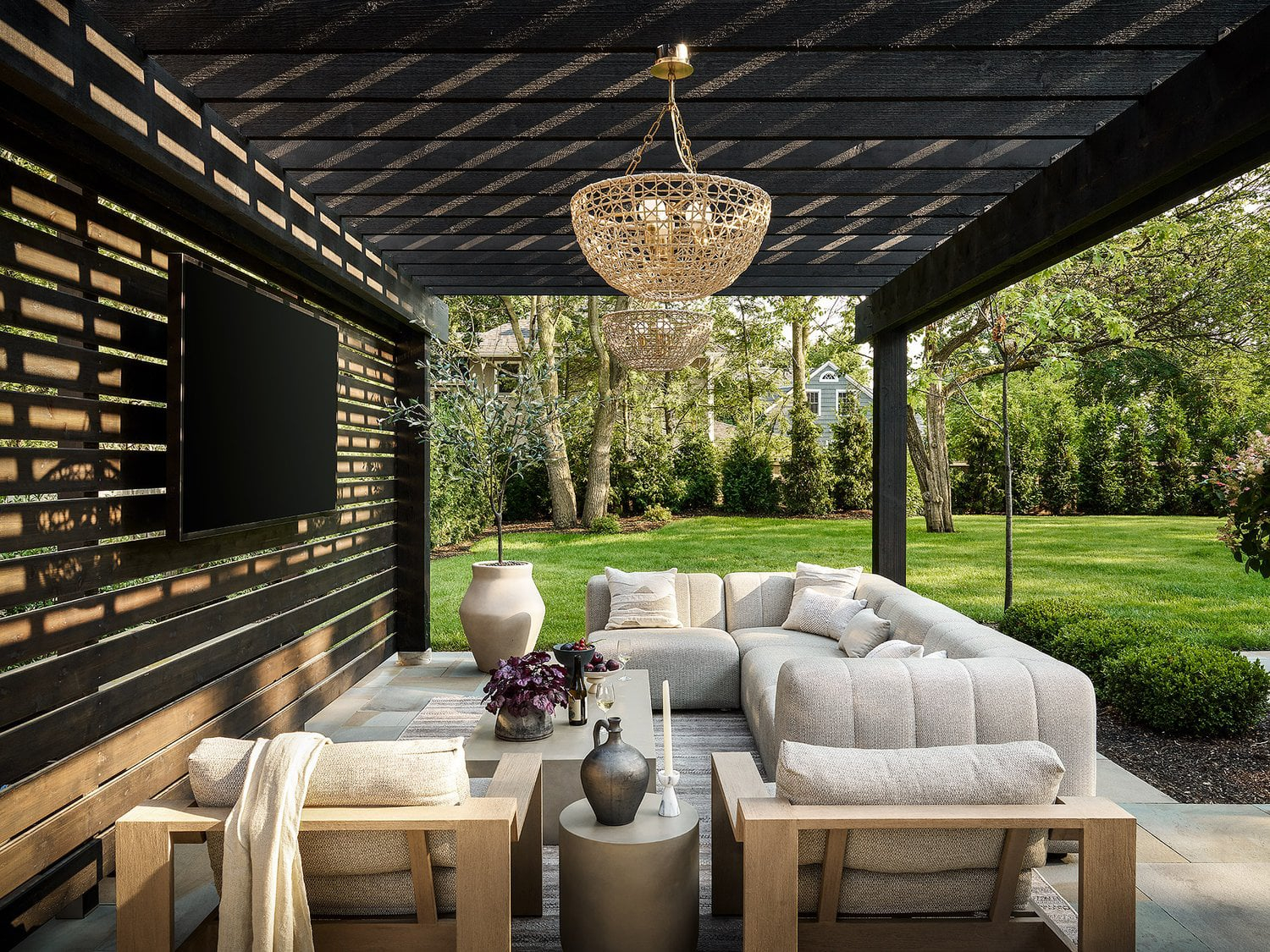
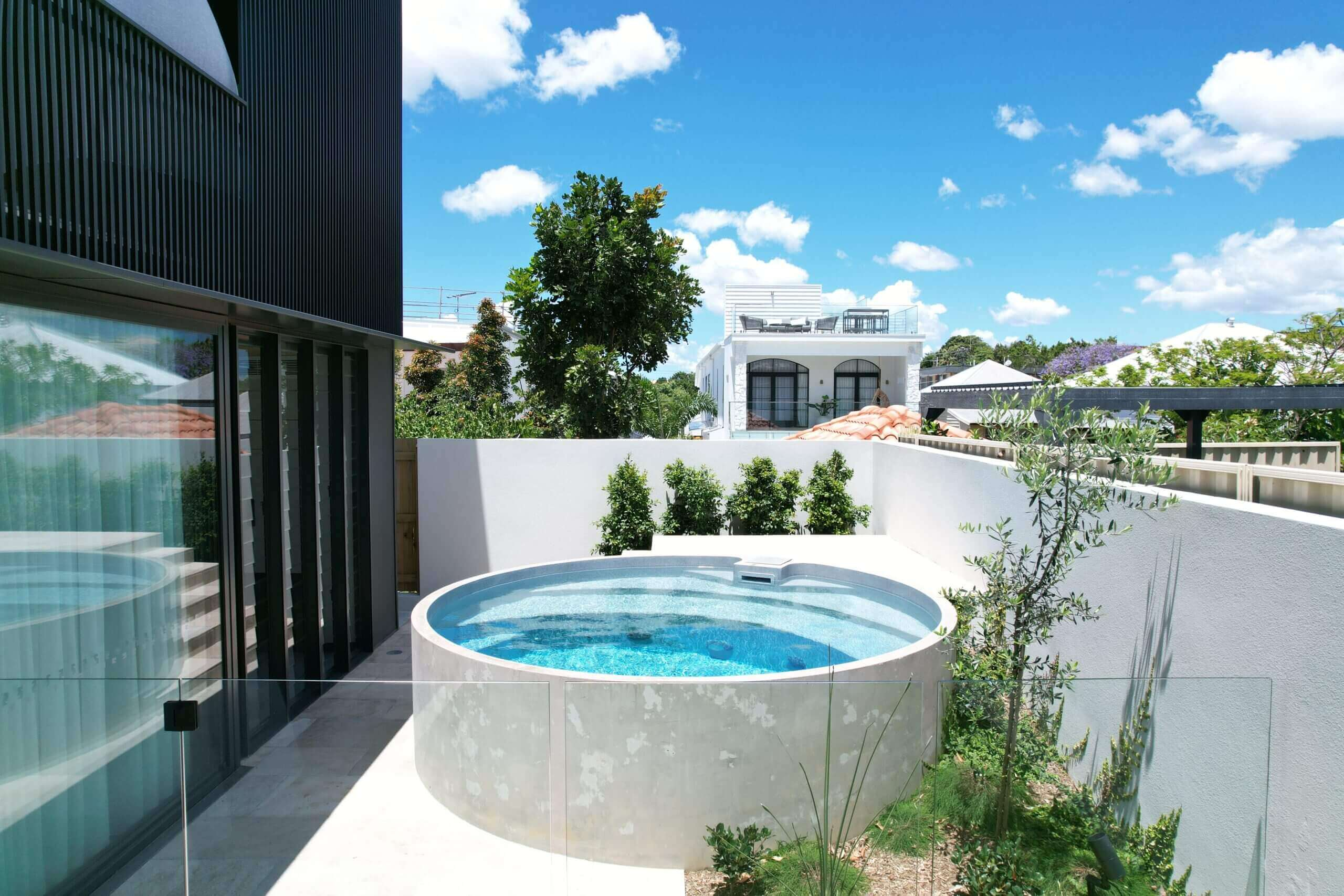
The afternoon sun beats down on the asphalt three streets over, but inside this particular backyard, the loudest sound is the steady, rhythmic splash of a two-tiered stone water fountain. You are sitting on a deep-cushioned teak lounge chair, shielded from the gaze of passing pedestrians and the looming second-story windows of the neighboring house. There is no glaring wall of concrete, nor a stark, prison-grade chain-link barrier. Instead, a warm, tightly integrated cedar privacy screen acts as a living frame, working in tandem with tiered hornbeam hedges and soft perennial grasses. It feels less like an urban property line and more like a private room carved out of the open air.
Achieving this level of tranquility rarely happens by accident. Most homeowners inherit a hodgepodge of aging wire, rotting boards, or arbitrary property boundaries put up decades ago by developers who cared more about square footage than human psychology. Transforming a chaotic, exposed plot of land into a restorative outdoor living space requires a radical shift in perspective. A fence is never just a line drawn in the dirt to keep things in or out. When engineered with deliberate intent, it becomes an architectural anchor, a sound dampener, a wind buffer, and the primary boundary that defines whether your yard feels like a fishbowl or a sanctuary.
For generations, residential fencing has swung like a pendulum between purely utilitarian defense and ostentatious display. In early American colonial settlements, split-rail and picket barriers served the strict purpose of keeping livestock out of vegetable patches, prioritizing animal husbandry over aesthetic or psychological comfort. As suburban development surged through the mid-20th century, the six-foot privacy fence emerged as the default suburban defense mechanism—a monolithic wall of dog-ear pine designed to sever ties with the outside world entirely. While effective at blocking a neighbor’s line of sight, these uniform barriers often created oppressive, claustrophobic corridors that stripped yards of natural light and airflow.
Today, the approach to backyard architecture has evolved dramatically. Designers, landscape architects, and homeowners are moving away from brute-force privacy walls in favor of layered, contextual boundaries. The contemporary outdoor living movement treats the perimeter not as a hard stop, but as a transitional threshold. By combining architectural elements—such as mixed-material panels, louvered slats, and integrated planters—with soft landscaping, modern fences actively contribute to the sensory ecology of a garden. They manage the flow of microclimates, bounce ambient light into shady corners, and absorb the low-frequency drone of modern traffic, turning a patch of grass into an intentional retreat.
Deconstructing the Psychology of Boundaries and Enclosure
Human beings possess an innate evolutionary desire for what environmental psychologists call "refuge and prospect." We crave safe, enclosed spaces where we can relax without feeling exposed to sudden threats, yet we also need visual connections to nature to maintain psychological well-being. A poorly designed boundary destroys this delicate equilibrium. If your fence is too low, you feel vulnerable and watched. If it is a towering, solid expanse of dark vinyl, you feel trapped inside an enclosed box. Thoughtful fence design bridges this gap by manipulating scale, texture, and transparency to create a sense of deep psychological comfort.
When you sit in your yard, your peripheral vision constantly registers vertical structures. If those vertical structures are jagged, unkempt, or visually aggressive—such as rusting corrugated metal or splintering pressure-treated pine—your nervous system remains subtly on edge. Conversely, when a boundary is built with harmonious proportions, warm organic tones, and careful rhythmic spacing, it signals safety to the brain. This is why material selection matters far beyond initial curb appeal. Natural woods like Western Red Cedar and Ipe release subtle organic compounds and weather gracefully into soothing silver-grays, while high-grade composite panels offer clean, predictable geometry that calms the visual field.
Furthermore, the placement of your fence dictates the perceived volumetric space of your property. Pushing a fence to the absolute outer limits of a small lot can actually make the space feel smaller and more rigid by exposing every square foot of awkward geometry. Strategic placement allows you to break a large or oddly shaped yard into distinct, human-scaled outdoor rooms. By pulling a privacy screen inward to frame an intimate dining patio or screening off a utility zone with decorative metal fretwork, you create a sequence of spatial discoveries. You trick the eye into sensing depth and mystery, transforming a flat suburban rectangle into a multi-dimensional landscape.
The interaction between sunlight, shadow, and vertical boundaries cannot be overstated. A solid, unyielding privacy fence placed along the southern edge of a northern-hemisphere property can cast a deep, damp shadow across your entire garden, killing sun-loving plants and creating a chilly, uninviting microclimate. A thoughtful design anticipates solar azimuths and seasonal shifts. By incorporating semi-open elements—such as horizontal slats with half-inch gaps, top trellis extensions, or alternating board-on-board patterns—you allow filtered light to dance through the space while maintaining total privacy from key vantage points. This dynamic interplay of light and shadow turns the fence itself into a living canvas throughout the day.
Engineering Acoustic Comfort and Microclimate Control
Beyond visual privacy, the physical placement and structural density of your fence play a critical role in sensory insulation. Modern suburban life comes with a relentless soundtrack: barking dogs, lawnmowers, traffic acceleration, and distant sirens. Sound waves travel as pressure fluctuations in the air, and a hard, continuous surface is required to disrupt them. Wire mesh or spaced picket fences offer zero acoustic attenuation, letting noise wash freely across your outdoor living area. A heavy, well-sealed tongue-and-groove or multi-layered acoustic fence, however, can reflect and refract sound waves, significantly lowering the decibel level inside your personal sanctuary.
Achieving true acoustic isolation requires attention to mass and continuity. Gaps at the base of the fence or poorly fitted gate thresholds act as acoustic leak points, allowing sound to funnel straight through. Practitioners often recommend pairing a solid base fence with dense, multi-tiered plantings on the street-facing side to absorb high-frequency sounds before they hit the wood or composite panels. Soft vegetation captures sound waves, while the solid fence blocks lower frequencies. This dual-action approach transforms a noisy backyard backing onto a busy thoroughfare into a surprisingly quiet haven where you can actually hear the wind rustling through ornamental grasses.
Microclimate management is another invisible benefit of strategic boundary engineering. Wind is one of the primary culprits behind outdoor discomfort, stripping body heat on cool spring evenings and creating turbulence that disrupts outdoor dining. However, erecting an absolute, impenetrable windbreak can backfire. When fast-moving wind hits a completely solid, high wall, it creates a high-pressure zone on the windward side and a violent turbulent vortex or downdraft on the leeward side. This swirling eddy can actually toss patio furniture around and snap delicate plant stems right behind the safety of the wall.
The secret to effective wind mitigation lies in porosity. Porous or louvered fence designs allow roughly twenty to thirty percent of the wind to pass through while breaking its momentum. As the air filters through the slats, its velocity drops drastically, creating a calm, protected zone extending for a distance equal to several times the height of the fence on the lee side. By placing these semi-permeable boundaries strategically to intercept prevailing seasonal winds, you extend your outdoor living season by months, remaining comfortable outdoors long after the autumn chill has set in.
Step-by-Step Methodology for Designing and Placing Your Sanctuary Fence
Designing a peaceful outdoor living space requires a methodical, step-by-step approach that balances regulatory compliance, environmental factors, and human-centric spatial planning. Rushing into construction without a clear roadmap often leads to costly property disputes, structural failure, or an underwhelming aesthetic result.
- Step 1 (Boundary Verification and Legal Due Diligence): Hire a licensed land surveyor to officially stake your property lines before buying a single board. Never rely on existing old fences, concrete markers, or neighborly assumptions, as boundary discrepancies can result in forced teardowns. Simultaneously, review local municipal zoning codes regarding maximum allowable fence heights, mandatory setbacks from the street, and utility easements that prohibit construction over underground lines.
- Step 2 (Sun, Wind, and Sightline Mapping): Spend a few weeks observing your yard at different times of day. Track where the sun hits your favorite seating areas, identify the exact angles where second-story neighbor windows overlook your space, and note the direction of prevailing seasonal winds and annoying street noise. Use this data to map out precisely where you need maximum privacy, where you need filtered light, and where acoustic buffering is most critical.
- Step 3 (Material and Style Selection): Choose materials that complement your home’s existing architecture and fit your maintenance capacity. If you select natural wood like cedar, redwood, or tropical hardwoods, acknowledge the need for periodic staining or sealing to prevent graying and warping. If you prefer low-maintenance longevity, investigate high-density composite panels, powder-coated aluminum framing, or weathering Cor-Ten steel accents that develop a stable, protective rust patina.
- Step 4 (Zoning and Spatial Partitioning): Avoid treating your yard as a single, monotonous perimeter. Plan the fence layout to carve out distinct functional zones—such as a secluded dining terrace, a hidden utility or trash storage area, and an open lounging lawn. Utilize varying fence heights and panel styles within these zones to create visual rhythm, using taller solid panels where privacy is paramount and lower decorative screens or trellises near garden beds.
- Step 5 (Structural Engineering and Installation): Ensure your foundational installation is built to withstand extreme weather events. Dig post holes below the local frost line (typically 36 to 48 inches deep in colder climates) and set your 4×4 or 6×6 posts in high-strength concrete, sloping the surface away from the wood to prevent moisture accumulation. Use galvanized or stainless-steel fasteners that will not bleed unsightly black tannin stains across your pristine new fence panels over time.
Navigating Advanced Design Pitfalls and Practical Workarounds
Even experienced DIYers and landscape designers can run into unexpected obstacles when transforming a backyard perimeter. Anticipating these common failure points saves thousands of dollars in retrofits and spares you from uncomfortable conversations with the people living next door.
- Pitfall 1 (Ignoring Neighbor Relations and Legal Covenants): Putting up a towering, imposing privacy wall right on the property line without consulting your neighbors is the fastest way to start a neighborhood feud. Practitioner Workaround: Talk to your neighbors before breaking ground, share your design plans, and check if your neighborhood has a Homeowners Association (HOA) with strict design guidelines. Furthermore, remember the "good neighbor" rule: in many jurisdictions, the finished side of the fence must face outward toward your neighbors, while the structural framing faces inward toward your yard.
- Pitfall 2 (Failing to Account for Soil Movement and Drainage): Setting fence posts directly into heavy clay or poorly draining soil without proper gravel footings leads to frost heaving, rotting timber, and leaning panels within two seasons. Practitioner Workaround: Always pour a six-inch bed of crushed gravel at the bottom of every post hole before adding concrete to ensure proper sub-surface drainage, and keep the bottom rail of wood panels at least two inches off the soil line to prevent ground-contact rot.
- Pitfall 3 (Creating a Monotonous, Prison-Yard Aesthetic): Running a hundred feet of identical, flat wooden boards completely around a small yard creates a sterile, claustrophobic tunnel effect. Practitioner Workaround: Break up the visual weight by incorporating mixed media—such as topping wooden lower panels with modern metal grid trellises, inserting vertical garden pockets, or stepping down the fence height as it transitions from the private patio to the open garden.
- Pitfall 4 (Neglecting Gate Engineering and Hardware Quality): Spending thousands on gorgeous custom fence panels while skimping on gate hinges and latches results in sagging gates that won’t latch properly after the first heavy rain. Practitioner Workaround: Use heavy-duty, adjustable self-closing hinges, diagonal anti-sag internal gate framing braces, and lockable gravity latches rated for commercial or heavy residential use.
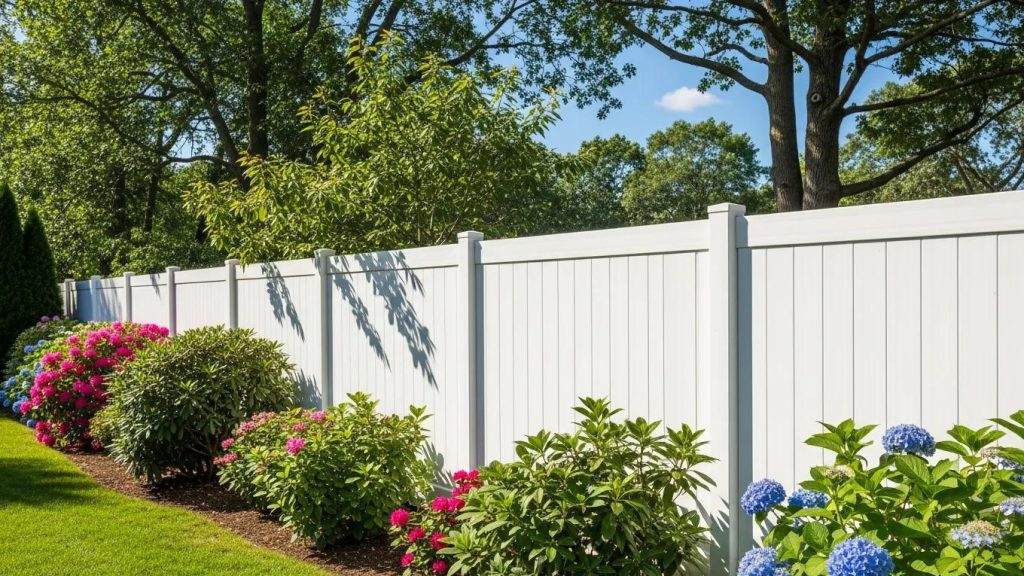
- Pitfall 5 (Overlooking Integration with Soft Landscaping): Treating the fence as an isolated hardscape object that abruptly meets bare dirt or turf creates a harsh, disconnected boundary. Practitioner Workaround: Soften the transition by planting cascading vines, ornamental grasses, or flowering shrubs directly against the base and along the face of the fence, allowing nature to weave the boundary seamlessly into the surrounding garden ecosystem.
Holistic Perspectives on Longevity, Sustainability, and Ecological Integration
A truly peaceful outdoor living space does not exist in a vacuum; it is part of a living ecosystem. When we erect boundaries, we inevitably alter local wildlife corridors, insect habitats, and water drainage patterns. Viewing fence design through an ecological lens allows us to create spaces that are not only peaceful for humans, but also supportive of the natural world. Sustainable fencing choices minimize carbon footprints while maximizing the ecological functionality of your perimeter, turning a static wooden or metal barrier into a thriving vertical habitat.
Sourcing materials responsibly is the cornerstone of sustainable fence design. While tropical hardwoods like Ipe or Cumaru offer extraordinary durability and resistance to rot, harvesting them from ancient rainforest ecosystems carries a heavy environmental toll unless certified by organizations like the Forest Stewardship Council (FSC). Alternatively, domestically harvested Western Red Cedar, thermally modified timber (焼き板/Yakisugi techniques), or reclaimed barn wood offer exceptional character and longevity with a vastly smaller transportation and carbon footprint. Furthermore, composite fencing made from recycled post-consumer plastics and reclaimed wood fibers diverts thousands of pounds of waste from landfills while eliminating the need for toxic chemical sealants and paints.
Integrating living elements into your boundary design transforms a hard property line into an ecological highway. Vertical gardening systems, espaliered fruit trees, and flowering vines such as star jasmine, clematis, or native honeysuckle turn a plain wooden paneling system into a foraging ground for local pollinators like bees, butterflies, and hummingbirds. By building deep planting beds directly against the base of your fence, you create a layered micro-ecosystem that naturally filters stormwater runoff, cools the surrounding air through evapotranspiration, and dampens ambient neighborhood noise far more effectively than any solid sheet of plastic or metal could ever achieve on its own.
Looking toward the future, outdoor living spaces are increasingly viewed as essential extensions of our mental health and wellness infrastructure. As urban densities rise and our daily lives become more digitally saturated, the backyard sanctuary is no longer a luxury—it is a biological necessity. Thoughtful fence design provides the structural boundary required to disconnect from the noise of the world and reconnect with our own rhythms. By honoring both human psychology and ecological health in our boundary choices, we build enduring outdoor spaces that offer genuine peace, quietude, and restoration for decades to come.
Essential Recommendations for Your Backyard Sanctuary Project
Synthesizing the myriad choices involved in designing a peaceful outdoor perimeter requires clear frameworks that keep your project grounded in practicality, beauty, and long-term value.
- Prioritize Quality Over Economy: Skimping on lumber grades, post depth, or hardware quality guarantees premature failure. Invest in premium, rot-resistant materials and robust structural engineering from day one to avoid costly repairs or total replacement within five to ten years.
- Layer Hard and Soft Elements: Never rely solely on a hard architectural wall to create privacy and peace. Pair your fencing structure with dense perimeter landscaping, multi-stemmed trees, and climbing vines to soften the visual impact and absorb acoustic energy.
- Design for Human Scale: Avoid the temptation to build every section of your yard to maximum height. Use staggered heights, semi-private louvered slats, and open trellises to define distinct functional zones without making your outdoor space feel like a fortress.
- Respect the Microclimate: Analyze solar paths and wind patterns before finalizing your layout. Ensure your fence design allows sufficient airflow and filtered light so your garden stays healthy and your outdoor seating areas remain comfortable across all four seasons.
- Maintain Open Communication: Keep your neighbors and local municipal guidelines involved throughout the planning phase. A collaborative approach prevents legal disputes, property line conflicts, and neighborhood friction, ensuring your new sanctuary is welcomed by everyone sharing the surrounding landscape.
The journey of crafting a peaceful outdoor living space is ultimately an exercise in boundary management—not just of wood and metal, but of our relationship with the surrounding world. When you step outside into a yard defined by thoughtful design, careful proportions, and living greenery, the chaotic noise of daily life begins to recede. You are no longer just occupying a piece of land behind a generic barrier; you are inhabiting an intentional work of architecture that nurtures your mental well-being and shelters your personal peace.
As you embark on your own backyard transformation, remember that perfection takes patience. Whether you are replacing a dilapidated wire boundary with a warm cedar screen or layering climbing roses over a modern horizontal slat system, every choice you make shapes the character of your outdoor home. Take the time to map your light, consult your neighbors, and select materials that will weather gracefully through the seasons. By investing thought and care into your perimeter today, you build a sanctuary that will offer quiet refuge, beauty, and renewal for many years to come.