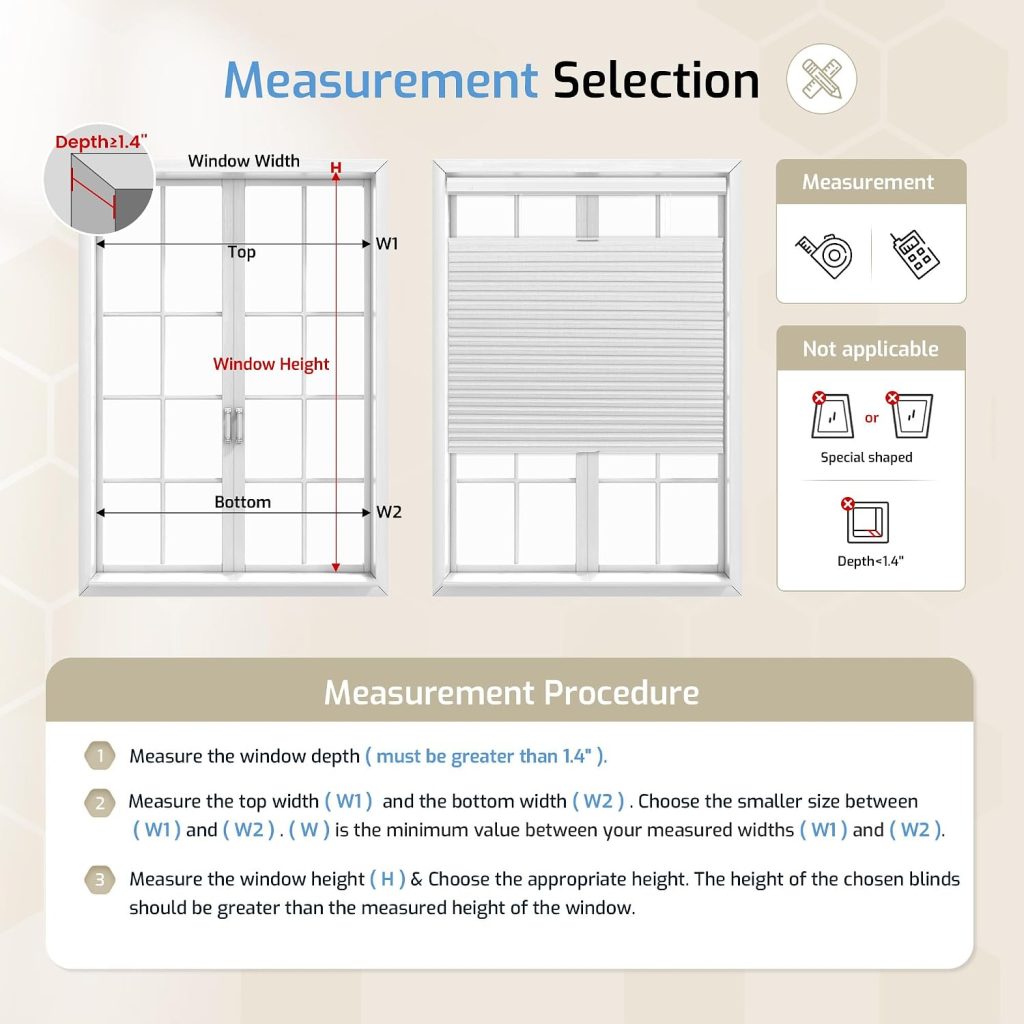
To measure cellular shades for an inside mount, record the opening’s width, height, and usable depth separately, then follow the instructions for the exact shade you intend to order. A window can be wide enough for a shade while lacking the depth needed for its headrail. Checking only the dimensions of an old blind leaves that question unanswered.
This guide uses LEVOLOR’s US measuring instructions as a worked process for a single cellular shade in a conventional rectangular opening. It does not supply a universal deduction or mounting-depth requirement for every brand. Keep the selected product’s instructions beside your measurement sheet, and resolve any difference with the supplier before submitting a custom order.
Choose the product and mount before taking order measurements
Start a record with the room, window location, manufacturer, shade collection, and operating system you are considering. Write “inside mount” clearly at the top. If there are several windows in the room, give each one its own name, such as “living room, left window,” rather than assuming a single size will serve the whole group.
LEVOLOR describes an inside mount as an integrated look within the window frame and warns that the frame must accommodate the selected treatment’s required minimum depth. Its guide identifies insufficient depth as a common measuring mistake.[1] Make that a purchasing checkpoint before spending time comparing fabrics.
Distinguish the manufacturer’s minimum mounting depth from the depth needed for a fully recessed appearance. The guide lists those as separate specifications. A product that can be mounted does not necessarily sit entirely behind the front of the opening.[1] Ask the supplier which specification matches the appearance you want, using the exact collection and control option.
Measure the opening width in three places
Use a metal tape measure and record the actual opening rather than the width of an existing blind. LEVOLOR recommends a metal tape because cloth tapes may stretch, and it says to measure every window even when neighboring windows appear identical.[1] Keep all measurements in inches on the same sheet.
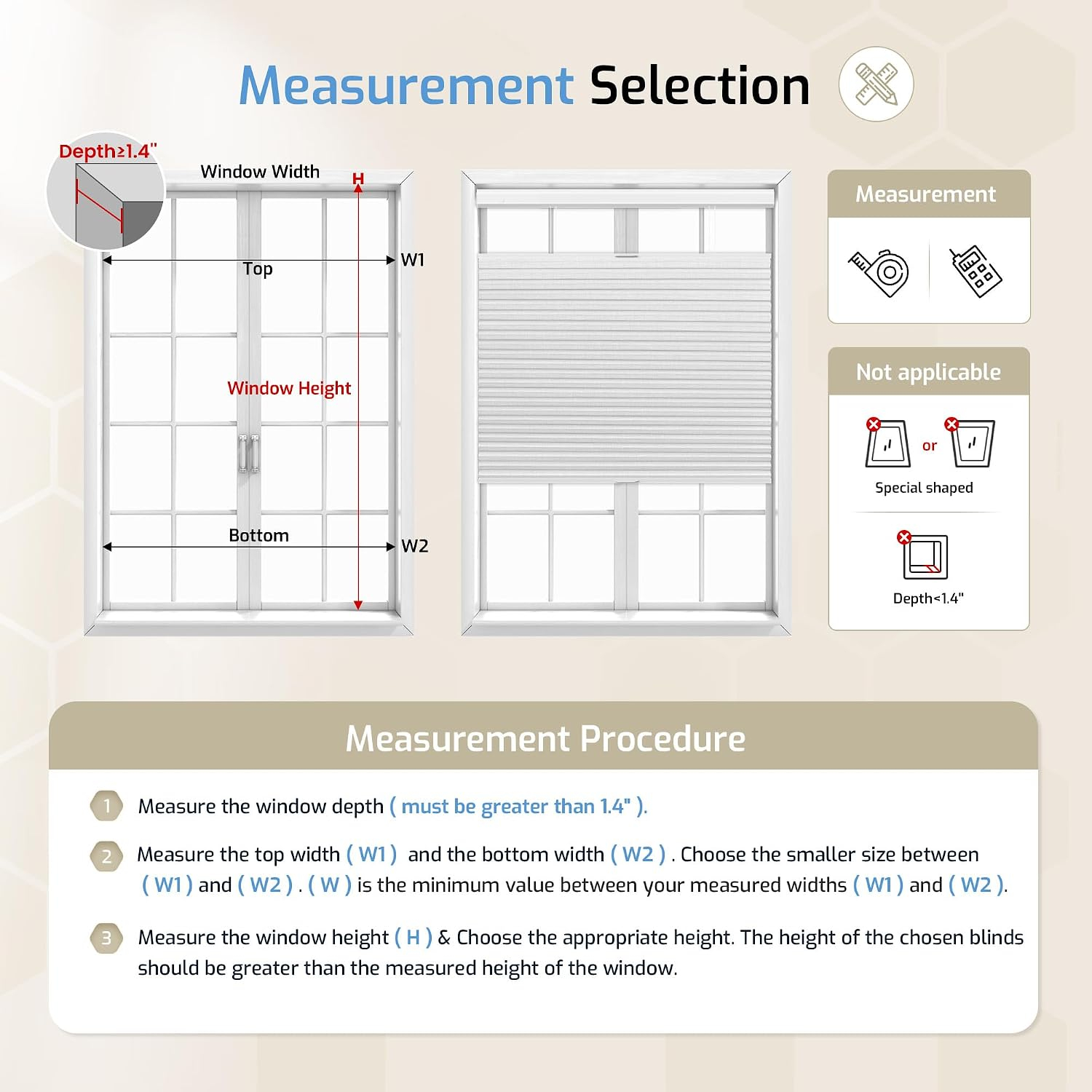
For its inside-mount process, measure horizontally inside the frame at the top, middle, and bottom, to the nearest 1/8 inch. Record all three readings, then identify the shortest as the width.[1] Do not write down only the chosen number: retaining the other readings makes it easier to discuss an uneven opening with the supplier.
For an illustrative opening, suppose the three widths are 35 3/8, 35 1/4, and 35 1/2 inches. Under this particular measuring instruction, the recorded width is 35 1/4 inches. These are invented example measurements, not a recommended window size or evidence that any shade with that advertised width will fit.
Record height separately and keep the product exception visible
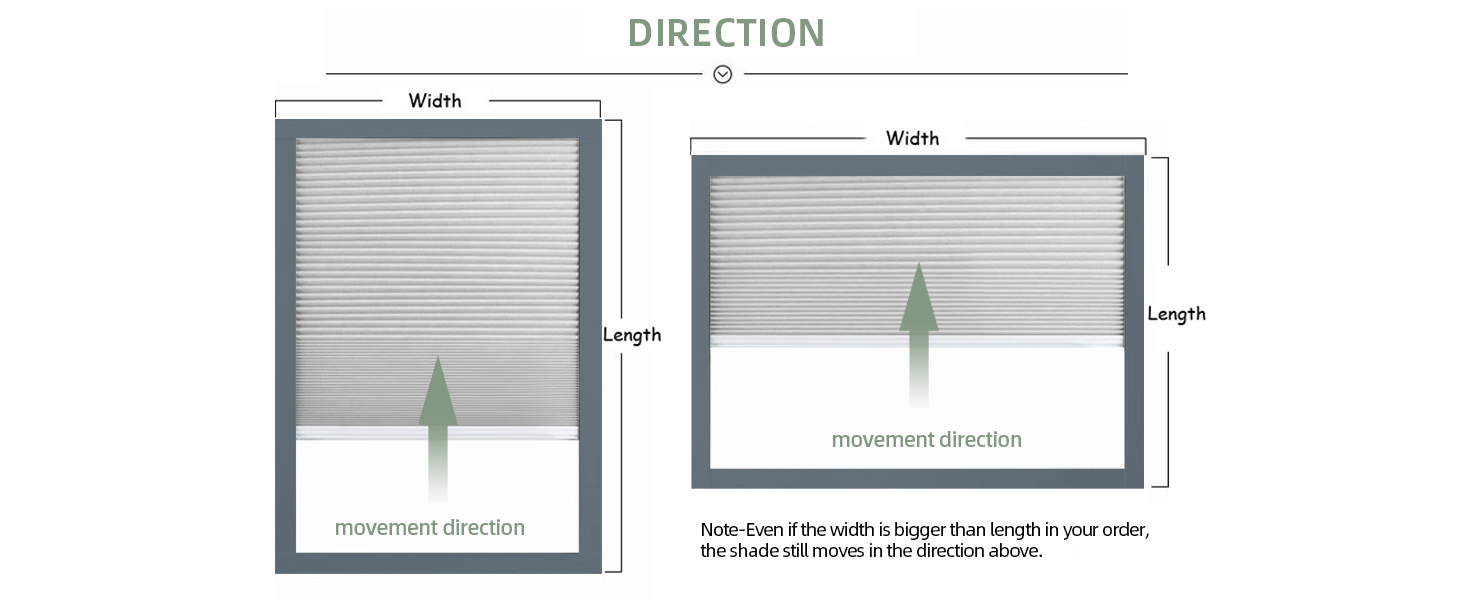
LEVOLOR’s general inside-mount instructions call for three vertical measurements inside the frame: left, middle, and right. Measure to the nearest 1/8 inch and record the longest reading as the height.[1] Keep the three original readings beside the selected result so that width and height cannot be accidentally transposed.
Do not carry that instruction across to a different shade category without checking. The same page gives a shortest-height exception for banded and sheer shades to allow their bottom rail to rotate.[1] That exception is a useful reminder that a general measuring video and a product-specific order form must refer to the same treatment.
For a cellular-shade order, confirm the collection, configuration, and current instructions before entering height. If your opening has an unusual sill or shape, send the supplier a photograph and ask how that condition should be measured. Do not convert an uncertain opening into a confident custom-order number by guessing where the shade should end.
Check usable depth and moving-window obstacles
Measure the inside depth at the top of the frame, again to the nearest 1/8 inch. LEVOLOR instructs shoppers to consider window obstacles and use the shortest depth measurement.[1] Record where each depth was taken so the supplier can understand what limits the space.
Photograph handles, locks, projecting trim, and other features that may affect the proposed position. Include a wider photograph showing the whole opening. A number alone cannot show which part of a window moves or which surface you intended to use. Ask whether the selected headrail and shade can occupy that space while preserving normal window operation.
If the supplier needs to identify the window itself, our guide to finding a window product ID can help organize that information. The window ID supplements your measurements; it does not establish a shade’s mounting requirements or authorize drilling into an unfamiliar frame.
Keep factory deductions separate from your measurements
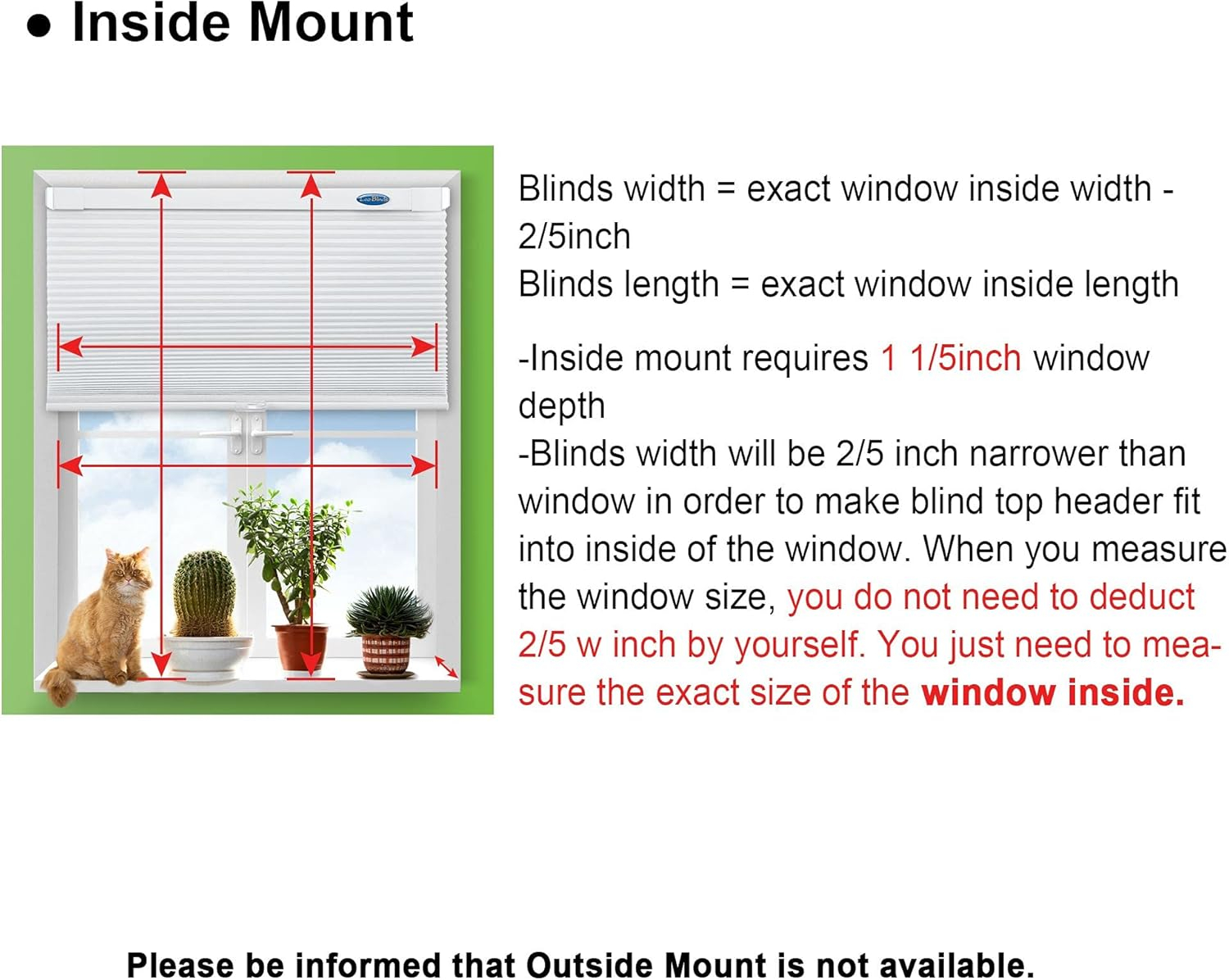
LEVOLOR’s measuring tips explicitly say not to take deductions from your measurements and explain that the company makes inside-mount adjustments.[1] For that ordering process, enter the requested opening measurements rather than subtracting an extra allowance because an old blind looked narrower.
Keep “measured opening,” “order entry,” and any “finished product dimension” the supplier provides in separate fields. If the order form uses unfamiliar language, ask what its width represents before paying. Do not assume a deduction used by a different retailer, a previous installer, or a stock blind applies to this custom product.
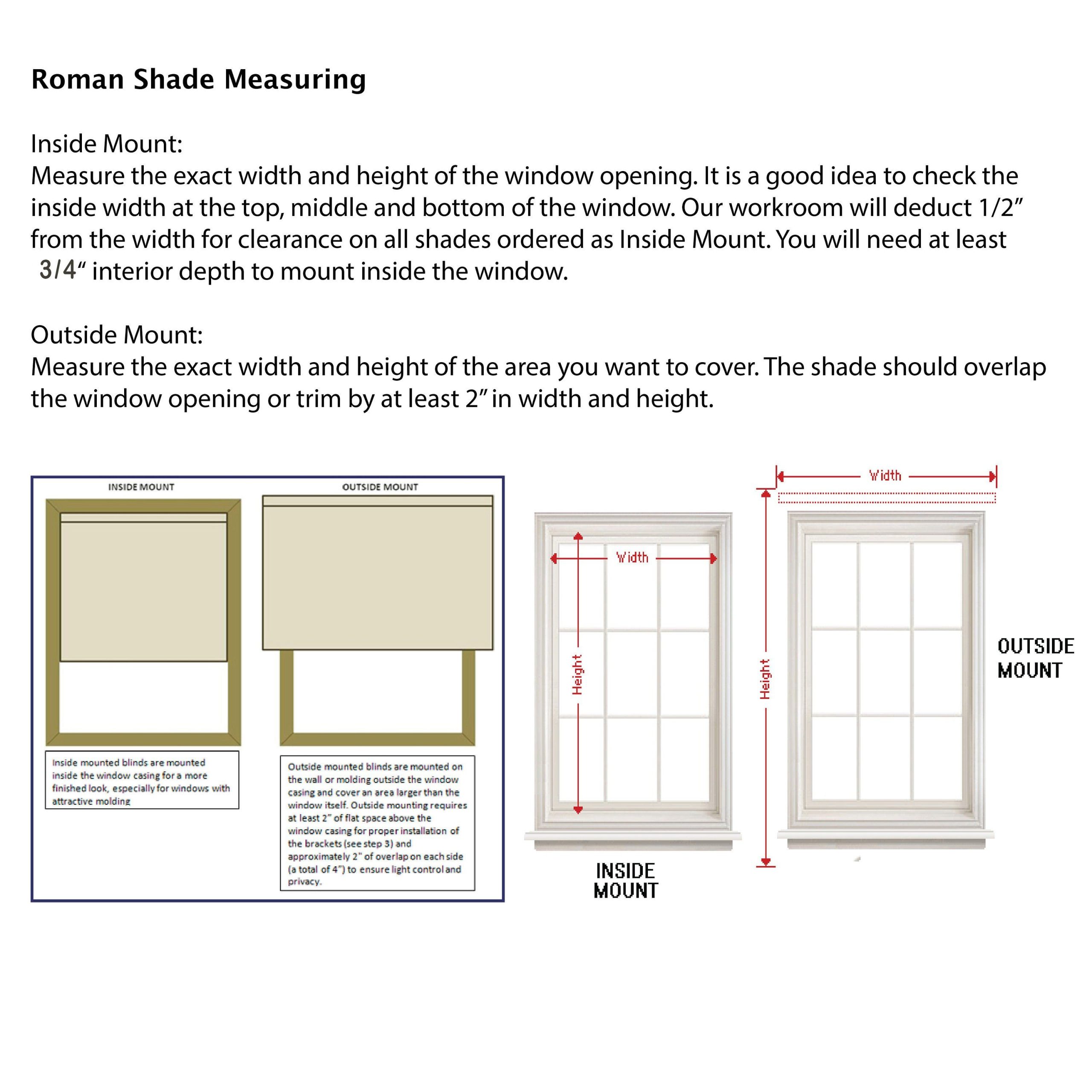
If the selected shade does not meet the required depth, pause the inside-mount order. LEVOLOR describes outside mounting as an alternative when the frame lacks sufficient depth.[1] Treat that as a new measurement plan with its own instructions, rather than reusing inside-opening numbers unchanged.
Review one complete window record before ordering
Read the window name, mount type, product collection, operating system, three widths, three heights, and depth notes back against the order form. Check units and fractions carefully. Attach the photographs and keep the supplier’s answers with that specific window record.
Complete this review for every opening, including windows that appear identical. When a depth requirement, obstacle, or measurement remains unresolved, leave the order unsubmitted until the supplier clarifies it. A useful measurement sheet preserves what you actually observed and the product instructions used to turn those observations into an order.
Sources