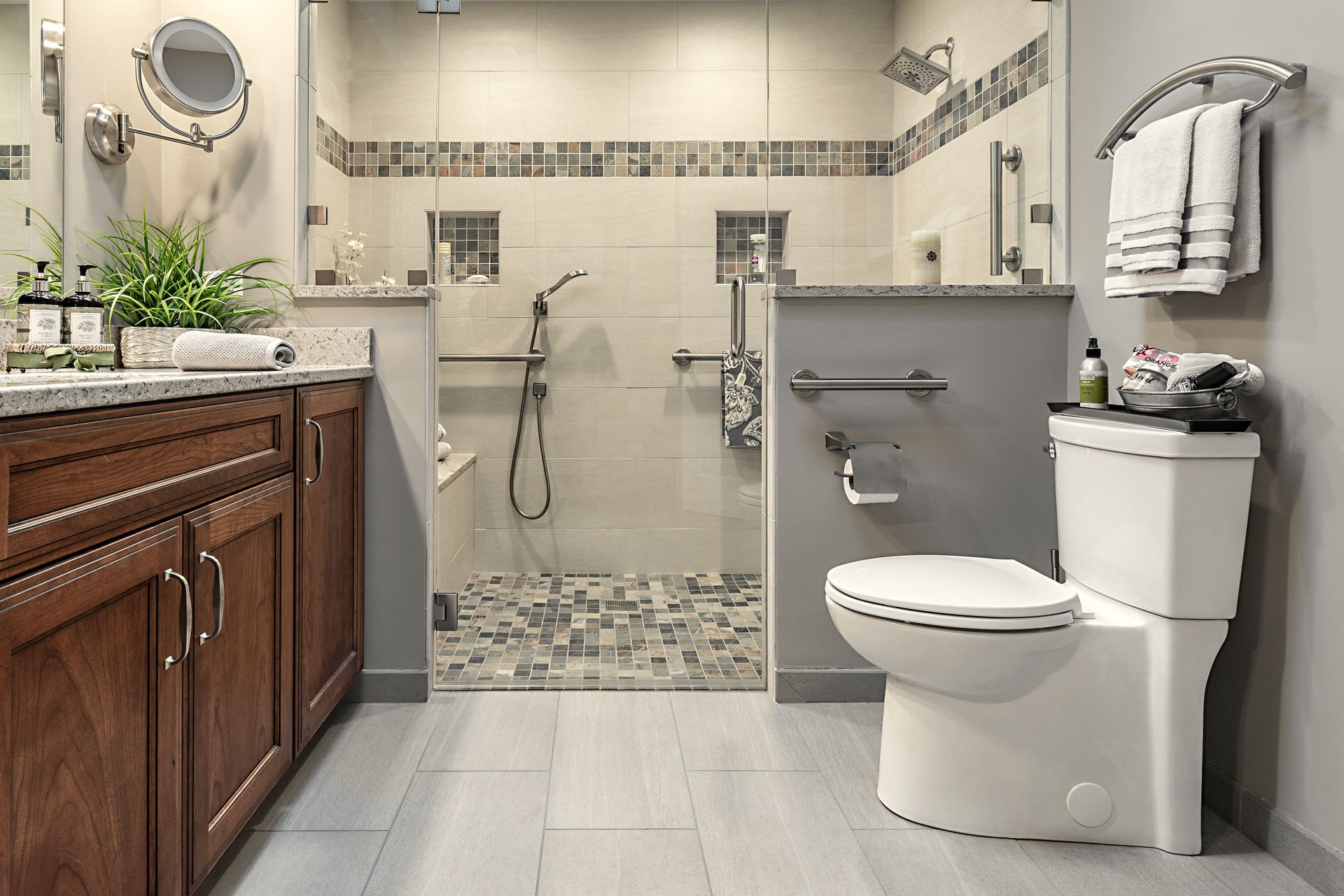
The walk through a newly completed residential build often stops abruptly in the smallest room of the house. We spend months obsessing over structural timber, cantilevered staircases, and custom Italian marble slabs, only to stand in the finished bathroom staring at a flimsy, spring-loaded chrome cylinder that sags under the weight of a damp waffle-weave linen curtain. It is a quiet design failure—a microscopic detail that instantly disrupts the architectural volume and tactile rhythm of a carefully curated interior.
From an architectural standpoint, the bath is a high-stress microclimate of steam, condensation, skin oils, and mechanical wear. Every fixture must earn its place through a rigorous synthesis of form, structural physics, and material science. When we evaluate bathroom hardware, the shower rod is rarely viewed as a mere utility. Instead, it functions as a critical horizontal datum line. It dictates sightlines, frames the bathing volume, and either anchors the room’s geometric layout or visually fractures it.
The industry has evolved far beyond the basic telescopic tension rods of the twentieth century. Modern residential design demands hardware that respects spatial constraints while delivering uncompromising mechanical longevity. Whether you are dealing with a compact urban alcove or an expansive wet room requiring complex corner geometry, selecting the correct rod type requires an understanding of structural loads, wall substrates, and spatial psychology.
Architectural Geometry and the Physics of Shower Space
The primary job of a shower rod is deceptively simple: span an open gap and support a curtain. Yet, when you analyze the vector forces acting upon that rod, the engineering challenge becomes clear. A standard curtain, once saturated with water spray and drawn back and forth hundreds of times, creates cyclical lateral loads and dynamic bending moments. If the rod is anchored into fragile drywall or relies on weak friction pads, structural failure is only a matter of time.
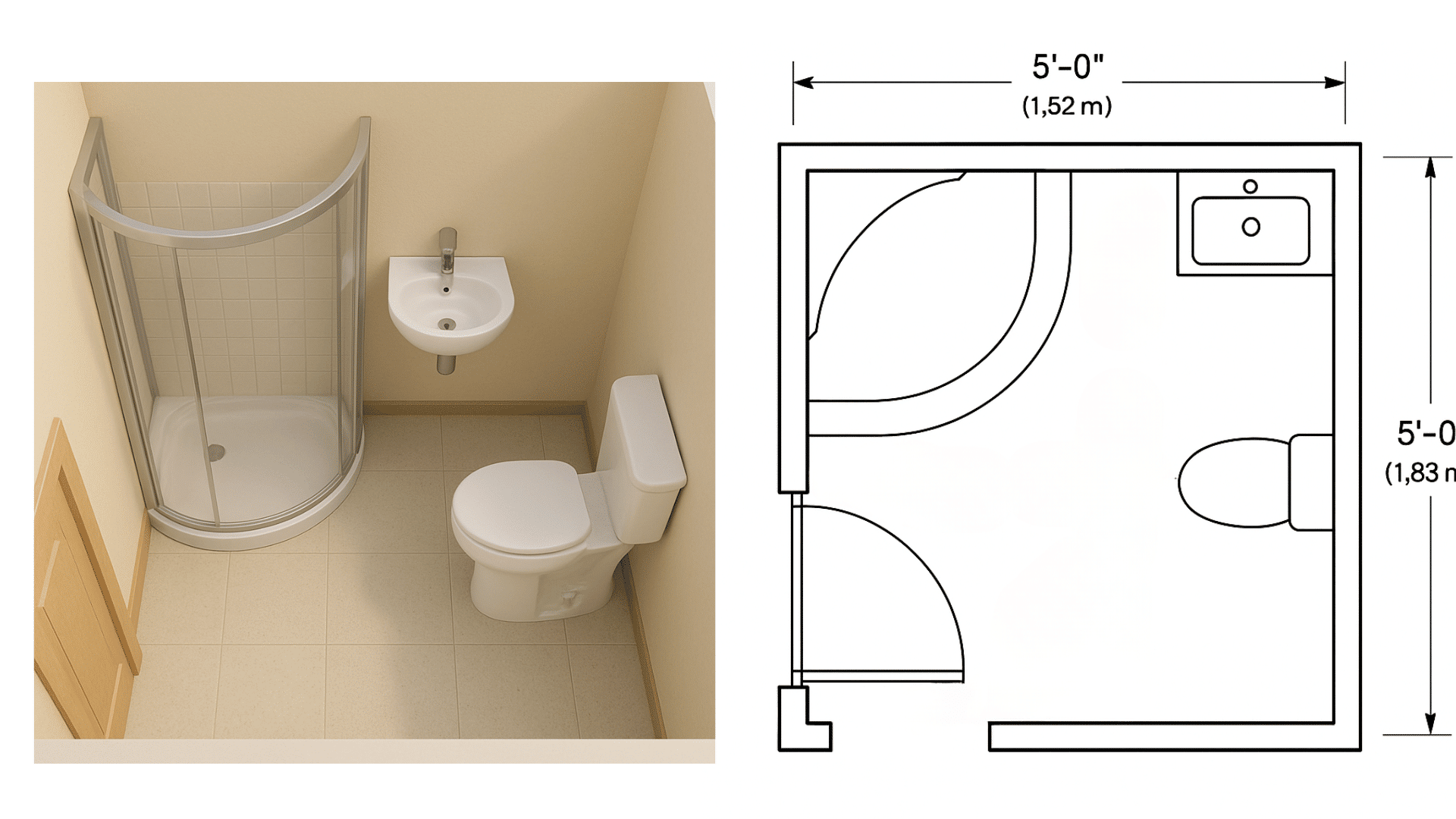
Spatial perception is another critical driver in modern architecture. Bathrooms in contemporary urban developments are shrinking in footprint, forcing designers to manipulate sightlines and perimeter volumes to prevent the space from feeling claustrophobic. A straight rod mounted flush across a standard tub alcove forces the curtain inward, effectively reducing the interior shoulder room of the shower occupant by several inches. This minor constriction changes the physical experience of the space, turning a daily ritual into a cramped, claustrophobic ordeal where the wet fabric constantly clings to your skin.
Conversely, expanding the perimeter with alternative geometries alters the room’s entire dynamic. Architects frequently look at the room’s floor plan as a series of overlapping zones—dry, wet, and transitional. The shower rod acts as the physical threshold between these zones. Choosing between a linear span, a compound curve, or an asymmetrical corner layout means deciding how the user interacts with the room’s volume. It requires balancing human ergonomics against the fixed architectural constraints of plumbing rough-ins, window placements, and ceiling heights.
Categorizing Modern Rod Typologies and Their Spatial Applications
Selecting the correct hardware demands a clear taxonomy of what is available on the market and where each typology shines. No single rod design fits every architectural context; each serves a distinct combination of tub geometry, spatial flow, and user expectation.
Straight wall-mounted rods remain the gold standard for clean, minimalist aesthetics. When paired with concealed mounting flanges, they deliver an uninterrupted horizontal line that enhances the room’s linear perspective. They work exceptionally well in dedicated alcoves where the surrounding walls provide robust structural backing. However, they lack spatial expansion, making them less ideal for compact showers unless paired with an outward-bowed fabric liner.
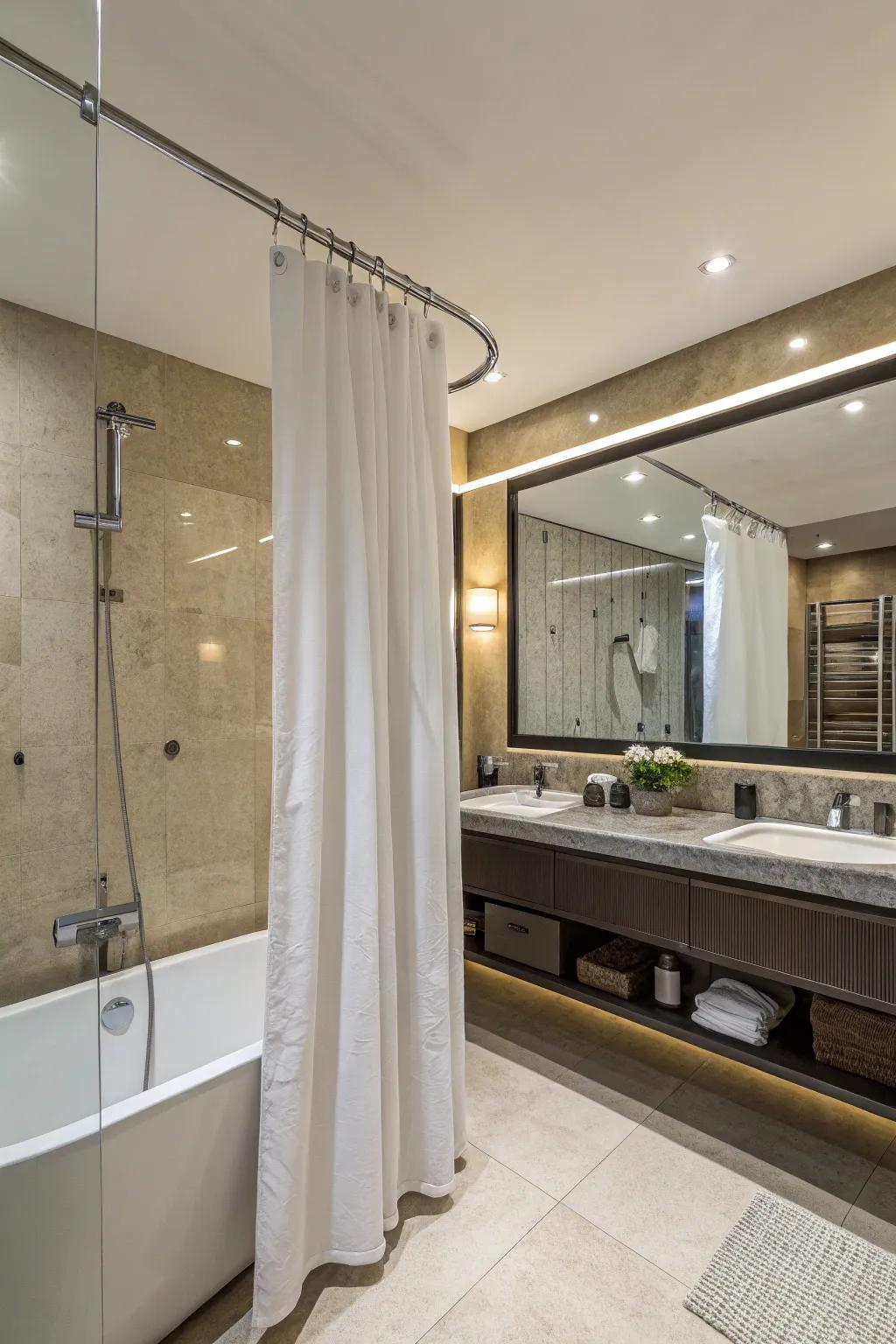
Curved rods represent a masterclass in functional ergonomics. By bowing outward by five to six inches at the center of the span, they reclaim valuable interior volume, eliminating the dreaded curtain-cling phenomenon. In modern open-concept bathrooms where the tub and shower share a unified footprint, a curved rod softens the perimeter geometry, moving away from rigid boxy layouts toward a more organic, fluid spatial flow.
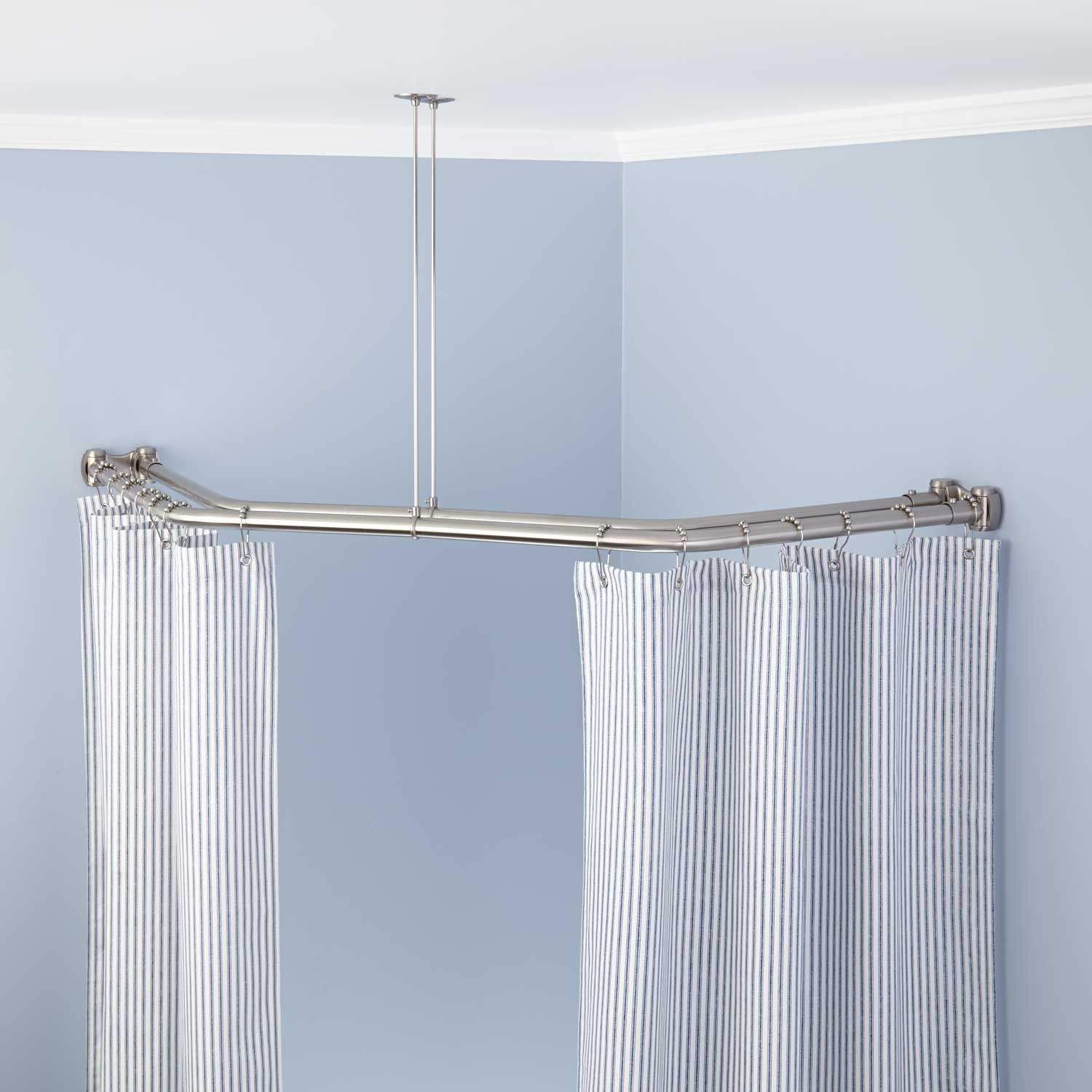
For complex architectural layouts, including L-shaped corner showers, neo-angle stalls, or clawfoot tubs positioned away from walls, perimeter systems such as D-shaped, U-shaped, or circular ceiling-hung rods are essential. These configurations wrap completely around the bathing vessel, ensuring total privacy and maximum splash containment. Because they hang suspended from the ceiling or anchor across multiple walls, they require rigorous structural planning to handle torsion and prevent sagging over time.
A Step-by-Step Methodology for Specification and Installation
Getting the installation right requires a systematic approach that bridges structural engineering with finish carpentry. Skipping even a single step in this workflow can lead to loose flanges, stripped wall anchors, or misaligned sightlines that ruin the entire installation.
- Step 1 (Substrate Assessment and Layout Planning): Inspect the wall or ceiling framing behind the tile. Locate wood studs or solid blocking using a high-precision electronic stud finder, or prepare to install heavy-duty toggle anchors if mounting directly into cement backer board and tile. Establish your horizontal datum line using a self-leveling laser level, ensuring the rod sits parallel to the tub deck or finished floor.
- Step 2 (Height Optimization and Clearance Check): Standard shower rod height typically ranges between 72 and 78 inches from the finished floor, but this must be calibrated to your specific curtain and liner drop. Measure your curtain length, accounting for ring drop and a 1-to-2-inch clearance above the tub lip or shower floor to prevent mold growth and ensure proper air circulation.
- Step 3 (Flange Positioning and Pilot Drilling): Hold the mounting brackets against your laser line and mark the screw holes with a grease pencil. If drilling through porcelain or natural stone tile, use a diamond-grit core drill bit with water cooling to prevent cracking the ceramic face. Never attempt to drive screws directly into tile without a proper pilot hole.
- Step 4 (Anchor Insertion and Bracket Securing): Insert rated wall anchors flush into the substrate if studs are unavailable. Drive stainless steel or brass mounting screws through the flange into the framing or anchors. Ensure the set screw channels on the flanges point downward so they remain invisible from eye level once the rod is locked in place.
- Step 5 (Rod Insertion, Level Verification, and Locking): Slide the rod through or into the mounting brackets, check the level one final time across the entire horizontal span, and tighten the set screws securely. Test the assembly by sliding a set of curtain rings back and forth to check for smooth gliding and structural rigidity.
Common Specification Pitfalls and Field-Tested Workarounds
Even experienced designers and contractors fall into traps when specifying bathroom hardware. Anticipating these missteps prevents callbacks, damaged tile work, and frustrated homeowners.
- Pitfall 1 (Depending on Tension Rods in High-Traffic Homes): Spring-loaded tension rods are easy to install, but they rely entirely on friction against painted drywall or tile. In a busy family home where children pull on curtains or adults lean for balance, tension rods inevitably slip, scratch the walls, and crash down. Workaround: Always specify permanent, screw-fixed flange mounts anchored directly into solid blocking or heavy-duty toggles for any residential project meant to last.
- Pitfall 2 (Ignoring Material Compatibility in Wet Environments): Specifying cheap plated steel or zinc alloy rods in high-humidity zones leads to rapid oxidation, bubbling finishes, and unsightly rust bleeding down the tile wall. Workaround: Restrict your specifications to marine-grade Type 304 or Type 316 stainless steel, solid brass, or anodized aluminum, ensuring the finish rating matches or exceeds the plumbing fixtures (e.g., matching matte black PVD or brushed nickel).
- Pitfall 3 (Overlooking Curtain Ring Drag and Noise): Many modern designer rods feature square profiles or decorative joints that catch standard C-rings, producing an abrasive scraping sound and tearing the fabric eyelets. Workaround: Specify integrated roller-bearing rings or ensure the rod diameter matches the interior tolerance of the chosen hardware, testing the glide action before final sign-off.
- Pitfall 4 (Inadequate Ceiling Support for Perimeter Rods): Suspending a large U-shaped or circular rod from the ceiling using only a single drop-rod creates a dangerous cantilever effect that will wobble and pull out of the drywall under minor loads. Workaround: Use a multi-point ceiling suspension grid with rigid vertical stays tied directly into ceiling joists or structural blocking.
- Pitfall 5 (Misjudging the Splash Radius with Straight Rods): Installing a standard straight rod over a high-flow modern rainfall showerhead almost always results in water escaping onto the unprotected bathroom floor. Workaround: Pair straight rods with an outward-curved liner, or upgrade to a curved rod typology to push the fabric away from the primary spray arc.
The Broader Impact of Hardware Details on Interior Architecture
Architecture is experienced in the details. When a user steps into a bathroom, they register the quality of the space through tactile touchpoints—the weight of a door handle, the temperature of a brass faucet, and the rigid stability of a shower rod. Choosing high-end hardware elevates the mundane mechanics of daily living into a series of refined sensory experiences.
Furthermore, sustainability and lifecycle economics play a massive role in modern architectural choices. Specifying durable, corrosion-resistant metals reduces landfill waste caused by cheap plastic-cored or plated rods that fail every two years. Investing in solid, repairable, and recyclable materials aligns with modern green building standards, ensuring that the bathroom infrastructure ages gracefully alongside the primary structure of the home.
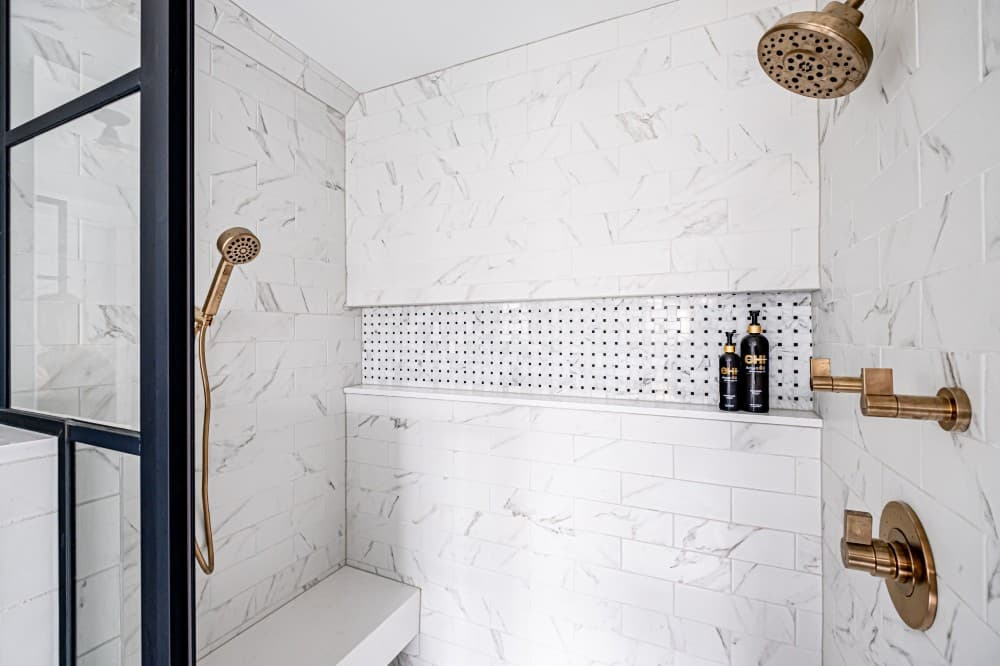
Design cohesion also relies on these horizontal accents. The finish of the shower rod should enter into a deliberate dialogue with the mirror frames, vanity pulls, sconce housings, and plumbing trim. When every metal element in the room shares a consistent undertone—whether it is living brass, brushed nickel, or matte black—the space achieves a sense of architectural calm and deliberate curation.
Strategic Recommendations for Modern Bathroom Design
To synthesize these insights into actionable design principles, consider the following framework when specifying shower hardware for your next residential project:
- Audit the Spatial Envelope: Always evaluate the physical dimensions of the room before choosing a rod shape. Use curved rods to expand tight alcoves, and perimeter ceiling systems for open wet rooms.
- Prioritize Substrate Integrity: Never compromise on anchoring. Coordinate with your framing contractor during the rough-in stage to install wood blocking precisely where shower rod flanges will land.
- Match the Material Palette: Ensure the rod material and surface treatment match the plumbing fixtures to maintain visual continuity across the entire room.
- Design for Maintenance: Select smooth, continuous finishes that resist soap scum buildup and make cleaning effortless for the homeowner.
The bathroom remains one of the most intimate spaces in human architecture—a sanctuary dedicated to renewal and personal reset. Within this private theatre, even the simplest elements carry weight. By moving past the mindset of hardware as an afterthought, we transform functional necessities into design opportunities that enrich the built environment.
As material science continues to advance and interior aesthetics shift toward refined minimalism, the shower rod will continue to evolve. Yet, the core architectural imperative remains unchanged: to marry form and function with uncompromising integrity. Take the time to specify the right rod, anchor it with precision, and watch how a simple horizontal line pulls an entire architectural space into harmonious focus.