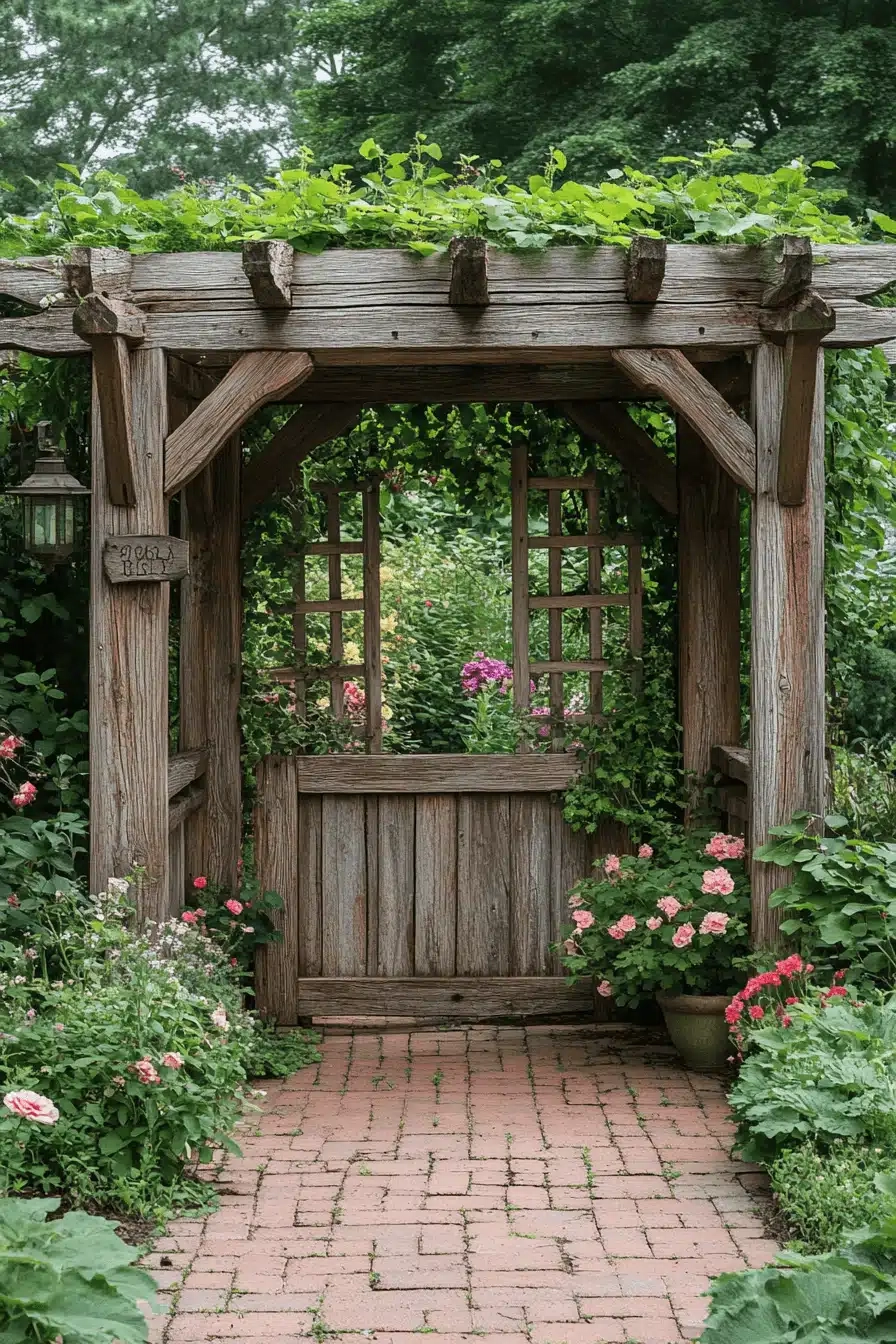
You know that feeling. It’s a perfect Saturday morning. The coffee is hot, the birds are chirping, and the sun is just hitting that sweet spot where it’s warm but not scorching. You step out onto your deck, ready to soak it all in. But then you see it. That gray, weathered patch of wood that looks like it gave up on life three winters ago. Or maybe it’s the mildew creeping up the corners of your patio pavers. Suddenly, the relaxation vanishes. Instead of sipping coffee, you’re mentally calculating how many hours of sanding, staining, or pressure washing it’s going to take to fix it.
We’ve all been there. For years, the dream of an outdoor living space came with a hidden tax: endless maintenance. We bought beautiful cedar decks or elegant stone patios, thinking we’d spend our weekends entertaining. Instead, we spent them fighting against nature. But here’s the good news. The game has changed. In 2026, the options for creating stunning, durable outdoor spaces have never been better. You don’t have to choose between beauty and convenience anymore. You can have both.
The key isn’t just buying "low-maintenance" stuff. It’s understanding what that actually means for your specific climate, your budget, and how you plan to use the space. Are you hosting big BBQs? Do you have dogs running around? Do you live in a place where it snows six months of the year? These things matter. Let’s cut through the marketing noise and look at what really works when you want to spend less time working on your yard and more time actually enjoying it.
The Shift Away from Traditional Wood
Let’s be honest. Natural wood has soul. There’s nothing quite like the smell of fresh cedar or the warmth of ipe under bare feet. But let’s also be real about the hassle. Traditional timber requires a level of commitment that most of us just don’t have anymore. We’re busy. We’re tired. The idea of spending a whole weekend stripping old stain and applying new sealant sounds less like a hobby and more like punishment.
In recent years, we’ve seen a massive shift away from untreated or even treated lumber for high-traffic areas. Why? Because wood moves. It expands when it’s humid, shrinks when it’s dry, and rots if it stays wet too long. By 2026, the consensus among builders and homeowners alike is clear: if you want true low maintenance, natural wood is usually not the answer unless you are willing to treat it like a high-end car. And even then, it’s a losing battle against UV rays and moisture.
That doesn’t mean wood is dead. It just means it’s becoming a niche choice for purists who accept the upkeep as part of the charm. For the rest of us, the focus has moved to engineered solutions. These materials mimic the look of wood—or stone, or concrete—but they don’t behave like them. They don’t rot. They don’t splinter. They don’t need annual sealing. It’s a trade-off, sure. You lose some of that organic unpredictability, but you gain back your weekends. And frankly, for most people, that’s a deal worth making.
Composite Decking: The Reliable Workhorse
If you’ve looked into outdoor renovations lately, you’ve heard of composite decking. It’s everywhere. And for good reason. Composite is essentially a blend of wood fibers and plastic (usually recycled). Think of it as the best bits of both worlds. You get the texture and appearance of wood, but the durability of plastic. It’s tough. Really tough.
One of the biggest advantages of modern composite, especially the capped varieties available in 2026, is its resistance to staining and fading. Old-school composites used to get chalky or fade out after a few years in the sun. Newer tech has solved that. A quick hose-down is usually all it takes to keep it looking fresh. No sanding. No staining. No sealing. If you spill wine on it during a party, you wipe it up. Done.
But it’s not perfect. Composites can get hot. If you live in a desert climate like Arizona or Nevada, dark-colored composite decks can become unbearable to walk on barefoot in the middle of summer. You’ll need to choose lighter colors or look for brands with specific cooling technology. Also, while it’s low maintenance, it’s not no maintenance. You still need to sweep off leaves and dirt to prevent mold or mildew from growing in the grime. It’s easy work, but it’s still work. Just don’t expect it to feel exactly like real wood. It has a slightly different give, a slightly different sound. But for 90% of homeowners, that’s a small price to pay for not having to buy a gallon of stain every spring.
PVC and Polymer: The Ultimate Durability Play
If composite is the reliable workhorse, PVC (polyvinyl chloride) decking is the tank. This is 100% synthetic material. No wood fibers at all. Just pure, engineered plastic. And because there’s no organic material in it, it literally cannot rot. It’s impervious to water, insects, and mold. For people living in super humid places—like Florida or the Gulf Coast—PVC is often the go-to recommendation.
The aesthetic has come a long way too. Early PVC looked… well, plastic-y. Shiny and fake. Today’s premium PVC boards have realistic grain patterns and matte finishes that fool almost everyone. They’re also incredibly consistent. With wood or even composite, you might get slight color variations from board to board. With PVC, what you see is what you get. Every single board matches perfectly. This makes for a very clean, uniform look that some people love and others find a bit sterile.
There are downsides, though. PVC tends to be more expensive than composite. It’s also harder to work with for DIYers because it expands and contracts more with temperature changes. You need to leave proper gaps during installation, or it can buckle. And like composite, it can get hot. But if your main goal is "install it and forget it for the next 30 years," PVC is hard to beat. It’s the closest thing to a permanent outdoor surface you can get without using stone or concrete. Plus, since it’s fully recyclable in many cases, it’s a decent choice for the eco-conscious builder, provided you check the specific brand’s sustainability claims.
Stone, Porcelain, and Concrete: The Hardscape Heroes
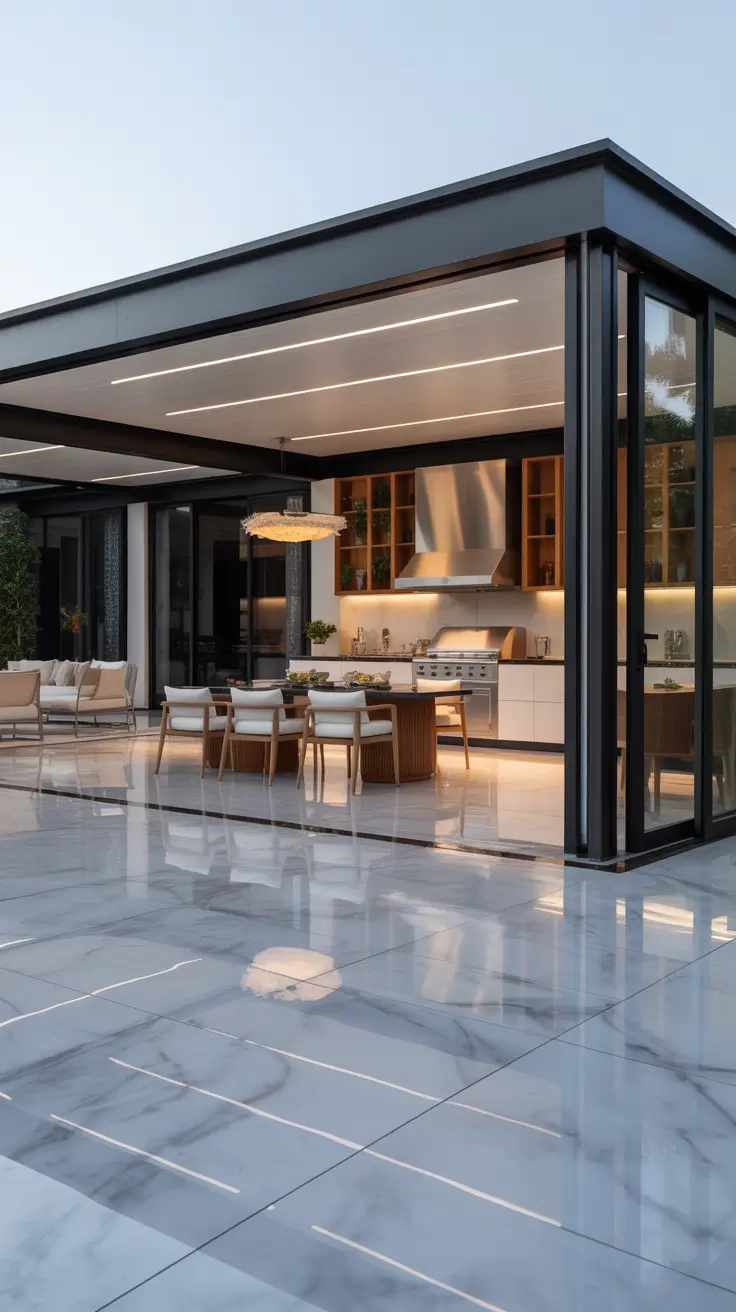
Not everyone wants a deck. Sometimes, you just want a solid, grounded patio. And when it comes to low-maintenance hardscaping, porcelain pavers are having a major moment in 2026. Forget those cheap concrete pavers that crack after one freeze-thaw cycle. Porcelain is dense, non-porous, and virtually indestructible. You can drop a hammer on it, and the hammer will break before the tile does.
The beauty of porcelain is its versatility. Thanks to advanced printing technology, you can get porcelain that looks like marble, slate, wood, or rustic stone. But unlike natural stone, it doesn’t need sealing. Natural slate or sandstone is porous. If you don’t seal it, it absorbs water, stains, and eventually cracks in winter. Porcelain? Water beads right off. Spill grease from the grill? Wipe it up. It’s that simple.
Concrete is another option, but it’s tricky. Standard poured concrete can crack and stain easily. However, stamped and sealed concrete, or pre-cast concrete pavers, can be a good mid-range option. The key is the sealant. If you go with concrete, you must reseal it every few years to keep it looking good. That’s more maintenance than porcelain, but less than wood. For a truly set-it-and-forget-it patio, large-format porcelain tiles installed on a pedestal system or over a proper base are the gold standard. They drain well, they don’t shift, and they look expensive without the expensive upkeep.
Metal and Modern Accents: Railing and Structures
When we talk about outdoor living, we often focus on the floor. But what about the railing? Or the pergola? These elements define the space just as much. And traditionally, they’ve been huge maintenance headaches. Wooden railings rot at the base. Iron railings rust. Paint peels. It’s a never-ending cycle.
Enter aluminum and powder-coated steel. In 2026, metal is the default choice for low-maintenance railings and structural accents. Aluminum is lightweight, doesn’t rust, and comes in a variety of finishes. Black matte aluminum railings with cable infills are incredibly popular right now. They look sleek, modern, and require zero care. Maybe a wipe down with soapy water once a year if you’re near the ocean to remove salt spray. That’s it.
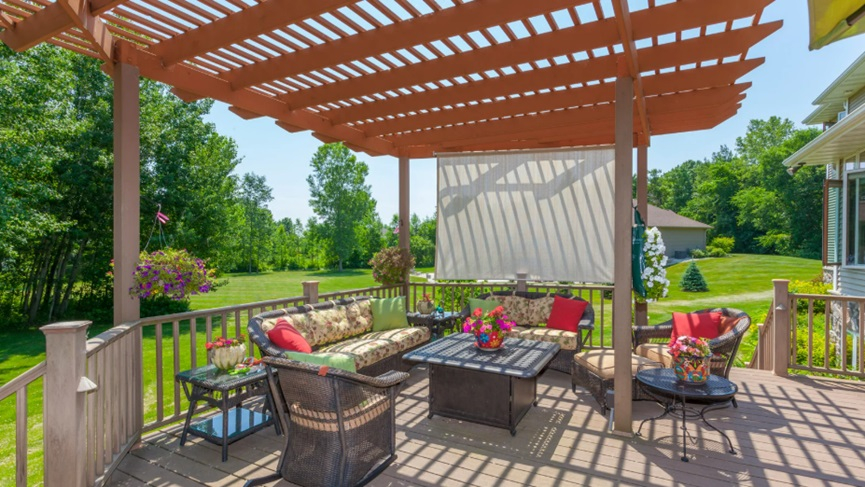
Powder-coated steel is heavier and stronger, great for pergolas or shade structures. The powder coating is baked on, so it doesn’t chip or peel like traditional paint. It resists UV damage and weathering beautifully. If you’re building a pergola, skip the cedar beams unless you’re ready to oil them annually. Go with aluminum or vinyl-clad options instead. They mimic the look of wood but won’t warp or crack. And let’s talk about cable railing for a second. It’s not just for views. It’s low profile, lets light through, and doesn’t trap debris like balusters do. Less cleaning, better aesthetics. It’s a win-win.
Smart Design Choices That Reduce Upkeep
Here’s a secret: Material choice is only half the battle. How you design the space matters just as much. You can buy the most expensive, low-maintenance decking in the world, but if you design it poorly, you’ll still be stuck doing chores. For example, avoid complex patterns with lots of cuts and seams. Every seam is a potential trap for dirt and leaves. Simple, straight layouts are not only cheaper to install but easier to clean.
Think about drainage. Water is the enemy of almost every outdoor material. Make sure your deck or patio slopes away from your house. If water pools anywhere, it will cause problems. Staining, mold, ice damage—it all starts with standing water. Also, consider the color. Lighter colors show less dust and pollen. Darker colors show water spots and footprints. If you live in a dusty area, go light. If you live in a rainy area, dark might hide the wet patches better, but remember the heat issue.
And don’t forget about furniture. Your deck might be low maintenance, but if you buy wicker furniture that traps moisture and molds, you’ve defeated the purpose. Choose outdoor-rated fabrics like Sunbrella or solution-dyed acrylics. They resist fading and mildew. Pick furniture with aluminum or teak frames (teak needs oiling, but it lasts forever). Avoid cheap plastics that crack in the sun. The goal is to create a system where everything works together to minimize effort. It’s about holistic thinking. Don’t just pick a floor. Pick a lifestyle.
So, how do you actually choose? It comes down to three things: Climate, Budget, and Usage. First, look at your climate. If you’re in a wet, humid zone, lean toward PVC or porcelain. If you’re in a dry, hot zone, watch out for heat retention with composites and metals—lighter colors are your friend. If you’re in a freeze-thaw zone, avoid porous materials like natural stone unless they’re properly sealed and installed.
Next, budget. Yes, low-maintenance materials often cost more upfront. A high-end composite or PVC deck can cost twice as much as a pressure-treated pine deck. But do the math over ten years. Add up the cost of stain, sealant, tools, and your own time. Often, the higher initial cost pays for itself within five to seven years. Plus, you get to enjoy the space immediately without dreading the upkeep. If budget is tight, consider mixing materials. Use composite for the main deck area and cheaper materials for hidden steps or borders.
Finally, usage. Do you have kids? Pets? Do you host big parties? If you have dogs, avoid smooth porcelain that gets slippery when wet. Look for textured composites or rougher stone. If you drop things often, avoid brittle materials. Be honest about how you live. There’s no point in buying a pristine white deck if you’re going to track mud on it every day. Embrace materials that forgive mistakes. That’s what low maintenance is really about. Forgiveness. Freedom. And the ability to step outside, take a deep breath, and just be.
Choosing the right material isn’t just about construction. It’s about reclaiming your time. It’s about designing a space that serves you, not the other way around. In 2026, we have better tools and better materials than ever before. Use them. Build something that lasts. Build something that lets you live.
[sps_html tag=”img” src=”https://cdn.northcarolinafinearchitecture.com/2026/05/fence-etiquette-navigating-shared-fences-with-neighbors-fence-okc-for-outdoor-fence-design.jpg” alt=”Fence Etiquette: Navigating Shared Fences With Neighbors - Fence Okc … for Outdoor Fence Design” style=”width: 100%; height: auto;”]
[sps_html tag=”img” src=”https://cdn.northcarolinafinearchitecture.com/2026/05/connecting-to-neighbors-fence-fence-etiquette-youtube-inside-what-your-neighbor-wont-tell-you-about-shared-fence-responsibilities.jpg” alt=”Connecting To Neighbors Fence - Fence Etiquette - Youtube inside What Your Neighbor Won't Tell You About Shared Fence Responsibilities” style=”width: 100%; height: auto;”]
[sps_html tag=”img” src=”https://cdn.northcarolinafinearchitecture.com/2026/05/neighbor-friendly-fencing-tips-for-edmonds-north-seattle-sky-fence-pertaining-to-what-your-neighbor-wont-tell-you-about-shared-fence-responsibilities.jpg” alt=”Neighbor-Friendly Fencing Tips For Edmonds & North Seattle | Sky Fence pertaining to What Your Neighbor Won't Tell You About Shared Fence Responsibilities” style=”width: 100%; height: auto;”]
[sps_html tag=”img” src=”https://cdn.northcarolinafinearchitecture.com/2026/05/how-to-tell-if-the-fence-is-yours-10-easy-steps-2026-throughout-outdoor-fence-design.jpg” alt=”How To Tell If The Fence Is Yours | 10 Easy Steps (2026) throughout Outdoor Fence Design” style=”width: 100%; height: auto;”]
[sps_html tag=”img” src=”https://cdn.northcarolinafinearchitecture.com/2026/05/can-a-neighbor-tear-down-a-shared-fence-craftingwithconcrete-com-in-outdoor-fence-design.jpg” alt=”Can A Neighbor Tear Down A Shared Fence - Craftingwithconcrete.com in Outdoor Fence Design” style=”width: 100%; height: auto;”]